
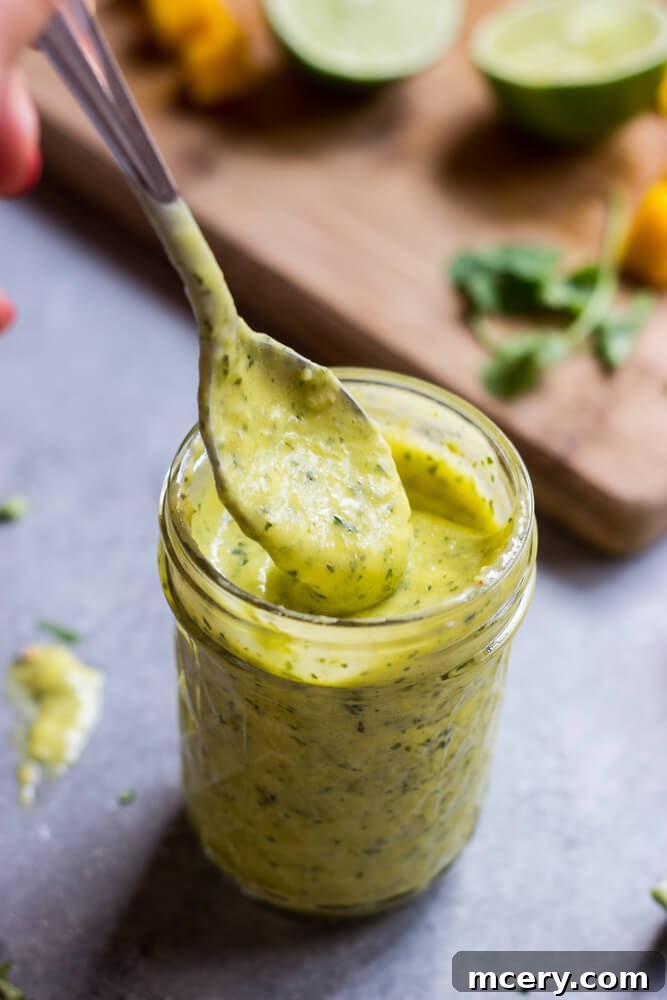
Vibrant & Versatile Homemade Mango Dressing: Your New Favorite Recipe
Transform your meals with this incredibly quick and easy homemade mango dressing! Bursting with fresh, sweet, and tangy flavors, this versatile recipe is much more than just a salad topping. It’s perfect for marinating meats, drizzling over grilled chicken or fish, or even enjoying as a flavorful chutney. Crafted with simple, wholesome ingredients and the irresistible sweetness of in-season mangoes, it’s a culinary game-changer you’ll want to keep on hand.
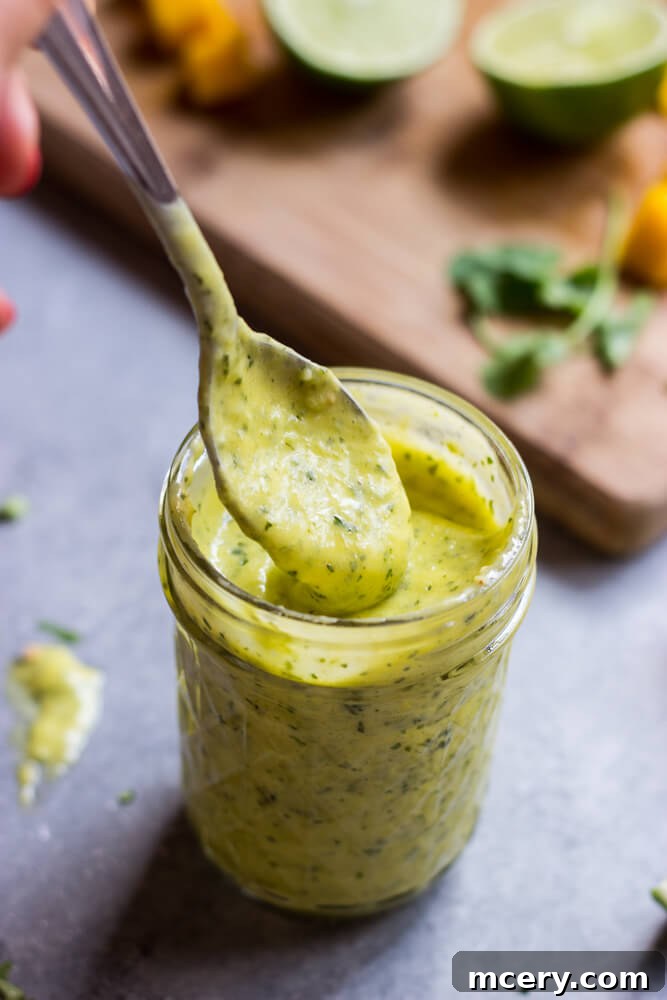
Imagine a dressing that’s perfectly balanced: sweet, with a delightful tang, and just the right hint of spice. This mango cilantro dressing can be made from scratch in a mere 10 minutes, combining succulent mangoes, fresh cilantro, crisp green onions, pungent garlic, a fiery kick from jalapeños, earthy cumin, and bright lime juice. The result is a vibrant, smooth, and utterly delicious sauce that will elevate any dish.
Whether you’re hosting a lively backyard barbecue or preparing a simple weeknight meal at home, this dressing is your secret weapon. Its vibrant flavor profile makes it an ideal accompaniment to a wide array of dishes. You’ll find yourself reaching for it again and again, eager to spoon its sunny goodness over everything from fresh greens to savory proteins.
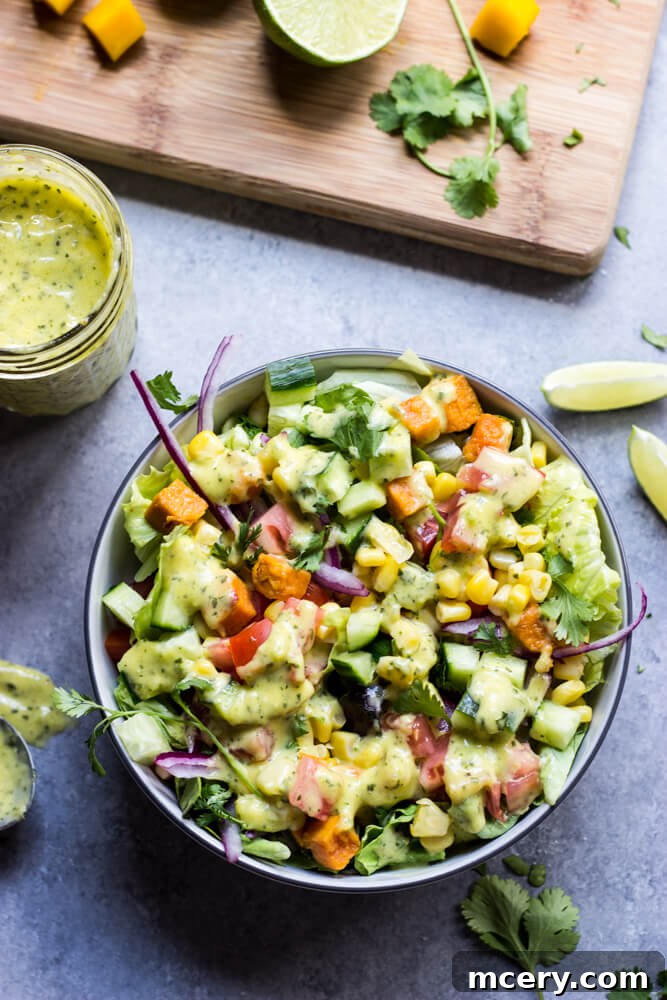
The Star Ingredients: What Makes This Dressing So Delicious?
Creating an exceptional mango dressing starts with selecting the finest ingredients. Here’s a closer look at the components that come together to form this healthy and irresistibly flavorful dressing:
- Fresh Mango: The heart of this recipe. Opt for ripe, in-season mangoes for the best natural sweetness and smooth texture. A perfectly ripe mango will yield slightly to gentle pressure and offer an intoxicating aroma.
- Cilantro: This herb adds a fresh, zesty, and slightly peppery note that beautifully complements the mango. There’s no need for meticulous mincing; simply add the leaves and tender stems directly to your blender or food processor.
- Green Onion: Providing a mild oniony bite and a subtle sharpness, green onions add a crucial layer of flavor complexity, contrasting wonderfully with the mango’s sweetness.
- Garlic: A single clove of garlic introduces an aromatic depth and savory undertone that elevates the overall flavor profile, ensuring the dressing isn’t just sweet but also deeply satisfying.
- Jalapeño: For those who appreciate a little heat, jalapeños deliver a pleasant kick. You can adjust the amount (and whether you include seeds) to customize the spice level to your preference. Remember to taste before adding too much!
- Ground Cumin: This warm, earthy spice adds a smoky nuance and exotic flavor dimension, tying all the ingredients together harmoniously and giving the dressing a more complex character.
- Lime Juice: Freshly squeezed lime juice is essential for balancing the sweetness of the mango. Its bright acidity cuts through the richness, creating a wonderfully tangy and refreshing finish.
- Avocado Oil: A neutral-flavored, heart-healthy oil, avocado oil helps to emulsify the dressing, creating a smooth, luxurious texture without overpowering the other flavors. It’s a fantastic choice for its mild taste and beneficial properties.
- Kosher Salt and Black Pepper: A pinch of salt enhances all the flavors, making them pop, while fresh ground black pepper adds a subtle warmth and aromatic finish. Season to taste to achieve perfect balance.
Mastering the Mango: How to Cut It Like a Pro
Achieving the best consistency and flavor for your dressing begins with properly preparing your mango. While a ripe mango is key, one that is still slightly firm will be easier to handle and cut. Always remember to wash your mango thoroughly before you begin to remove any surface contaminants.
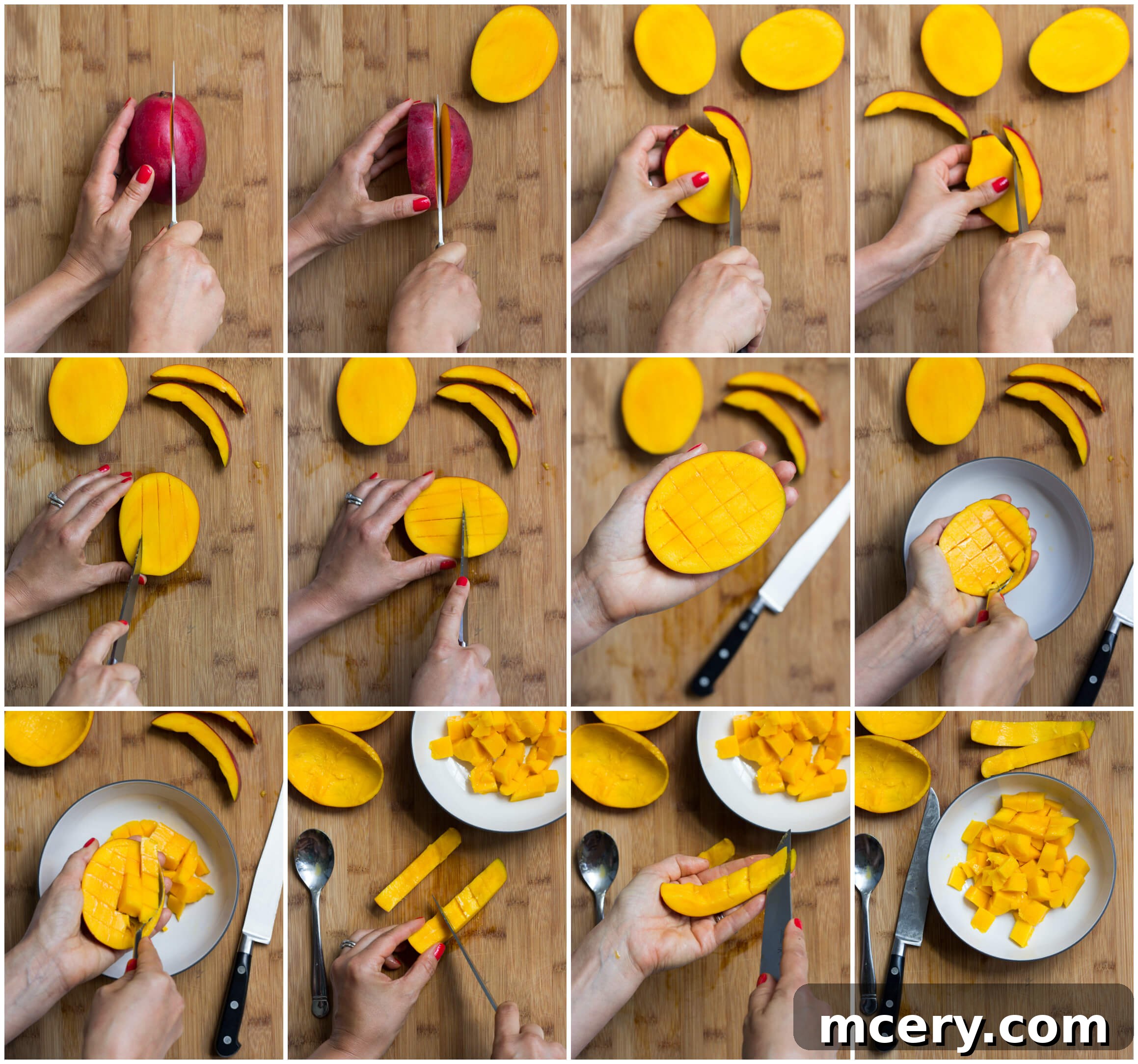
Here’s a simple, step-by-step visual guide on how to safely and efficiently cut a mango:
- Gather Your Tools: You’ll need a sturdy cutting board, a sharp knife (a chef’s knife or a paring knife works well), and a spoon.
- Locate the Pit: Mangoes have a large, flat, oval-shaped pit in the center. Imagine it running lengthwise through the mango.
- Slice the “Cheeks”: Stand the mango upright on your cutting board with the stem end facing up. Carefully slice downwards about a quarter-inch away from the center line on both sides. This will give you two large fleshy “cheeks” of the mango, avoiding the pit.
- Score the Flesh: Take one of the mango cheeks. Without cutting through the skin, make several parallel slices lengthwise, then several parallel slices crosswise, creating a grid pattern.
- “Hedgehog” Method: Gently push the skin side of the mango cheek inwards, causing the scored cubes of mango flesh to pop outwards like a hedgehog.
- Scoop or Slice: Use a spoon to scoop out the mango cubes into a bowl, or carefully slice them off with your knife. Repeat with the other cheek.
- Handle the Remaining Flesh: For the remaining narrow strips of mango around the pit, you can carefully peel the skin and slice off any usable flesh. Discard the pit.
Crafting the Perfect Dressing: Step-by-Step Guide
The secret to achieving a beautifully creamy and velvety mango dressing lies in the technique of emulsification – specifically, how you introduce the oil. If all ingredients, including the oil, are added simultaneously, the oil tends to separate, resulting in a thin and inconsistent dressing. However, by adding the oil slowly and steadily, you create a stable emulsion that yields that wonderfully thick, luxurious texture we desire.
The Art of Emulsification
Emulsification is the process of blending two immiscible liquids (like oil and water/lime juice) to form a stable mixture. When you slowly add oil while the food processor is running, the blades break the oil into tiny droplets, dispersing them evenly throughout the other ingredients. The natural emulsifiers present in some ingredients (like garlic or even the pectin in mango) help to bind these droplets, preventing them from separating and creating a smooth, cohesive dressing.
Simple Instructions for Making the Dressing
Follow these steps to create your delicious mango dressing:
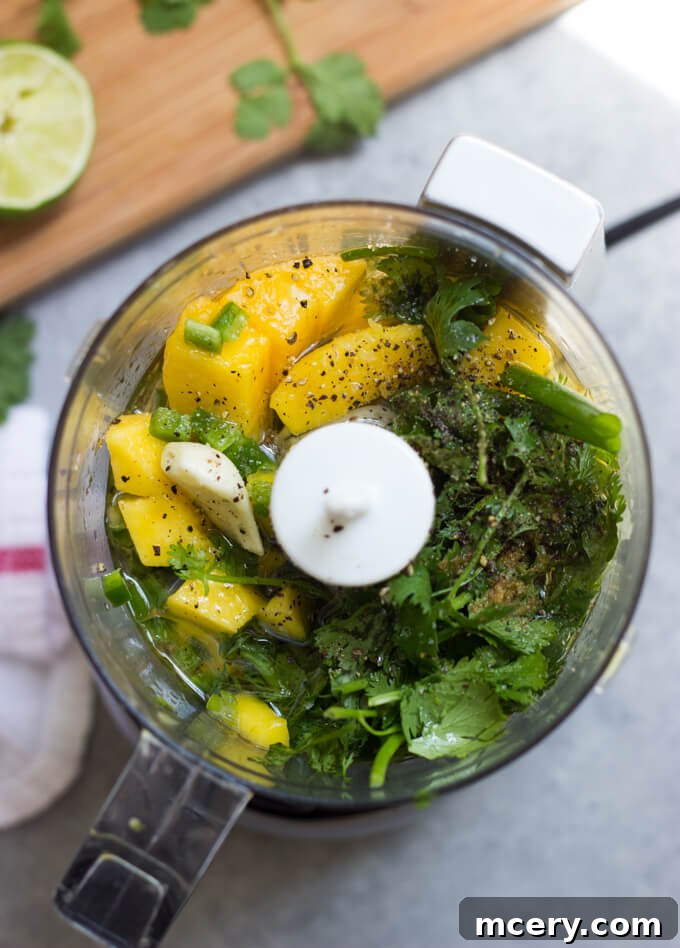
- Combine Base Ingredients: Into the bowl of a food processor, add the chopped mango, fresh cilantro, green onion, garlic, jalapeño, cumin, and lime juice. Season with a generous pinch of kosher salt and fresh black pepper to taste.
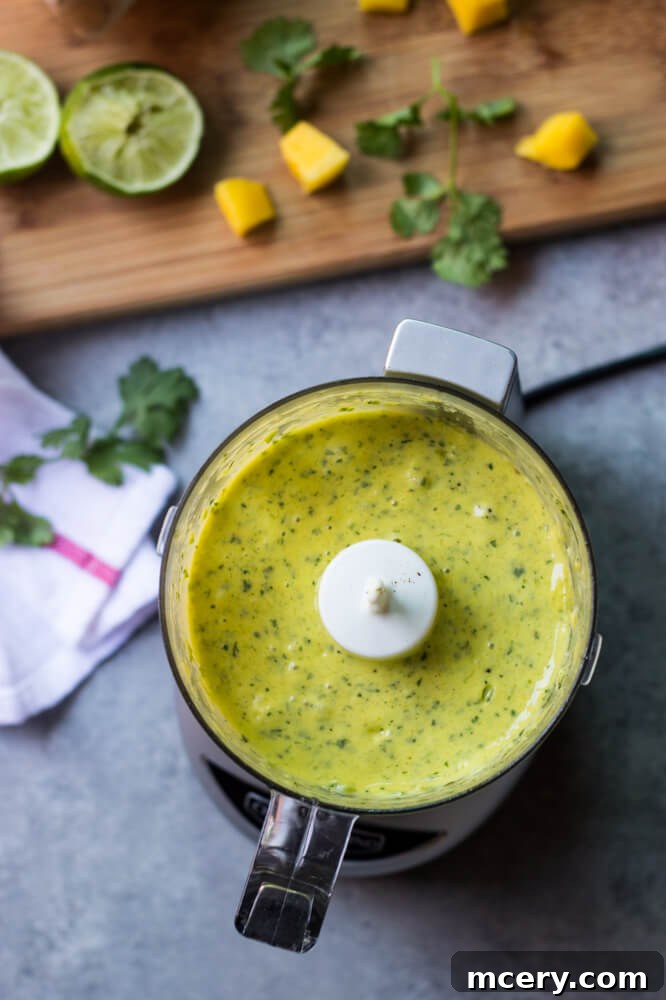
- Puree Until Smooth: Process the ingredients until they form a completely smooth puree. Stop and scrape down the sides of the food processor bowl as needed to ensure all ingredients are thoroughly blended.
- Gradually Add Oil: With the food processor running on a low to medium speed, slowly and steadily stream in the avocado oil. The key here is patience; a slow drizzle allows the dressing to emulsify properly.
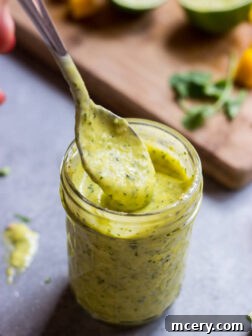
- Observe Transformation: As you add the oil, you’ll notice the dressing begin to thicken and become creamy, often developing a lovely light lime-green color. Continue processing until all the oil is incorporated and the dressing is beautifully smooth and velvety.
- Adjust Consistency (if needed): If your dressing appears too thick for your liking, you can thin it out by adding water, one teaspoon at a time, until it reaches your desired consistency.
- Final Taste Test: Taste the dressing and adjust the seasoning as necessary. You might want to add more salt, pepper, or a touch more lime juice for an extra zing, or even a tiny bit of sweetener if your mangoes weren’t super sweet.
- Store Properly: Transfer the finished dressing to an airtight container and store it in the refrigerator for up to 3 days.
Expert Tips for the Best Mango Dressing You’ve Ever Tried
To ensure your mango dressing is nothing short of spectacular, keep these helpful tips in mind:
- Always Use Fresh Mangoes: While frozen mangoes are a decent substitute in a pinch (remember to thaw them first), fresh, ripe mangoes will always deliver superior flavor and a more vibrant, authentic texture. You’ll need approximately ¾ cup of chopped mango, which typically equates to about one large mango.
- Customize the Spice: This basic recipe provides a mild hint of spice. If you prefer a bolder kick, feel free to add more jalapeño. Always taste a small piece of the jalapeño beforehand to gauge its heat level, as spiciness can vary greatly between individual peppers. Alternatively, red pepper flakes can be substituted for diced jalapeño for a different kind of heat.
- Adjust Sweetness Naturally: The sweetness of your dressing will largely depend on the ripeness of your mango. For an extra sweet dressing, ensure your mangoes are fully ripe. If you need a bit more sweetness, a teaspoon of honey or maple syrup can be added, or even a few pitted dates for natural sugars.
- The Importance of Gradual Oil Addition: As emphasized, slowly streaming in the oil during blending is crucial for emulsification. Adding it too quickly will cause the oil and other liquids to separate, resulting in a thin, oily dressing. Patience is a virtue here!
- Acidity Balance: Fresh lime juice provides that essential tangy balance. If fresh limes aren’t available, apple cider vinegar can be used as a substitute, offering a similar acidic profile.
- Oil Alternatives: While avocado oil is recommended for its neutral flavor and health benefits, extra virgin olive oil can be used as a substitute. Be aware that olive oil has a more distinct flavor that might subtly alter the dressing’s taste.
- Make it a Chunky Chutney: For a more rustic, chutney-like consistency, you can simply chop all the ingredients (including the mango) roughly instead of pureeing them completely. Then, gently stir in the oil to coat, rather than emulsifying it fully.
Unleash Its Potential: Creative Ways to Use Your Mango Dressing
This dynamic mango cilantro dressing is incredibly versatile and can be used in countless ways beyond just adorning your salads. Its bright, tropical flavors make it a fantastic addition to a variety of dishes:
- Flavorful Marinade: Transform ordinary proteins into extraordinary meals! Use this vibrant puree as a marinade for chicken, beef, or pork. The acidity from the lime juice helps to tenderize the meat, while the mango and spices infuse it with incredible flavor, perfect for grilling or baking. Consider it for chicken kebabs or grilled steak.
- Seafood Enhancement: Seafood and mango are a match made in culinary heaven. Spoon this exquisite sauce generously over cooked fish like Blackened Salmon Lettuce Wraps, Baked Fish in Foil, or Shrimp Lettuce Wraps. Its fresh and tangy notes cut through the richness of seafood beautifully.
- Elevate Your Bowls: Whether you’re making a grain bowl, a veggie bowl, or a chicken bowl, a drizzle of this mango dressing will instantly jazz it up. It adds a burst of tropical flavor and creamy texture that ties all the components together.
- Rustic Chutney: As mentioned in the tips, you can easily transform this dressing into a thicker, more rustic chutney. Simply chop the ingredients instead of pureeing, and enjoy it as a side dish or condiment with curries, grilled meats, or even on toast.
- Salad Reinvention: Of course, it shines brightest in salads! Substitute your usual dressing with this mango creation to give any salad a refreshing, tropical twist. It’s particularly fantastic with salads featuring shrimp (Shrimp Avocado Salad), berries (Berry Spinach Salad), or even Asian-inspired flavors (Thai Chicken Salad).
Achieving Your Desired Consistency: Creamy & Flavorful Variations
Making It Creamier
If you desire an even creamier, richer dressing, there are a couple of fantastic options that will enhance its texture without compromising its fresh flavor:
- Avocado: Adding about half a ripe avocado to your food processor along with the other ingredients will create an incredibly smooth, decadent, and naturally creamy dressing. This keeps the dressing vegan and dairy-free, while also adding healthy fats.
- Greek Yogurt: For a tangy and thick consistency, incorporate a tablespoon or two of whole-fat plain Greek yogurt into the blender. The yogurt provides a delightful tartness and a luscious, velvety texture that pairs beautifully with the sweet mango.
Beyond the Basics: Flavor Enhancements
While delicious as is, this sweet mango salad dressing is also highly adaptable. Feel free to experiment with different ingredients and flavors to tailor it to your palate:
- Sweeteners: If your mangoes aren’t as sweet as you’d like, or you simply prefer a sweeter dressing, a teaspoon of
honey
or
maple syrup
can be added. For a natural alternative, a few pitted dates can also boost sweetness and add fiber.
- Extra Heat: For a more intense spicy kick, consider adding
Fresno chiles
(which offer a slightly fruitier heat than jalapeños) or a dash of your favorite hot sauce.
- Citrus Boost: Enhance the fruity notes by adding a splash of
orange juice
(freshly squeezed or from a bottle) alongside or in addition to the lime juice.
- Aromatic Depth: For a more refined onion flavor, substitute the green onion with a small
shallot
. Shallots are milder and sweeter, offering a delicate complexity.
- Tangy Kick: A teaspoon of
Dijon mustard
can add an extra layer of tanginess and also acts as a natural emulsifier, helping to create an even smoother dressing.
Blending Tools: Finding Your Perfect Match
Achieving a silky-smooth puree for your mango dressing is crucial, and thankfully, you have a few excellent tools at your disposal:
- Food Processor: This is the recommended tool for its efficiency and consistent results. A food processor allows you to finely chop and blend all the ingredients quickly, and its wide bowl makes it easy to gradually stream in the oil for perfect emulsification.
- Blender: A high-speed blender can also create a wonderfully smooth dressing. For best results, ensure your mango chunks are relatively small before adding them. You might need to use the tamper or stop and stir a few times to ensure everything blends evenly.
- Mortar and Pestle: For those who enjoy a more traditional, hands-on approach and a slightly coarser texture, a mortar and pestle can be used. If using this method, grind your ingredients in small batches to ensure a consistent texture, or use a large enough mortar to accommodate all ingredients at once. This method will require more effort and yield a less uniform, more rustic consistency, which can be delightful for a chutney-style dressing.
Regardless of your chosen tool, the golden rule remains: add the oil in a slow, steady stream while blending. This careful approach is what creates the stable emulsion, preventing separation and delivering that desired velvety texture. Rushing this step is the most common reason for a broken, separated dressing.
Frequently Asked Questions (FAQs) About Mango Dressing
Can you eat mango dressing like chutney?
Absolutely! This versatile recipe can easily be transformed into a rustic mango chutney. Instead of pureeing the fruits and vegetables until completely smooth, simply chop them into desired, chunkier pieces and gently stir them together with the oil. This creates a delightful condiment with more texture, perfect for scooping with a spoon or serving alongside savory dishes.
When is mango season?
Mango season varies significantly depending on your geographical location. In many parts of the world, mangoes are available year-round due to imports from different growing regions. However, for the freshest and most flavorful mangoes, check your local in-season food guide or inquire at your grocery store to determine when they are at their peak ripeness and availability in your area.
How can I make mango dressing sweeter?
To enhance the natural sweetness of your mango dressing, start by using the freshest, ripest mangoes possible – their natural sugars are key. If you need an extra boost, you can add a teaspoon of honey or maple syrup to the blender. For a more natural and fiber-rich sweetener, consider blending in a few pitted dates. Always taste and adjust according to your preference.
Don’t Waste a Drop: Ideas for Leftover Mango
If you find yourself with extra ripe mangoes after making your delicious dressing, don’t let them go to waste! Mango is a fantastic ingredient that can elevate many other recipes. Here are some delightful ways to use up any leftover mango:
- Power Smoothie: Blend mango with other fruits, leafy greens, a liquid base (like almond milk or coconut water), and a protein source for a refreshing and nutritious Power Smoothie.
- Mango Shrimp Salad: Combine diced mango with cooked shrimp, avocado, red onion, and a light lime vinaigrette for a vibrant and satisfying Mango Shrimp Salad.
- Pineapple Mango Salsa: Chop mango with fresh pineapple, red bell pepper, red onion, cilantro, and lime juice for a sweet and tangy Pineapple Mango Salsa, perfect with grilled fish or chicken, or served with tortilla chips.
- Mango Guacamole: Add diced mango to your classic guacamole recipe for a tropical twist that’s both sweet and savory. This Mango Guacamole is unexpectedly delicious!
- Shrimp with Mango Salsa: Prepare a quick sautéed or grilled shrimp dish and top it with a fresh Mango Salsa for an easy and flavorful meal.
Mango Dressing
5 out of 5 stars from 1 review
- Author: Katya
- Prep Time: 10 mins
- Total Time: 10 mins
- Yield: 8 servings (1 cup)
- Category: Salad
- Method: Blend
- Cuisine: American
Description
Fresh mango chunks, cilantro, and a kick of jalapeño make this mango dressing absolutely irresistible! All it takes is 10 minutes and you have yourself a vibrant dressing to go over your favorite salads.
Ingredients
Yields: 1 cup
- 1 large ripe mango, peeled, pitted, and chopped
- ½ cup fresh cilantro leaves, lightly packed
- 1 green onion, roughly chopped, whites included
- 1 garlic clove, peeled
- 1 Tbsp. chopped jalapeño
- ¼ tsp. ground cumin
- ¼ cup fresh lime juice, 1-2 limes
- ½ cup avocado oil
- Kosher salt and fresh ground black pepper, to taste
Instructions
- To a bowl of a food processor, add mango, cilantro, onion, garlic, jalapeño, cumin, and lime juice. Season with salt and black pepper, to taste. Puree until smooth, scraping down sides as needed.
- With the food processor running, gradually add oil, in a slow, steady stream. The dressing should be thick, creamy, and light lime color. If it’s too thick, thin out by a teaspoon of water. Taste for salt and acidity.
- Store, refrigerated, in an airtight container for up to 3 days.
Notes
- Mango: You will need ¾ cup chopped mango, which equals about 1 large mango. Fully ripe mango works best. Frozen mango can be used but thaw it first.
- Spiciness: This dressing is not inherently spicy. Feel free to add more jalapeño if you desire more heat.
- Oil: For perfect emulsification, add the oil in a slow, steady stream. Adding the oil too fast will cause it to separate.
- Original recipe published in July 2016 called for canola oil. We have since updated the recipe with avocado oil, which is a healthier alternative.
Nutrition
- Serving Size: 2 Tablespoons
- Calories: 141
- Sugar: 4.1 g
- Sodium: 2.5 mg
- Fat: 13.7 g
- Carbohydrates: 5.2 g
- Protein: 0.2 g
- Cholesterol: 0 mg