
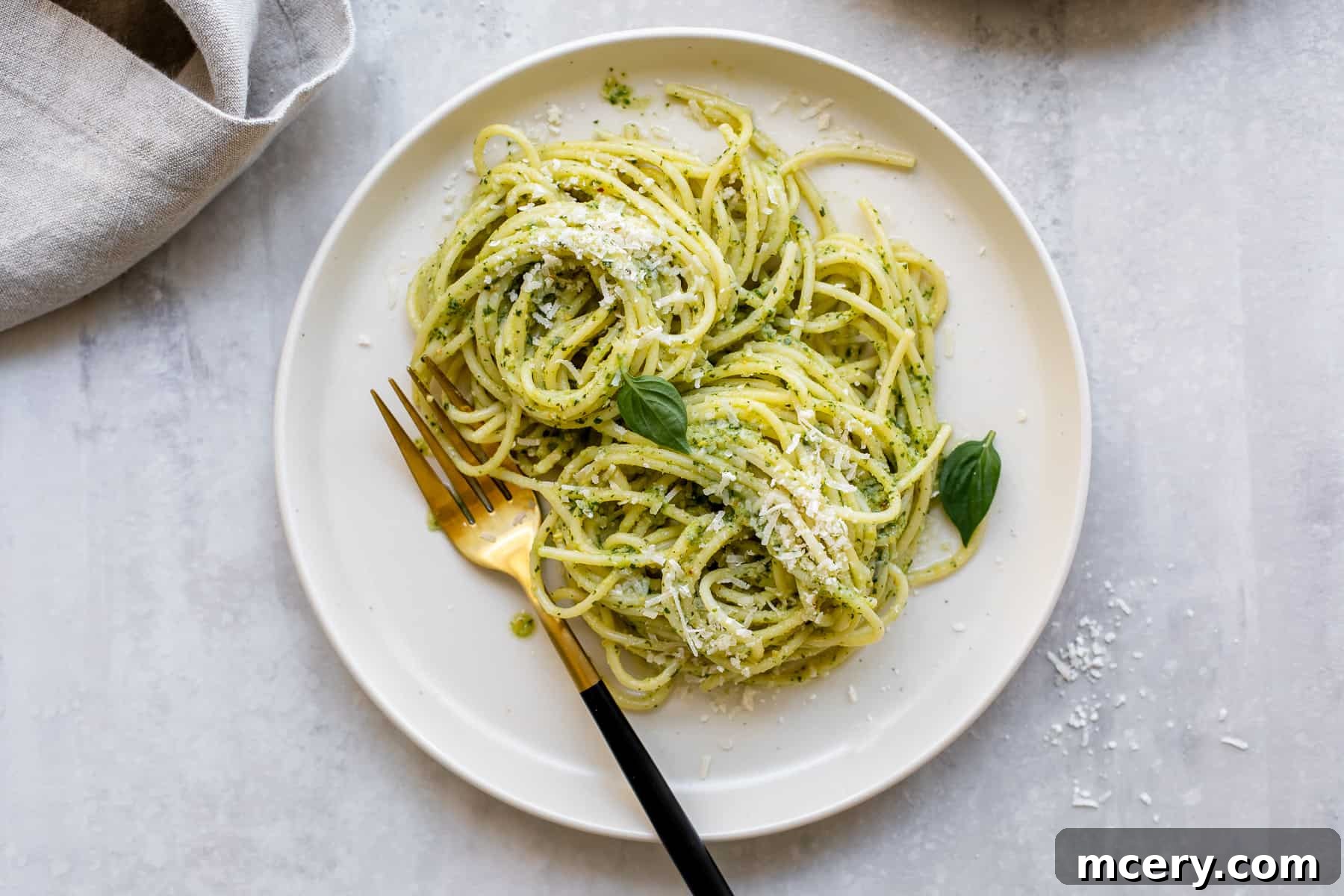
Effortless 3-Ingredient Pesto Pasta: Your Go-To Quick & Flavorful Meal
Discover the ultimate weeknight hero with this incredibly easy 3-ingredient pesto pasta recipe. Italian-inspired and bursting with fresh flavors, this dish is a true crowd-pleaser that can be enjoyed hot or cold, making it perfect for any season or occasion. Forget complicated cooking; this simple yet satisfying meal proves that gourmet taste doesn’t require a lengthy ingredient list or hours in the kitchen.
Why You’ll Love This Easy Pesto Pasta Recipe
In a world where time is a precious commodity, this easy pesto pasta stands out as a culinary lifesaver. With just ten minutes of active prep and another ten minutes of cooking, it’s practically foolproof, even for novice cooks. This dish quickly became my family’s favorite for busy evenings when a delicious, homemade meal is needed fast, but complex recipes are simply out of the question.
The beauty of this recipe lies in its simplicity and the vibrant flavors it delivers. It’s a testament to the idea that you don’t need a pantry full of exotic ingredients to create something truly special. In fact, this delightful pasta comes together with just three essential staples that you likely already have on hand. The result is a bright, savory, and herbaceous pasta that tastes fantastic on its own, yet offers incredible versatility for customization.
I often adapt this basil pesto pasta to suit our cravings. For a boost of protein, I might toss in some perfectly cooked shrimp or use up leftover shredded chicken thighs. When I’m in the mood for a subtle kick, a pinch of red pepper flakes does the trick. And for those indulgent evenings, a splash of cream transforms it into a richer, more luxurious experience. No matter how I serve it, this recipe consistently earns rave reviews and a five-star rating in my household. Its speed, reliability, and bursting flavor make it a staple you’ll want in your regular rotation.
Pro Tip: While store-bought pesto is convenient, using homemade basil pesto truly elevates this dish. The fresh, vibrant flavors of a homemade sauce are unmatched. If opting for store-bought, always choose a good-quality, refrigerated pesto for the best taste experience.
Essential Pesto Pasta Ingredients
Crafting this simple yet spectacular pesto pasta dish requires only a handful of ingredients, focusing on quality to let each flavor shine. Here’s what you’ll need:
- Dry Pasta: The foundation of our dish! While any pasta shape works wonderfully, my personal favorites for pairing with pesto are spaghetti, penne, or fusilli. Their surfaces are ideal for clinging to the rich sauce. Choose a high-quality pasta for the best texture.
- Basil Pesto: This is the star of the show. For the most authentic and fresh flavor, I highly recommend using homemade basil pesto. Its bright, garlicky, and nutty notes are unparalleled. If purchasing, look for refrigerated pesto in the deli section, as it tends to be fresher and more flavorful than jarred varieties found in the pasta aisle.
- Fresh Lemon Juice: A squeeze of fresh lemon juice is a game-changer, adding a zesty brightness that cuts through the richness of the pesto and truly awakens the flavors of the dish. Always opt for fresh lemon juice over bottled for superior taste.
- Optional Garnishes: Freshly grated Parmesan cheese is a classic topping that adds a salty, umami depth. Red pepper flakes can introduce a pleasant warmth, and a sprinkle of fresh basil leaves enhances the herbaceous aroma.
Choosing the Best Pasta for Pesto Sauce
The type of pasta you choose can significantly influence your pesto pasta experience. While any shape will technically work, some are better suited to cradling the vibrant pesto sauce. My top recommendations include:
- Spaghetti or Linguine: Long, thin strands perfectly coat with pesto, offering a classic and elegant presentation.
- Penne or Rigatoni: Tubular shapes with ridges are excellent for trapping the pesto inside and on their surfaces, ensuring every bite is flavorful.
- Fusilli or Rotini: The spirals are fantastic for catching and holding onto thick sauces like pesto, delivering a generous burst of flavor with each twist.
- Farfalle (Bowtie) or Orecchiette: These shapes have nooks and crannies that are ideal for scooping up spoonfuls of pesto, especially when combined with other additions like vegetables.
- Tortellini or Ravioli: For a more substantial meal, using cheese or meat-filled pasta with pesto is a delightful variation.
Ultimately, the best pasta is the one you enjoy most and have readily available in your pantry. This pesto pasta recipe is incredibly forgiving and easily adaptable to your preferences, making it a truly versatile dish.
How to Master Pesto Pasta in Minutes
Creating this flavorful pesto pasta is surprisingly simple and comes together in just a few straightforward steps. The key is in the technique, ensuring the pesto retains its vibrant color and fresh taste.
- Cook the Pasta: Begin by cooking your chosen pasta in a large pot of generously salted water according to the package directions until it’s al dente (firm to the bite). This is crucial for texture. Before draining, make sure to reserve about 1 cup of the starchy pasta water. This liquid is a secret weapon that helps emulsify the sauce and achieve the perfect consistency.
- Combine Pasta and Pesto: Immediately after draining the pasta (and reserving the water), transfer it back to the hot, empty pot or a large mixing bowl. Off the heat, add about ½ cup of your basil pesto. The residual heat of the pasta will warm the pesto gently without cooking it, which is essential to prevent the basil from oxidizing and turning black.
Toss the pasta and pesto together thoroughly. Gradually add some of the reserved pasta water, a tablespoon at a time, until you achieve a beautifully saucy consistency that evenly coats every strand of pasta. The starch in the water helps the sauce cling better. Stir in the fresh lemon juice, which brightens the entire dish and balances the richness of the pesto.
Season and Serve: Taste the pasta and adjust seasoning as needed. You might want to add a little more salt, black pepper, or even another tablespoon or two of pesto if you desire a more intense flavor. Serve your vibrant pesto pasta immediately, garnished with a generous sprinkle of freshly grated Parmesan cheese and perhaps a few fresh basil leaves.
Expert Tips for Making the Best Pesto Pasta Sauce
Achieving restaurant-quality pasta with pesto sauce at home is easy with these simple tips:
- Toss Off the Heat: This is arguably the most crucial tip. Always combine the cooked pasta with the pesto off the heat. If the pesto is exposed to high heat for too long, the delicate basil can oxidize, causing it to lose its bright green color and vibrant flavor, turning instead to a dull brownish-black. The residual heat from the pasta is sufficient to warm the sauce.
- Don’t Discard All the Pasta Water: Reserve at least a cup of that starchy cooking water! It’s an essential ingredient for creating a smooth, emulsified sauce that perfectly coats the pasta. The starch helps bind the pesto to the noodles, preventing it from being oily or dry. Add it gradually until you reach your desired saucy consistency.
- Taste and Adjust: Pesto, whether homemade or store-bought, can vary in saltiness and intensity. Always taste your pasta after combining it with pesto and reserved water. Adjust with more salt, pepper, lemon juice, or even a little more pesto until it suits your palate perfectly.
- Use Fresh Lemon Juice: The bright acidity of fresh lemon juice is vital for balancing the richness of the pesto and adding a fresh, zesty finish. Bottled lemon juice simply won’t offer the same vibrant flavor.
- Choose Quality Pesto: If not making your own, invest in a good quality refrigerated pesto. It makes a significant difference in the final flavor profile of your dish.
Delicious Additions to Your Pesto Pasta
While fantastic on its own, pesto pasta is a versatile canvas for adding extra flavors and nutrients. Here are some tasty options to consider:
- Seafood: For a light yet satisfying meal, consider adding:
- Grilled Garlic Shrimp: Quick-cooking and full of flavor, shrimp pairs beautifully with pesto.
- Artichoke and Spinach Roasted Salmon: Flaked salmon can add richness and healthy fats.
- Scallops: Pan-seared scallops are a luxurious addition.
- Meat: To make it a heartier main course, try incorporating:
- Lemon Pepper Chicken Tenders: Sliced grilled or pan-fried chicken breast or thighs are excellent.
- Bone-in Turkey Breast (shredded): Use up leftovers for a quick protein boost.
- Chicken Parmesan Meatballs: A fun and flavorful addition for a comforting meal.
- Italian Sausage or Bacon: Cooked and crumbled, they add a savory, smoky depth.
- Vegetables: Boost the nutritional value and texture with a variety of colorful vegetables:
- Broccoli or Asparagus: Steamed or roasted until tender-crisp.
- Cherry Tomatoes: Halved and tossed in fresh, or roasted for a burst of sweetness.
- Spinach or Arugula: Wilted into the hot pasta for a fresh, peppery note.
- Sun-dried Tomatoes: Adds a concentrated, sweet-tart flavor.
- Mushrooms: Sautéed until golden brown for an earthy umami.
- Zucchini: Sliced and quickly sautéed or grilled.
- Artichoke Hearts: Quartered, either marinated or fresh, for a tangy bite.
- Garlic: Extra minced garlic sautéed lightly before adding pasta for an extra aromatic kick.
Make This Pesto Pasta Creamy
For those who love a richer, more indulgent pasta dish, transforming this green basil pesto into a creamy sauce is incredibly simple. After tossing the pasta with pesto and lemon juice, stir in a splash of:
- Half and Half: For a lighter creaminess.
- Heavy Cream: For a decadent and rich sauce.
- Garlic Cream Sauce: If you have some on hand, it will add another layer of savory flavor and luxurious texture.
Add the cream gradually, tasting as you go, until you achieve your desired level of creaminess. The cream not only enhances the texture but also mellows the intense flavors of the pesto, creating a wonderfully smooth and comforting dish.
Vegan Pasta With Pesto Sauce Options
This pesto pasta recipe is wonderfully accommodating for those following a vegan diet. With a few simple substitutions, you can easily enjoy this flavorful meal:
- Vegan Pesto: Traditional pesto often contains Parmesan cheese. Look for readily available store-bought vegan pesto varieties that use nutritional yeast or other plant-based alternatives for that cheesy flavor. Alternatively, you can easily make your own homemade vegan pesto using fresh basil, pine nuts, garlic, olive oil, and nutritional yeast for an authentic taste.
- Egg-Free Pasta: Most dried pastas are naturally vegan (made from semolina flour and water), but it’s always good practice to check the ingredient list to ensure no eggs are used. Many fresh pasta varieties, however, do contain eggs, so be mindful when selecting.
By simply ensuring your pesto and pasta are vegan-friendly, you can savor this delicious and healthy dish without compromise.
What to Serve Alongside Pesto Pasta
This versatile pesto pasta shines as both a delightful main course and a fantastic side dish. When serving it as part of a larger meal, consider these complementary options:
- Roasted Asparagus with Lemon: A simple, fresh green vegetable that brightens the plate.
- Roasted Broccoli with Pine Nuts: Adds a nutty crunch and earthy flavor.
- Mediterranean Bean Salad: A light, refreshing salad that complements the Italian flavors.
- Sourdough Garlic Bread or Gluten-Free Cheese Bread: Perfect for soaking up any leftover pesto sauce.
- House Salad with Balsamic Vinaigrette or Italian Dressing: A crisp, fresh salad always pairs well with pasta.
- Caprese Skewers: Fresh mozzarella balls, cherry tomatoes, and basil drizzled with balsamic glaze offer a light and flavorful starter.
- Grilled Chicken or Fish: For a balanced meal, serve alongside a lean protein like grilled chicken breast or a flaky white fish.
Storing Pesto Pasta for Later
Proper storage ensures you can enjoy your delicious pesto pasta for days to come:
- Refrigerate: Leftover pesto pasta can be stored in an airtight container in the refrigerator for up to 4 days. When ready to serve, you can enjoy it cold as a pasta salad, or gently reheat it. Be aware that reheating pasta with fresh basil pesto can cause the basil to oxidize and turn slightly darker, losing some of its vibrant green color. To minimize this, reheat slowly and avoid excessive heat.
- Freezing: This dish is not ideally suited for freezing once assembled. Cooked pasta can become mushy, and the fresh basil in the pesto can lose its texture and color upon thawing. However, you can absolutely freeze pesto on its own! Pour homemade pesto into ice cube trays, freeze until solid, then transfer the pesto cubes to a large zip-top bag or freezer-safe container. Store in the freezer for up to three months, ready to be added to freshly cooked pasta whenever a craving strikes.
Pesto Recipe Pasta FAQs
How much pesto should I use for 8 ounces of pasta?
For 8 ounces (approximately 225 grams) of dry pasta, you’ll typically need anywhere from ½ cup to ¾ cup of basil pesto. This range allows for personal preference – some like a lighter coating, while others prefer a more generous amount of sauce. Start with ½ cup, toss well, and then add more if needed until the pasta is coated to your liking. Remember, you can always add more, but you can’t take it away!
What cheese goes well with pesto pasta?
While freshly grated Parmesan cheese is the classic and arguably best pairing for pesto pasta, several other delicious cheeses also complement its flavors beautifully. Consider trying:
- Pecorino Romano: A saltier, sharper sheep’s milk cheese that adds a robust flavor.
- Feta Cheese: Crumbled feta introduces a tangy, briny note that can be particularly refreshing.
- Shredded Mozzarella: Melts beautifully for a gooey, mild addition, especially if adding other ingredients.
- Ricotta: Stirred in, it can make the sauce extra creamy and light.
- Goat Cheese: A dollop of creamy goat cheese adds a distinctive tang and richness.
- Asiago or Gruyere: Offer a nutty, more complex flavor profile.
Experiment to find your favorite!
How can I eat pesto without pasta?
Pesto is an incredibly versatile sauce that can elevate many dishes beyond traditional pasta. Here are some fantastic ways to enjoy it:
- On Spiralized Zucchini Noodles: A lighter, low-carb alternative to pasta.
- Drizzled Over Baked Balsamic Salmon: Adds a fresh, herbaceous counterpoint to the rich fish.
- As a Spread: Use it on sandwiches, wraps, or toast instead of mayonnaise.
- With Roasted Vegetables: Toss with roasted broccoli, potatoes, or bell peppers for an extra flavor kick.
- Mixed into Eggs: Stir a spoonful into scrambled eggs, omelets, or frittatas.
- As a Pizza Base: Use pesto instead of tomato sauce for a unique pizza flavor.
- In Soups or Stews: Swirl a dollop into vegetable or chicken soups for added depth.
- Marinate Meats: Use it as a marinade for chicken, fish, or pork before grilling or baking.
More Delicious Pesto Recipes to Explore
If you try our pesto pasta dish, please leave a star rating and a comment below letting us know how you liked the recipe. Your feedback is greatly appreciated!
Pesto Pasta Recipe
5 Stars
4 Stars
3 Stars
2 Stars
1 Star
5 from 1 review
- Author: Katya
- Prep Time: 10 min
- Cook Time: 10 min
- Total Time: 20 minutes
- Yield: 4 1x
- Category: Main
- Method: Simmer
- Cuisine: Italian
Description
This 3-ingredient pesto pasta is an easy side or main dish that’s perfect for warm weather. It’s made with pasta, basil pesto, and lemon juice.
Ingredients
- 8 oz. dry pasta of choice
- ½ – ¾ cup basil pesto
- 1 Tbsp. fresh lemon juice
- Shredded Parmesan cheese, for serving, optional
Instructions
- Cook pasta in salted water according to package directions. Reserve about 1 cup of pasta water and drain the rest.
- Immediately, off heat, toss the cooked pasta with ½ cup pesto and some of the reserved pasta water to create saucy consistency. Add lemon juice. Taste, add more pesto as needed.
- Serve immediately, garnished with freshly shredded Parmesan cheese.
Notes
- Pesto: If using store-bought pesto, look for fresh refrigerated pesto. It’s better tasting than pesto found in the pasta sauce aisle.
- Leftovers: Store leftovers in an airtight container for up to 4 days.
Nutrition
- Serving Size: ¼ pasta tossed with pesto
- Calories: 360
- Sugar: 2 g
- Sodium: 272.5 mg
- Fat: 15.8 g
- Carbohydrates: 44.1 g
- Protein: 9.4 g
- Cholesterol: 0 mg