
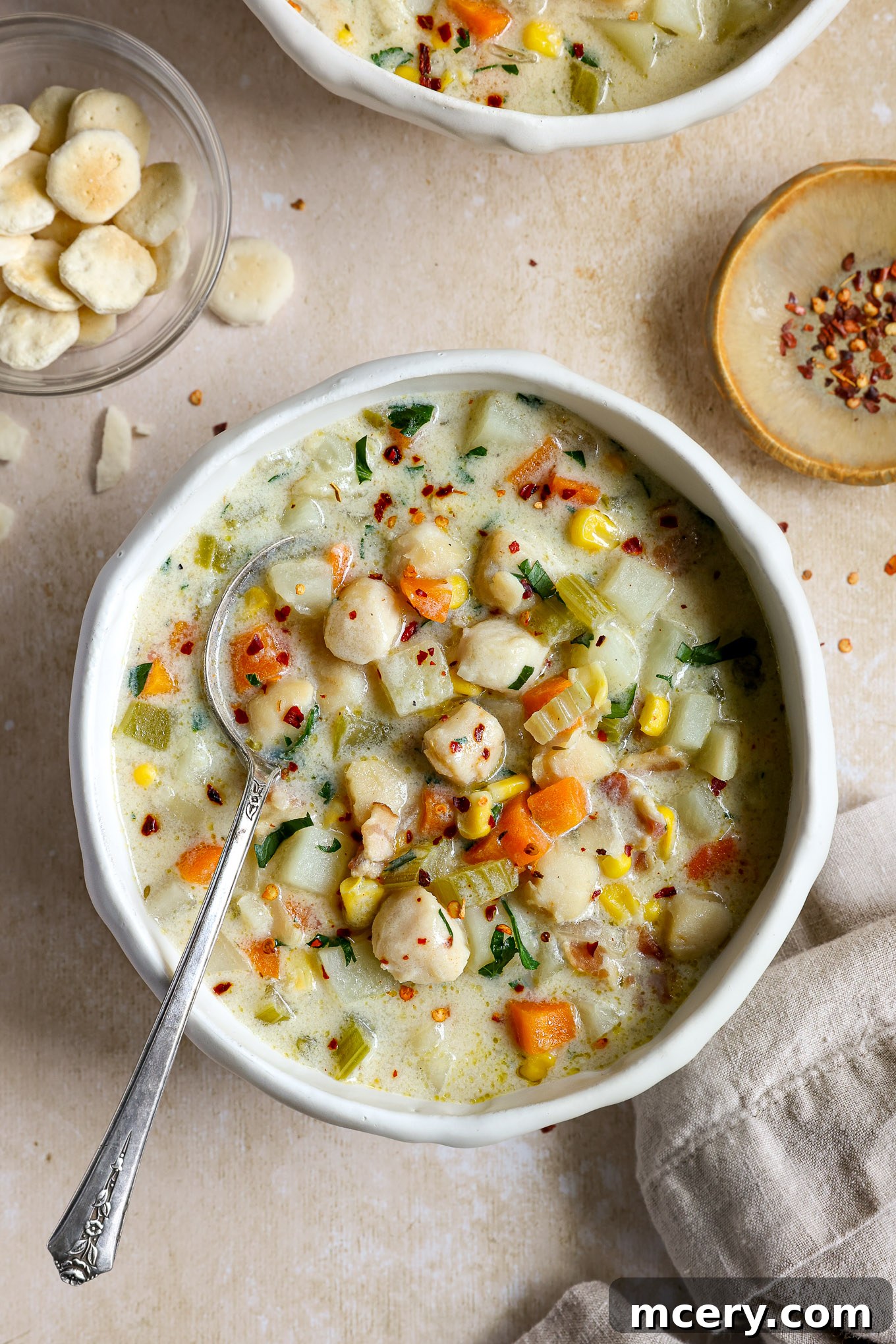
The Best Creamy Scallop Chowder with Bay Scallops, Bacon, and Corn
Indulge in a truly comforting and incredibly flavorful experience with this creamy scallop chowder recipe. Featuring tender bay scallops, smoky bacon, and sweet corn, this dish is not just a meal; it’s a culinary hug that has quickly become a reader favorite. If you’re seeking a hearty yet elegant seafood chowder, look no further. This recipe promises ease of preparation without compromising on rich, satisfying taste, making it perfect for any day of the week.
For more delightful chowder recipes, explore our Summer Corn Chowder or our savory Corn and Crab Chowder.
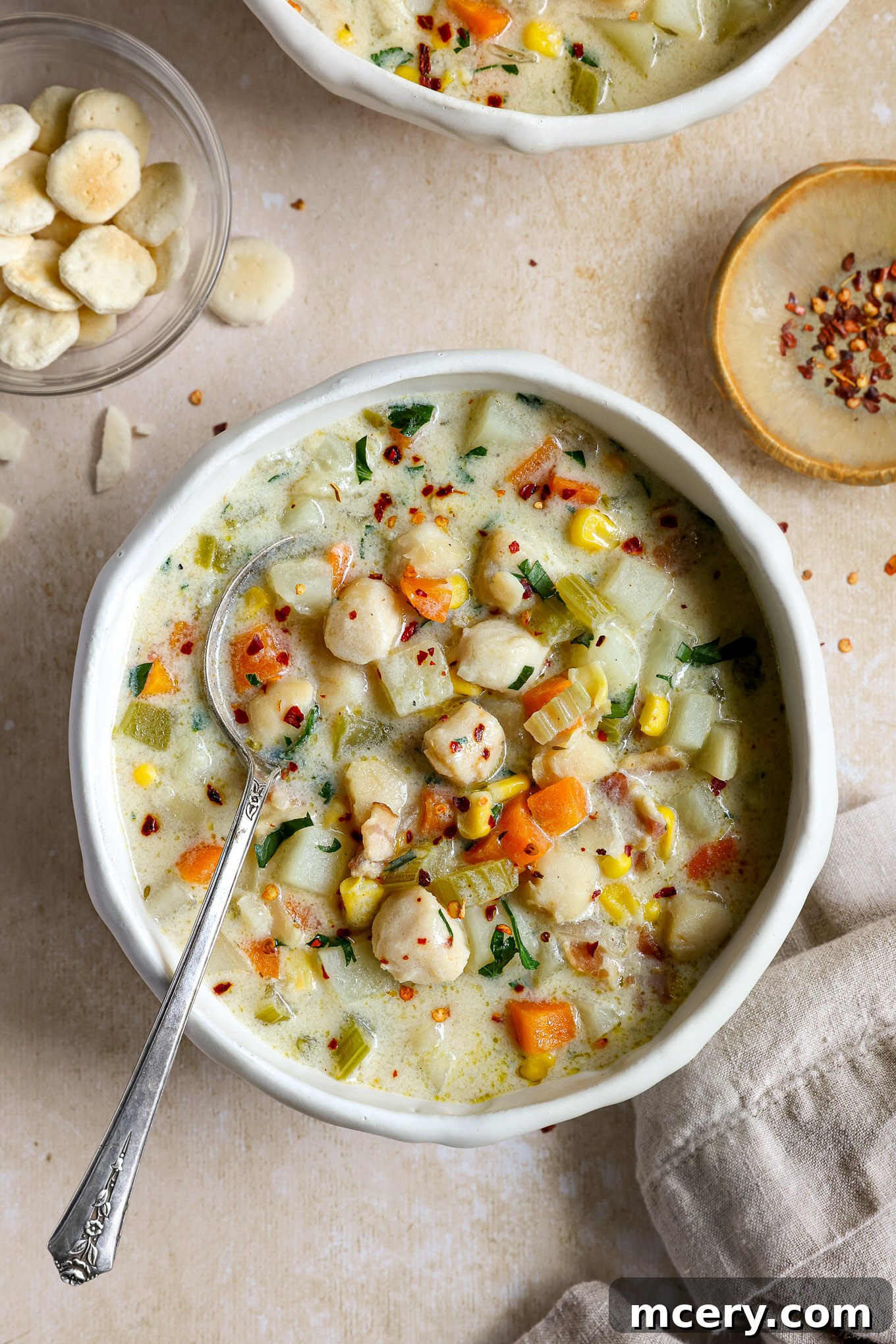
Why This Scallop Chowder is a Family Favorite
This isn’t just any chowder; it’s a recipe that consistently earns rave reviews from everyone, including the pickiest eaters in the family. It’s the kind of comforting meal that brings smiles to faces and requests for second helpings. A satisfied reader, Steve, perfectly captures its essence: “My wife and I make this all the time. It’s perfect. I like to wash my Scallops and then pat them completely dry. The salt and pepper them before throwing in the pot.” His tip about preparing the scallops is excellent advice for achieving optimal texture and flavor.
What makes this creamy scallop chowder truly special is its ability to deliver profound flavor with minimal fuss. It’s a convenient, one-pot wonder that you can effortlessly whip up, even on busy weeknights. Even children who typically shy away from seafood often find themselves asking for more of this delightful soup. It strikes the perfect balance with its medley of delicious, colorful vegetables, a velvety broth, and the naturally sweet bay scallops that elevate the dish to a divine experience.
Beyond its incredible taste, this chowder also offers an easy and enjoyable way to incorporate more wholesome vegetables into your diet. While it’s particularly cherished during the crisp days of fall and winter for its warming properties, it’s equally enjoyable in late summer when fresh, sweet corn is at its peak. Its versatility makes it a year-round contender for your dinner table.
Sea Scallops vs. Bay Scallops: Understanding Your Choices
Scallops are a beloved type of shellfish, highly prized for their tender, sweet meat. The succulent, white muscular tissue inside the shell is the part we savor. When shopping for scallops, you’ll primarily encounter two main varieties: sea scallops and bay scallops, each with distinct characteristics that make them suitable for different culinary applications.
Sea scallops are considerably larger, typically measuring 1.5 to 2 inches in diameter. They boast a firmer, chewier texture and a richer, more robust flavor. Due to their size, sea scallops are often pan-seared to achieve a beautiful golden crust while keeping their interior tender and moist. They are excellent for grilling, broiling, or as a standalone entrée.
Bay scallops, on the other hand, are much smaller, usually about half an inch wide, and are notably sweeter and more delicate in flavor and texture. Their diminutive size means they cook very quickly, making them ideal for dishes like chowders, pasta, stir-fries, or ceviche, where their sweetness can shine without being overwhelmed. In this scallop chowder recipe, we specifically use bay scallops for their tender bite and intense sweetness, which perfectly complements the creamy broth and other ingredients.
When selecting scallops, whether sea or bay, look for those that are plump, firm, and have a slightly translucent, off-white to light pinkish hue. Avoid scallops that appear dry, discolored, or have a strong “fishy” odor; they should smell fresh, like the ocean. Patting them dry before cooking, as our reader Steve suggested, is crucial for achieving the best texture and preventing them from steaming rather than searing or gently cooking in the chowder.
Essential Ingredients for a Delicious Scallop Chowder
The magic of this creamy scallop chowder lies in its carefully selected ingredients, each playing a vital role in creating a harmonious and deeply satisfying flavor profile. Here’s a closer look at what you’ll need and why these components are essential:
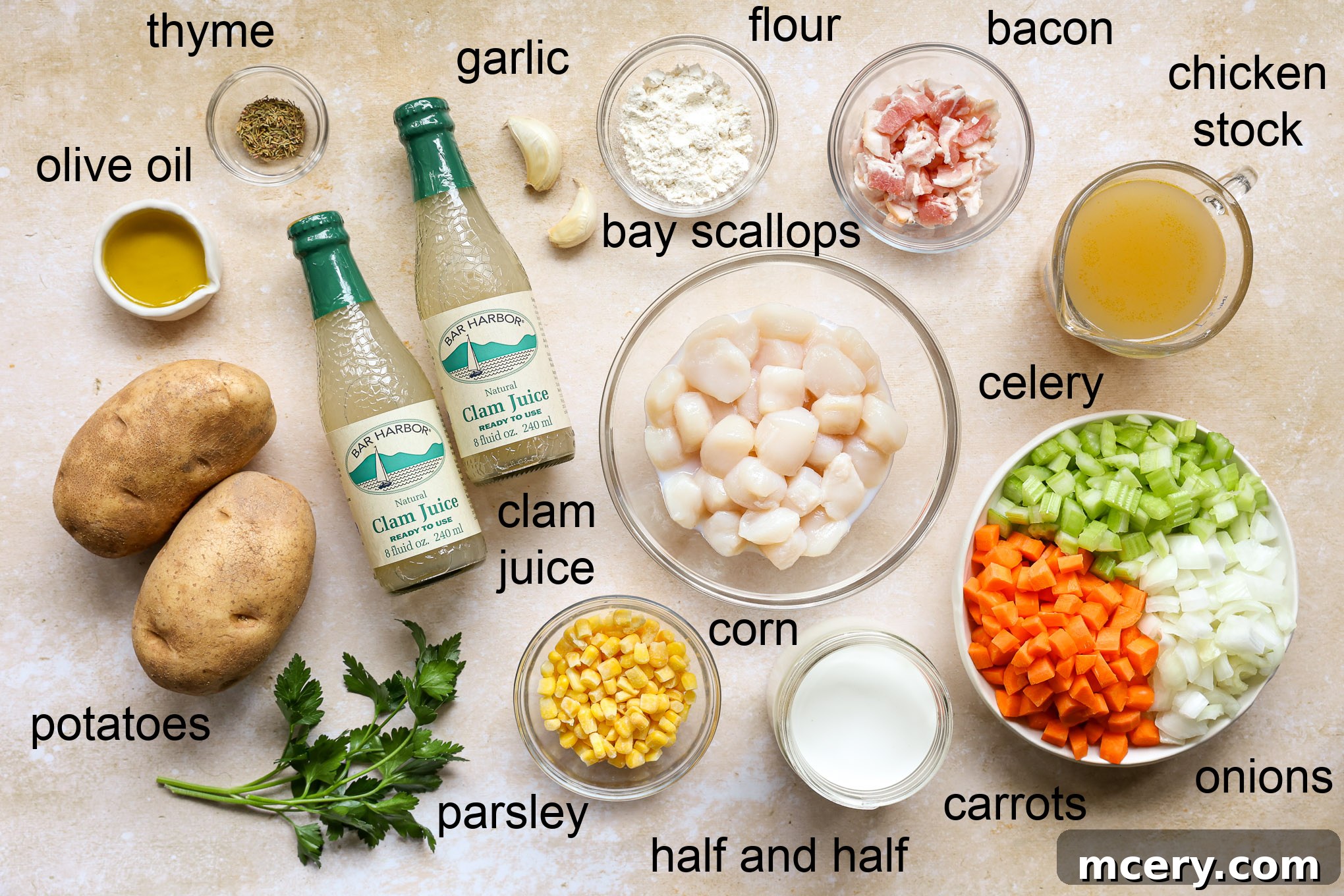
- Olive oil: Used for sautéing the vegetables, providing a healthy base. Avocado oil can be a great alternative if preferred.
- Bacon: This is a key ingredient, offering an irresistible smoky depth and savory richness to the chowder. The rendered bacon fat is also crucial for sautéing the mirepoix, adding another layer of flavor.
- Mirepoix (Onions, Celery, and Carrots): This aromatic trifecta forms the classic flavor foundation of many soups and stews. They soften and release their sweet, savory essence, building complexity in the broth.
- Garlic: Freshly minced garlic is non-negotiable here. It infuses the chowder with its pungent, aromatic notes that are far superior to pre-minced varieties.
- All-purpose flour: A small amount of flour is used to create a roux with the bacon fat and olive oil, thickening the chowder to its desired creamy consistency.
- Clam juice: This ingredient is a secret weapon for boosting the chowder’s authentic seafood flavor. It provides a robust marine taste and serves as an excellent substitute for more expensive seafood stock.
- Half & half: Essential for achieving the signature creamy texture and luxurious mouthfeel of a classic chowder. For those seeking non-dairy alternatives, we’ve provided detailed options below.
- Chicken stock: This forms the primary liquid base of the chowder, providing a savory backdrop that complements the seafood without overpowering it.
- Potatoes: Russet potatoes are ideal for this recipe due to their starchy texture, which helps thicken the chowder as they cook down and become wonderfully tender. Dice them evenly for consistent cooking.
- Bay scallops: The star of the show! These small, sweet scallops cook quickly and add a burst of delicate seafood flavor and tender texture to every spoonful.
- Thyme: Whether dried or fresh, thyme imparts an earthy, slightly minty, and subtly sweet aroma that pairs beautifully with both seafood and creamy bases.
- Fresh parsley: Added at the very end, fresh chopped parsley provides a vibrant, clean finish and a pop of color, lifting the overall flavor of the rich chowder.
- Optional: Sweet corn: Fresh corn kernels are highly recommended when in season for their natural sweetness and delightful texture, which beautifully complements the scallops and creamy broth. Frozen sweet corn also works perfectly out of season.
Tips for Crafting a Delicious Dairy-Free Scallop Chowder
For those with dietary restrictions or preferences, transforming this creamy scallop chowder into a dairy-free delight is entirely possible without sacrificing flavor or texture. The key lies in selecting the right non-dairy milk and making a few minor adjustments. Here’s a guide to help you create a rich, dairy-free version of this beloved recipe:
-
Choose the Right Non-Dairy Milk:
- Full-Fat Coconut Milk: This is a popular choice for chowders due to its natural creaminess and subtle sweetness. It can add a unique tropical undertone that complements seafood well. However, be mindful that its distinct coconut flavor might slightly alter the traditional chowder taste. Use full-fat canned coconut milk for the best richness.
- Unsweetened Oat Milk: Oat milk is an excellent contender because of its naturally creamy texture and mild, neutral flavor. It won’t overpower the delicate taste of the scallops or other ingredients, making it a versatile option for a dairy-free chowder. Ensure you choose an unsweetened variety to avoid unwanted sweetness.
- Unsweetened Cashew Milk: Cashew milk is another fantastic option known for its luxurious creaminess and subtly nutty flavor. It’s often richer than oat milk and works exceptionally well in savory, creamy dishes, providing a mouthfeel very similar to traditional dairy.
- Unsweetened Almond Milk: While widely available, almond milk tends to be thinner than other non-dairy options. If using, opt for an unsweetened, “extra creamy” variety if possible. You may need to use a bit more thickener to achieve the desired consistency. Be aware that it might not contribute the same richness as coconut or cashew milk.
-
Adjusting the Texture:
Non-dairy milks are generally thinner than half-and-half. To ensure your chowder retains its signature thickness, you might need an extra thickening agent. Create a slurry by whisking a tablespoon or two of cornstarch or all-purpose flour with a small amount of cold non-dairy milk (or water) until smooth. Stir this slurry into the simmering chowder during the final stages of cooking, allowing it to cook for a few minutes to thicken. You can adjust the amount based on your desired consistency.
-
Balancing the Flavor:
Since non-dairy milks can introduce different flavor notes, it’s important to taste and adjust your seasoning as you cook. You might find your dairy-free chowder benefits from a little extra salt, a dash of white pepper, or a squeeze of fresh lemon juice at the end. Lemon juice can brighten the flavors and balance any sweetness from coconut milk or nutty notes from cashew milk, ensuring the scallops remain the star.
Step-by-Step Guide: How to Make Scallop Chowder
Creating this delicious scallop chowder is a straightforward process that yields incredibly flavorful results. Follow these simple steps for a perfect pot of creamy comfort:
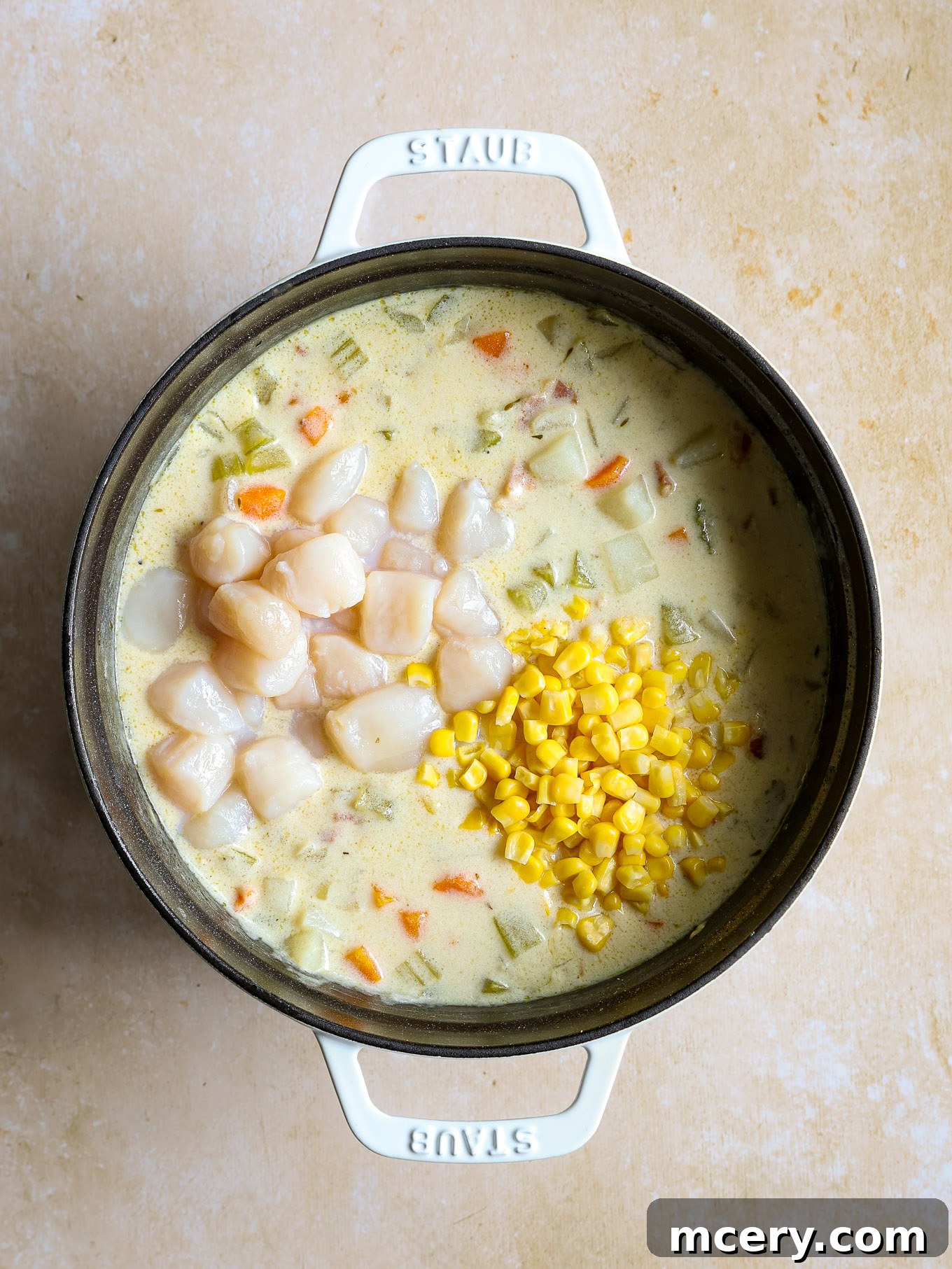
Expert Tip: How to Tell if Scallops are Perfectly Cooked
Achieving perfectly cooked scallops is crucial for their delicate texture and sweet flavor. Overcooked scallops can quickly become tough and rubbery, detracting from the entire dish. There are two simple visual cues to help you determine if your scallops are done just right:
- Opaque Appearance: Raw scallops are somewhat translucent. As they cook, their flesh will turn opaque all the way through. Cut one scallop in half to check its center if you’re unsure.
- Flake Easily: When cooked, scallops should be tender enough to break apart easily with a fork. They should not resist, nor should they be mushy.
Remember, bay scallops cook very quickly due to their small size, typically requiring only 3-4 minutes in a hot chowder. Watch them closely and remove from heat as soon as they reach the opaque and tender stage.
Delicious Ways to Serve Your Scallop Chowder
This creamy scallop chowder is a satisfying meal on its own, but pairing it with the right accompaniments can elevate the dining experience even further. Here are some fantastic side dishes that complement its rich flavors beautifully:
- Cheddar Jalapeño Biscuits: The cheesy, slightly spicy kick of these biscuits offers a wonderful contrast to the chowder’s creaminess.
- Crusty Bread or Oyster Crackers: A classic pairing! A warm, crusty baguette is perfect for soaking up every last drop of the savory broth, while oyster crackers add a delightful crunch.
- Cheese Popovers: Light, airy, and cheesy, popovers are an elegant and delicious choice that pairs wonderfully with any creamy soup.
- Kale Caesar Salad: A crisp, fresh salad provides a refreshing counterpoint to the richness of the chowder, balancing the meal.
- All Veggie Sandwich: A light, flavorful vegetable sandwich can be a great addition for a more substantial lunch or dinner.
- Artichoke Tomato Spinach Flatbread: A savory flatbread makes a fantastic dipper and adds another layer of flavor and texture to your meal.
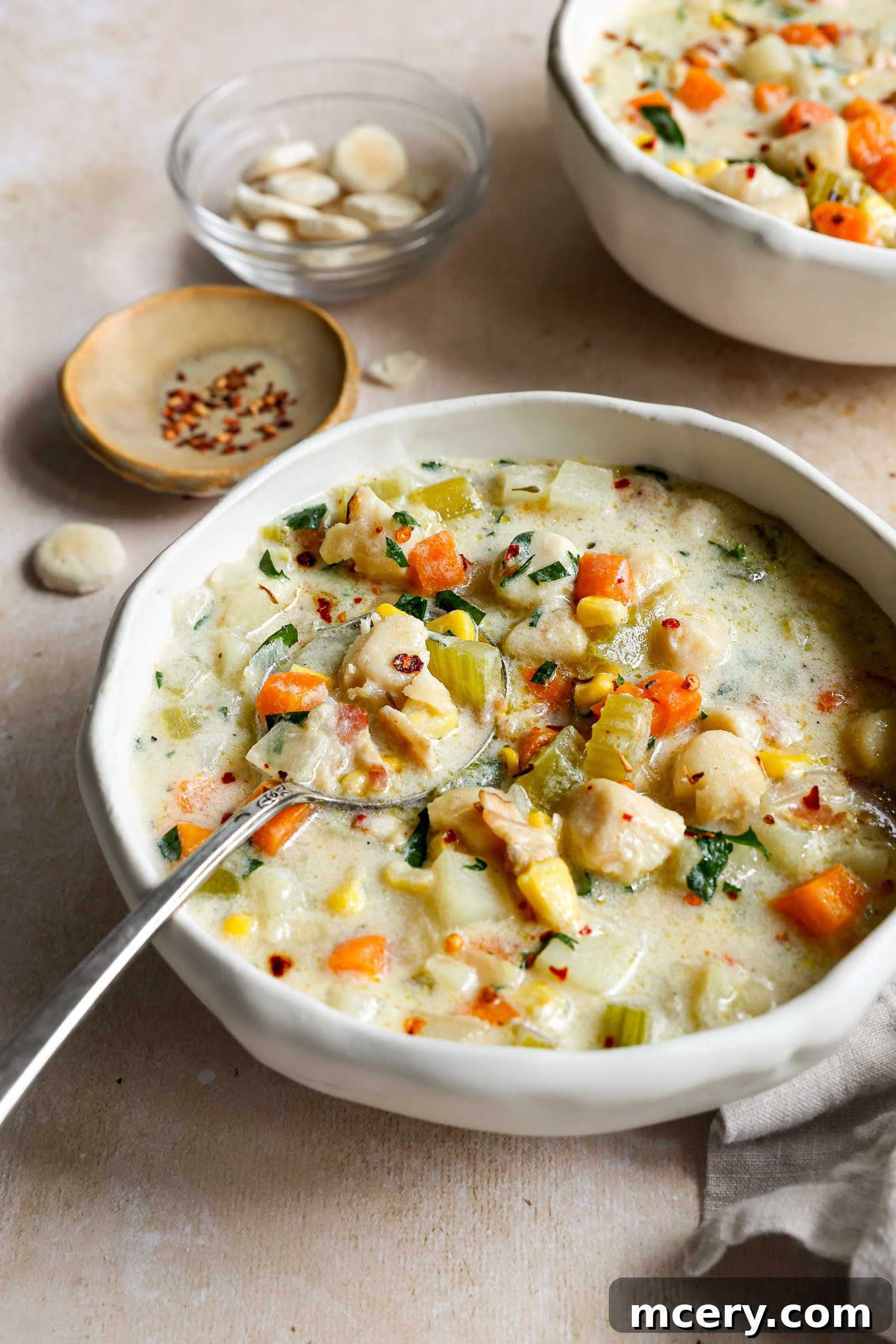
Storage and Reheating Tips for Scallop Chowder
While this scallop chowder is best enjoyed fresh, you might find yourself with delicious leftovers. Here’s how to store and reheat it to maintain its quality:
- Refrigeration: Allow the chowder to cool completely before transferring it to an airtight container. It can be stored in the refrigerator for up to 2-3 days.
- Freezing: Freezing dairy-based soups can sometimes alter their texture upon thawing, making them slightly grainy. If you plan to freeze, it’s best to freeze the chowder *before* adding the half & half. You can then add the cream when reheating. If you freeze the chowder with the dairy, thaw it slowly in the refrigerator overnight.
- Reheating: Gently reheat the chowder on the stovetop over low heat, stirring frequently. Avoid boiling, as high heat can cause the dairy to separate and the scallops to become rubbery. If it’s too thick, add a splash of milk, chicken stock, or clam juice to reach your desired consistency.
Frequently Asked Questions About Scallop Chowder
Can I use sea scallops instead of bay scallops?
While this recipe is optimized for bay scallops due to their sweetness and quick cooking time, you can use sea scallops. If you do, slice them into smaller, bite-sized pieces to ensure they cook evenly and integrate well into the chowder’s texture. Be extra careful not to overcook them, as they tend to become tougher if cooked for too long.
What if I don’t have clam juice?
Clam juice provides a unique depth of seafood flavor. If you don’t have it, you can substitute an equal amount of seafood stock or even vegetable stock. While the flavor profile will be slightly different, it will still yield a delicious chowder.
Can I add other vegetables?
Absolutely! This chowder is quite versatile. Feel free to add other quick-cooking vegetables like diced bell peppers, green beans, or even spinach in the last few minutes of cooking for added nutrition and flavor. Adjust seasonings as needed.
Can I make this spicier?
If you enjoy a bit of heat, you can add a pinch of cayenne pepper or a dash of hot sauce along with the other seasonings. A sprinkle of red pepper flakes when serving can also add a nice kick.
Is this chowder gluten-free?
As written, this recipe uses all-purpose flour for thickening. To make it gluten-free, substitute the all-purpose flour with a gluten-free all-purpose flour blend (one designed for thickening) or use cornstarch (as suggested in the dairy-free tips) to create a slurry for thickening. Ensure all other ingredients are naturally gluten-free.
Scallop Chowder Recipe
Rated 5 out of 5 stars from 15 reviews.
- Author: Katya
- Prep Time: 15 min
- Cook Time: 40 min
- Total Time: 55 minutes
- Yield: 6 servings
- Category: Soup
- Method: Simmer
- Cuisine: American
Description
Creamy vegetable chowder featuring tender scallops, smoky bacon, and sweet corn. This scallop chowder is the perfect choice when you crave a comforting, satisfying, and quick meal!
Ingredients
- 2 Tbsp. olive oil
- 2 slices bacon, chopped
- 1 cup each – diced onions, celery, carrots
- 2 garlic cloves, minced
- ½ tsp. dried thyme (or 2 tsp. fresh thyme)
- 2 Tbsp. all-purpose flour
- 1 cup chicken stock or seafood stock
- 1 lb. russet potatoes, peeled and diced ¾-inch
- 2 (8 oz.) bottles clam juice
- 1 cup half and half
- 1 lb. bay scallops
- Fresh parsley, chopped
- Kosher salt and fresh black pepper, to taste
- Optional: ½ cup frozen sweet corn
Instructions
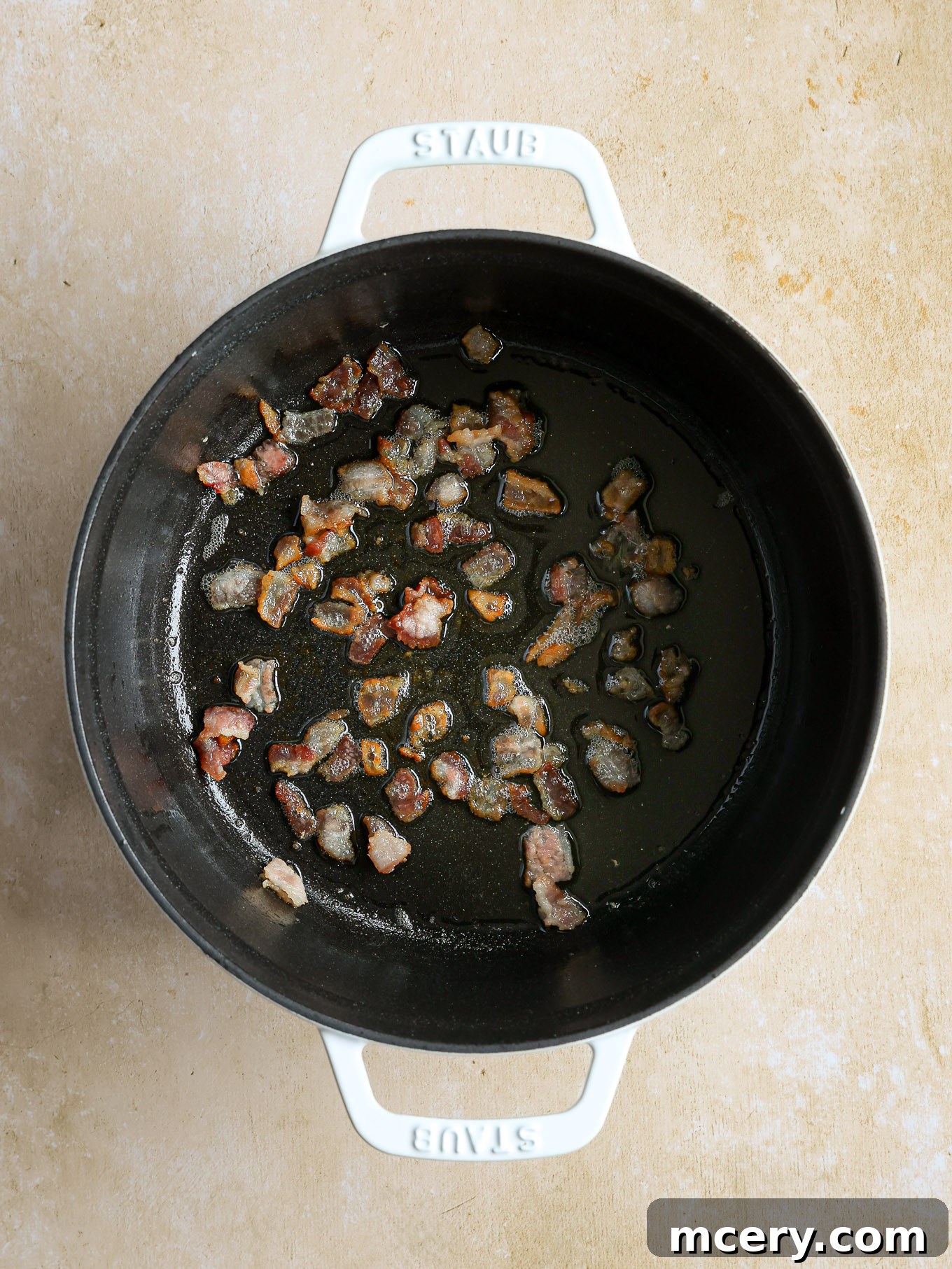
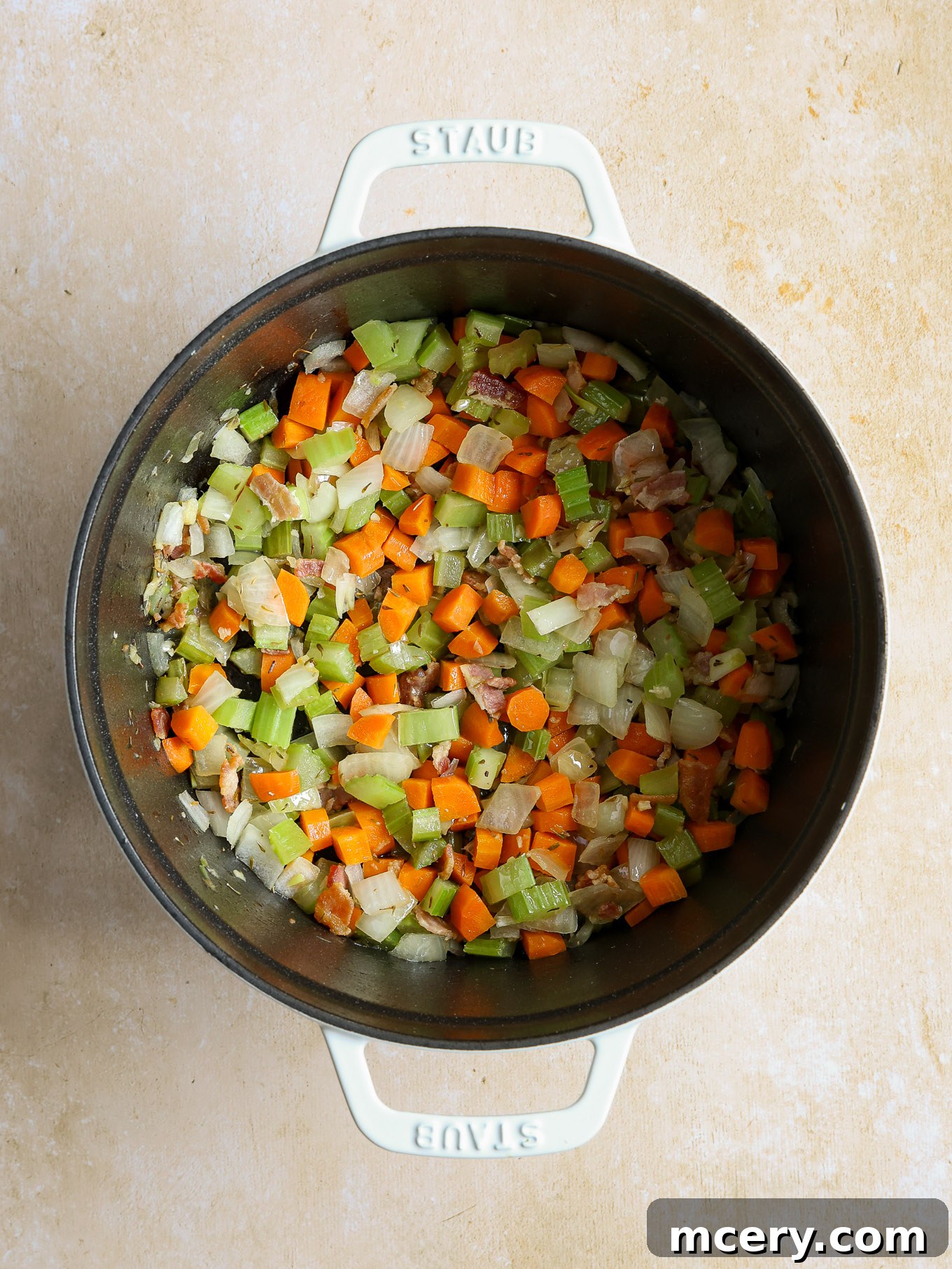
- In a large Dutch oven, heat olive oil over medium heat. Add bacon and cook until crispy, about 5 minutes. Do not pour off any of the fat.
- Add onions, celery, carrots, garlic, thyme, and a few pinches of salt. Cook the vegetables until soft, stirring occasionally, about 5 minutes.
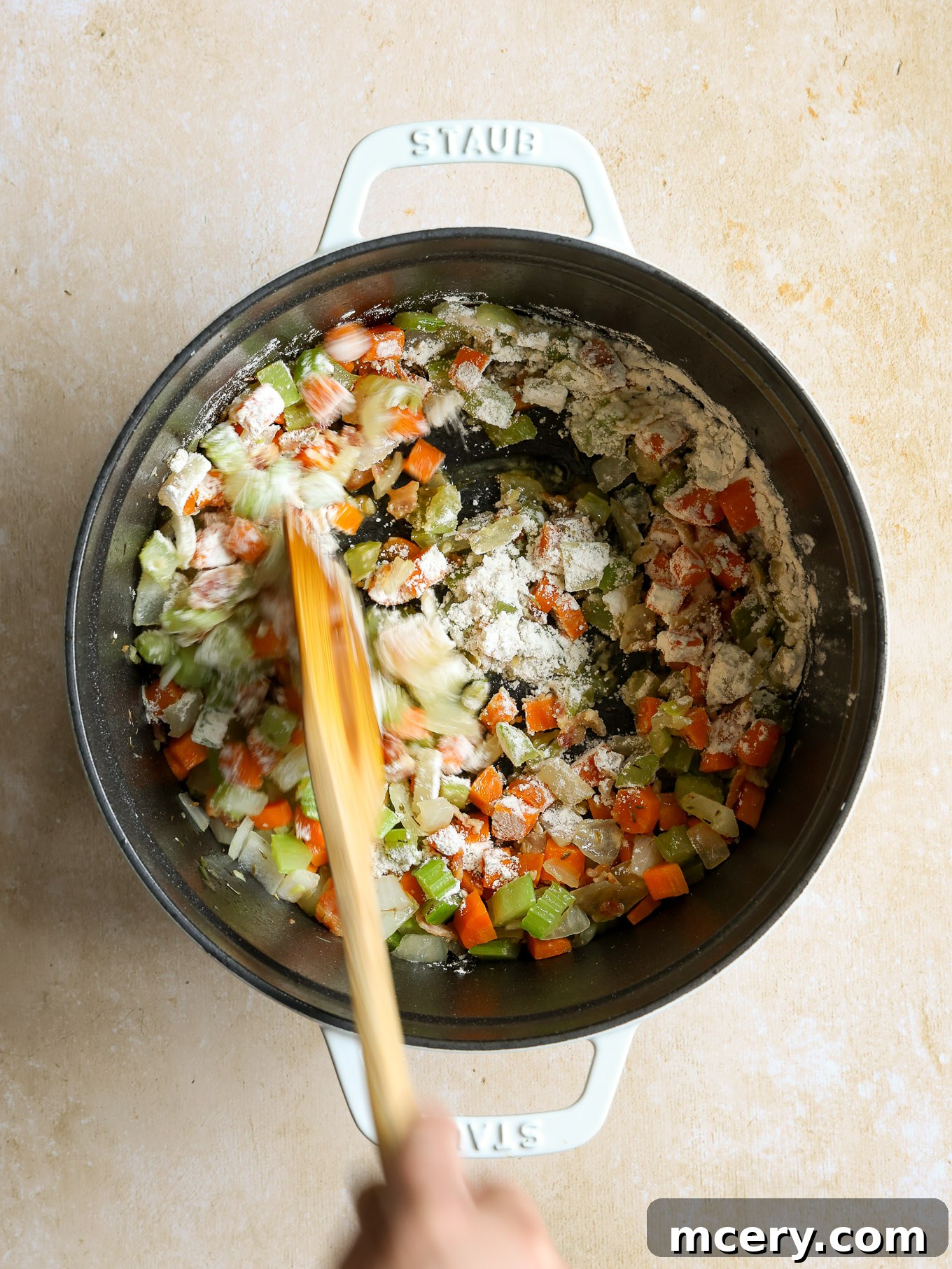
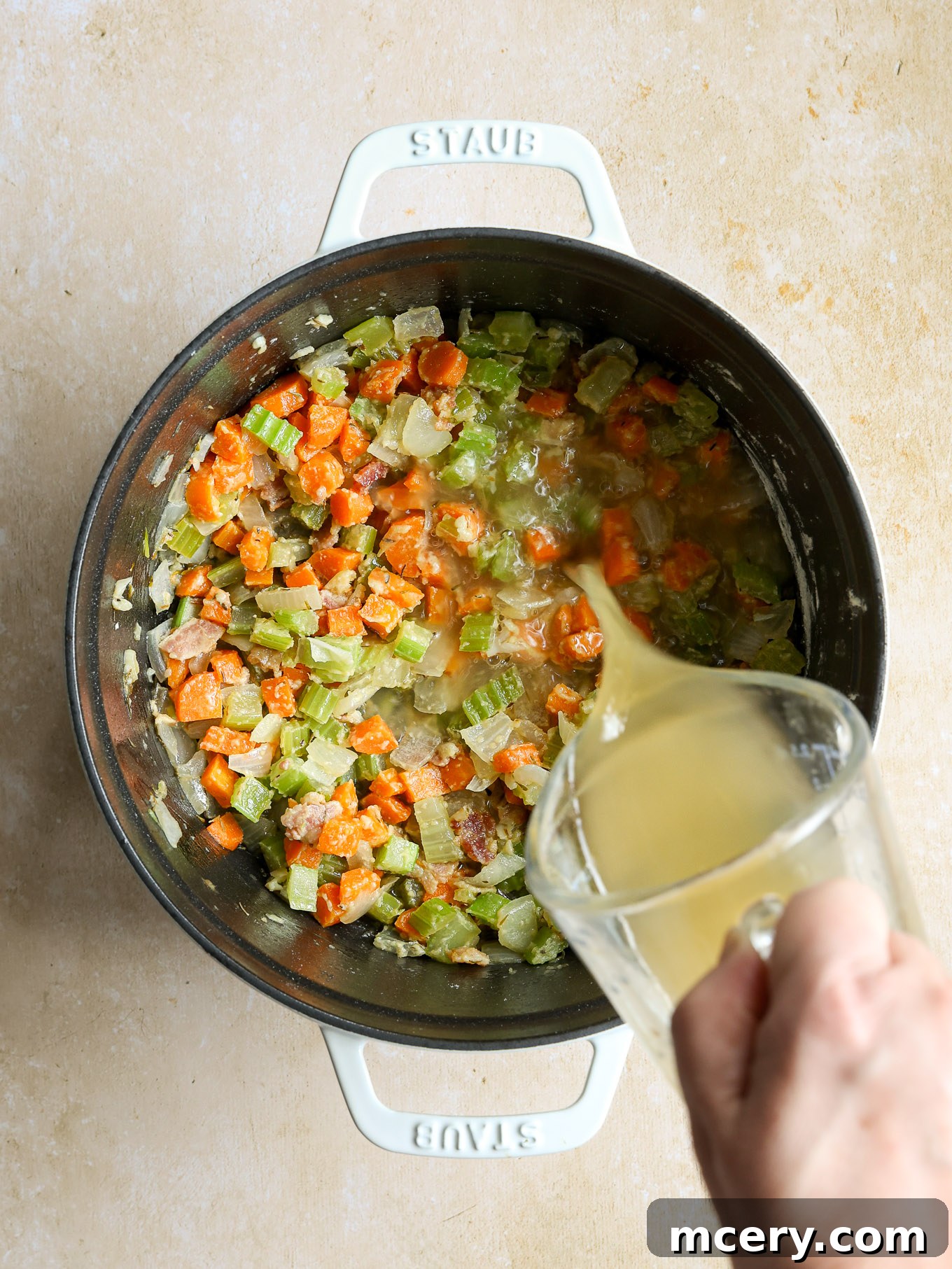
- Stir in flour and cook for about 1 minute. Add stock and bring to a quick simmer. The mixture will slightly thicken.
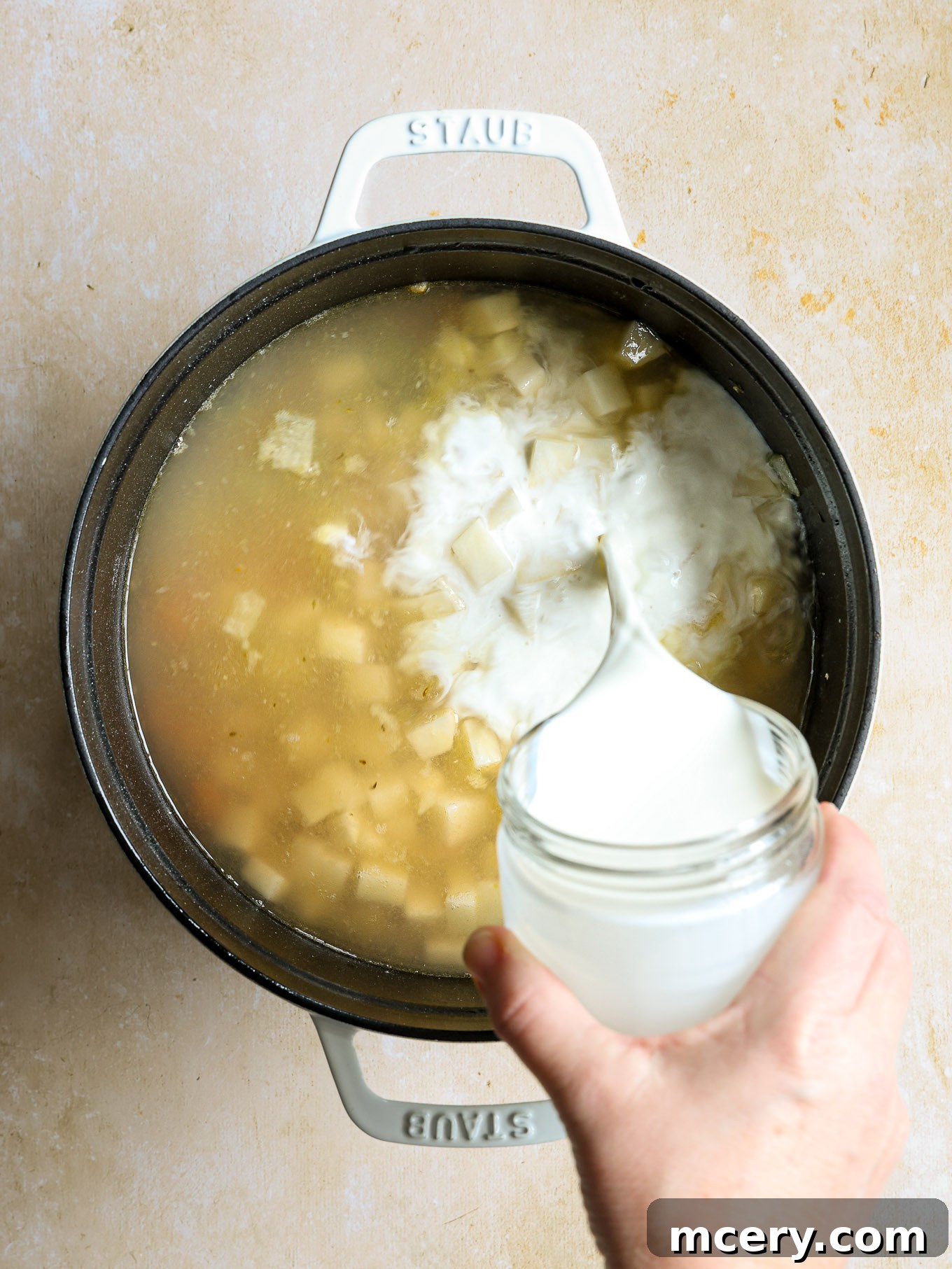
- Add potatoes, clam juice, and half and half. Season with salt and pepper, to taste. Bring the mixture to a simmer, reduce heat to medium-low, and cook, partially covered, for 15-20 minutes, or until the potatoes are tender.
- Stir in scallops and corn (optional). Cook until the scallops are tender, about 3-4 minutes. Taste the chowder for salt before adding the scallops. Stir in parsley before serving.
Notes
- You can substitute equal parts of chicken or seafood stock for clam juice.
- Bay scallops can often be found in the frozen seafood section of your grocery store. You can use frozen or thawed/fresh scallops; the cooking time remains roughly the same.
- Corn adds a delicate sweetness and texture to the chowder. It is highly recommended!
Nutrition
- Serving Size: 1/6th of recipe
- Calories: 354
- Sugar: 10 g
- Sodium: 963.7 mg
- Fat: 10.6 g
- Carbohydrates: 44 g
- Protein: 22.5 g
- Cholesterol: 40.3 mg
This scallop chowder recipe was originally published in February 2019 and has since been updated with additional information for clarity and enhanced user experience. The original recipe method and ingredients remain unchanged.
More Delicious Seafood Recipes
You May Also Like…
If you try our scallop chowder, please leave a star rating and a comment letting us know how you like the recipe. Your feedback is greatly appreciated!