
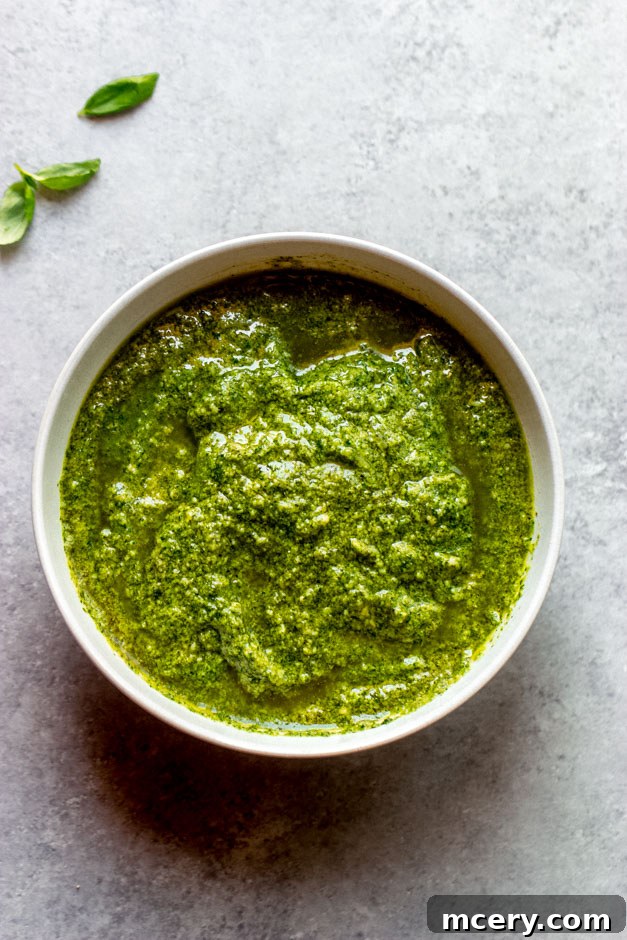
Transform your everyday meals with the vibrant, fresh taste of this incredibly easy homemade basil pesto. In just 5 minutes, you can whip up a batch of this versatile and aromatic sauce, ready to elevate everything from grilled chicken and comforting pasta dishes to crisp salads and elegant appetizers. Forget the often dull and artificial flavors of store-bought varieties; once you experience the bright, herbaceous, and robust taste of freshly made pesto, you’ll wonder why you ever settled for anything less!
For more delicious homemade sauce inspiration that will add a gourmet touch to your cooking, be sure to explore our incredibly fresh and zesty chimichurri sauce. It’s another fantastic, quick-to-make condiment that will boost the flavor of your favorite meats and vegetables.
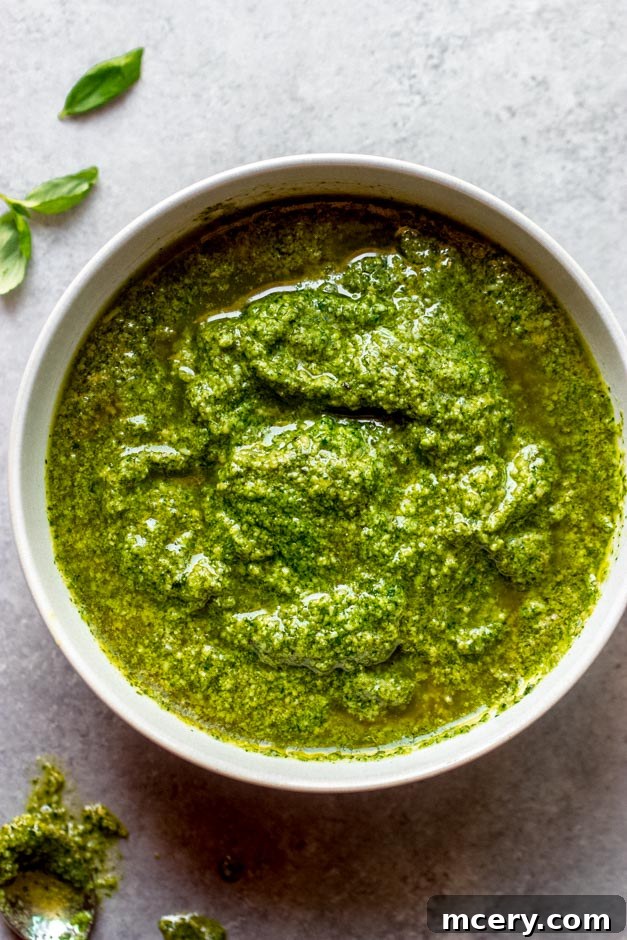
Why This Simple Basil Pesto Recipe is a Culinary Game-Changer
For many years, my kitchen has been completely free of any store-bought pesto, and I can confidently assure you that once you try this incredible homemade basil pesto recipe, yours will be too! This isn’t just an easy recipe; it’s a true revelation for home cooks. I make it a point to always keep a fresh batch on hand because its vibrant, aromatic flavor instantly elevates such a wide array of dishes – from simple grilled chicken and comforting pasta to crisp green salads and even sophisticated appetizers. It’s a foundational staple that never ceases to impress with its fresh appeal and delicious complexity.
The true beauty and appeal of this particular recipe lie in its astonishing simplicity and remarkable speed. You only need a handful of fresh, high-quality ingredients and a mere five minutes of your time to create a rich, aromatic sauce that is absolutely bursting with unparalleled flavor. With this recipe in your arsenal, you can confidently say goodbye to bland, boring, or uninspired meals forever. What’s more, even my pickiest eaters – my own children – eagerly ask for this homemade pesto over other dressings or sauces, which I consider to be the ultimate testament to its utterly irresistible taste and broad appeal!
This simple, virtually foolproof pesto recipe is a no-brainer for anyone looking to effortlessly add a touch of gourmet freshness and authentic Italian flavor to their everyday cooking. It’s designed to be a permanent and beloved fixture in your refrigerator, always ready to transform any meal into something special. Its consistent five-star rating isn’t just an arbitrary number; it’s a clear reflection of its unparalleled taste, the sheer ease of its preparation, and the incredible versatility that countless home cooks have come to love, rely on, and rave about worldwide.
Whether you are a novice in the kitchen, just starting your journey into making sauces from scratch, or a seasoned chef with years of experience, this basil pesto will quickly ascend to the top of your list of go-to recipes. It’s far more than just a simple condiment; it’s a powerful flavor enhancer, a convenient shortcut to deliciousness, and a healthy, wholesome addition to almost any dish you can imagine. Throughout this article, we will meticulously delve into the classic ingredients, provide clear, step-by-step instructions for preparation, explore exciting and creative variations, and share countless innovative ways to seamlessly incorporate this magnificent homemade sauce into your culinary repertoire, making every meal a celebration of flavor.
Homemade Pesto Ingredients: The Foundation of Fresh Flavor
The secret to crafting truly exceptional basil pesto lies fundamentally in using the freshest, highest-quality ingredients available. While many people instinctively associate pesto with the warmth and abundance of summer, it is absolutely possible to make this incredibly delicious and vibrant sauce year-round, provided you have consistent access to bright, fragrant, and fresh basil. Here’s a detailed look at what you’ll need for this classic Italian sauce, along with tips for selecting the best:
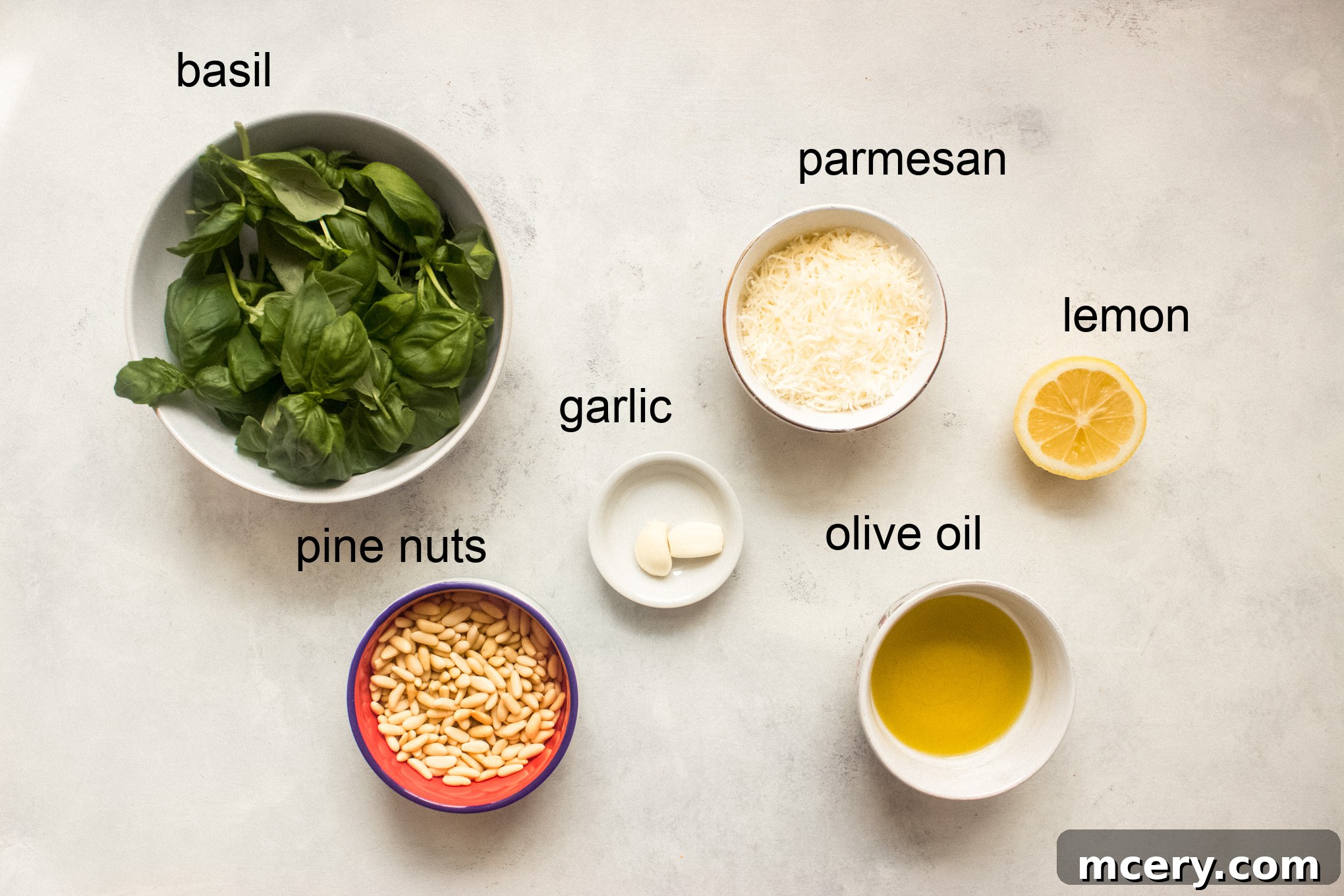
- Fresh Basil: This verdant herb is undeniably the star of our pesto. When selecting basil, always aim for leaves that are bright green, unblemished, and highly fragrant. Sweet basil is the most commonly used and recommended variety for traditional pesto due to its balanced, aromatic flavor. Using freshly picked basil ensures not only the most vibrant color but also the most intense, authentic flavor profile in your final sauce.
- Pine Nuts: These delicate nuts contribute a subtle yet essential creaminess and a distinct nutty depth that truly defines classic pesto. For an even richer and more pronounced flavor, I highly recommend lightly toasting them in a dry pan over medium heat for a few minutes until they are golden brown and fragrant. This simple step significantly enhances their natural sweetness and aromatic qualities.
- Parmesan Cheese: Freshly grated Parmesan cheese (ideally Parmigiano-Reggiano, the king of cheeses) is absolutely essential for an authentic and delicious pesto. Its unique salty, savory, and umami notes complement the fresh basil beautifully, adding complexity and depth. Please avoid pre-grated varieties, as these often contain anti-caking agents that can affect both the texture and the pure, rich flavor of your homemade pesto.
- Garlic: A single clove (or perhaps two, if you are a true garlic enthusiast and enjoy a bolder flavor!) provides a pungent, aromatic kick that is a hallmark of classic pesto. Feel free to adjust the amount of garlic to perfectly suit your personal taste preferences.
- Extra Virgin Olive Oil: The choice of olive oil is paramount, as it forms the foundational base of the sauce, beautifully binding all the ingredients together and contributing significantly to its luscious, smooth texture. Always choose a good quality, preferably mild, extra virgin olive oil. A high-quality oil will make a noticeable and positive difference in the overall flavor profile of your finished pesto.
- Lemon Juice: While many highly traditional pesto recipes might omit lemon juice, I personally find that a touch of fresh lemon juice is a genuine game-changer. It expertly cuts through the inherent richness and heaviness of the garlic and Parmesan, brightening all the flavors and preventing the pesto from feeling overly dense or oily. It imparts a wonderful, refreshing zing that truly makes the pesto sing with freshness and vitality!
- Kosher Salt and Freshly Ground Black Pepper: These fundamental seasonings are added to taste and are crucial for enhancing and perfectly balancing all the ingredients, ensuring they contribute their best qualities to the harmonious blend of flavors.
By meticulously ensuring that each and every ingredient you use is of the absolute best possible quality, you will directly translate that care into the most delicious, authentic, and memorable homemade basil pesto you have ever had the pleasure of tasting. Remember, when it comes to pesto, the fresher the ingredients, the superior the final result!
How to Make the Best Basil Pesto in Just 5 Minutes: A Step-by-Step Guide
Creating homemade basil pesto is a surprisingly simple and gratifying culinary endeavor, especially when you are equipped with the right kitchen tools. For this recipe, I wholeheartedly recommend utilizing a food processor; it genuinely transforms the entire process into an incredibly speedy 5-minute affair, consistently yielding a perfectly textured, vibrant pesto every single time. While a high-speed blender can certainly get the job done, it might demand a bit more effort in terms of frequent scraping down of the sides to achieve the desired smooth yet slightly textured consistency. If you happen to possess both appliances, always opt for the food processor for maximum ease, efficiency, and optimal results.
Detailed Step-by-Step Instructions:
Step 1: Combine the Dry Ingredients and Pulse for Mincing
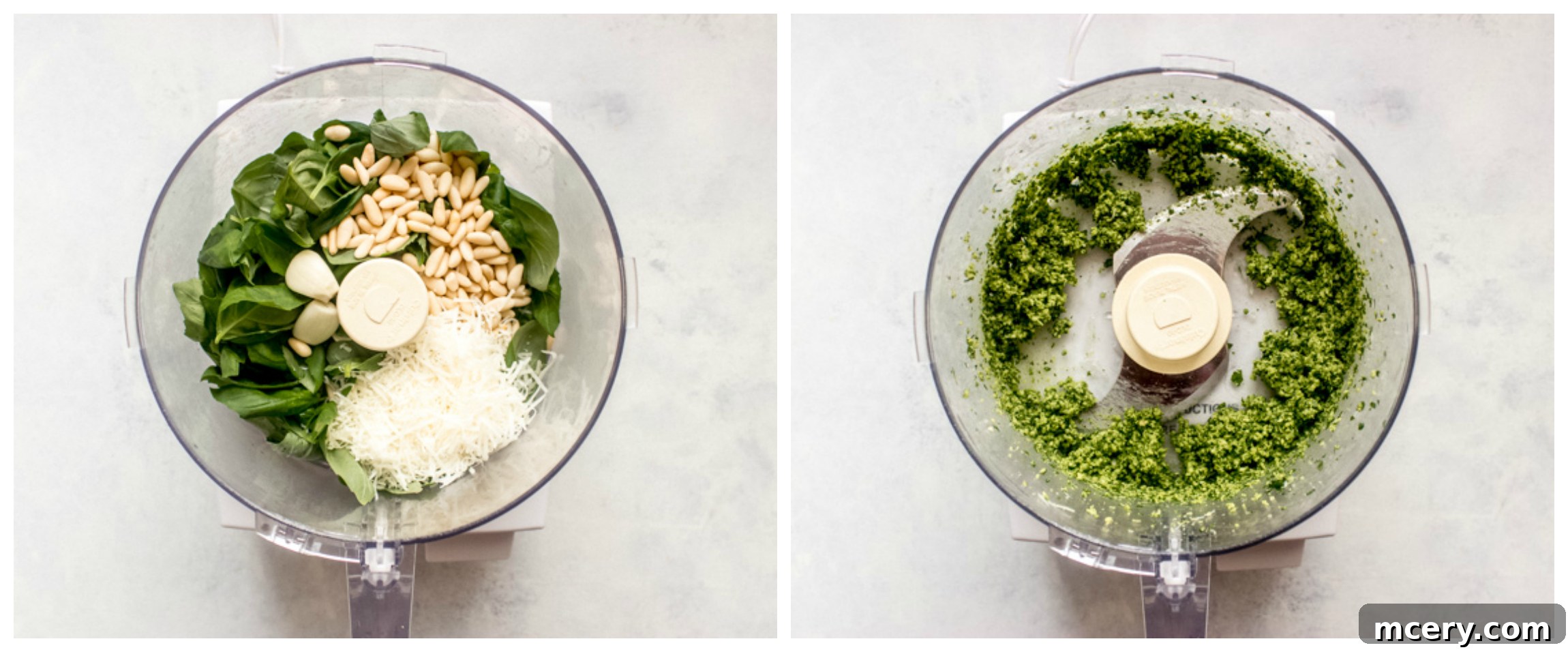
Begin by adding all the solid, foundational ingredients into the bowl of your food processor. This includes the fresh basil leaves (ensure they are thoroughly dry), the delightfully toasted pine nuts, the freshly grated Parmesan cheese, the peeled garlic clove, and the refreshing fresh lemon juice. Once all these components are in, secure the lid firmly and pulse the mixture several times in short bursts. The primary objective at this stage is to finely mince all the solid ingredients without over-processing them into an overly smooth paste. You are aiming for a coarse, somewhat chunky texture that still has visible flecks of basil and nuts. Throughout this initial pulsing, remember to stop periodically and meticulously scrape down the sides of the food processor bowl with a spoon or a small rubber spatula. This crucial step ensures that all ingredients are evenly processed and incorporated before the addition of the oil.
Step 2: Slowly Emulsify with High-Quality Olive Oil
Once your solid ingredients have reached that finely minced, coarse texture, turn the food processor on to a continuous setting. While it’s running, begin to slowly drizzle in the extra virgin olive oil through the feed tube in a steady, thin, and continuous stream. This slow and controlled addition of oil is absolutely critical for properly emulsifying the olive oil with the other ingredients. This emulsification process is what creates that signature luscious, creamy, and beautifully smooth pesto texture we all love. Continue processing until the pesto reaches your desired consistency – it should be smooth but still possess a delightful, subtle texture from the basil and nuts. Again, do not hesitate to scrape down the sides of the bowl as needed to ensure that all ingredients are thoroughly and evenly incorporated into the growing sauce. It is paramount to avoid over-processing at this stage, as excessive blending can generate unwanted heat. This heat can cause the delicate basil to oxidize rapidly and turn an unappetizing brown, or even impart a bitter taste to your otherwise perfect pesto. Blend just enough to achieve that perfect balance of smoothness and texture.
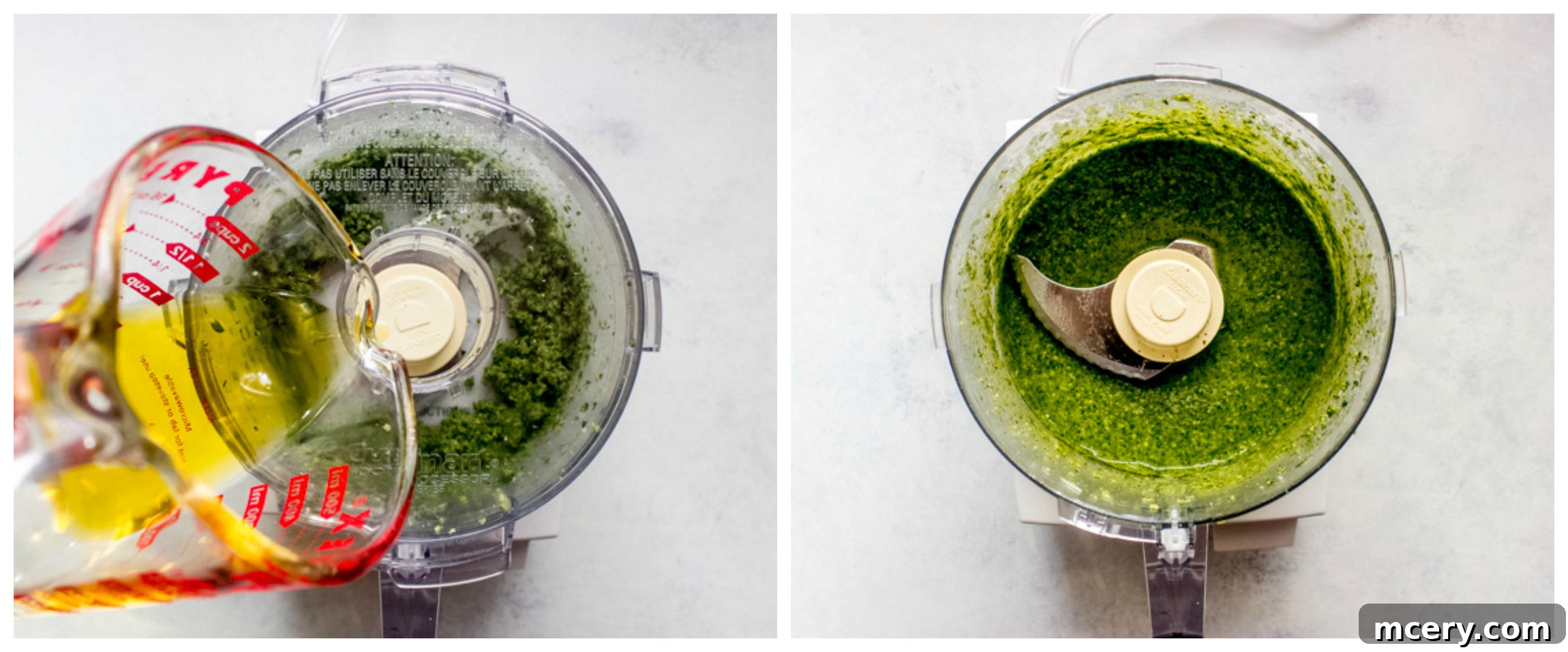
Step 3: Season to Perfection and Serve
Now comes the most satisfying part: tasting your freshly made basil pesto! Remove the lid and take a small spoonful to assess the flavor. Season generously with kosher salt and freshly ground black pepper according to your personal preference. Remember that Parmesan cheese is already inherently salty, so it’s always best to add salt incrementally, tasting as you go, until the flavor is perfectly balanced and harmonious. Your homemade pesto is now officially ready to be enjoyed immediately! This recipe typically yields around ⅔ cups of incredibly vibrant, aromatic, and flavorful pesto. It’s absolutely perfect for slathering generously on warm, crusty bread, tossing with your favorite hot pasta, or stirring into hearty soups and stews for an instant flavor boost. If you don’t plan on using the entire batch right away, be sure to follow our comprehensive storage tips outlined below to keep it exceptionally fresh and vibrant for longer.
Easy Pesto Recipe Variations: Unleash Your Culinary Creativity
The culinary marvel of pesto truly extends far beyond the traditional combination of basil and Parmesan. This basic, brilliant formula is incredibly adaptable and remarkably forgiving, actively inviting you to experiment with a vast array of different greens, nuts, and cheeses to craft truly unique and exciting flavor profiles. Don’t feel confined by the classic Italian recipe; instead, feel empowered to think creatively outside the box and customize your easy pesto recipe to perfectly suit your personal taste preferences, dietary needs, or simply whatever fresh ingredients you happen to have readily available in your kitchen. Here are some inspiring and fun ways to brilliantly change up your homemade pesto:
- Creative Herb & Green Swaps for Basil:
While basil is iconic, many other fresh, tender greens can create fantastic pestos.
- Arugula Pesto: For those who appreciate a peppery, slightly bitter, and wonderfully spicy kick, try using fresh arugula instead of basil, or consider a delightful half-and-half mix for a balanced flavor.
- Parsley Pesto: This offers a distinctly fresh, clean, and wonderfully herbaceous flavor that pairs exceptionally well with delicate fish dishes or hearty roasted vegetables.
- Mint Pesto: Surprisingly refreshing and incredibly bright, mint pesto is an excellent choice for pairing with lamb, or as an invigorating salad dressing that awakens the palate.
- Cilantro Pesto: A truly fantastic and bold option for infusing Mexican or vibrant Asian-inspired dishes with flavor, especially when enhanced with a squeeze of fresh lime juice instead of lemon.
- Spinach or Kale Pesto: For a milder, incredibly nutrient-packed, and slightly earthy version, blend fresh spinach or thoroughly destemmed kale. Briefly blanching the kale beforehand can significantly help with achieving a more tender and smooth texture.
- Mixed Herb Pesto: Unleash your inner chef by combining basil with other tender, aromatic herbs like fragrant dill, zesty chives, or elegant tarragon to create incredibly complex and nuanced flavor profiles.
- Delicious Nut & Seed Alternatives for Pine Nuts:
Toasted nuts and seeds are absolutely crucial for contributing both essential texture and deep flavor to your pesto. Always remember to lightly toast them beforehand for the absolute best results, whether you purchase them pre-roasted or take a few minutes to toast them yourself in a dry pan.
- Walnut Pesto: A widely popular and classic alternative that imparts a robust, earthy, and slightly bitter flavor, pairing wonderfully with bolder dishes.
- Almond Pesto: Creates a delightful pesto with a slightly sweeter, milder, and more delicate nutty taste.
- Pistachio Pesto: For a truly unique, subtly exotic, and visually stunning vibrant green hue, pistachio pesto is an excellent choice.
- Cashew Pesto: Delivers an exceptionally creamy, subtle nuttiness that works well in a variety of applications.
- Pumpkin Seed (Pepita) Pesto: An excellent nut-free option, offering a distinct earthy and slightly crunchy taste that’s both healthy and delicious.
- Sunflower Seed Pesto: Another superb nut-free choice, providing a mild, buttery flavor and a satisfying texture.
- Exciting Cheese Substitutions for Parmesan Cheese:
When selecting cheese for pesto, hard, salty, and aged varieties consistently work best, providing essential depth, umami, and savory notes that elevate the sauce.
- Pecorino Romano: Made from sheep’s milk, this cheese is typically saltier and tangier than Parmesan, adding a sharper, more assertive bite to your pesto.
- Aged Asiago: Offers a wonderfully nutty, slightly pungent, and complex flavor that complements fresh herbs beautifully.
- Manchego Cheese: A distinctive Spanish sheep’s milk cheese, Manchego provides a unique savory and subtly sweet profile, adding an intriguing twist.
- Grana Padano: Very similar to Parmesan but often presents a slightly milder flavor and a less crumbly texture, making it a great versatile option.
- Nutritional Yeast: For a completely dairy-free or vegan pesto, nutritional yeast is an exceptional substitute that effectively mimics the savory, cheesy flavor without any animal products.
- Flavor Boosters & Savory Add-ins:
Don’t be afraid to enhance your pesto with extra ingredients for an even more complex flavor profile.
- Sun-Dried Tomatoes: Incorporate a few oil-packed sun-dried tomatoes for a naturally sweet, tangy, and intensely flavorful reddish pesto known as “Pesto Rosso.”
- Roasted Red Peppers: For a smoky, sweet, and vibrant dimension, try blending in some roasted red peppers.
- Chilies: A subtle pinch of red pepper flakes or a small amount of fresh, finely minced chili can add a lovely, invigorating kick to your pesto.
- Citrus Zest: Grate a little additional lemon or even orange zest into your pesto for an extra aromatic lift and bright, fresh top notes.
Feel encouraged to fearlessly experiment with these numerous variations to discover your personal favorite combinations. The possibilities for creative pesto making are truly endless, allowing you to craft a perfectly personalized pesto for every occasion, season, and culinary whim!
How to Use Homemade Pesto Sauce: Endless Culinary Possibilities
One of the most remarkable and appealing attributes of freshly made homemade basil pesto is its incredible versatility. Unlike many other sauces, pesto typically does not require extensive cooking or heating before it’s served, unless a particular recipe explicitly calls for it. You have the flexibility to enjoy it chilled straight from the jar, at a fragrant room temperature for maximum aroma release, or gently warmed into your favorite main dishes to meld with other flavors. Here are just a few of the myriad ways to seamlessly incorporate this flavorful, vibrant green sauce into your daily meals, transforming ordinary dishes into extraordinary culinary experiences:
- Elevate Your Avocado Toast: Take your breakfast or brunch to the next level. Either mix a generous spoonful of pesto directly into your mashed avocado or simply smear it onto your toast before adding avocado for an extra, sophisticated layer of gourmet flavor that truly awakens the palate.
- Transform Sandwiches and Wraps: Apply a generous spread of pesto onto your favorite bread or tortillas for any sandwich or wrap creation. It’s utterly fantastic on its own, delivering a burst of freshness, or it can be delightfully mixed with a little mayonnaise for a creamy, herbaceous spread. For an especially fresh and hearty option, try it with our satisfying all-veggie sandwich.
- Drizzle Over Salads as a Zesty Dressing: Effortlessly thin out your pesto with a little additional extra virgin olive oil and a splash more fresh lemon juice to create a vibrant, flavorful, and incredibly aromatic salad dressing. It’s particularly delicious drizzled over fresh mixed greens, perfectly grilled vegetables, or a classic Caprese salad. For a unique and refreshing twist, be sure to try our exquisite Beet, Cucumber, and Radish Salad with Basil Pesto Vinaigrette.
- A Flavorful Baked Potato Topping: Move beyond basic butter and sour cream! Dollop a generous amount of your homemade pesto onto a steaming hot baked potato for an instant and dramatic flavor upgrade. It adds a delightful richness, an invigorating freshness, and a beautiful pop of color to a simple side dish.
- Enhance Grilled Proteins with a Burst of Flavor: Pesto is an absolutely natural and phenomenal complement to a wide variety of grilled meats and seafood. Spoon it generously over freshly grilled chicken, succulent shrimp, or flaky fish (such as salmon, cod, or halibut) right after cooking for an incredible and instant burst of fresh, herbaceous flavor.
- The Quintessential Pasta Partner: This is arguably the most classic and beloved use! Toss warm, al dente pasta with your homemade pesto, adding a small amount of reserved pasta water to create a beautifully silky, clingy sauce. Enhance it further with cherry tomatoes, fresh mozzarella balls, or additional grilled vegetables for a complete and satisfying meal.
- A Gourmet Base for Pizza or Flatbread: Reimagine your pizza nights! Use homemade pesto as a flavorful base sauce for pizza instead of traditional tomato sauce, or spread it generously on flatbreads before adding your favorite cheeses and toppings for an Italian-inspired appetizer or light meal.
- Stir into Soups and Stews for Depth: A spoonful of vibrant pesto stirred into a hot bowl of vegetable soup, minestrone, or even a creamy tomato soup just before serving adds an amazing depth of flavor, a rich complexity, and a fresh herbal note that elevates the entire dish.
- Versatile Marinade for Meats or Vegetables: Utilize pesto as an aromatic and tenderizing marinade for chicken, fish, or various vegetables before grilling, roasting, or baking. The olive oil helps keep things moist, and the herbs infuse an incredible, complex flavor.
- Whisk into Eggs for a Flavorful Start: Brighten up your breakfast or brunch by stirring a tablespoon or two of pesto into scrambled eggs, omelets, or frittatas. It’s a simple way to add vibrant flavor and color to your morning routine.
- Serve with Roasted Vegetables: After roasting vegetables like broccoli florets, asparagus spears, zucchini slices, or crispy potatoes, toss them immediately with a generous dollop of pesto. This adds a fantastic finish, both in terms of flavor and visual appeal.
With its vibrant color, bold, fresh taste, and incredible adaptability, homemade basil pesto is far more than just a simple sauce; it’s a powerful and transformative ingredient that can effortlessly turn ordinary meals into extraordinary, memorable culinary experiences. Let your creativity guide you!
How to Store Homemade Pesto for Maximum Freshness and Color
Proper storage is absolutely paramount to maintaining both the vibrant green color and the fresh, aromatic taste of your homemade basil pesto. Basil, a delicate herb, is particularly prone to oxidation, a natural process that causes it to darken and lose its brilliant hue when exposed to air. Here’s a detailed guide on how to effectively store your pesto, ensuring it looks and tastes its absolute best for longer periods:
Storing Homemade Pesto in the Refrigerator:
Freshly made homemade basil pesto can be safely stored in the refrigerator for a respectable duration of up to 1 week. However, it’s a common observation that pesto will naturally begin to darken and lose some of its vibrant green color when refrigerated, primarily due to ongoing air exposure and oxidation. While this change in color doesn’t necessarily indicate that the pesto has spoiled (it’s often still perfectly safe and delicious to consume), it can certainly detract from its appealing visual presentation.
Pro Tip to Keep Pesto Bright Green and Prevent Oxidation: The most effective and widely favored trick for preserving your pesto’s beautiful bright green color is to create an airtight seal on its surface. To do this, simply pour a thin layer (approximately ½-inch) of good quality extra virgin olive oil directly over the surface of the pesto once it’s transferred into its storage container. This layer of oil acts as a protective barrier, effectively preventing air from making contact with the delicate basil leaves beneath. Always ensure that your chosen container has a tight-fitting lid for optimal freshness and to further minimize air exposure. Before you’re ready to use the pesto, simply give it a good stir to incorporate the oil. This smart method significantly helps to maintain its stunning color and extends its peak freshness, making every serving as appealing as the first.
Storing Homemade Pesto in the Freezer:
To truly extend the life and enjoyment of your delicious homemade pesto even further, freezing is an absolutely excellent and highly recommended option. This clever preservation method allows you to savor the taste of fresh, homemade pesto months down the line, even when fresh basil might be out of season. I personally find that using standard ice cube trays is the most convenient and efficient method for freezing pesto into small, perfectly portioned, and easily accessible servings.
Step-by-Step Guide to Freezing Pesto:
- Portion into Ice Cube Trays: Begin by carefully spooning uniform portions of your freshly made pesto into clean ice cube trays. These small, individual portions are incredibly practical and perfect for adding directly to hot pasta, enriching soups, or conveniently thawing for single servings whenever the craving strikes.
- Freeze Until Solid: Place the filled ice cube trays gently into the freezer and allow them to remain there until the pesto cubes are completely solid and firm, which typically takes a few hours, depending on your freezer’s temperature.
- Transfer to Long-Term Storage: Once the pesto cubes are thoroughly frozen and solid, pop them out of the ice cube trays. Then, transfer these frozen pesto cubes to a heavy-duty, freezer-safe plastic bag (ensure you squeeze out as much air as possible before sealing) or an airtight freezer container with a secure lid.
- Enjoy Long-Term Storage: You can confidently store these convenient pesto cubes in the freezer for an impressive duration of up to 6 months. For best practices, always remember to clearly label the bag or container with the date of freezing to easily keep track of its freshness and ensure you use it within the optimal timeframe.
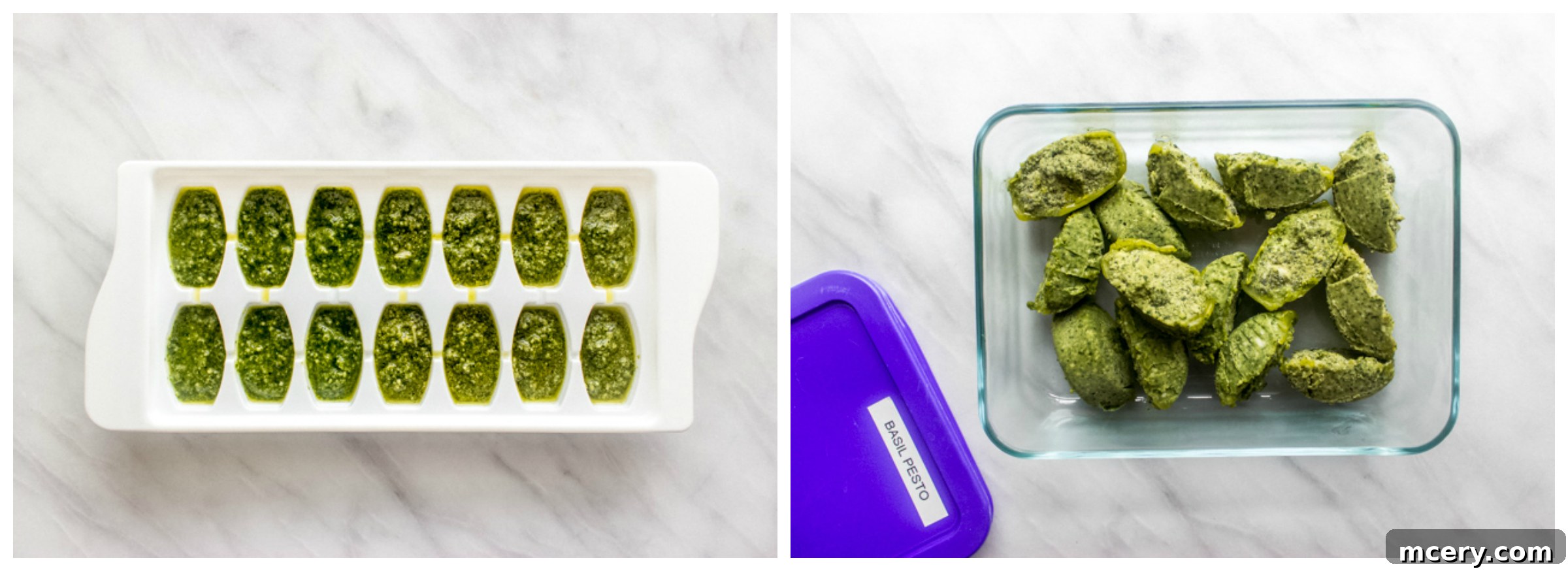
How to Thaw Frozen Pesto: When you’re ready to utilize your frozen pesto, simply transfer the desired number of cubes to a small container and allow them to thaw slowly overnight in the refrigerator. Alternatively, for hot dishes, you can add the frozen cubes directly to warm sauces, soups, or pasta; they will melt and integrate beautifully, infusing your meal with that unmistakable fresh pesto flavor.
By diligently following these simple yet effective storage tips, you will always have a readily available supply of vibrant, flavorful homemade basil pesto on hand, perfectly poised and ready to effortlessly enhance any meal, any time of the year.
Homemade Pesto Recipe FAQs: Your Questions Answered
Yes, you absolutely can use basil stems in your homemade pesto, especially the more tender ones! While most traditional recipes primarily call for just the leaves, which offer a delicate texture and intense flavor, the stems are also packed with basil essence and flavor compounds. Incorporating them can actually enhance the overall basil flavor, significantly reduce food waste, and add to the volume of your pesto without compromising taste. When considering using the stems, simply make sure to remove any overly thick, woody, or tough parts, as these might be too fibrous and could negatively affect the desired smooth texture of your finished pesto. The thinner, more pliable and tender parts of the stems can be perfectly blended right along with the leaves. You might find that you need to process them for a slightly longer duration to ensure a perfectly smooth and uniform texture, particularly if you are using a blender rather than a food processor. Don’t let those flavorful parts of the basil plant go to waste – they are a valuable addition!
It is generally always a very good idea to meticulously wash basil leaves before making pesto, as you would with any fresh produce, to effectively remove any residual dirt, debris, tiny insects, or potential pesticide residues. However, there’s a specific, crucial technique to follow for basil to prevent its premature wilting and discoloration. It is vital not to wash fresh basil until you are just about to use it, as excess moisture clinging to the delicate leaves will cause them to turn black or wilt very quickly. When you are ready to proceed, gently rinse the basil leaves under cool, running water. After rinsing, it is absolutely crucial to dry them thoroughly. You can lightly pat them dry with clean paper towels or, for the most efficient and gentle method, use a salad spinner to carefully remove any excess moisture. Ensuring the basil is perfectly dry is key; it helps prevent the pesto from becoming watery, allows the olive oil to emulsify properly, and contributes to a more vibrant, flavorful, and perfectly textured sauce.
A bitter taste in your homemade pesto can be quite disappointing, and several factors commonly contribute to this issue. The most frequent culprit is often the quality or condition of the olive oil. Using low-quality, old, or, worst of all, rancid extra virgin olive oil can impart a distinctly unpleasant bitter flavor to your pesto. Always opt for a fresh, high-quality extra virgin olive oil, as its flavor forms a very significant and foundational part of the pesto’s overall profile. Another very common reason for bitterness is over-blending the ingredients, particularly the delicate basil. Excessive processing can generate undesirable heat, which causes the basil leaves to oxidize rapidly and release chlorophyll, leading to a noticeable bitter taste. To effectively avoid this, blend the pesto just until it reaches your desired smoothness – typically in short, controlled pulses rather than continuous blending. Over-blending can also negatively affect the pine nuts, causing them to release bitter compounds. Ensure you are using genuinely fresh basil, and consider slightly adjusting the amount of garlic if you consistently find it to be overpowering or too pungent.
Basil pesto turning brown is an extremely common occurrence, and it is primarily due to the natural process of oxidation. This phenomenon happens when the delicate chlorophyll in the basil leaves comes into contact with oxygen in the air. The chlorophyll reacts, causing the vibrant green color to fade and transform into a dull brown or olive green hue. While this color change doesn’t necessarily mean the pesto has spoiled (it’s often still perfectly safe and delicious to eat), it undeniably detracts from its appetizing visual appeal.
Fortunately, there are a few highly effective strategies you can employ to significantly minimize browning:
- Airtight Storage: Always store your homemade pesto in an airtight container when refrigerating. This crucial step severely limits its exposure to oxygen.
- The Olive Oil Seal: The single most effective method to actively preserve pesto’s bright green color is to pour a thin layer (approximately ½-inch) of extra virgin olive oil over the surface of the pesto once it’s in its storage container. This creates a physical, protective barrier, effectively preventing air from reaching the basil. Simply give the pesto a good stir to incorporate the oil before you serve it.
- Quick Preparation: Work swiftly when preparing your pesto to minimize the overall air exposure during the blending process.
- Avoid Over-processing: As mentioned regarding bitterness, over-blending generates heat, which accelerates oxidation and thus browning. Blend just enough to achieve the desired consistency.
Even with these precautions, some very slight darkening is a natural and expected part of pesto’s life cycle. However, these practical tips will significantly help in preserving that beautiful, appetizing green hue for a much longer period, keeping your homemade pesto looking as good as it tastes.
Absolutely! While pine nuts are traditionally used and contribute a unique flavor and texture to classic pesto, you can easily make equally delicious pesto using a variety of other nuts or even seeds. This is particularly useful if you have a nut allergy, are looking for a more budget-friendly option, or simply prefer a different flavor profile. Excellent substitutes include walnuts (which offer a more robust, earthy flavor), almonds (for a slightly sweeter, milder taste), pistachios (for a beautiful green color and unique, delicate flavor), cashews (for a wonderfully creamy texture), or even sunflower or pumpkin seeds (for fantastic nut-free options that still provide a satisfying crunch and earthy note). Just remember, regardless of your choice, it is always best to lightly toast your chosen nuts or seeds before blending. This simple step significantly enhances their flavor and aroma, which will add a wonderful, complex depth to your homemade pesto.
Generally speaking, yes, homemade pesto can indeed be significantly healthier than many store-bought varieties, and for several compelling reasons. When you take the time to make pesto at home, you gain complete and total control over the quality, freshness, and quantity of every single ingredient. You can confidently opt for fresh, potentially organic basil, ensure you use high-quality extra virgin olive oil, and grate fresh Parmesan cheese without having to worry about hidden, unwanted additives. Many commercial pestos, in an effort to cut costs or extend shelf life, often contain artificial colors, a multitude of preservatives, lower-quality oils (such as canola or sunflower oil instead of premium olive oil), and sometimes even surprisingly high amounts of added sugars or excessive sodium. By crafting your pesto yourself, you effectively avoid all these undesirable ingredients, guaranteeing a fresher, purer, and almost always more nutritious sauce. Furthermore, making it at home empowers you to adjust ingredients to perfectly suit specific dietary needs or preferences, such as reducing sodium content or choosing particular types of oil for health reasons.
Recipes Using This Homemade Pesto Sauce: Elevate Your Meals with Fresh Flavor
Now that you’ve successfully mastered the art of crafting incredibly fresh and flavorful basil pesto, you’ll be absolutely delighted by the seemingly endless culinary possibilities it effortlessly opens up in your kitchen. This vibrant and aromatic sauce isn’t merely a topping or a condiment; it’s a foundational flavor enhancer that possesses the magical ability to transform ordinary, everyday ingredients into truly gourmet and memorable dishes. Here are some of our absolute favorite recipes where this homemade pesto truly shines, adding a burst of fresh, herbaceous goodness:
If you try our amazing homemade basil pesto sauce and love how it effortlessly transforms and elevates your cooking, please be sure to leave a star rating and a detailed comment below telling us how much you enjoyed the recipe! Your valuable feedback is incredibly important and helps other enthusiastic home cooks discover this truly fantastic and versatile recipe. Thank you for your support!
Print Recipe Card
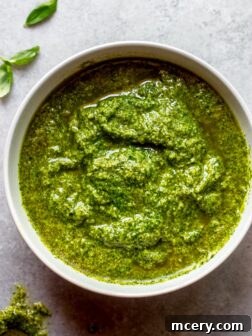
Easy Homemade Pesto Sauce Recipe Card
5 Stars 4 Stars 3 Stars 2 Stars 1 Star
5 from 6 reviews
Author: Katya
Prep Time: 5 mins
Total Time: 5 mins
Yield: 5 1x
Category: Sauce, Condiment
Method: Blend, Food Processor
Cuisine: Italian
Description
Whip up this easy, authentic basil pesto in just 5 minutes! This incredibly fresh, vibrant, and aromatic sauce is perfectly versatile for tossing with your favorite pasta dishes, spooning generously over grilled chicken or fish, drizzling on crisp salads, or spreading on hearty sandwiches. It’s a quick, simple, and utterly delicious way to add incredible, gourmet flavor to almost any meal you prepare.
Ingredients
Units
Scale
- 1 cup fresh basil leaves, packed (about 1.5-2 ounces, ensure leaves are dry)
- 3 Tbsp. toasted pine nuts (for best flavor, lightly toast in a dry pan until fragrant and golden)
- ¼ cup freshly grated Parmesan cheese (Parmigiano-Reggiano for authentic, rich flavor)
- 1 large garlic clove (peeled, adjust to your preferred intensity, 1-2 cloves works well)
- 3 tsp. fresh lemon juice (about half a small lemon, essential for brightening the flavors)
- ¼ cup + 2 Tbsp. extra-virgin olive oil (use a good quality, mild extra-virgin olive oil)
- Kosher salt and black pepper, to taste (start with a pinch of salt, taste, then add more as needed, considering Parmesan is salty)
Instructions
- Prepare Food Processor: Place the fresh basil leaves, toasted pine nuts, freshly grated Parmesan cheese, peeled garlic clove, and fresh lemon juice into the bowl of a food processor. Ensure the basil leaves are thoroughly dry before adding.
- Initial Mincing: Secure the lid and pulse the mixture several times in short bursts until all the solid ingredients are finely minced and a coarse, somewhat chunky paste begins to form. Stop and scrape down the sides of the food processor bowl with a spoon or a small rubber spatula as needed to ensure all ingredients are evenly processed.
- Emulsify with Olive Oil: With the food processor running on a continuous setting, slowly drizzle the extra-virgin olive oil through the feed tube in a steady, thin stream. Continue processing until the pesto is smooth yet still retains a slight, desirable texture from the basil and nuts. Scrape down the sides again if necessary to fully incorporate all ingredients. Be careful not to over-process, as excessive blending can generate heat and cause the basil to oxidize and turn brown or become bitter.
- Season and Serve: Taste the freshly made pesto and season with kosher salt and freshly ground black pepper to your preference. Adjust the salt gradually, remembering that Parmesan cheese already contributes salinity. Your vibrant homemade basil pesto is now ready to be enjoyed immediately, or stored for later use according to the notes below. This recipe yields approximately ⅔ cups of delicious pesto.
Notes
- To Freeze Pesto for Long-Term Storage: For convenient, single-serving portions that are easy to access, spoon your freshly made pesto into clean ice cube trays. Place the filled trays in the freezer until the pesto cubes are completely solid. Once frozen, pop the cubes out and transfer them to a freezer-safe plastic bag (ensure you remove as much air as possible) or an airtight container with a lid. Store in the freezer for up to 6 months. To use, simply thaw the desired number of pesto cubes overnight in the refrigerator, or add them directly to hot dishes like soups or pasta sauces, where they will melt and incorporate beautifully.
- Preventing Browning in the Refrigerator: To help keep refrigerated pesto its beautiful, vibrant green color, pour a thin layer (about ½-inch) of extra virgin olive oil over the surface of the pesto in its storage container before sealing it tightly. This creates a protective barrier against air, significantly preventing oxidation. Simply stir the oil into the pesto before you are ready to use it.
- Ingredient Substitutions and Creative Variations: For a comprehensive and inspiring list of suggested ingredient swaps (including different fresh herbs, various nuts and seeds, and alternative cheeses) and exciting flavor variations to customize your pesto, please refer to the detailed “Easy Pesto Recipe Variations” section in the main blog post above.
- Adjusting Garlic Intensity: If you find raw garlic to be too potent or have a sensitivity, you can gently mellow its flavor without losing its aromatic quality. Briefly blanch the peeled garlic clove in boiling water for about 30 seconds, then immediately transfer it to an ice bath to stop the cooking, before adding it to the food processor.
Nutrition Information
(Please note: Nutritional values provided are approximate and may vary significantly based on specific brands of ingredients used, exact portion sizes, and preparation methods. This information is intended for general guidance only.)
- Serving Size: 2 tablespoons
- Calories: 187
- Sugar: 0.3 g
- Sodium: 68.3 mg
- Fat: 20.3 g
- Carbohydrates: 1.4 g
- Protein: 2.2 g
- Cholesterol: 2.9 mg