
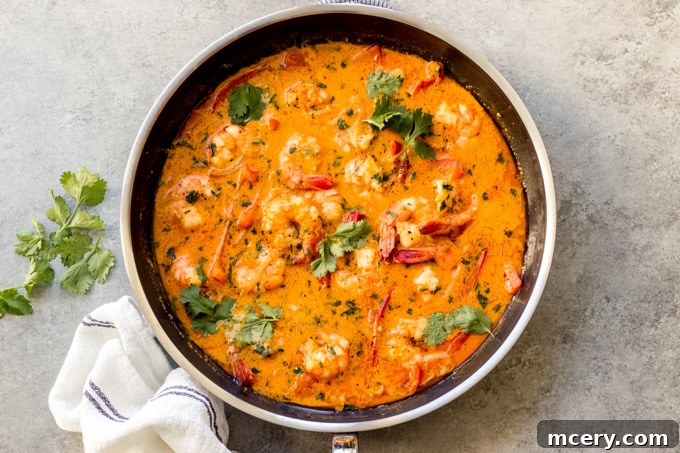
Red curry shrimp is an incredibly easy and flavorful dish that comes together in under 30 minutes. Succulent shrimp are simmered in a rich, aromatic coconut curry sauce so delicious, you’ll be tempted to eat it straight from the spoon!
Quick & Easy Thai Red Curry Shrimp Recipe: Your Weeknight Flavor Fix!
If you love the exotic and vibrant flavors of Thai cuisine but have been hesitant to try preparing them at home, this recipe for Thai Red Curry Shrimp is your perfect introduction! It’s one of my all-time favorite meals because it effortlessly brings the authentic, bold tastes of Thailand directly to your dinner table. Forget complicated techniques or hard-to-find ingredients; this dish relies on simple, accessible components that combine and cook in a single skillet in just about 20 minutes of active cooking time. That’s right, a truly gourmet-level meal on your table faster than ordering takeout!
This recipe is designed to be virtually foolproof, making it an excellent choice for those hectic weeknights when you need a delicious, satisfying dinner without spending hours in the kitchen. Imagine plump, tender shrimp perfectly cooked in a velvety, subtly spicy, and wonderfully aromatic coconut curry sauce. Serve it steaming hot over a bed of fluffy jasmine rice, alongside warm and soft naan bread, or even tossed with some quick-cooking rice noodles, and you’ll feel like you’re dining in a high-end Thai restaurant. The depth and balance of flavors are so exceptional that once you try it, you might find yourself adding it to your regular rotation, perhaps never needing another shrimp curry option again!
This dish isn’t just a hit in my household; it’s a crowd-pleaser that frequently earns five-star ratings and enthusiastic reviews from readers. Take Colette, for example, who enthusiastically shared, “I doubled this recipe so that I would have leftovers for lunch. It is delicious!” And Christy, another delighted cook, commented, “Love it when I have all of the ingredients as I did for this quick dish. It was super tasty! I doubled the recipe and glad I did for leftovers! My husband loved it too! Thanks for the recipe. This will be a regular dish for me!” Join the growing number of satisfied home cooks and experience the delightful simplicity and incredible taste of this Thai Red Curry Shrimp for yourself – I’m confident you’ll agree it’s a keeper!
The Irresistible Flavor Profile of Thai Curry Shrimp
Prepare your taste buds for an exquisite journey! This red curry shrimp boasts a remarkable layering of flavors, with its deeply fragrant and creamy sauce as the star. Each bite delivers a harmonious blend of bold, savory notes balanced with a gentle, warming spice. You’ll experience subtle hints of natural sweetness, derived from the honey and coconut milk, alongside a luxurious creaminess that coats the palate. The aromatics like ginger and garlic provide a fresh, pungent base, while fish sauce introduces an essential savory umami depth. A touch of creamy peanut butter adds a nutty richness, and finally, a squeeze of fresh lime brightens the entire dish with a zesty, tangy finish. It’s a complex yet perfectly balanced symphony of sweet, salty, spicy, and sour – truly a hallmark of authentic Thai cuisine.
Thai Shrimp Curry Ingredients: What You Need to Make It
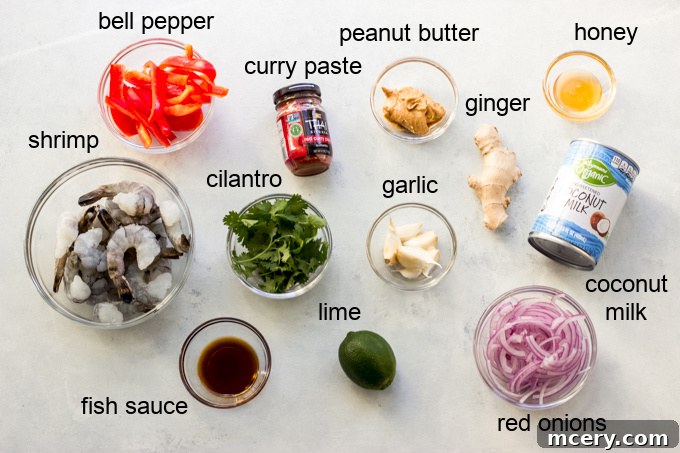
Creating an unforgettable Thai curry begins with gathering the right ingredients. Here’s a detailed breakdown of what you’ll need, along with tips for selecting the best quality and understanding their role in the dish:
- Aromatics: Red Onion, Fresh Ginger, and Garlic. These three ingredients are the foundational building blocks of flavor for our curry. The red onion offers a mild sweetness when sautéed, while fresh ginger provides a warm, slightly peppery kick, and garlic adds a pungent, savory depth. For the best flavor, I highly recommend grating the ginger with a microplane grater to achieve a fine, almost paste-like consistency that melts into the sauce. Similarly, mincing fresh garlic yourself yields a significantly more vibrant and potent flavor compared to pre-minced jarred garlic.
- Coconut Milk: Canned, Full-Fat, Unsweetened. This is the cornerstone of any creamy Thai curry. The full-fat variety is essential for achieving the rich, velvety texture and authentic mouthfeel of the sauce. Avoid using light or reduced-fat coconut milk, as they will result in a thinner, less satisfying curry. Look for it in the international or Asian food aisle of your local supermarket.
- Red Curry Paste: The Flavor Powerhouse. A good quality red curry paste is a pantry staple for anyone exploring Thai cooking. It’s a concentrated blend of red chilies, aromatic herbs like lemongrass and galangal, kaffir lime peel, and various spices. This paste provides incredible depth of flavor, a pleasant zing, and the characteristic vibrant color of the dish. While many brands are available, I personally find the Thai Kitchen brand to be consistently excellent. It’s made with a balanced blend of red chili pepper, garlic, lemongrass, salt, shallots, coriander root, and kaffir lime peel, offering fantastic flavor that isn’t overly spicy, making it suitable for most palates.
- Vegetables: Bell Peppers (and Beyond!). While I often use colorful bell peppers for their sweet flavor, crunch, and visual appeal in this dish, this recipe is wonderfully adaptable. Feel free to swap or add other vegetables based on your preferences or what’s in season. The key is to slice them into similar sizes to ensure even cooking.
- Shrimp: Jumbo, Peeled, and Deveined. For optimal texture and presentation, select jumbo-sized shrimp. Whether you choose shrimp with tails on or off is a matter of personal preference. If you’re using frozen shrimp, it’s crucial to thaw them completely before cooking. This ensures they cook evenly and prevents any excess water from diluting the rich curry sauce.
- Key Flavor Enhancers: Honey, Fish Sauce, and Creamy Peanut Butter.
- Honey: A natural sweetener that perfectly balances the inherent spice and acidity of the curry, adding a subtle touch of sweetness without being cloying.
- Fish Sauce: An absolutely critical ingredient in Thai cuisine, fish sauce provides an unparalleled depth of salty, savory, and umami flavor. Do not skip or attempt to substitute this ingredient, as it truly defines the authentic taste of the curry. Rest assured, despite its name, it enhances the dish’s complexity without making it taste “fishy.”
- Creamy Peanut Butter: Contributes a wonderful richness, nutty undertones, and extra creaminess to the sauce, adding another layer of comforting and satisfying flavor.
- Fresh Finishers: Lime Zest, Lime Juice, and Fresh Cilantro. These vibrant ingredients are stirred in at the very end to provide a burst of fresh, zesty, and herbaceous notes that lift and brighten the entire dish. Lime zest and juice deliver a tangy citrus pop, while fresh cilantro adds a fragrant, aromatic finish.
- Seasoning: Kosher Salt and Black Pepper. Essential for seasoning both the curry sauce and the shrimp to taste, enhancing all the other flavors.
Customize Your Curry: What Vegetables to Add to Red Coconut Curry Shrimp
The beauty of this red coconut curry shrimp recipe lies in its versatility. You can easily adapt the vegetables to suit your taste, what’s in season, or what you have on hand. Just remember to slice them into roughly the same size to ensure they cook evenly. Here are some fantastic vegetable options to consider:
- Broccoli florets: Add a pleasant crunch and a significant nutritional boost.
- Green beans: Crisp and refreshing, they cook quickly and maintain a vibrant color.
- Mushrooms (sliced): Offer an earthy flavor and a tender, meaty texture.
- Fresh Spinach: Stir in at the very end as it wilts almost instantly, adding a delicate texture and color.
- Cauliflower florets: A heartier option that absorbs the rich curry flavors wonderfully.
- Carrots (thinly sliced or julienned): Introduce a touch of natural sweetness and a beautiful pop of orange.
- Snap Peas or Snow Peas: Provide a delightful, crisp-tender texture and a fresh green hue.
- Baby Corn: Adds a unique, slightly sweet crunch and visual interest.
Step-by-Step: How to Make the Best Curry Shrimp (Red Curry)
Creating this incredibly delicious Thai Red Curry Shrimp is a simple and swift process. Follow these straightforward steps to achieve a perfect, restaurant-quality meal every time:
-
Sauté the Aromatics: In a large skillet (at least 12-inches, to comfortably accommodate all your ingredients), heat 2 tablespoons of olive oil or avocado oil over medium heat. Add the thinly sliced red onions and cook them gently until they soften and become translucent, which typically takes about 3-4 minutes. Next, stir in the finely grated ginger and minced garlic. Continue to cook for approximately 30 seconds, stirring continuously, until these aromatics release their wonderful fragrance. Be vigilant to prevent the garlic from burning, as this can impart a bitter taste.
-
Build the Sauce: Pour in the entire can of full-fat coconut milk. Then, add the 2 tablespoons of red curry paste, 2 teaspoons of honey for a hint of natural sweetness, 4 teaspoons of fish sauce for that crucial umami depth, 1 tablespoon of creamy peanut butter for richness, and ⅓ cup of water to achieve the ideal sauce consistency. Season the mixture generously with kosher salt and black pepper to taste. Bring the mixture to a gentle simmer, then whisk continuously until the sauce is completely smooth and any lumps from the curry paste or peanut butter have fully dissolved. It’s important to maintain a gentle simmer and avoid a vigorous boil to prevent the coconut milk from curdling.
-
Cook the Vegetables: Incorporate your sliced bell peppers (or any other firm vegetables you’ve chosen) into the gently simmering sauce. Cover the skillet and allow the vegetables to cook until they are almost tender, typically for about 5-7 minutes. Throughout this step, keep the heat on low to maintain a very gentle simmer. This ensures the vegetables absorb the delicious curry flavors while retaining a slight, pleasing crispness.
-
Prepare the Shrimp: While your vegetables are simmering, prepare the shrimp for cooking. Lay the peeled and deveined jumbo shrimp on a few sheets of paper towels and pat them thoroughly dry. Removing excess moisture is a crucial step for achieving a good texture and preventing them from releasing water into and diluting your flavorful sauce. Season the dried shrimp liberally on all sides with kosher salt and black pepper.
-
Add and Cook the Shrimp: Uncover the skillet and gently stir the seasoned shrimp into the simmering curry sauce. Cook the shrimp for approximately 3 minutes, stirring often and flipping them occasionally, until they just turn opaque and pink. It is very important not to overcook the shrimp, as they can quickly become tough and rubbery. As the shrimp cook, you’ll notice the sauce will also slightly reduce and thicken to a perfect, luscious consistency.
-
Finish with Freshness: Once the shrimp are perfectly cooked, remove the skillet from the heat. Stir in the fresh lime zest, 1 tablespoon of fresh lime juice, and ¼ cup of chopped fresh cilantro. This final touch brightens the entire dish, adding a burst of citrusy and herbaceous freshness that perfectly complements the rich and savory curry. Serve immediately over your chosen accompaniment.
Pro Tips for Making Perfect Thai Curry Shrimp
Achieving a restaurant-quality Thai Red Curry Shrimp at home is incredibly easy when you keep a few key considerations in mind:
- Maintain a Gentle Simmer, Avoid Boiling: It is absolutely crucial not to let the curry come to a rolling boil once the coconut milk has been added. High heat can cause the coconut milk to separate or curdle, resulting in an unappealing, clumpy, and oily sauce. A gentle simmer is all that’s needed for the flavors to meld beautifully and the sauce to thicken slightly.
- Always Use Full-Fat Coconut Milk: For that truly luxurious, rich, and creamy sauce texture that is the hallmark of an authentic Thai curry, always opt for unsweetened, regular (full-fat) coconut milk. Lite or reduced-fat versions will yield a thinner, less satisfying sauce lacking in body and flavor.
- Fish Sauce is an Essential Ingredient: Do not be tempted to substitute fish sauce with anything else. It’s a fundamental ingredient in Thai cuisine, providing a unique salty, deeply savory, and umami flavor that simply cannot be replicated. Despite its pungent aroma in the bottle, it adds a crucial complexity to the curry without making the dish taste “fishy.”
- Do Not Overcook the Shrimp: Shrimp cook incredibly quickly, often in just 2-3 minutes. Overcooked shrimp become tough, rubbery, and lose their delicate, succulent texture. Remove the skillet from the heat as soon as the shrimp turn opaque and pink. Remember, they will continue to cook slightly from the residual heat even after being taken off the stove.
- Prep Ingredients Ahead for Speed: To truly make this a 20-minute meal, engage in mise en place. Chop your onions, mince your garlic and ginger, slice your bell peppers, and thaw your shrimp in advance. Having all your ingredients ready and measured before you start cooking will ensure a smooth, stress-free, and quick preparation process.
- Taste and Adjust Seasoning: Always taste your curry before serving and adjust the seasonings as needed. You might find it benefits from a pinch more salt, an extra dash of fish sauce, or a final squeeze of lime juice to perfect the delicate balance of sweet, salty, spicy, and sour.
- Store Leftover Curry Paste Thoughtfully: If you don’t use the entire can or jar of red curry paste, don’t let it go to waste. Spoon the leftover paste into an ice cube tray, freeze until solid, and then transfer the frozen cubes to a sealable bag or an airtight container. It will keep for up to 3 months, ensuring you’re always ready for your next curry craving!
Serving Suggestions for Thai Red Curry Shrimp
This incredibly flavorful red curry shrimp pairs wonderfully with a diverse array of accompaniments, making it a versatile meal for any occasion. Here are some popular and delicious ways to enjoy it:
- Jasmine Rice: The quintessential choice! Its fragrant aroma and slightly sticky texture are perfect for soaking up every drop of the rich, creamy curry sauce.
- Brown Rice or Quinoa: For a healthier, fiber-rich alternative that still provides a substantial base for the curry.
- Naan Bread or Roti: Warm and soft, these flatbreads are ideal for scooping up the luscious sauce and enjoying all the flavors.
- Cauliflower Rice: An excellent low-carb option that absorbs flavors beautifully and keeps the meal light.
- Rice Noodles: Cooked vermicelli or wider flat rice noodles can transform this dish into a delightful curry noodle bowl.
- Fresh Herbs: Always enhance your serving with an extra sprinkle of fresh cilantro, and consider adding some chopped Thai basil or mint for an elevated aromatic experience.
- Lime Wedges: Serve with fresh lime wedges on the side, allowing each diner to add a squeeze of fresh lime juice just before eating, which brightens all the complex flavors.
How to Store and Reheat Coconut Curry Shrimp
Should you be fortunate enough to have any delicious leftovers from this dish (which is a rare occurrence!), proper storage and reheating techniques will ensure they taste just as fantastic the next day:
- Storage: Allow the coconut curry shrimp to cool completely to room temperature before transferring it to an airtight container. Store it promptly in the refrigerator, where it will keep fresh for up to 2-3 days.
- Reheating: When you’re ready to enjoy your leftovers, the best method is to gently warm the curry in a skillet over low heat on the stovetop. Avoid using high heat, as this can cause the coconut milk to separate and the shrimp to become tough. If the sauce has thickened too much overnight in the fridge, you can add a small splash of water or vegetable stock to loosen it back up to your desired consistency. Stir frequently and heat just until warmed through. Always remember the cardinal rule: be careful not to overcook the shrimp again during reheating, as this will compromise their tender texture.

Thai Shrimp Red Curry
- Author: Katya
- Prep Time: 10 min
- Cook Time: 20 min
- Total Time: 30 minutes
- Yield: 4-6 servings
- Category: Main Dish
- Method: Simmer
- Cuisine: Thai
Description
Red curry shrimp is an easy dish that only takes about 20 minutes to prepare. The shrimp are simmered in a fragrant coconut curry sauce that you’ll want to eat by the spoonful!
Ingredients
- 2 Tbsp. olive oil or avocado oil
- 1 small red onion, thinly sliced, about 1 cup
- 1 Tbsp. finely grated ginger, use a microplane
- 1 Tbsp. minced garlic
- 1 (14 oz.) can full-fat coconut milk
- 2 Tbsp. red curry paste
- 2 tsp. honey
- 4 tsp. fish sauce
- 1 Tbsp. creamy peanut butter
- ⅓ cup water
- 1 small bell pepper (any color), sliced into thin strips
- 12 oz. peeled and deveined jumbo shrimp, tails on or off, thawed if frozen
- 1 Tbsp. fresh lime juice
- Zest of 1 lime
- ¼ cup finely chopped cilantro
- Kosher salt and black pepper, to taste
Instructions
- Heat oil in a large skillet (at least 12-inches) over medium heat. Add the onions and cook until softened, about 3-4 minutes. Add the ginger and garlic and cook until fragrant, about 30 seconds, stirring continuously.
- Add the coconut milk, curry paste, honey, fish sauce, peanut butter, and water. Season with salt and pepper, to taste. Bring to a gentle simmer and whisk the sauce until smooth and lump-free.
- Add bell peppers and cook for about 5-7 minutes, covered, or until the peppers are almost tender. Slightly reduce the heat to maintain a gentle simmer.
- In the meantime, lightly pat dry the shrimp with a few sheets of paper towel to remove excess moisture. Season the shrimp all over with salt and pepper, to taste.
- Uncover the sauce, stir in the shrimp, and cook for about 3 minutes or until the shrimp just turn opaque, stirring often and/or flipping the shrimp. The sauce will also slightly reduce and thicken.
- Stir in lime juice, lime zest, and cilantro. Serve immediately over cooked rice or your chosen accompaniment.
Notes
- Coconut Milk: For a rich and creamy sauce, use unsweetened, regular (not light/reduced fat) coconut milk.
- Red Curry Paste: You can find red curry paste at most grocery stores in the Asian section of the store. I like the Thai Kitchen brand, which is not overly spicy.
- Fish Sauce: Fish sauce is an aromatic Asian condiment that adds a unique salty, umami flavor to the curry. The dish does not taste fishy. I do not recommend a substitute. Fish sauce can be found at most grocery stores in the Asian section of the store.
- Leftovers: Store leftovers in an airtight container for up to 2-3 days in the refrigerator. Reheat gently on the stovetop over low heat, adding a splash of water or stock if needed to restore consistency.
Nutrition Information (per serving, estimated)
- Calories: 376
- Sugar: 6.7 g
- Sodium: 779.8 mg
- Fat: 27.7 g
- Carbohydrates: 14.7 g
- Protein: 21.4 g
- Cholesterol: 136.9 mg
More Delicious Curry and Seafood Recipes to Explore
If you’ve enjoyed the vibrant flavors of this Thai Red Curry Shrimp, you might also love these other fantastic recipes:
If you try our Thai Shrimp Red Curry, please take a moment to leave a star rating and a comment below, letting us know how you liked the recipe. Your feedback is greatly appreciated and helps other home cooks!
You May Also Like… Other Seafood Delights