
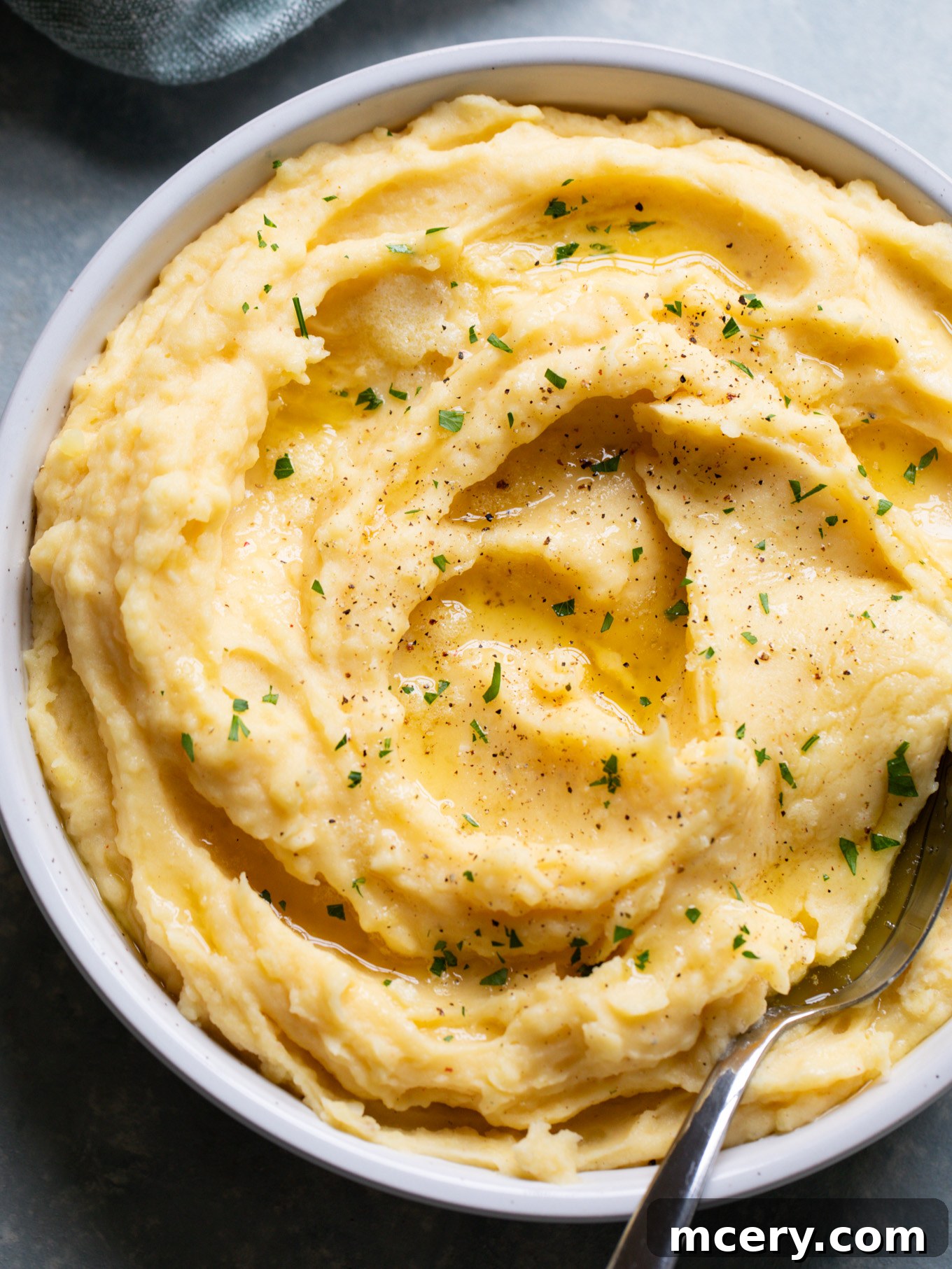
Prepare to elevate your side dish game with these **Homemade Garlic Mashed Potatoes**! Crafted from simple, wholesome ingredients and ready in just about 30 minutes, this recipe promises a rich, impossibly creamy, and wonderfully garlicky experience. It’s the quintessential comfort food, versatile enough to grace your most elegant holiday table or complement a casual weeknight dinner.
If you’re a mashed potato enthusiast, you’ll love exploring more of our favorite recipes! Don’t miss our Classic Yukon Gold Mashed Potatoes for a buttery classic, our indulgent Cheesy Mashed Potatoes, or the rustic charm of our Red Skin Mashed Potatoes!
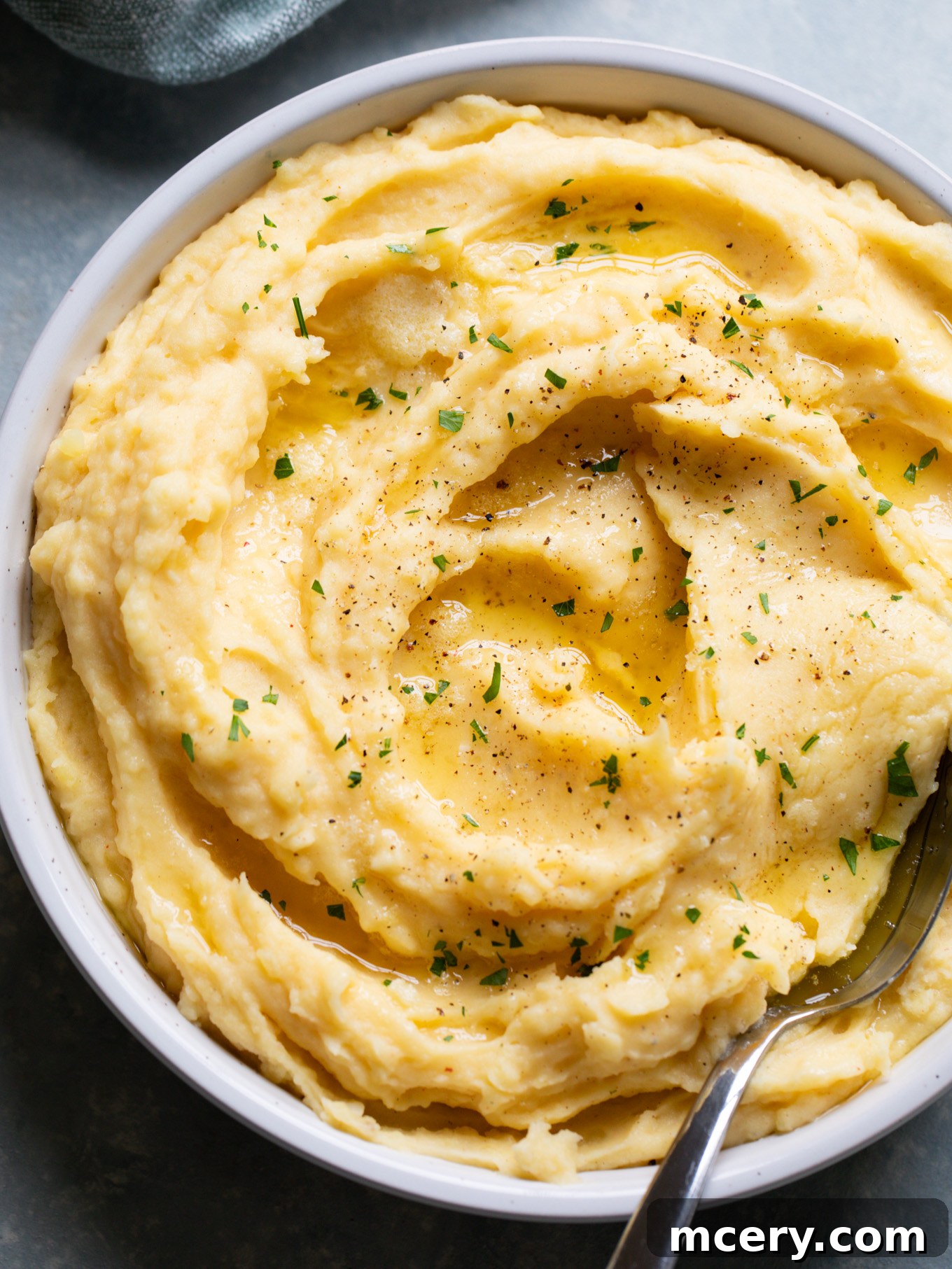
Deliciously Creamy Garlic Mashed Potatoes: A Family Favorite
One spoonful of these **garlic mashed potatoes** will instantly reveal why they’ve become a beloved staple in my kitchen, consistently earning rave reviews from family and friends. While they boast a profound depth of flavor that tastes incredibly gourmet, the magic truly lies in their unbelievably creamy texture, achieved with nothing more than a **handful of simple, everyday ingredients** and a few clever techniques.
The secret to avoiding gluey, unappetizing mashed potatoes and achieving that silky-smooth consistency comes down to a science. It involves selecting the right starchy potatoes, ensuring your milk and butter are warmed gently before incorporation, and embracing a gentle mashing approach rather than vigorous whipping. This **tried-and-true technique** is my definitive guide to crafting the creamiest mashed potatoes imaginable, transforming humble ingredients into a luxurious side dish.
What makes this recipe even better is how wonderfully hands-off it is. Much like my crispy steak fries, you can have a big batch of these potatoes simmering away on the stovetop while you focus on preparing the rest of your meal. They’re perfect for feeding a hungry crowd, and their exceptional ability to **reheat beautifully** makes them an ideal candidate for meal prepping ahead of busy weeknights or holiday gatherings.
Beyond being a perfect companion to nearly any main course, these garlic mashed potatoes are the side dish I turn to again and again. Alongside my decadent cheesy scalloped potatoes, they bring unparalleled comfort and a guarantee to disappear fast, whether it’s a festive holiday celebration, a cozy Sunday dinner, or just a Tuesday craving for something truly delicious.
Essential Ingredients for the Perfect Garlic Mash
Crafting truly exceptional garlic mashed potatoes starts with high-quality ingredients. Here’s a closer look at what you’ll need and why each component is crucial for achieving that signature rich, creamy texture and robust flavor.
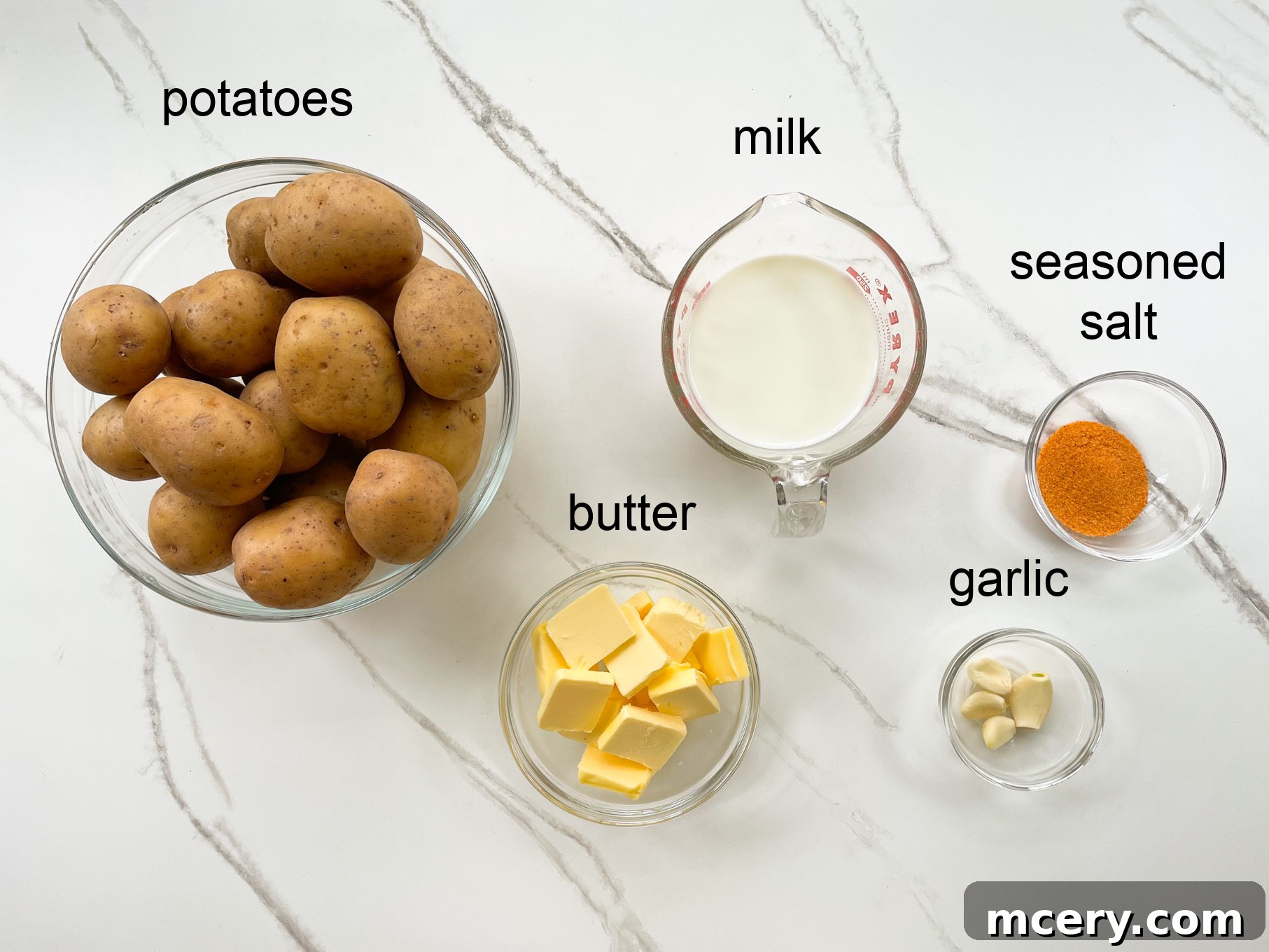
- Potatoes: The foundation of our dish! For the ultimate creamy and fluffy texture, choose starchy varieties like Russet potatoes or Yukon Gold potatoes. Russets offer a wonderfully dry and fluffy interior, ideal for absorbing butter and milk, while Yukon Golds provide a naturally buttery flavor and a slightly denser, yet still creamy, texture. Whichever you choose, ensure they’re peeled and cut into uniform 1 to 2-inch pieces to promote even cooking.
- Butter: A generous amount of unsalted butter is key to achieving that luxurious richness and velvety mouthfeel. Using unsalted butter allows you to control the overall sodium content in the dish, letting the natural flavors shine through. If you only have salted butter, simply reduce the amount of additional salt you add later.
- Garlic Cloves: Fresh garlic is non-negotiable for authentic garlic mashed potatoes! Minced garlic cloves infuse the butter and milk mixture with a fragrant, aromatic flavor that elevates the entire dish. Freshly minced garlic offers a brighter, more pungent taste than pre-minced jarred garlic.
- Milk: Whole milk is highly recommended for its higher fat content, which contributes significantly to the smooth consistency and rich flavor of the mashed potatoes. While lower-fat milk can be used, it may result in a slightly less creamy and decadent final product. Warming the milk before adding it to the potatoes is a crucial step that prevents the potatoes from cooling down and ensures better absorption without overworking.
- Seasoned Salt: This is a secret weapon ingredient that truly takes these mashed potatoes from great to extraordinary! A good quality seasoned salt, often containing a blend of salt, paprika, garlic powder, onion powder, and other spices, adds a complex layer of savory flavor that plain salt alone cannot achieve. It imparts a subtle depth and a hint of warmth that makes these potatoes irresistible.
- Kosher Salt and Black Pepper: Essential for seasoning to taste. You’ll add a generous pinch of kosher salt to the cooking water to season the potatoes from the inside out, then finish with additional salt and freshly ground black pepper after mashing to balance and enhance all the flavors.
- Fresh Parsley or Chives (Optional Garnish): A sprinkle of finely chopped fresh parsley or chives adds a vibrant pop of color and a fresh, herbaceous note, making the finished dish even more appealing.
Choosing the Best Potatoes for Unmatched Creaminess
For the absolute creamiest and fluffiest texture in your mashed potatoes, the type of potato you select is paramount. **Starchy potatoes** are always the best choice because they have a low moisture content and a high starch content. When cooked, their cells break down easily, making them light, fluffy, and ideal for absorbing the rich butter and milk without becoming gluey. Varieties like **Russet**, **Yukon Gold**, or **Idaho potatoes** are your top contenders. Russets yield a very fluffy and absorbent mash, while Yukon Golds offer a naturally buttery flavor and a slightly richer, smoother texture. Avoid waxy potatoes (like red new potatoes or fingerlings) for a classic creamy mash, as their higher moisture content makes them prone to a gummy texture when mashed.
Step-by-Step: How to Make Irresistibly Creamy Garlic Mashed Potatoes
Follow these detailed steps to achieve perfect, flavorful, and incredibly creamy garlic mashed potatoes every time. The process is straightforward, but paying attention to these crucial details will make all the difference.
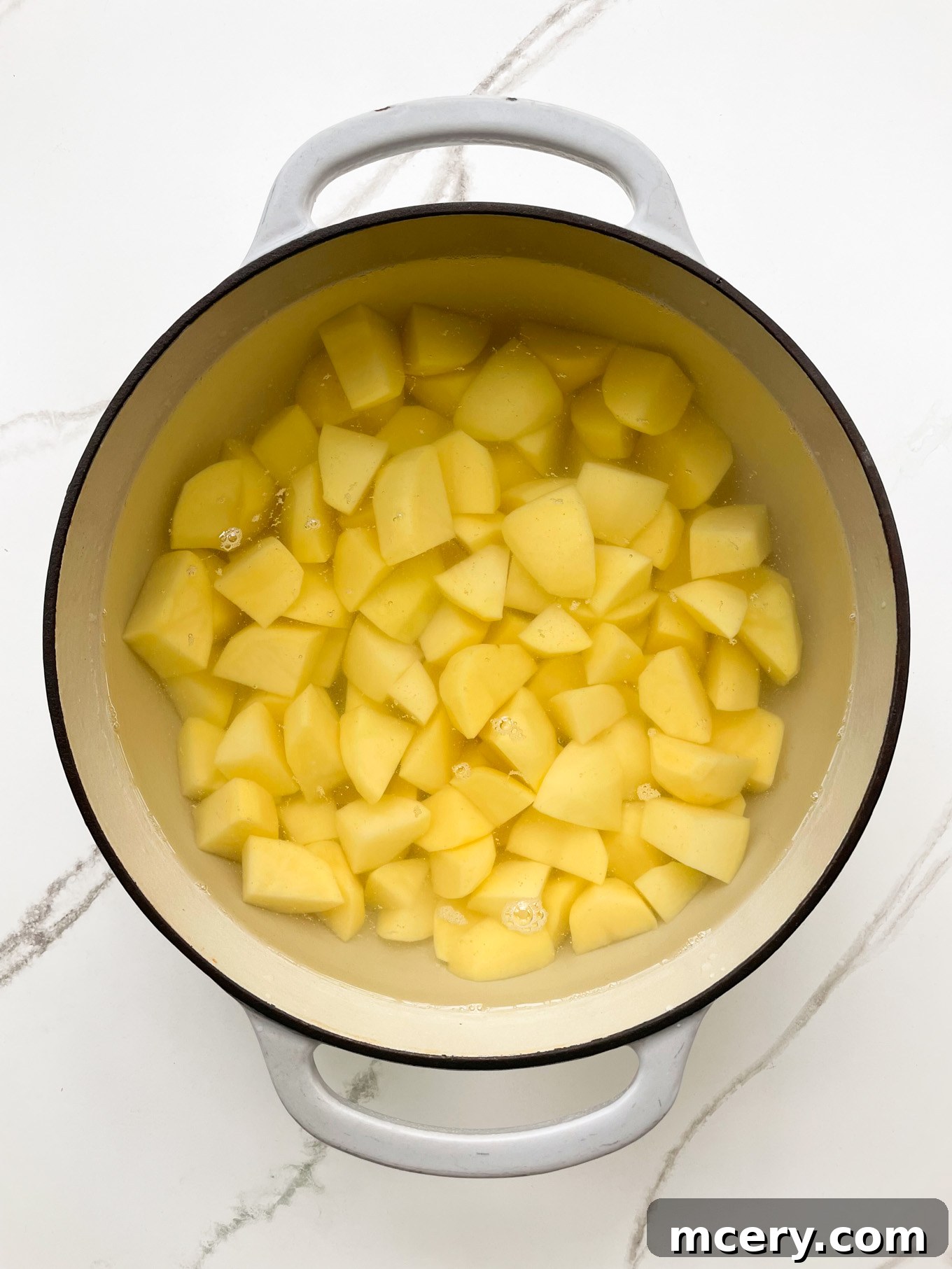
Step 1: Cook the Potatoes to Perfection. Begin by placing your peeled and uniformly cut potato chunks (1 to 2 inches is ideal for even cooking) into a large pot. Cover them completely with cold water, ensuring there’s at least an inch or two of water above the potatoes. Add a generous pinch of salt to the water; this is essential for seasoning the potatoes from the inside out. Bring the water to a boil over medium-high heat. Once boiling, reduce the heat to medium and let the potatoes simmer gently for about 15-20 minutes, or until they are completely fork-tender. You should be able to easily pierce them with a fork with little resistance. Avoid overcooking, which can lead to watery potatoes.
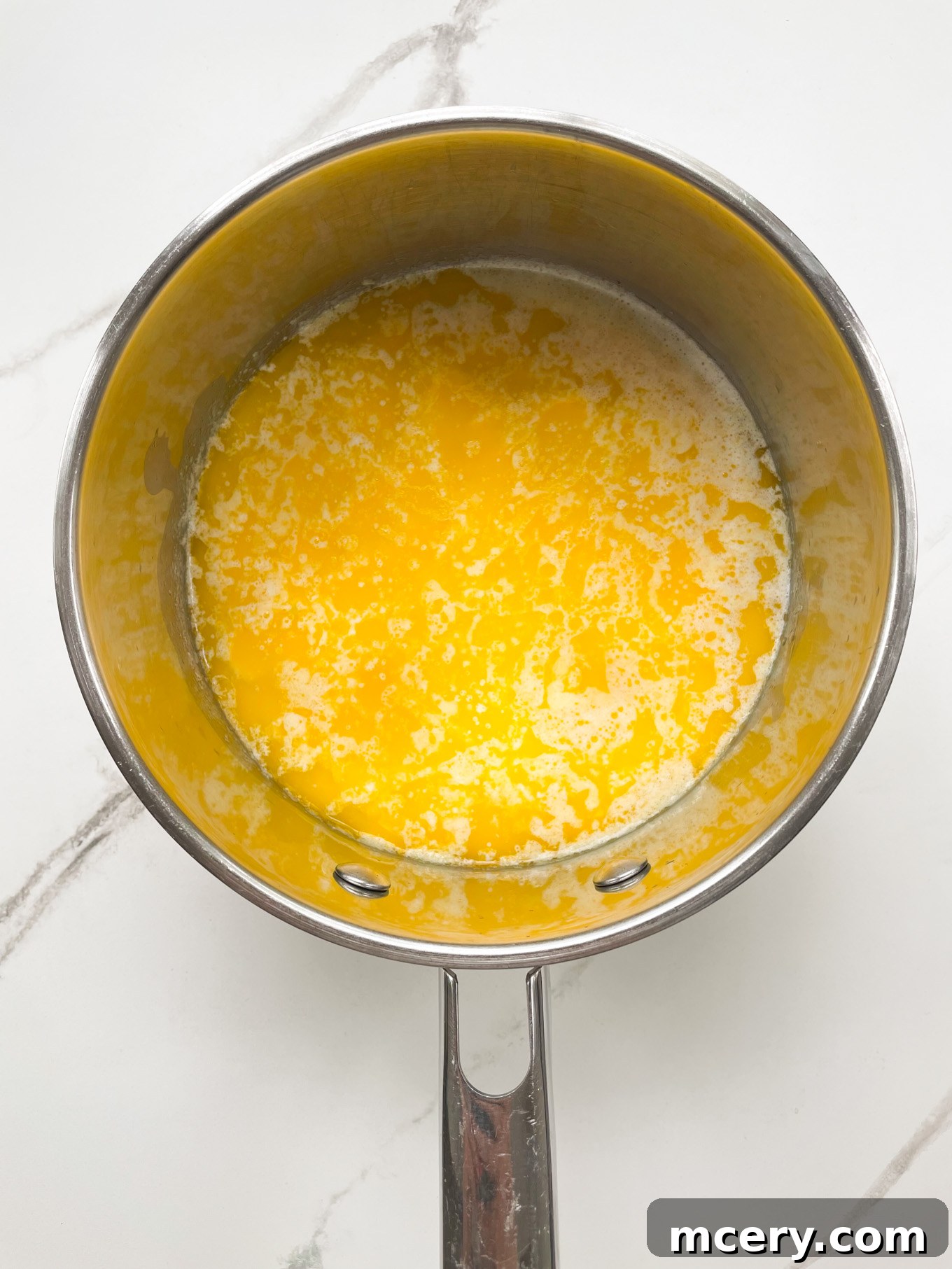
Step 2: Prepare the Flavorful Dairy Mixture. While your potatoes are cooking, melt the butter in a small saucepan over medium heat. Once the butter is melted and shimmering, add the minced garlic. Cook the garlic for just about 30 seconds, stirring constantly, until it becomes fragrant. Be very careful not to let the garlic brown or burn, as burnt garlic can taste bitter. Next, pour in the whole milk and continue to cook, stirring occasionally, just until the milk is warmed through and steam begins to rise. Do not bring the milk to a boil. Warming the dairy prevents the potatoes from seizing up and allows for smoother incorporation.
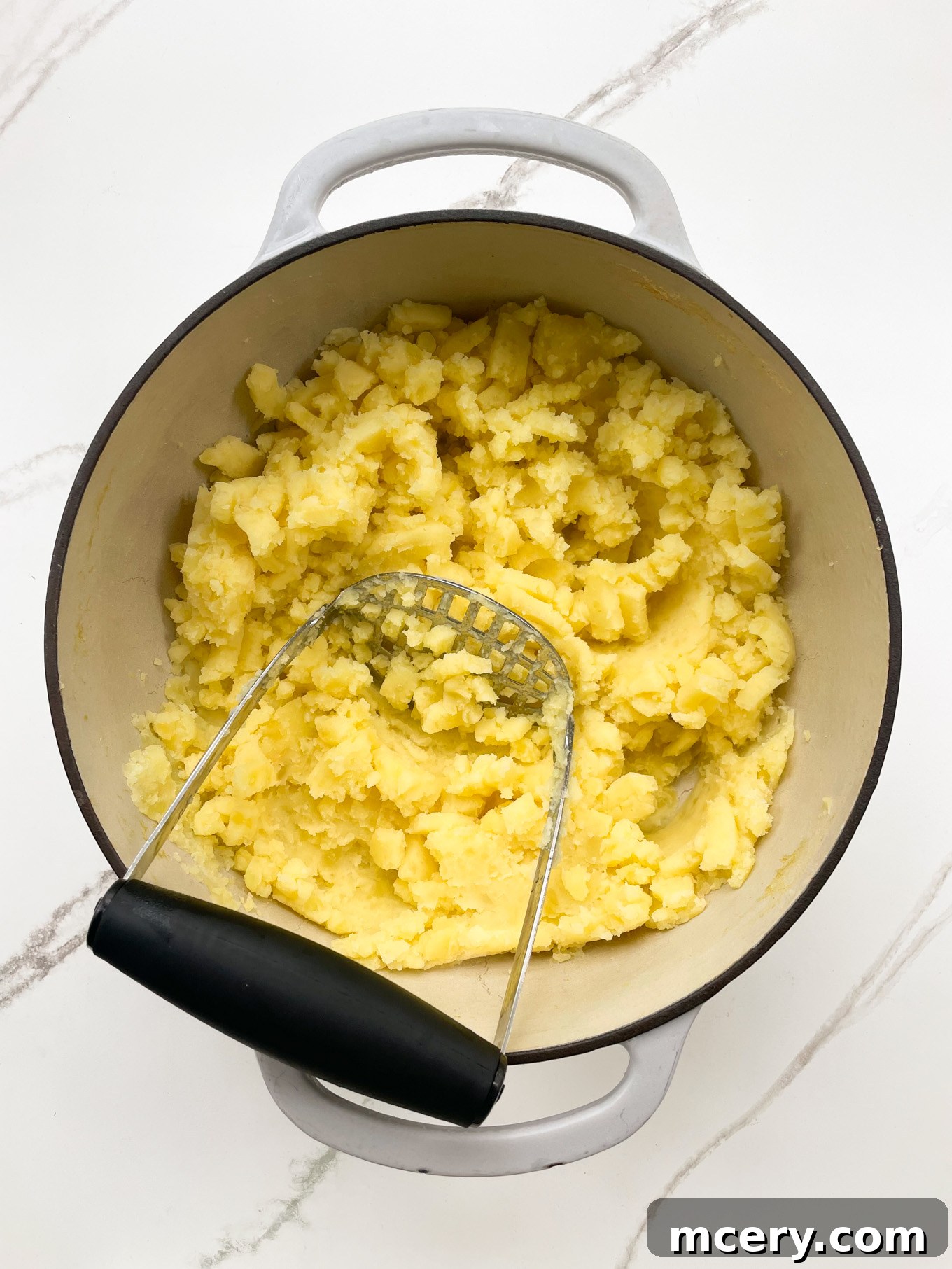
Step 3: Mash the Hot Potatoes. Once the potatoes are tender, drain them thoroughly in a colander. For the creamiest results, you can let them sit in the colander for a minute or two to allow any excess steam to evaporate. Immediately return the hot, drained potatoes to the empty pot. Using a sturdy potato masher, begin to mash the potatoes. Mash gently and consistently until they reach your desired consistency – whether you prefer a slightly rustic, chunky texture or a completely smooth puree. Avoid over-mashing or using an electric mixer, which can activate too much starch and lead to gluey potatoes.
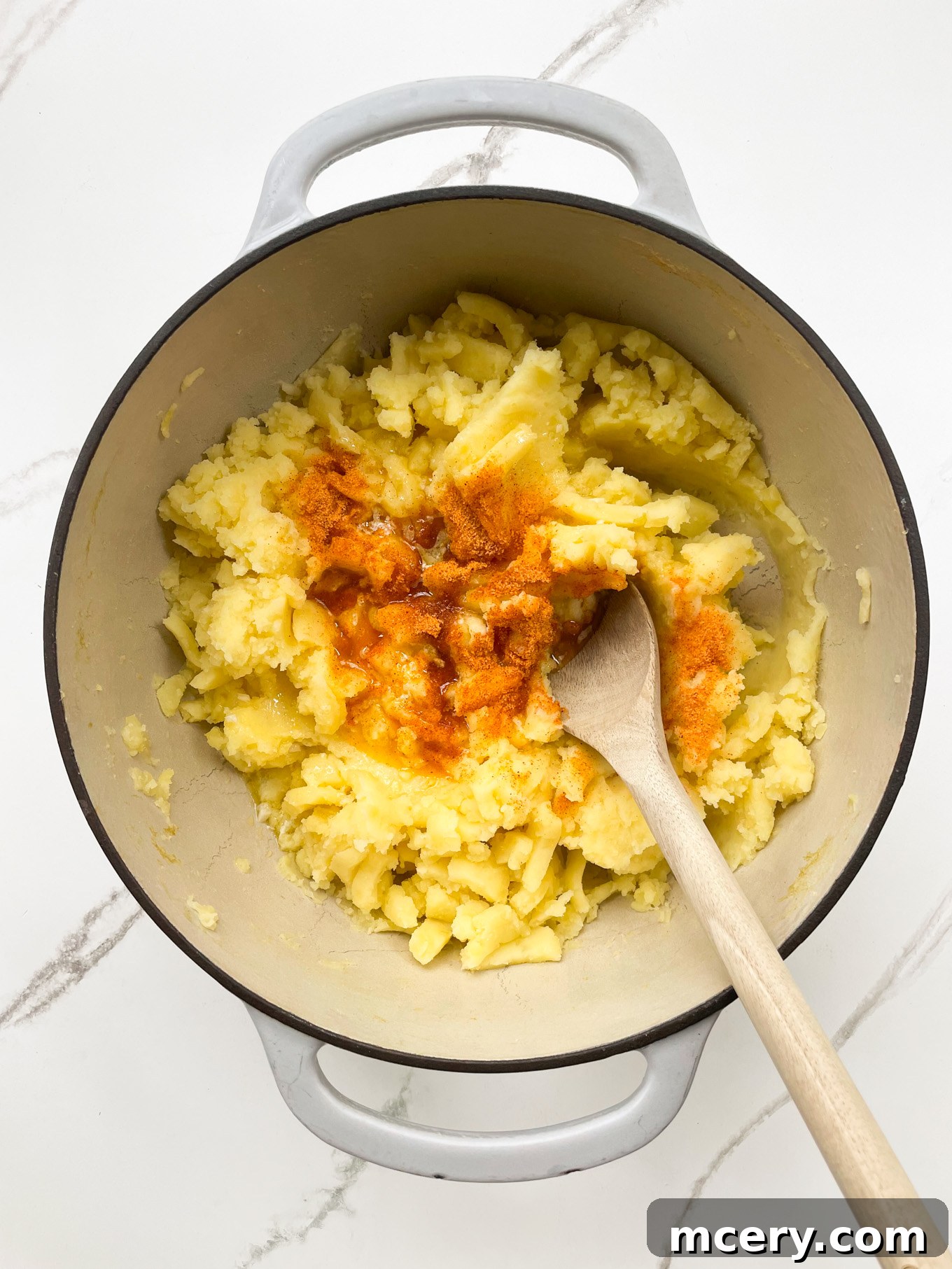
Step 4: Incorporate the Flavorful Liquid. Pour about half of the warm milk and garlic mixture over the mashed potatoes. Immediately sprinkle in the seasoned salt. Using a wooden spoon or a spatula, gently fold the liquid and seasoning into the potatoes. Mix just until the potatoes have absorbed the liquid and everything is well combined. Resist the urge to vigorously stir or beat the potatoes, as this can easily lead to a gummy texture.
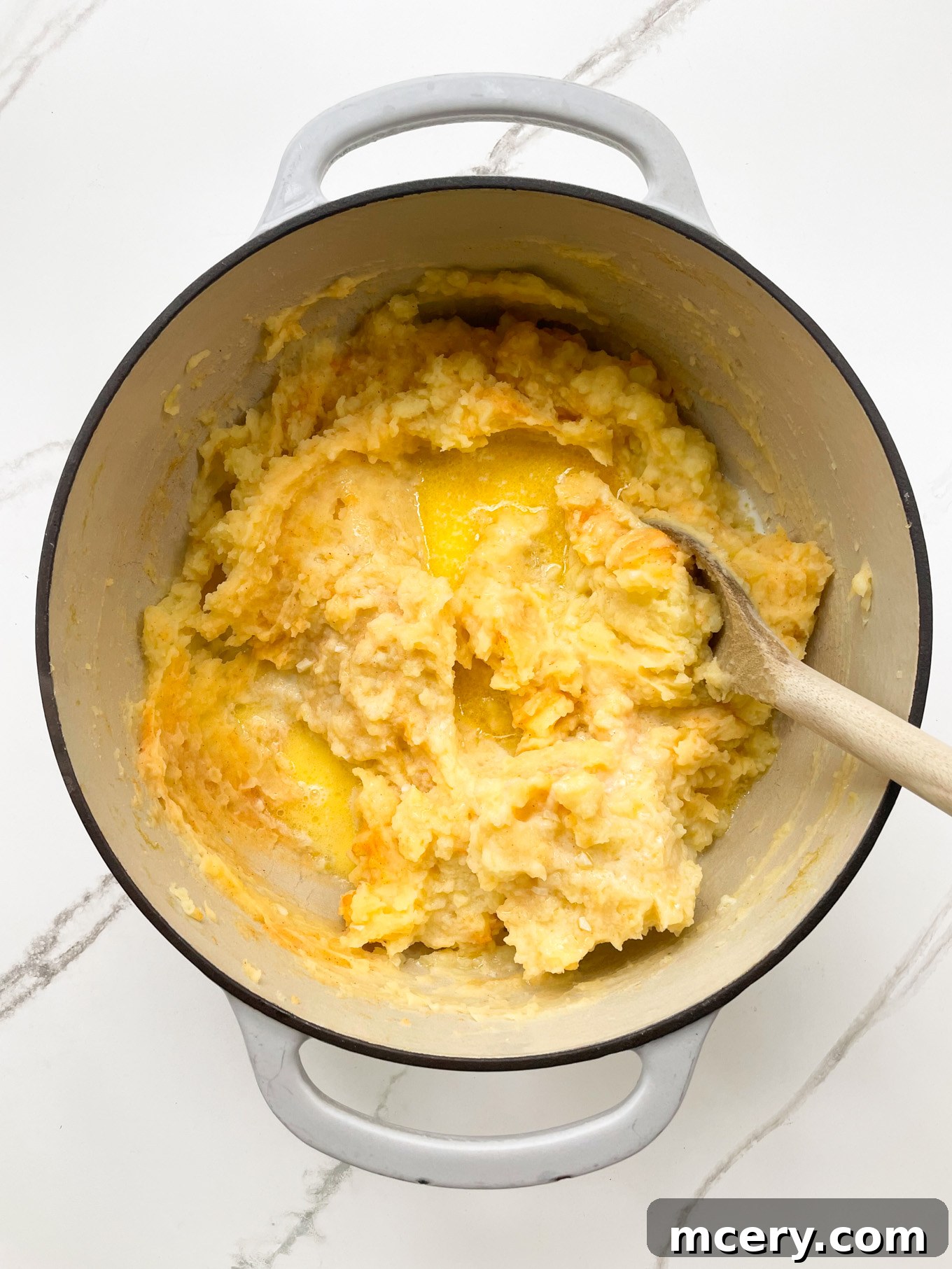
Step 5: Finish for Ultimate Creaminess. Once the first half of the liquid has been fully soaked up by the potatoes, add the remaining milk and butter mixture. Continue gently folding it into the potatoes with your spoon or spatula. Keep mixing until the potatoes are smooth, creamy, and have achieved your desired luxurious consistency. The key here is gentle incorporation to maintain that delightful texture.
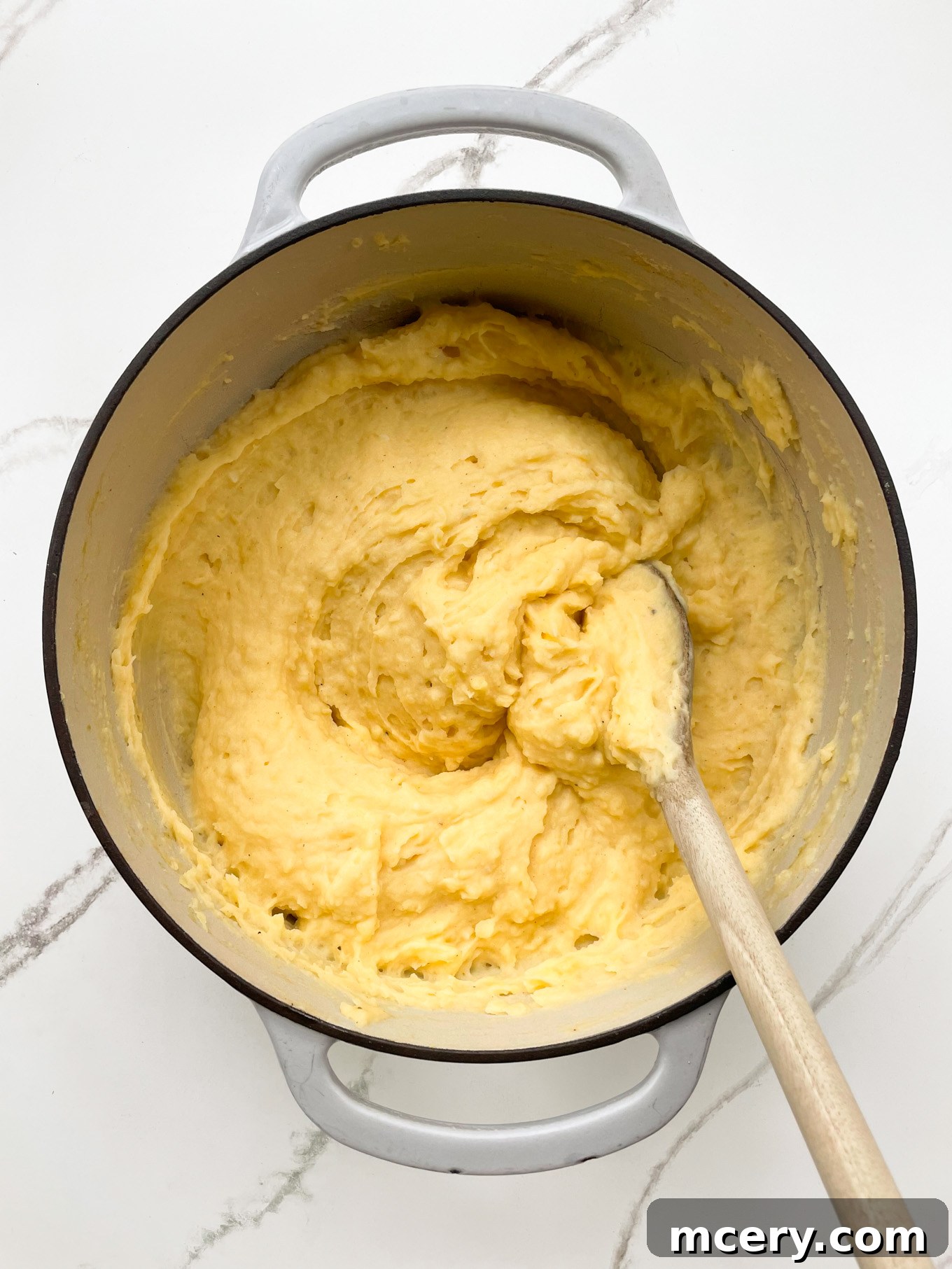
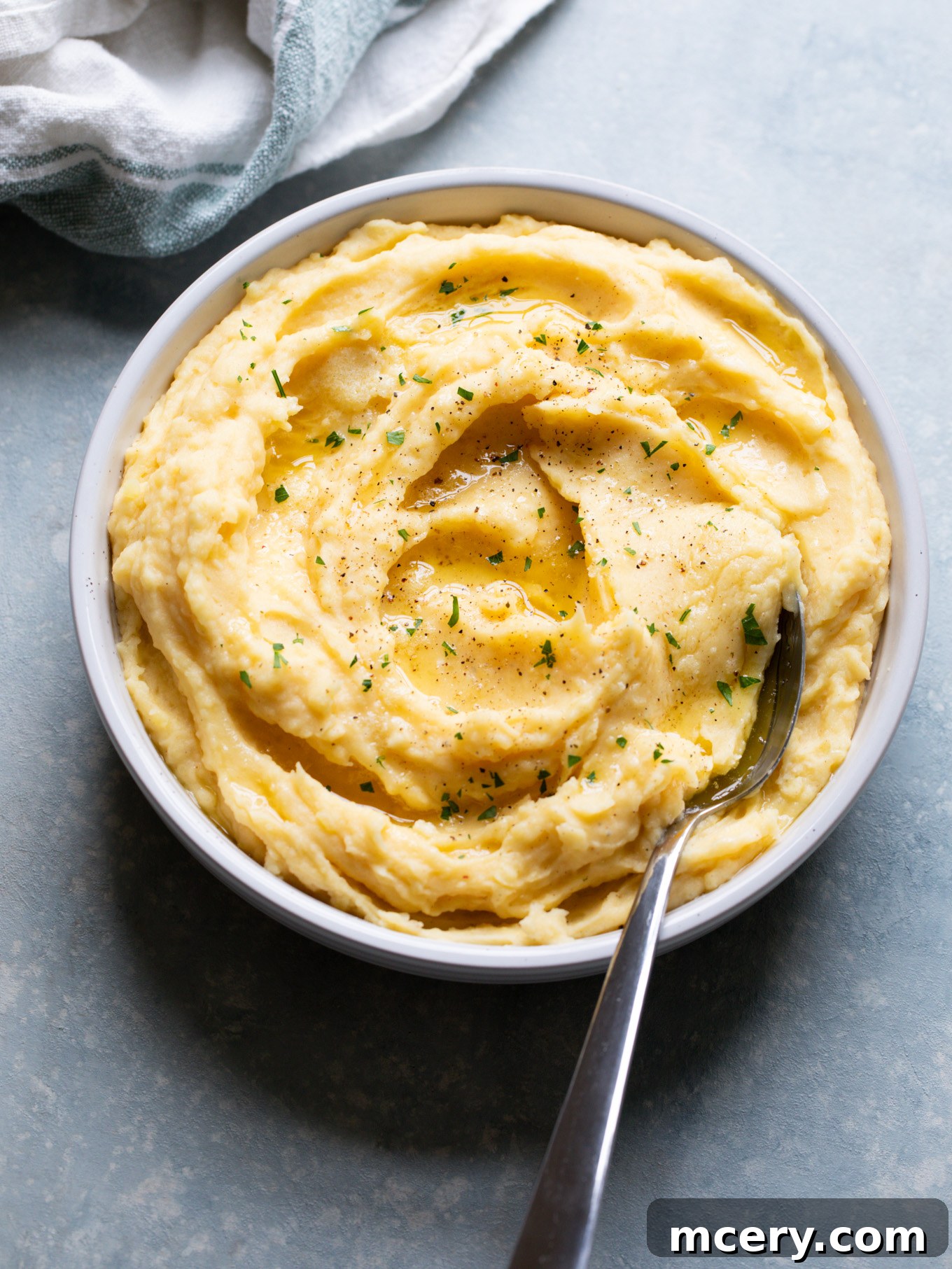
Step 6: Season and Serve. Take a small taste of your beautifully mashed potatoes. This is your chance to adjust the seasoning! Add more kosher salt and freshly ground black pepper as needed to enhance the flavors to your liking. If desired, garnish with freshly chopped parsley or chives for a pop of color and freshness. Serve immediately and enjoy the ultimate comfort food experience!
Creative Variations for Your Mashed Potatoes
While our classic garlic mashed potatoes are spectacular on their own, they also serve as a fantastic base for endless creative variations. Don’t be afraid to experiment and customize them to your personal taste!
- Embrace a Rustic Texture (Skin-On): For a more robust and rustic consistency, leave some of the potato skins intact before boiling and mashing. This adds a delightful chewiness, extra fiber, and a visually appealing speckled texture. This variation works especially well with Yukon Gold or red potatoes, which have thinner skins.
- Explore Different Potato Types (Red Potatoes): While starchy potatoes are ideal for ultimate creaminess, using red potatoes can offer a slightly different and equally delicious experience. Red potatoes are waxier and hold their shape better, resulting in a slightly firmer, yet still tender, mash. They are particularly good for skin-on mashed potatoes as their vibrant red skins add beautiful color and are quite thin.
- Loaded Mashed Potatoes (Sour Cream and Chives): Transform your mash into a “loaded baked potato” experience by stirring in a generous dollop of sour cream (or Greek yogurt for a healthier twist) and plenty of freshly chopped chives or green onions. A sprinkle of crispy bacon bits and shredded cheddar cheese would complete this indulgent variation.
- Slow Cooker Mashed Potatoes (Hands-Off Convenience): For ultimate convenience, prepare your mashed potatoes in a slow cooker! Simply add the peeled and chopped potato pieces along with the minced garlic and enough water or chicken broth to cover them. Cook on high for 3 to 4 hours or on low for 6-8 hours, until the potatoes are tender. Then, drain any excess liquid, set the slow cooker to the “warm” setting, add the remaining butter, milk, and seasonings, and mash directly in the slow cooker to your desired consistency.
- Roasted Garlic Mashed Potatoes: For an even deeper, sweeter garlic flavor, consider roasting whole heads of garlic until soft and caramelized before mashing. The roasted garlic cloves will be incredibly spreadable and add a nuanced, mellow garlic note without the sharpness of raw garlic.
- Herbaceous Mashed Potatoes: Infuse your mashed potatoes with fresh herbs like rosemary, thyme, or sage. You can add whole sprigs to the boiling water or simmer them with the milk and butter mixture, removing them before mashing, or simply stir in finely chopped fresh herbs at the end.
- Cheesy Mashed Potatoes: Elevate the comfort factor by folding in your favorite shredded cheese! Cheddar, Gruyère, Parmesan, or even a creamy goat cheese would be delicious additions, melting into the hot potatoes for an extra layer of flavor and richness.
- Brown Butter Mashed Potatoes: For a nutty, more complex flavor, brown your butter before adding it to the milk. Simply cook the butter over medium heat until it turns a light golden-brown and smells nutty. This adds an incredible depth that complements the potatoes beautifully.
Expert Tips for Perfect Homemade Mashed Potatoes Every Time
Achieving that dreamily creamy and flavorful mashed potato dish is easier than you think when you follow these golden rules. These tips will help you avoid common pitfalls and ensure your potatoes are always a hit:
- Cut Potatoes into Equal-Sized Pieces: Uniformity is key for even cooking. If your potato pieces are different sizes, some will be overcooked and waterlogged while others remain undercooked and hard. Aim for 1 to 2-inch chunks for optimal results.
- Always Start with Cold Water: This is a crucial step for perfectly cooked potatoes. Placing potatoes into cold water and bringing it to a boil slowly ensures that the potatoes cook evenly from the outside in. If you start with hot water, the outside will cook faster and likely turn mushy before the center is tender. Don’t forget to generously salt your cooking water – it’s the only chance to season the potatoes internally!
- Warm the Butter and Milk: This seemingly small step makes a huge difference. Adding cold dairy to hot potatoes can cool them down, making them harder to mash and causing them to absorb the liquid less effectively. Warming the butter and milk (and garlic!) before mixing allows for easier incorporation, prevents the potatoes from becoming stiff, and helps maintain their temperature and fluffy texture.
- Mash the Potatoes While They’re Hot: Potatoes are most pliable and absorbent when they are hot and steamy. Mashing them immediately after draining, while still hot, makes the process much easier and helps them better absorb the butter and milk for that ultra-creamy consistency. Cold potatoes are more resistant to mashing and can become gummy.
- Avoid Over-Mashing or Overworking: This is arguably the most important tip to prevent gluey mashed potatoes. Potatoes contain starch, and vigorous mashing or using an electric mixer can release too much of this starch, turning your beautiful mash into a sticky, unappetizing paste. Use a hand masher, potato ricer, or food mill and mash gently until just smooth. Stop as soon as you reach your desired consistency.
- Season in Layers: Don’t rely solely on seasoning at the end. Start by salting the cooking water. Then, add seasoned salt and finish with more salt and pepper to taste after the dairy is incorporated. This builds flavor from the beginning and ensures a well-seasoned final product.
- Taste and Adjust: Always taste your mashed potatoes before serving. Salt and pepper levels can vary based on individual preference and the seasoned salt brand used. Adjust as needed to achieve the perfect balance of flavors.
What to Serve with Your Luxurious Garlic Mashed Potatoes
These incredibly rich and creamy garlic mashed potatoes are the ultimate versatile side dish, pairing beautifully with a wide array of main courses. Their savory, comforting profile makes them a welcome addition to everything from elegant roasts to simple grilled proteins. Here are some of our favorite main dishes that perfectly complement their flavor and texture:
- Maple Mustard Salmon: The sweet and tangy glaze of the salmon offers a delightful contrast to the savory, creamy potatoes.
- Grilled Greek Lemon Chicken Drumsticks: The bright, zesty flavors of the chicken cut through the richness of the potatoes beautifully.
- Roasted Bone-In Turkey Breast: A classic holiday pairing! The moist turkey and flavorful gravy are a match made in heaven with creamy mashed potatoes.
- Roasted Half Chicken: Simple, flavorful roasted chicken and creamy potatoes create a quintessential comfort meal.
- Baked Buffalo Chicken Tenders: The cooling effect of the potatoes is a perfect balance for spicy buffalo chicken.
- Simple Whole Roasted Chicken: A wholesome and satisfying pairing that never disappoints, ideal for a family dinner.
- Steak or Beef Roasts: A juicy steak or a tender pot roast with its rich pan juices is perfectly sopped up by these creamy potatoes.
- Pork Chops: Whether grilled, pan-seared, or baked, pork chops pair wonderfully with a side of creamy mash.
- Meatloaf: The ultimate comfort food duo – classic meatloaf and fluffy mashed potatoes.
Storing and Reheating Creamy Garlic Mashed Potatoes
One of the many advantages of these garlic mashed potatoes is how well they store and reheat, making them perfect for meal prep or enjoying delicious leftovers throughout the week. Properly stored, they can maintain their deliciousness for several days.
How to Store Mashed Potatoes
To keep your leftover mashed potatoes fresh and flavorful, allow them to cool completely to room temperature (this prevents condensation and keeps them from becoming soggy). Once cooled, transfer them to an airtight container. They will stay fresh and delicious in the refrigerator for up to 4 days.
How to Reheat Mashed Potatoes for Creamy Results
Mashed potatoes can sometimes stiffen in the fridge, but restoring them to their original creamy glory is easy. The key is to reheat gently and often with a splash of extra liquid:
- Microwave Method: For individual servings or smaller batches, transfer the mashed potatoes to a microwave-safe bowl. Add a splash of milk or cream (about 1-2 tablespoons per cup of potatoes) to help rehydrate them. Cover the bowl loosely and microwave on medium power, stirring every 1-2 minutes, until heated through and creamy.
- Stovetop Method: For larger quantities, transfer the mashed potatoes to a saucepan over low to medium-low heat. Add a splash of milk, cream, or even chicken broth. Stir constantly, breaking up any lumps, until the potatoes are heated through and regain their smooth, creamy consistency. This method gives you the most control over the texture.
- Oven Method: If you prefer to reheat a large batch in the oven, transfer the mashed potatoes to a buttered baking dish. Add a few tablespoons of milk or cream over the top and cover the dish tightly with foil. Bake at 350°F (175°C) for about 25-30 minutes, or until the potatoes are thoroughly warmed through. Stir gently before serving.
Can You Freeze Mashed Potatoes?
Yes, you can! Mashed potatoes freeze quite well, though their texture may change slightly upon thawing and reheating. To freeze, allow the potatoes to cool completely. Portion them into freezer-safe containers or heavy-duty freezer bags (removing as much air as possible). They can be frozen for up to 1 month. When you’re ready to enjoy them, thaw overnight in the refrigerator, then reheat using one of the methods above, adding extra warm milk or butter as needed to restore their creamy texture.
Troubleshooting: Perfecting Your Mashed Potatoes
Even seasoned cooks can encounter a hiccup or two when making mashed potatoes. Don’t worry, most common issues are easily fixed! Here’s a guide to troubleshooting and ensuring your mash is always perfect:
- Potatoes turned gluey or gummy? This is the most common complaint and almost always a sign of over-mixing. When potatoes are overworked, they release too much starch, resulting in that unpleasant sticky, gluey texture. To fix it, you can sometimes add a splash of warm milk or broth to loosen it slightly, but prevention is best: mash gently with a hand masher or ricer, and stop as soon as they’re smooth.
- Too thick or stiff? If your mashed potatoes feel dense or dry, they likely need more liquid. Simply add a splash of *warm* milk, cream, or even chicken broth, and gently fold it in with a wooden spoon or spatula until the texture loosens and becomes beautifully creamy again. Adding cold liquid will cool down your potatoes and can make them seize.
- Too runny or watery? If you’ve accidentally added too much liquid, don’t despair! Transfer the potatoes back to a pot over very low heat. Let them sit uncovered for a few minutes, stirring occasionally, to allow some of the excess liquid to evaporate. Be careful not to scorch the bottom. You can also try adding a tablespoon of potato flakes or instant mashed potato granules to absorb extra moisture, though this can slightly alter the texture.
- Lumpy mashed potatoes? Lumps usually mean the potatoes weren’t cooked long enough or weren’t mashed thoroughly. The solution for next time is to ensure they are fork-tender throughout before draining. If you have lumps in your current batch, you can gently push them through a fine-mesh sieve or use a potato ricer for a smoother consistency.
- Not creamy enough? If your potatoes lack that luxurious creaminess, re-evaluate your ingredients and method. Ensure you’re using starchy potatoes (like Russet or Yukon Gold) and high-fat dairy (whole milk or cream). Critically, always warm your dairy and butter before adding it to the hot potatoes, and mash gently to allow for optimal absorption without developing a gummy texture.
- Lacking flavor or bland? Flavor comes in layers! First, make sure you salted the cooking water generously. Then, taste and adjust seasoning (salt, pepper, seasoned salt) after all ingredients are incorporated. Don’t be shy with salt – potatoes need it! A little extra butter or a dash of garlic powder can also boost flavor.
- Dry or dull after reheating? This is common. When reheating, always stir in an extra splash of warm milk, cream, or butter. This rehydrates the potatoes and brings them back to their original luscious, creamy state.
Garlic Mashed Potato Recipe FAQs
If you find the garlic flavor overpowering, you can try a few tricks. First, add a splash of lemon juice or white wine vinegar; the acidity can help cut through the strong garlic taste and brighten the dish. You can also incorporate more unsalted butter or a bit of sour cream to dilute the intensity and add richness. For a very strong garlic flavor, adding a few extra plain, unseasoned mashed potatoes (if you have them) can help balance it out.
Mashed potatoes become gluey or gummy when the potatoes release too much starch. This primarily happens when potatoes are overworked or mashed too heavily. Using an electric mixer, food processor, or over-mashing with a hand masher can rupture too many starch cells, creating a sticky, unpleasant texture. The best practice is to mash gently with a hand masher or use a potato ricer or food mill for a light and fluffy result.
Absolutely! Mashed potatoes are an excellent make-ahead dish, perfect for busy holidays or meal prep. You can prepare them **up to 2-3 days ahead** of time. After making them, allow them to cool completely to room temperature, then transfer them to an airtight container and refrigerate. When you’re ready to serve, reheat them gently on the stovetop or in the oven, adding a splash of warm milk, cream, or butter as needed to restore their creamy consistency and prevent them from drying out.
Yes, mashed potatoes can be frozen! To do so, let them cool completely after preparation. Portion them into freezer-safe containers or heavy-duty freezer bags (ensure to squeeze out as much air as possible to prevent freezer burn). They can be frozen for **up to 1 month**. Be aware that the texture may change slightly after freezing and thawing, sometimes becoming a bit grainier. To bring them back to creamy perfection when reheating, stir in a little extra warm milk, cream, or butter.
Several factors contribute to truly creamy mashed potatoes. First, using **starchy potatoes** like Russets or Yukon Golds is essential, as their cellular structure breaks down easily for a smooth texture. Second, **warming the dairy (milk and butter)** before adding it to the hot potatoes ensures better absorption and prevents the potatoes from stiffening. Third, **gentle mashing** with a potato masher, ricer, or food mill, avoiding overworking, is crucial to prevent the release of too much starch, which can lead to a gluey texture. Lastly, a generous amount of **butter and high-fat milk or cream** provides the richness and velvety mouthfeel.
Yes, you can use milk alternatives, but be mindful of the flavor and fat content. Unsweetened plain almond milk or oat milk can work, but they may result in a slightly less rich and creamy texture compared to whole milk. For best results, choose a full-fat, unsweetened variety of plant-based milk and consider adding a bit more butter or even a swirl of dairy-free cream cheese or vegan butter to compensate for the richness.
While fresh garlic is always recommended for the brightest and most potent flavor, you can use pre-minced garlic from a jar in a pinch. However, be aware that jarred garlic often has a slightly milder, sometimes even slightly acrid, flavor compared to fresh. You might need to adjust the quantity to achieve your desired garlic intensity. Be sure to check the ingredient list for any added preservatives or flavors.
Explore More Delicious Potato Recipes!
If you’re a fan of our creamy garlic mashed potatoes, you’ll surely love these other potato-centric dishes. They’re perfect for expanding your recipe repertoire and delighting your taste buds!
If you make this recipe, please leave a ⭐️ STAR rating and COMMENT letting us know how you liked the recipe. Your feedback helps us and other home cooks!
The Best Garlic Mashed Potatoes Recipe
⭐
⭐
⭐
⭐
⭐
5 from 1 review
- Author: Katya
- Prep Time: 15 min
- Cook Time: 15 min
- Total Time: 30 minutes
- Yield: 6 servings
- Category: Side Dish
- Method: Stovetop
- Cuisine: American
Description
These Homemade Garlic Mashed Potatoes come together with simple ingredients in about 30 minutes. Rich and creamy, it’s the perfect side dish for everything from holiday parties to weeknight dinners!
Ingredients
- 3 lbs. Yukon Golds or Russet potatoes, peeled and cut into 1 to 2 inch pieces
- ½ cup unsalted butter
- 4 garlic cloves, minced
- 1 cup whole milk
- 1 Tbsp. seasoned salt
- Kosher salt and black pepper, to taste
- Chopped fresh parsley or chives, for garnish, optional
Instructions
- Place the potato chunks in a large pot and cover with cold water. Add a generous pinch of salt to the water. Bring to a boil over medium-high heat, then reduce the heat to medium and let the potatoes simmer until they are fork-tender, about 15-20 minutes.
- While potatoes cook, melt butter in a small saucepan over medium heat. Add the minced garlic, and cook until fragrant, about 30 seconds. Be careful not to let the garlic burn. Add milk and cook just until warmed through. Avoid boiling the milk.
- Once the potatoes are cooked, drain them well. Use a colander if needed. Using a potato masher, mash the potatoes to your desired consistency.
- Pour about half of the milk mixture over the mashed potatoes and sprinkle seasoned salt. Fold it in with a wooden spoon or spatula until the potatoes have soaked up the liquid. Repeat with the remaining milk.
- Taste the potatoes and then season with salt and pepper, as needed. If desired, serve garnished with parsley or chives.
Notes
- Seasoned salt: After you mix in the seasoned salt, potatoes might have a slightly golden hue to them but it all depends on the brand of seasoned salt you use. I like using Lawry’s brand which has paprika and turmeric in it.
- Leftovers: Keep leftovers refrigerated for up to 4 days. Reheat leftovers in the microwave, stirring every 2 minutes. Or, transfer them to a buttered baking dish, cover with foil, and bake at 350F for about 25 minutes or until the potatoes are warmed through.
Nutrition
- Serving Size: ½ cup or 4 ounces
- Calories: 328
- Sugar: 4 g
- Sodium: 1196 mg
- Fat: 15.6 g
- Carbohydrates: 42.6 g
- Protein: 6.4 g
- Cholesterol: 41.5 mg
We hope this comprehensive guide has equipped you with all the knowledge and tips you need to create the most incredibly creamy and flavorful garlic mashed potatoes. This dish is more than just a side; it’s a celebration of simple ingredients transformed into pure comfort. Enjoy making them for your next meal!