
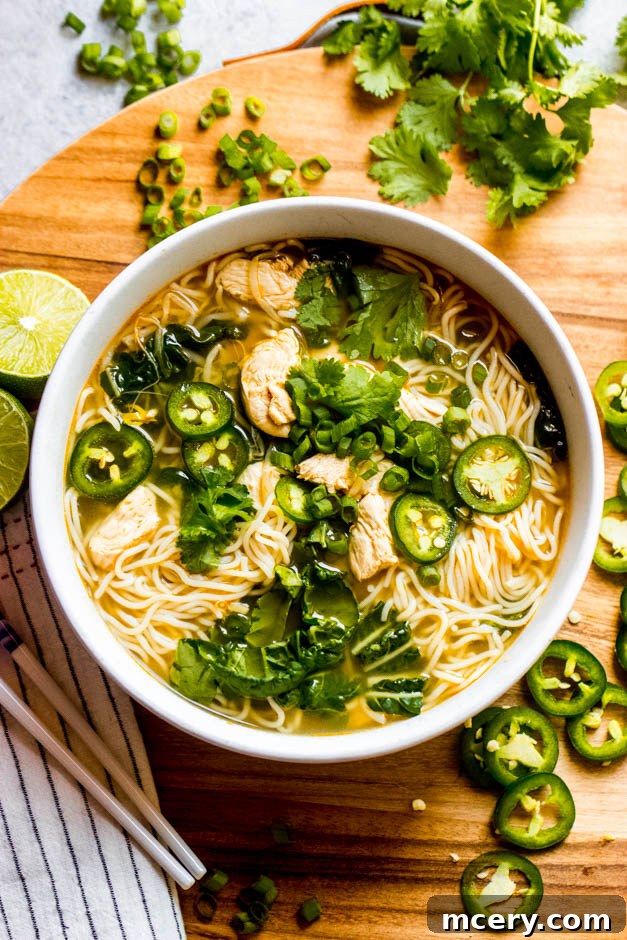
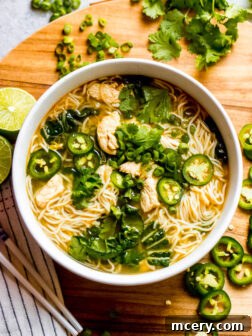
Welcome to the ultimate comfort food experience! This **Vietnamese chicken noodle soup**, often lovingly referred to as an “easy chicken pho,” is my winter essential. It’s a quick and straightforward version of the classic pho soup, delivering all the warmth, heartiness, and vibrant flavors you crave, with just the right touch of gentle heat. Forget long simmering times – this recipe brings the soul-soothing essence of traditional Vietnamese cuisine to your table in a fraction of the time, making it perfect for any weeknight.
Craving more comforting bowls? Don’t miss our Thai Red Curry Noodle Soup for an exotic twist or our classic Lemon Chicken Soup Recipe for a taste of home.
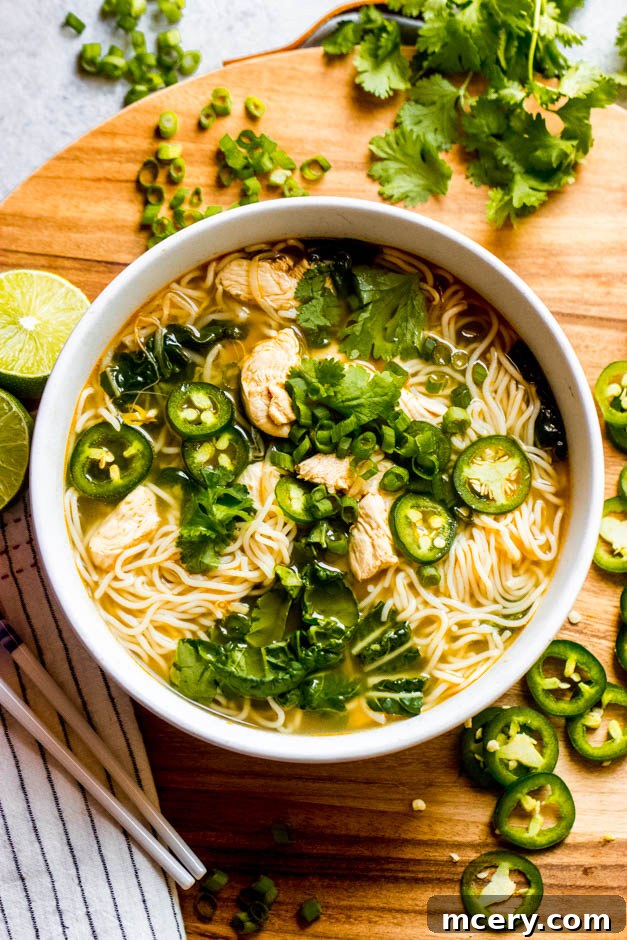
Why This Easy Vietnamese Chicken Noodle Soup Will Become Your Go-To!
This isn’t just any chicken noodle soup; it’s a thoughtfully crafted, simplified approach to Vietnamese chicken pho that prioritizes flavor and convenience. Here’s why you’ll absolutely adore this recipe:
- Effortless Weeknight Favorite: I’ve perfected this recipe over countless cold evenings when a hearty, satisfying meal was a must, but time was short. It’s a brilliant shortcut to traditional pho, offering bold, authentic flavors without requiring hours of simmering. You get all the depth and aroma you expect from a slow-cooked soup, ready in under an hour. It truly makes gourmet-level comfort accessible on even the busiest of days.
- Incredibly Deep, Flavorful Broth: The heart of any great pho is its broth, and this recipe doesn’t disappoint. The secret lies in using a high-quality chicken stock – whether it’s my rich homemade chicken stock or a premium store-bought option like Pacific Foods Organic Chicken Stock. This base is then infused with fresh garlic, pungent fish sauce, aromatic ginger, and a hint of paprika. The result is a savory, umami-rich broth that tastes like it’s been simmering for hours, providing an authentic foundation for our quick chicken pho.
- A Verified Crowd-Pleaser: This recipe boasts a consistently high five-star rating and glowing reviews from home cooks everywhere. My family consistently polishes off their bowls, savoring every last spoonful, and I frequently receive messages from readers echoing the same enthusiasm. Its undeniable appeal makes it a trusted favorite for cooks of all skill levels, guaranteeing a delightful dining experience for everyone at your table.
- Customizable and Versatile: One of the best aspects of Vietnamese chicken noodle soup is its adaptability. You can easily adjust the spice level, add different vegetables, or experiment with various toppings to suit individual preferences. This makes it a fantastic meal for families, as everyone can personalize their bowl to their liking. Plus, it’s a great way to use up leftover vegetables in your fridge!
- Wholesome and Nourishing: Packed with lean protein from the chicken, essential vitamins from the bok choy and bean sprouts, and invigorating aromatics, this soup is as healthy as it is delicious. It’s a nourishing choice that will leave you feeling satisfied and energized, making it a perfect meal to combat winter chills or simply enjoy a light yet fulfilling dinner.
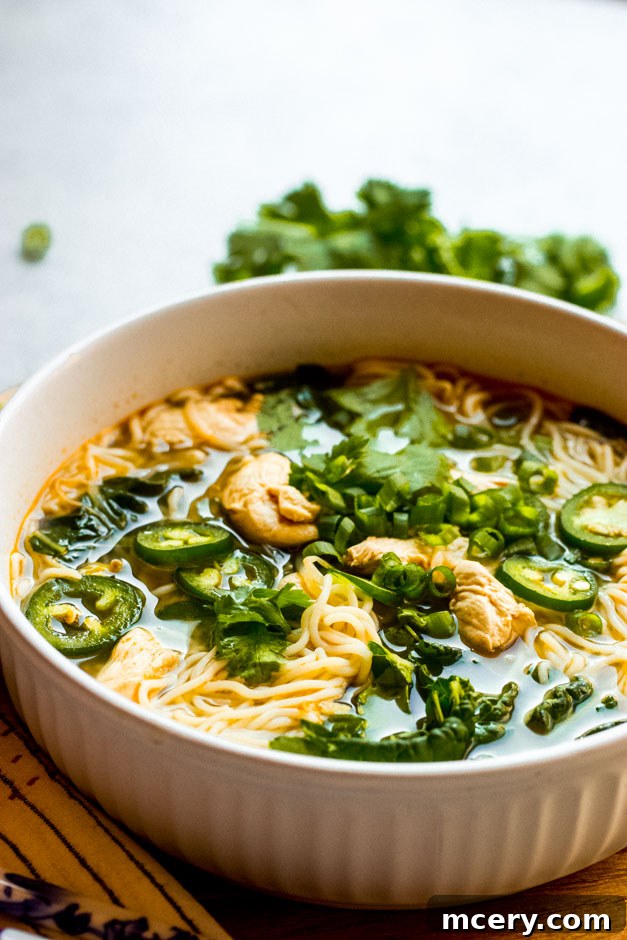
Essential Ingredients for Your Homemade Chicken Pho
Crafting this flavorful Vietnamese chicken noodle soup requires a thoughtful selection of fresh and pantry staples. Each ingredient plays a crucial role in building the soup’s distinctive taste profile. You’ll need the following to bring this delicious chicken soup to life:
- Ramen Noodles: While traditional pho often uses flat rice noodles, ramen noodles offer a wonderfully chewy texture and are readily available, making this a quicker and easier weeknight adaptation.
- Chicken Tenders: These cutlets cook quickly and remain tender, perfect for a fast-cooking soup. Boneless, skinless chicken breast or thighs can also be used.
- Limes: Fresh lime juice is essential for brightening the broth, adding a crucial acidic balance that lifts all the other flavors.
- Soy Sauce: Contributes a savory, umami depth and a touch of saltiness to the marinade and broth.
- Fish Sauce: A cornerstone of Vietnamese cuisine, fish sauce (nuoc mam) provides an incredible depth of savory, salty, and umami flavor that is irreplaceable. Don’t skip it!
- Fresh Ginger: Adds a warm, spicy, and aromatic kick that is characteristic of Asian broths. Always opt for fresh over powdered for the best flavor.
- Garlic: A fundamental aromatic that builds a robust flavor base for the chicken and the broth.
- Paprika: While not traditionally found in pho, a small amount of paprika in the marinade adds a subtle warmth and a beautiful color to the chicken.
- Chicken Stock: The foundation of your broth. Using a good-quality, flavorful chicken stock (homemade or low-sodium organic store-bought) is paramount for a rich and satisfying soup.
- Bean Sprouts: These add a delightful crunch and freshness, often stirred in right at the end to maintain their crisp texture. Fresh sprouts are preferred if available.
- Bok Choy: A tender and slightly sweet leafy green vegetable that adds color, texture, and nutrients to the soup. Both the whites and greens are edible.
- Toasted Sesame Oil: A finishing oil that imparts a wonderfully nutty, aromatic fragrance and flavor to the hot soup. A little goes a long way.
For serving, elevate your soup with vibrant garnishes such as thinly sliced jalapeño peppers for a gentle heat, fresh cilantro for herbaceous notes, and finely chopped green onions for a mild oniony bite. These toppings are not just for decoration; they add crucial layers of flavor and texture that complete the pho experience.
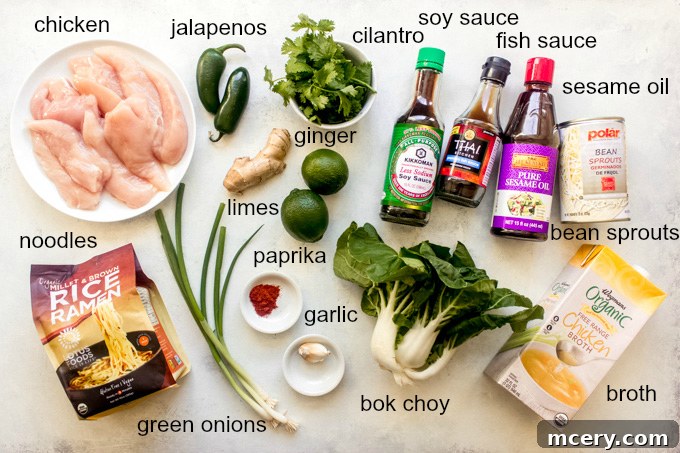
How to Make Quick and Easy Vietnamese Chicken Noodle Soup (A Simple Pho Adaptation)
Creating this delicious chicken pho is surprisingly simple, designed to bring complex flavors to your kitchen without hours of effort. Follow these straightforward steps for a comforting meal:
- Step 1: Marinate the Chicken for Flavor Infusion – In a medium bowl, combine your thinly sliced chicken tenders with the fresh lime juice, soy sauce, fish sauce, finely minced fresh ginger, minced garlic, and paprika. Toss everything together thoroughly until the chicken is evenly coated. Allow this vibrant mixture to marinate at room temperature for at least 15 minutes. This crucial step not only tenderizes the chicken but also infuses it with a burst of essential Vietnamese flavors before cooking, ensuring every bite is rich and aromatic.
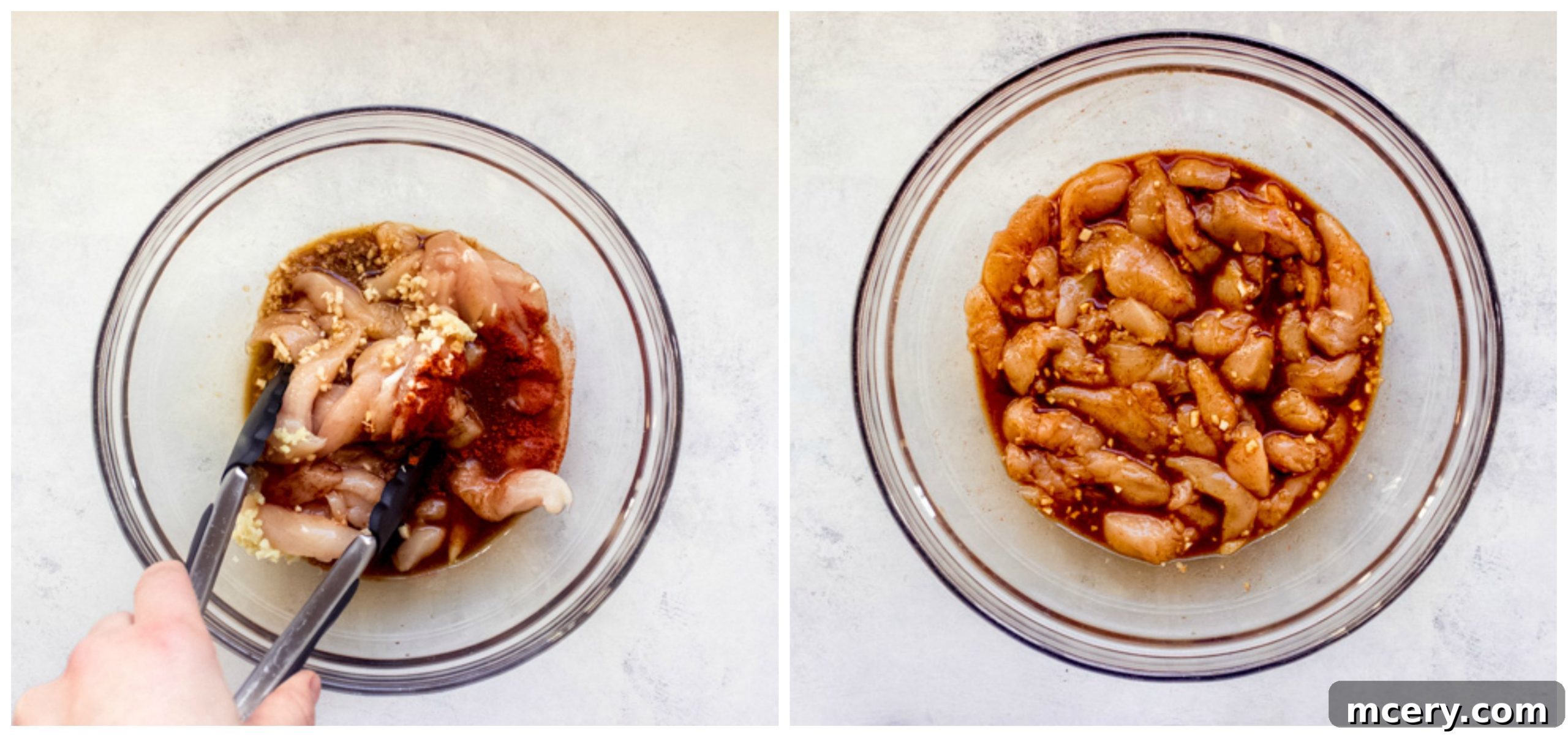
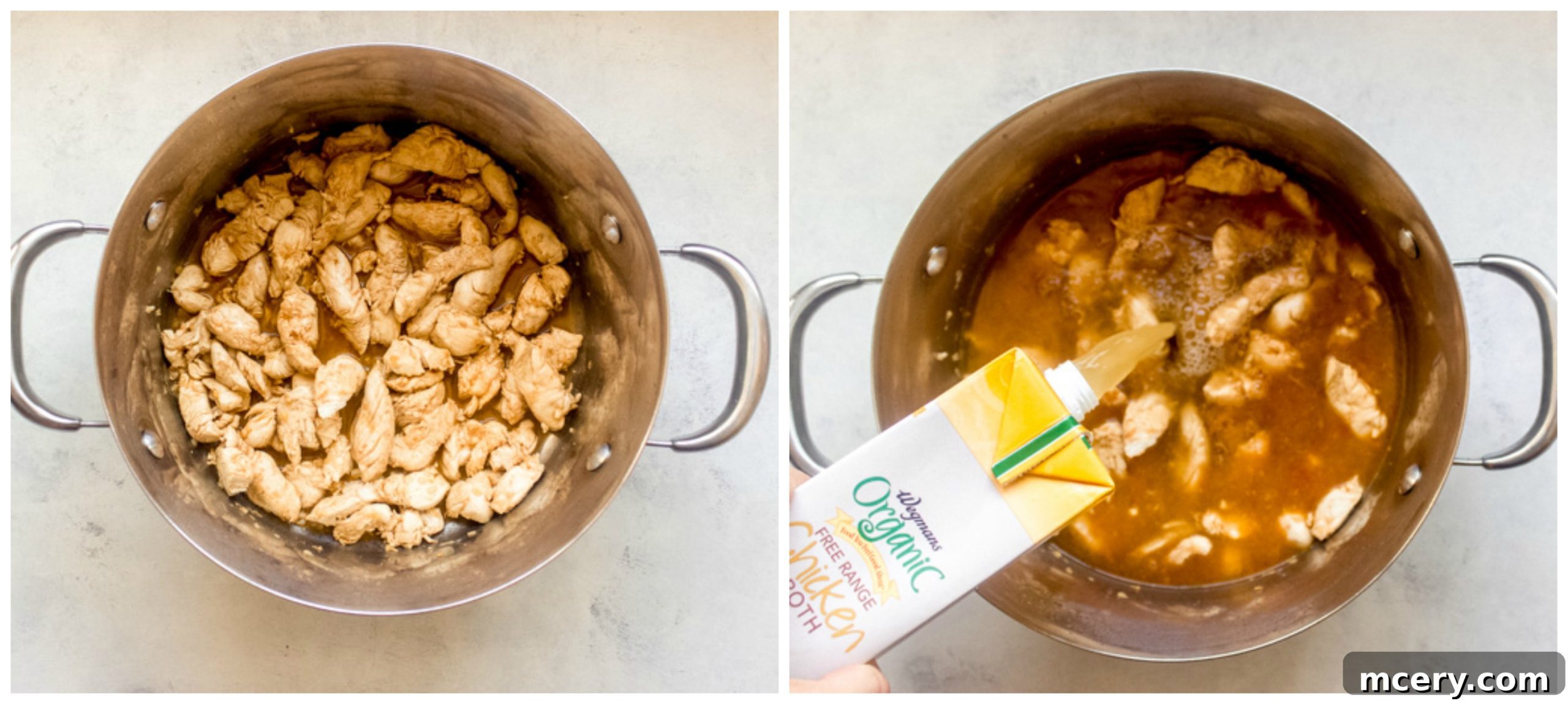
- Step 2: Build the Aromatic Broth Base – Heat 1 tablespoon of avocado oil (or any other neutral-tasting oil) in a 4-quart Dutch oven or a sturdy, heavy-bottomed soup pot over medium-high heat. Once the oil shimmers, add the marinated chicken along with all its flavorful liquid into the pot. Cook the chicken, stirring frequently, for about 3-4 minutes, or until it is no longer pink. Don’t worry if the chicken releases a lot of juice; this will contribute to the rich broth. Season the chicken generously with salt and freshly ground black pepper to taste at this stage.
Now, pour in the 6 cups of good-quality chicken stock. Bring the mixture to a rolling boil. Once boiling, season the stock again with salt and pepper, tasting and adjusting as needed to ensure a well-balanced base. Reduce the heat to medium-low, cover the pot partially, and let it simmer gently for another 5-7 minutes. This allows the chicken to cook through completely and the flavors to meld beautifully, creating a fragrant and deeply savory broth.
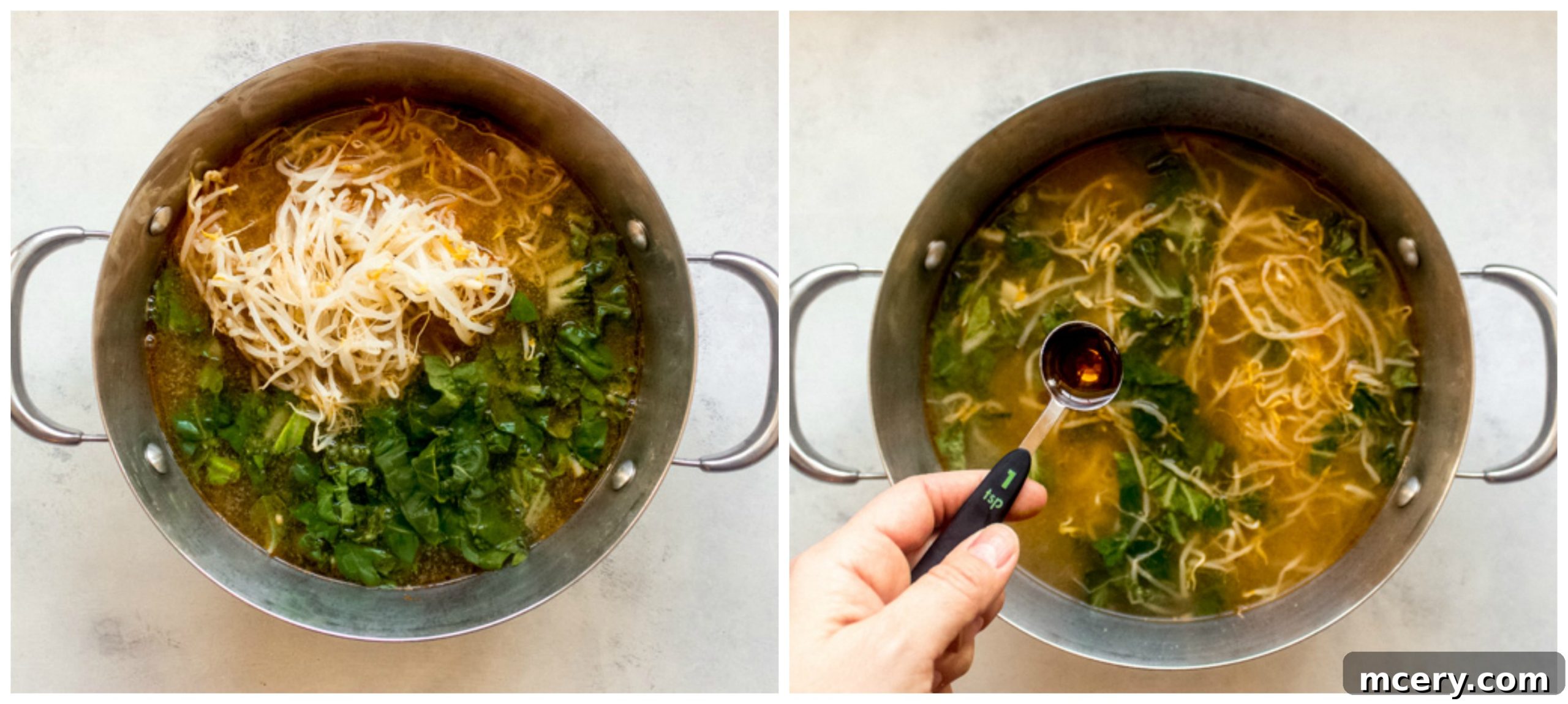
- Step 3: Incorporate Fresh Greens and Finish – Stir in the chopped bok choy and fresh (or drained canned) bean sprouts into the simmering soup. Cook for just 1-2 minutes, or until the bok choy leaves are wilted and the white parts are tender-crisp, and the bean sprouts are slightly softened but still retain a pleasant crunch. Overcooking these vegetables will make them soggy, so keep a close eye on them. Once the vegetables are perfectly cooked, remove the pot from the heat. Drizzle in about 1 teaspoon of toasted sesame oil (or more, to your preference) into the broth. Give it a final stir and taste the broth once more, adding any additional salt, pepper, or a squeeze of lime if it needs a final adjustment.
Pro Tip: For the best texture, always cook your ramen noodles separately and just before serving. This prevents them from absorbing too much broth and becoming overly soft or mushy. Follow the package instructions for al dente perfection, then drain them thoroughly and keep them warm until ready to assemble your bowls.
Clever Substitutions for Your Chicken Bok Choy Soup
Flexibility is key in the kitchen, and this Vietnamese chicken noodle soup recipe is highly adaptable. If you find yourself missing an ingredient or simply want to try something new, here are some excellent substitutions:
- Chicken Variations: While chicken tenders are fantastic for their quick cooking time and tender texture, boneless, skinless chicken breast can be used as an equally lean alternative. Simply slice it into thin strips against the grain to ensure it cooks quickly and evenly. For a richer flavor and slightly more forgiving texture, boneless, skinless chicken thighs are also an excellent choice, though they may require an extra minute or two of cooking time.
- Bean Sprout Alternatives: If your local market offers fresh bean sprouts, absolutely prioritize them for their superior crispness and flavor. However, good quality canned bean sprouts, thoroughly drained and rinsed, can work in a pinch. If you’re looking for another crunchy element, thinly sliced cabbage or even shredded carrots can add a similar texture contrast.
- Bok Choy Swaps: Bok choy lends a unique sweetness and crispness, but if it’s unavailable, baby spinach makes a fantastic substitute. Since spinach wilts down considerably more than bok choy, you might want to add a bit more than the recommended 3 cups to achieve a similar vegetable volume in your soup. Other leafy greens like Swiss chard (chopped, with stems removed) could also be used, though they might require slightly longer cooking.
- Noodle Options: While ramen noodles provide a satisfying chew, feel free to experiment with other noodle types. Traditional flat rice noodles (pho noodles) would bring it closer to an authentic pho experience. Thin spaghetti or even linguine, broken into shorter pieces, can also work well if ramen is not available. Just be sure to cook them according to package directions.
- Broth Boosters: For an even deeper umami flavor, consider adding a dried shiitake mushroom or a small piece of star anise to your chicken stock while simmering. Just remember to remove them before serving.
How to Serve Your Delicious Vietnamese Chicken Soup (with Perfect Toppings)
Serving Vietnamese chicken soup is an art form, and the toppings are arguably just as vital as the broth itself. They not only add a beautiful burst of color but also contribute incredible layers of fresh, vibrant, and sometimes spicy flavor that elevate the entire dish. Don’t skip this step – it truly completes the pho experience!
To create an authentic and customizable dining experience, arrange a generous platter of freshly prepared toppings alongside your steaming soup. Essential garnishes include:
- Thinly sliced jalapeño peppers: For a fresh, fiery kick that awakens the palate. Adjust the amount to your preferred spice level.
- Bright green onions: Finely chopped, they offer a mild, pungent freshness.
- Fragrant cilantro: Roughly chopped, cilantro adds a signature herbaceous and citrusy note.
Beyond these staples, consider adding other traditional pho toppings for an even richer flavor profile:
- Fresh basil leaves: Particularly Thai basil, for its distinct peppery and anise-like aroma.
- Fresh mint leaves: A refreshing contrast to the warm broth.
- Lime wedges: For an extra squeeze of brightness and acidity at the table.
- A dash of extra toasted sesame oil: For an added nutty aroma.
- Hot chili sauce (like Sriracha) or chili garlic paste: For those who love extra heat.
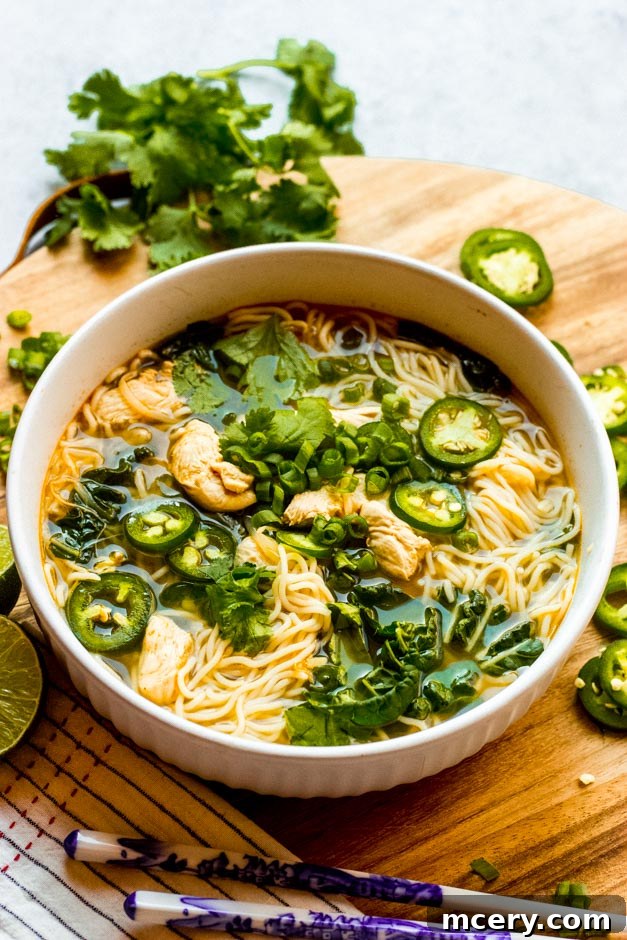
To serve your Vietnamese chicken soup, begin by placing a generous portion of the perfectly cooked and drained ramen noodles into individual serving bowls. Next, ladle a hearty amount of the hot, flavorful chicken soup, ensuring each bowl gets plenty of chicken, bok choy, and bean sprouts. Finally, encourage everyone to customize their bowl with an abundance of their favorite fresh greens and desired toppings. This interactive serving style makes the meal not just delicious, but also engaging and fun!
And this nourishing noodle soup isn’t just for lunch! Pair it with some amazing side dishes to create a nutrient-dense and satisfying full meal. Here are some fantastic accompaniments that perfectly complement the flavors of this Vietnamese chicken pho:
- Fresh Vegetable Rice Paper Rolls: Light, refreshing, and packed with crisp veggies, these rolls are a perfect counterpoint to the warm soup.
- Chili Garlic Rice Noodle Salad: A zesty and vibrant salad that adds another layer of texture and Asian-inspired flavor.
- Easy 4-Ingredient Potstickers: Quick to make and wonderfully savory, these dumplings are a hearty addition.
- Crunchy Asian Chopped Salad: A textural delight with a tangy dressing that brightens the palate.
- Roasted Garlic Green Beans: A simple yet flavorful vegetable side that adds a touch of earthy sweetness.
How to Store and Reheat Vietnamese Chicken Noodle Soup
Proper storage is essential to enjoy your delicious Vietnamese chicken noodle soup for days to come. This soup stores remarkably well, making it excellent for meal prep!
Store any leftover soup in an airtight container in the refrigerator for up to 5 days. For longer storage, you can freeze the soup for up to 3 months. When freezing, I highly recommend storing the noodles separately from the broth and other solid ingredients. This is a crucial step because noodles tend to absorb a lot of liquid and can become overly soggy and mushy when stored in the broth, especially after freezing and reheating. Cook fresh noodles when you’re ready to serve a frozen batch.
To reheat frozen Vietnamese chicken noodle soup, transfer it to the fridge overnight to thaw. Once thawed, reheat it gently in a pot over medium heat on the stove, stirring occasionally, until it’s simmering hot. If you stored the noodles separately (which is recommended!), prepare a fresh batch according to package instructions just before serving. Add the freshly cooked noodles to your bowl, then ladle the hot, reheated broth and ingredients over them, and don’t forget your fresh toppings!
More Cozy Chicken Soup Recipes to Warm Your Soul
If you loved this comforting Vietnamese Chicken Noodle Soup, you’re in for a treat! Explore more of our favorite chicken soup recipes that promise warmth, flavor, and satisfaction:
If you try our **Vietnamese chicken noodle soup** and discover your new favorite comfort food, please don’t hesitate to leave a star rating and a comment below. We love hearing how you enjoyed the recipe and any personal twists you added!
Print Recipe Card
Easy Vietnamese Chicken Pho (Noodle Soup)
5 Stars 4 Stars 3 Stars 2 Stars 1 Star
5 from 3 reviews
Author: Katya
Prep Time: 15 mins
Cook Time: 40 mins
Total Time: 55 mins
Yield: 4-6 1x
Category: Soup
Method: Simmer
Cuisine: Vietnamese
Description
Experience the warmth of homemade Vietnamese chicken noodle soup, a simplified take on classic pho. This easy recipe features tender chicken, ramen noodles, aromatic ginger, crisp bok choy, and fresh bean sprouts, all brought together in a deeply flavorful broth. It’s the perfect quick and comforting Asian-inspired meal for any night of the week.
Ingredients
Units
Scale
- 1 lb. chicken tenders, cut into thin strips
- 2 Tbsp. fresh lime juice
- 2 Tbsp. low-sodium soy sauce
- 2 Tbsp. fish sauce
- 1 Tbsp. finely minced fresh ginger or grated with microplane
- 2 cloves garlic, minced
- ½ tsp. paprika
- 1 Tbsp. avocado oil or other neutral tasting oil
- 6 cups good-quality chicken stock
- 14 oz. canned or fresh bean sprouts, drained
- 3 cups chopped bok choy, greens and whites
- Toasted sesame oil, to taste
- 8–10 oz. package ramen noodles
- Kosher salt and fresh black pepper
For Serving (Garnishes)
- Jalapeño peppers, thinly sliced
- Green onions, chopped
- Cilantro, roughly chopped
Instructions
- Prepare the Chicken: In a medium bowl, combine the thinly sliced chicken tenders, fresh lime juice, low-sodium soy sauce, fish sauce, finely minced fresh ginger, minced garlic, and paprika. Toss well to ensure the chicken is thoroughly coated. Let it marinate at room temperature for 15 minutes to infuse with flavors.
- Cook Chicken & Start Broth: Heat 1 tablespoon of avocado oil in a 4-quart Dutch oven or a heavy-duty soup pot over medium-high heat. Add the marinated chicken and all its liquid. Season with a pinch of kosher salt and fresh black pepper, to taste. Cook, stirring constantly, until the chicken is no longer pink, which should take about 3-4 minutes. Don’t worry about any liquid; it will enrich the broth.
- Simmer the Broth: Pour in the 6 cups of good-quality chicken stock. Bring the soup to a boil, then taste and season with additional salt and pepper as needed for a perfectly balanced flavor. Reduce the heat to medium-low, cover the pot partially, and let it simmer gently for about 5-7 minutes, or until the chicken is fully cooked through.
- Add Vegetables: Stir in the chopped bok choy and drained bean sprouts. Continue to cook for just 1-2 minutes, or until the bok choy greens are visibly wilted, and the white parts are tender-crisp. The bean sprouts should also be slightly softened but still retain a pleasant crunch. Taste the broth again and adjust salt if necessary.
- Finish with Sesame Oil: Remove the soup from the heat. Drizzle in about 1 teaspoon of toasted sesame oil into the broth (or more, if you prefer a stronger nutty aroma). Give it a final stir.
- Prepare Noodles Separately: Just prior to serving, cook the ramen noodles according to the package instructions until they are al dente. This ensures they don’t become soggy in the broth. Drain the noodles very well and keep them warm.
- Assemble and Serve: To serve, place a portion of the cooked ramen noodles into individual serving bowls. Ladle a generous amount of the hot Vietnamese chicken soup over the noodles, making sure each bowl gets plenty of chicken and vegetables. Finally, garnish with thinly sliced jalapeño peppers, chopped green onions, and fresh cilantro. Serve immediately and enjoy!
Recipe Notes & Expert Tips
- Ingredient Substitutions: If chicken tenders aren’t available, boneless, skinless chicken breast or boneless chicken thighs can be used. Slice them thinly for quick cooking. For bok choy, baby spinach is an excellent substitute; you may need to add a bit more than 3 cups as spinach cooks down significantly. For bean sprouts, fresh is always best, but thoroughly drained canned ones work too.
- Elevate Your Toppings: The key to an authentic pho experience is abundant, fresh toppings. Beyond the suggested jalapeños, green onions, and cilantro, consider adding fresh basil leaves (Thai basil if possible), fresh mint leaves, extra lime wedges, and a drizzle of hot chili sauce for those who like extra heat. A sprinkle of crispy fried shallots or garlic can also add amazing texture and flavor.
- Crucial Recipe Notes for Flavor: This streamlined recipe relies heavily on the quality of its ingredients and precise seasoning.
- Quality Stock: Always use a good-quality chicken stock or, even better, a rich chicken bone broth for maximum depth of flavor. This forms the backbone of your soup.
- Fresh Aromatics: Stick to fresh ginger, garlic, and lime juice. Avoid anything bottled, as it lacks the vibrant punch fresh ingredients provide.
- Seasoning is Key: The most important tip for a delicious broth is to taste and adjust your seasoning at every stage of cooking. Add salt and pepper gradually. If the broth tastes a little “flat” or lacks complexity, try adding a tiny bit more soy sauce or fish sauce, or another squeeze of fresh lime juice. The balance of salty, savory, and acidic is what makes pho so irresistible.
- Noodle Management: To prevent soggy noodles, always cook them separately just before serving. Add them directly to individual bowls, then ladle the hot soup over them. This ensures they stay perfectly chewy and don’t soak up all your delicious broth.
Nutrition Information (Approximate)
- Serving Size: 1 bowl (estimated)
- Calories: 234
- Sugar: 4.7 g
- Sodium: 1156.5 mg
- Fat: 7.7 g
- Carbohydrates: 27 g
- Protein: 14.6 g
- Cholesterol: 23.4 mg
Recipe originally published March 2015. It was lightly adapted from: Nigella Lawson “Nigella Kitchen”