
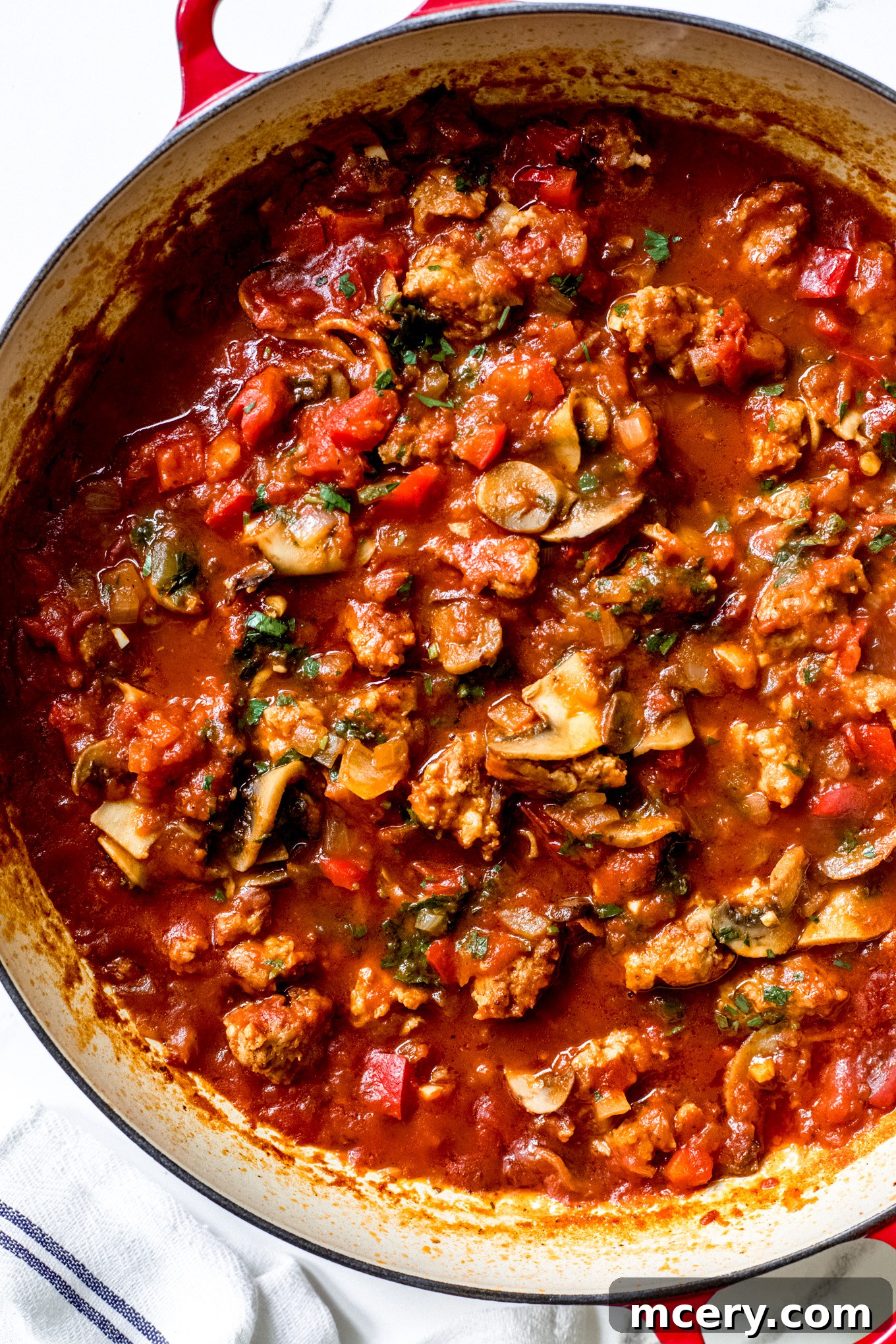
Sausage cacciatore is a beloved Italian classic, a hearty and rustic dish that truly embodies comfort. Combining tender Italian sausage with a vibrant tomato sauce, an abundance of fresh vegetables, and fragrant herbs, it’s a meal that promises deep flavor and satisfying warmth. It’s the kind of dish that fills your kitchen with an incredible aroma and brings everyone to the table with anticipation.
While delicious on its own, this sausage cacciatore pairs beautifully with a fresh salad like our Brussel Sprout Apple Salad, a zesty Grapefruit Avocado Salad, or a seasonal Harvest Salad. The crispness of a salad provides a wonderful contrast to the rich, savory flavors of the cacciatore.
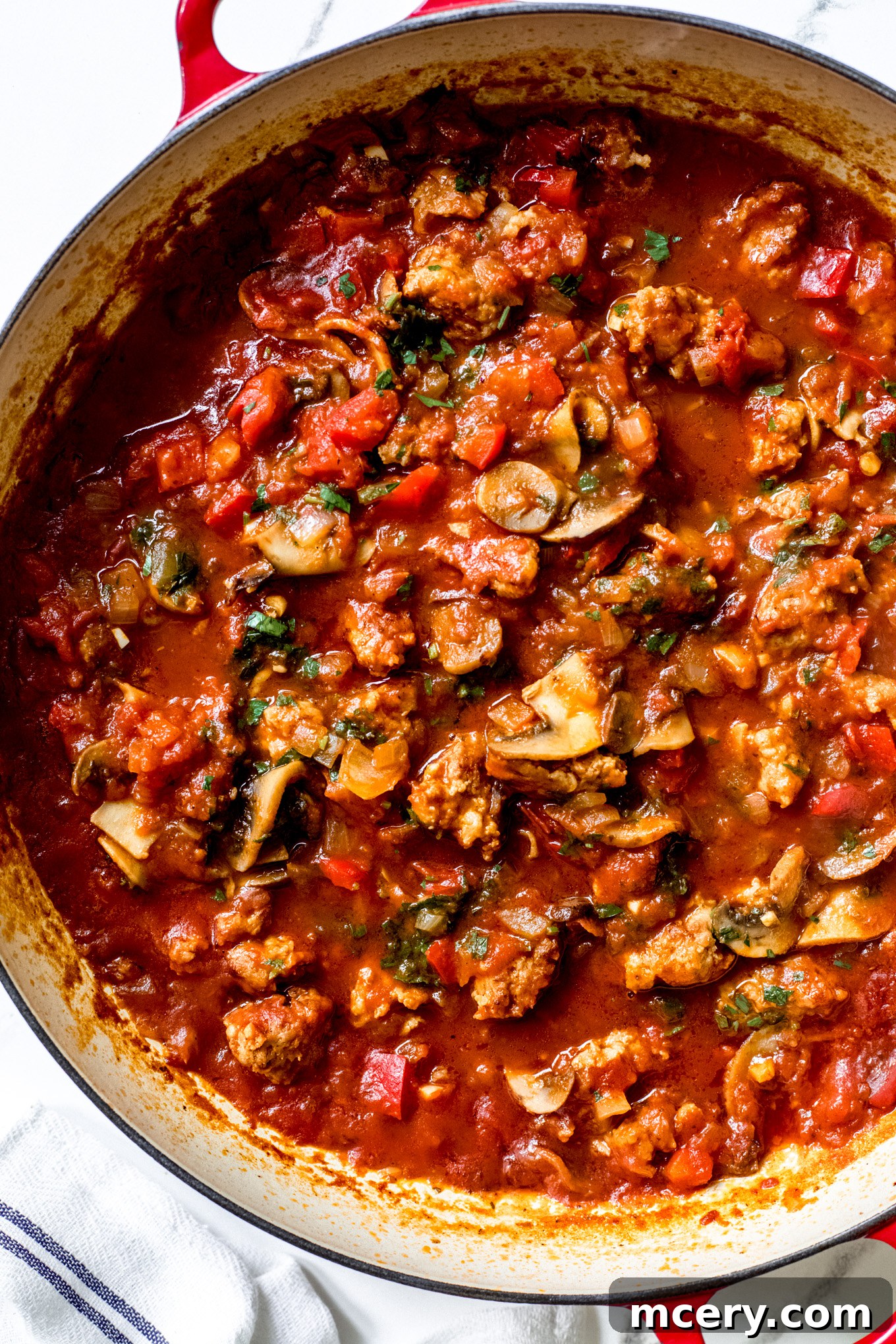
Featured Comment: “We made this with spicy Italian sausage and it was so good! So easy to make too and my husband and kids really enjoyed it. Thank you.”~Kate
Some of the most memorable meals are born from spontaneity, and this sausage cacciatore is a perfect example. The first time I prepared it, there was no grand plan—just a few bell peppers, some Italian sausage in the fridge, and the simple desire for a delicious dinner. Within an hour, my kitchen was filled with an irresistible aroma, and a new family favorite was born. This dish proves that exceptional flavor can emerge from straightforward ingredients and minimal fuss.
Now, this recipe has become my go-to for those evenings when I crave true comfort without the cleanup. The beauty of this dish lies in its one-pan preparation, meaning less time spent scrubbing pots and more time enjoying your meal. While I sometimes omit the mushrooms to cater to my children’s preferences, the cacciatore remains incredibly satisfying. It’s wonderfully adaptable, allowing you to easily adjust ingredients based on what you have on hand and who you’re cooking for.
A crucial step for achieving that deep, restaurant-quality flavor is properly browning the sausage first. This simple technique creates a rich fond at the bottom of the pan, which then infuses the entire sauce with an incredible depth of flavor. It’s a step I rarely skip because it adds so much character to the dish without any extra effort.
The best part? This sausage cacciatore often reheats even better the next day, as the flavors have more time to meld and deepen. It’s phenomenal served over a bed of al dente pasta or alongside a crusty loaf of artisanal bread, perfect for soaking up every last drop of that savory sauce.
Why You’ll Love This Hearty Sausage Cacciatore
There are countless reasons to make this sausage cacciatore a staple in your meal rotation. From its incredible flavor to its effortless preparation, this Italian classic ticks all the boxes for a perfect dinner.
- A Symphony of Flavors: This Italian sausage cacciatore is an explosion of complementary tastes. The savory notes of the Italian sausage, whether mild or spicy, are perfectly balanced by the vibrant acidity of the tomatoes and the earthy richness of the mushrooms. Every spoonful is a true taste sensation, reminiscent of our popular Cajun Pasta with Sausage, but with a distinct Italian flair. For an even more indulgent experience, serve it alongside our creamy Garlic Mashed Potatoes.
- Incredibly Easy One-Pan Meal: One of the greatest advantages of this dish is its simplicity. The entire meal comes together in a single pan, significantly reducing cleanup time. This makes it an ideal choice for busy weeknights when you need a wholesome, flavorful meal without spending hours in the kitchen. For more quick and easy dinner ideas, explore our Penne Primavera or speedy Tomato Chicken recipes.
- Remarkably Versatile and Adaptable: This cacciatore recipe is designed to be flexible, allowing you to easily customize it to your family’s preferences or whatever ingredients you have on hand. Feel free to experiment with different types of protein or integrate a wider array of vegetables to boost its nutritional value and introduce new flavors. If you’re in the mood for something lighter, our Roasted Red Pepper Salmon offers a fantastic alternative.
- Perfect for Meal Prepping: Beyond its ease, this cacciatore is a fantastic candidate for meal prepping. Its flavors deepen and become even more harmonious after a day or two in the refrigerator, making it an excellent choice for batch cooking or enjoying delicious leftovers throughout the week.
Essential Ingredients for a Perfect Sausage Cacciatore
Creating a truly exceptional sausage cacciatore starts with selecting quality ingredients. Each component plays a vital role in building the robust and comforting flavors of this classic Italian dish. Below is a detailed look at what you’ll need.
For a precise list of quantities, please refer to the recipe card further down this page.
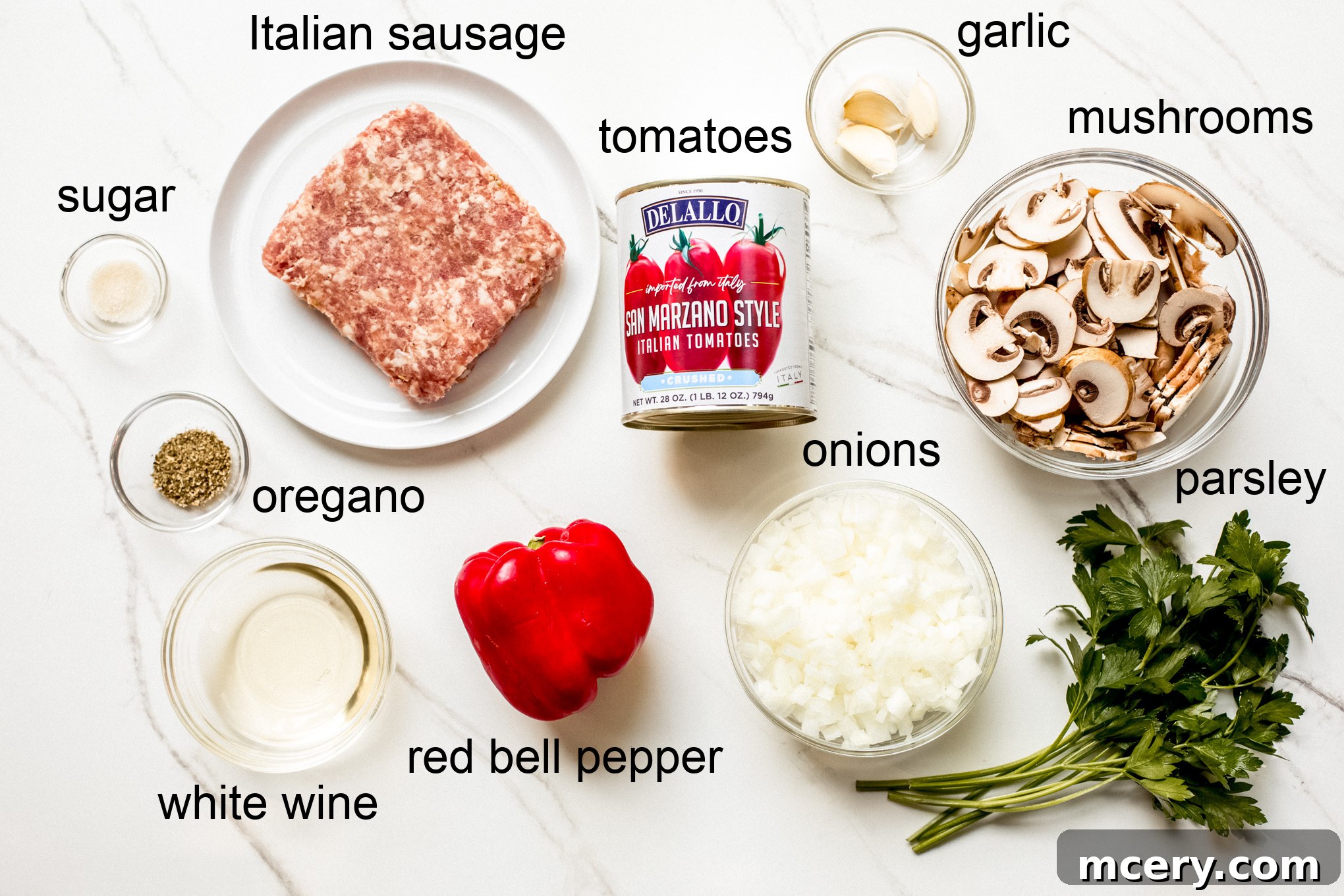
- Mild Italian Sausage: The foundation of this dish, mild Italian sausage provides a rich, savory flavor and a substantial texture. Its subtle spice blend is what gives cacciatore its signature taste, making it a truly satisfying centerpiece. You can also opt for spicy Italian sausage if you prefer a kick.
- Bell Peppers: Red bell peppers are chosen for their sweet, tangy flavor and their ability to add a beautiful pop of color to the dish. They soften beautifully in the sauce, contributing a delightful texture and natural sweetness.
- Onion: Chopped yellow onion forms the aromatic base of our cacciatore. When sautéed, it develops a slightly sweet and pungent flavor that deeply enhances the overall sauce.
- Garlic: Minced garlic is indispensable in Italian cooking. Its wonderfully pungent and savory aroma is released when cooked, laying a crucial flavor groundwork for the entire dish.
- Canned Crushed Tomatoes: The heart of any great cacciatore sauce. Using good-quality crushed tomatoes, ideally San Marzano, ensures a rich, naturally sweet, and deeply flavorful tomato base that coats every ingredient beautifully.
- Dry White Wine: A splash of dry white wine, such as Pinot Grigio or Sauvignon Blanc, is used to deglaze the pan. This step is critical as it lifts all the caramelized bits from the bottom, adding a complex depth and subtle acidity to the sauce that truly elevates the dish.
- Dried Oregano: This classic Mediterranean herb is essential for cacciatore sauce, contributing a warm, earthy, and slightly bitter flavor that pairs perfectly with tomatoes and sausage.
- Mushrooms: Sliced white or cremini mushrooms add an umami-rich, earthy flavor and a pleasing textural element. They absorb the sauce beautifully, becoming incredibly tender and flavorful. If your family isn’t a fan, you can easily omit them.
- Fresh Parsley: Added at the very end, fresh chopped parsley brightens the dish with a burst of herbaceous flavor and provides a lovely green garnish, enhancing both taste and presentation.
- Olive Oil, Sugar, Salt, and Fresh Black Pepper: These pantry staples are crucial for cooking the ingredients, balancing the flavors, and seasoning the dish to perfection.
How to Make Sausage Cacciatore: A Simple Step-by-Step Guide
Creating this flavorful sausage cacciatore is surprisingly straightforward and comes together easily in one pan. Follow these steps for a delicious Italian meal.
For detailed ingredient measurements and specific timing, please refer to the complete recipe card below.
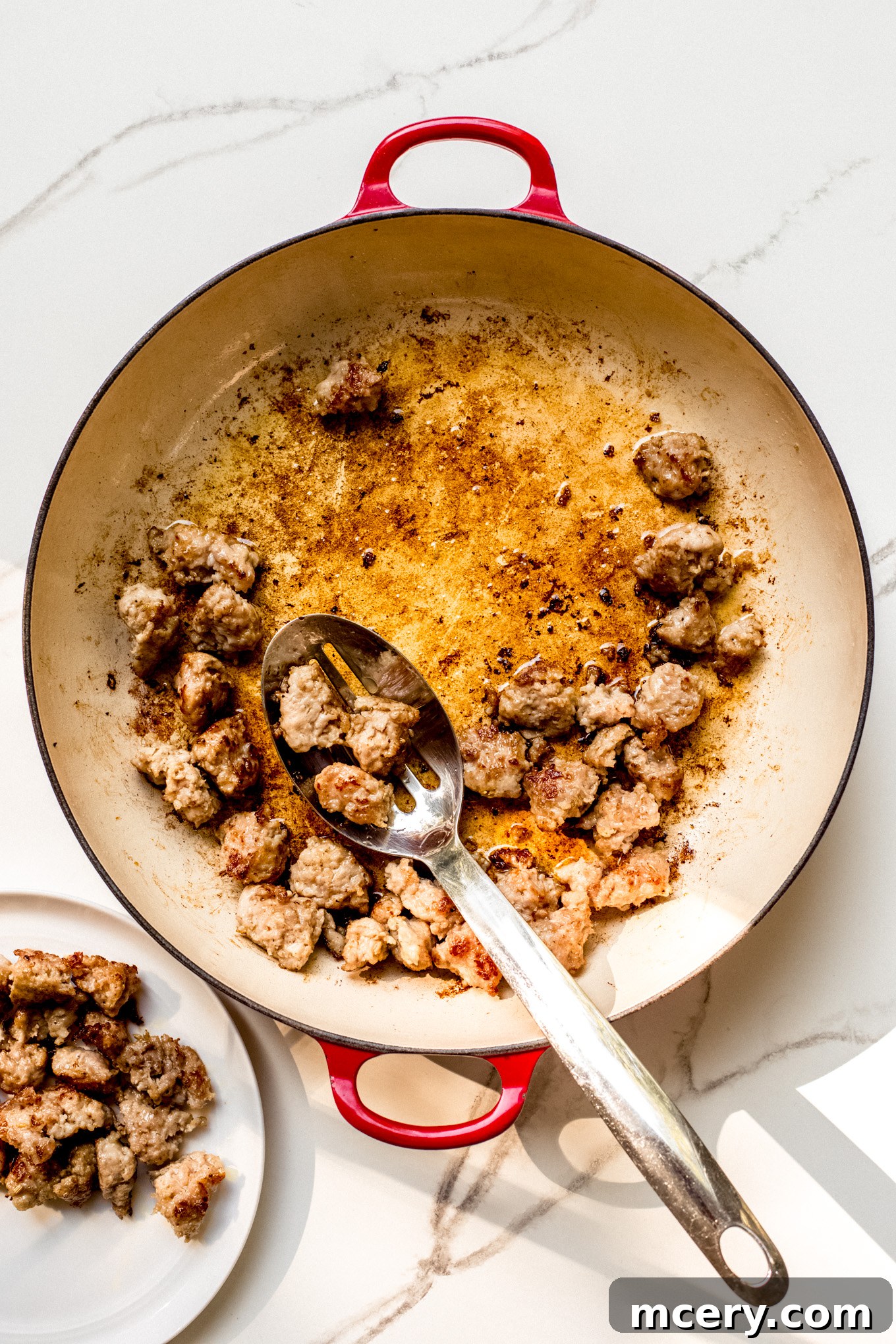
Step 1: Brown the Sausage. Heat the olive oil in a large, heavy-bottomed sauté pan or skillet over medium-high heat. Add the bulk Italian sausage and cook, breaking it up with a spoon, until it’s completely browned and crumbled. This usually takes about 5 minutes. Once cooked, remove the sausage to a plate using a slotted spoon, leaving the flavorful drippings in the pan.
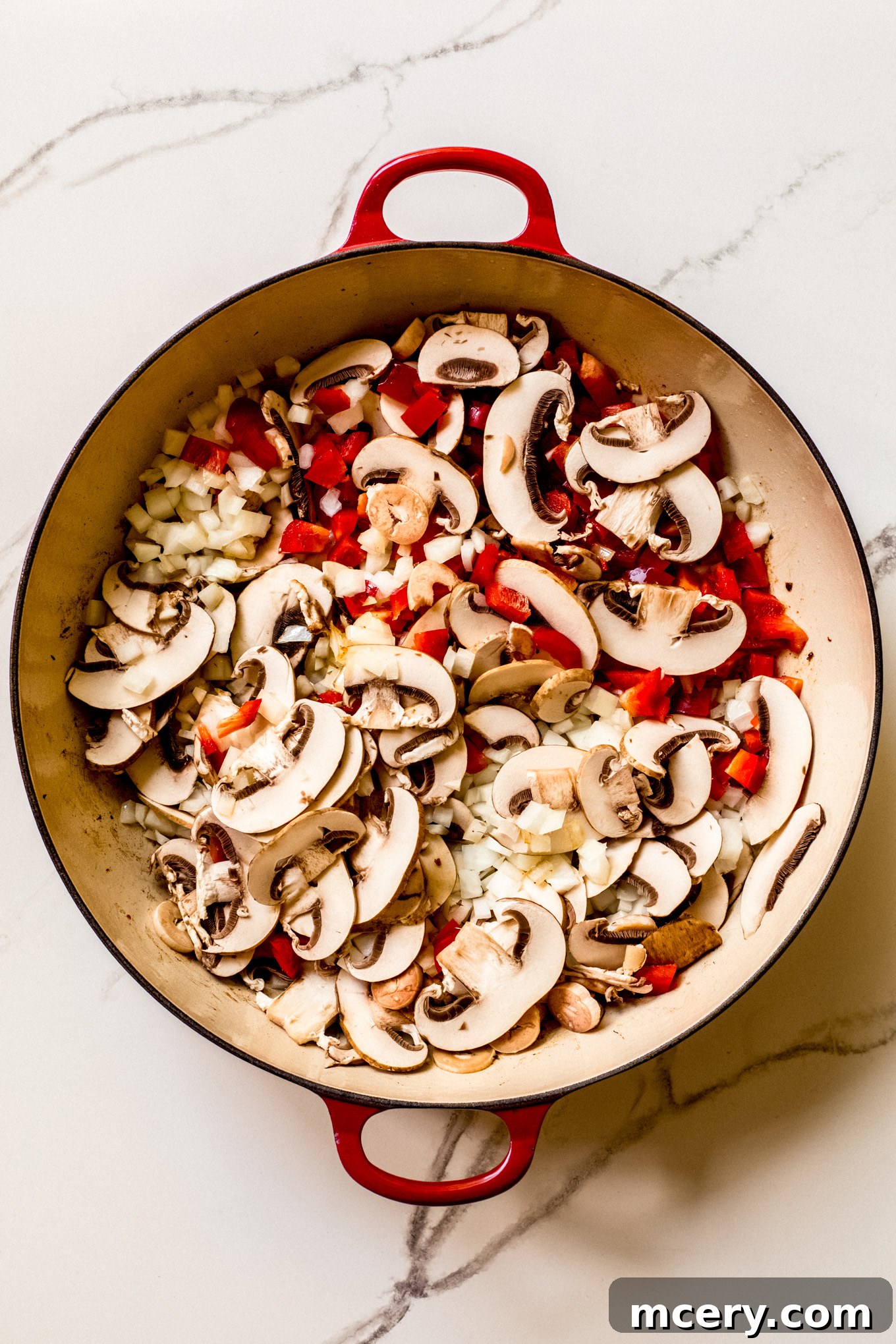
Step 2: Sauté the Vegetables. To the same pan with the sausage drippings, add the chopped onions, bell peppers, and sliced mushrooms. Season lightly with salt and pepper. Cook, stirring occasionally, until the vegetables begin to soften, which typically takes 5-8 minutes. If the vegetables start to stick, add 1-2 tablespoons of water to help loosen them.
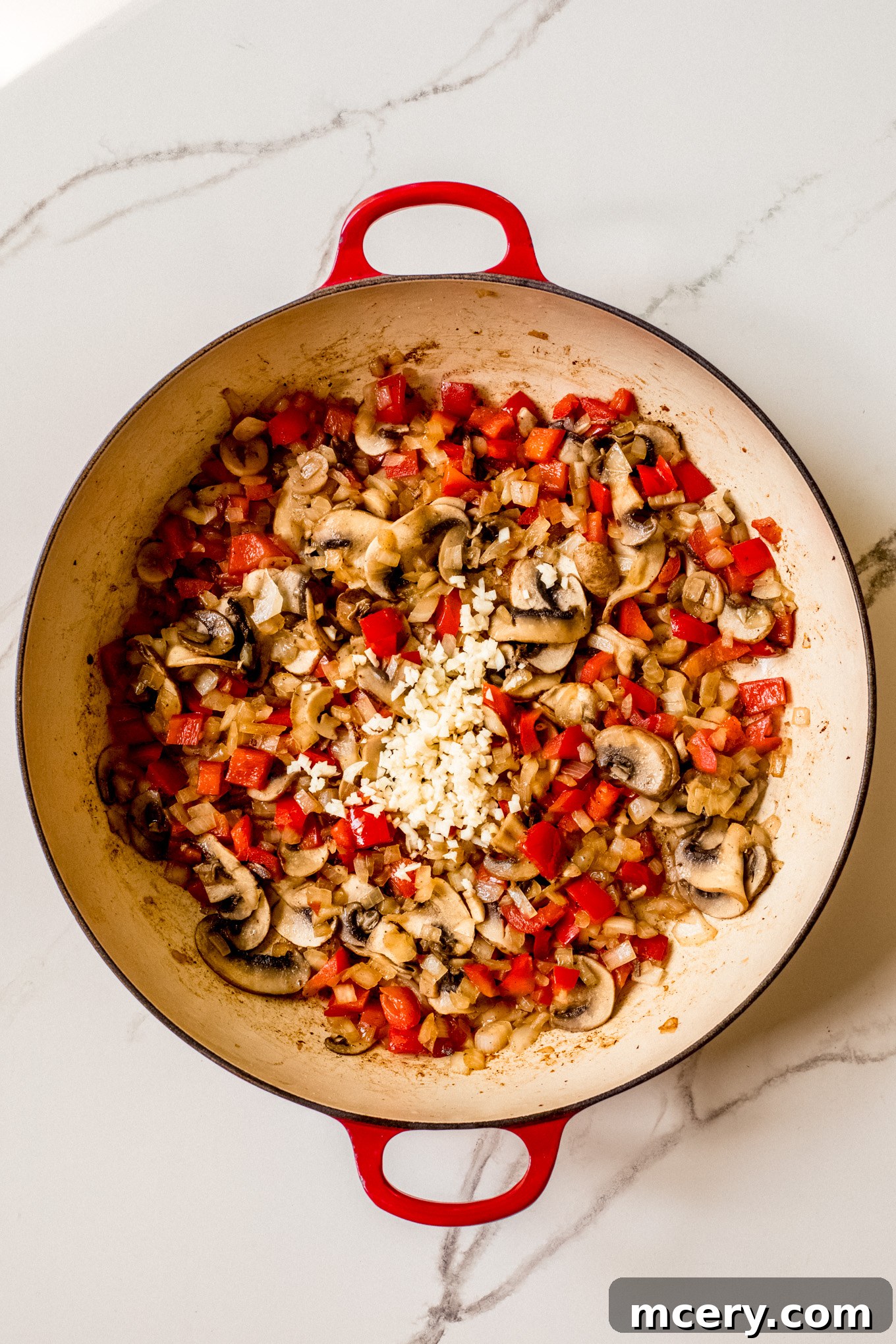
Step 3: Add Garlic. Stir in the minced garlic and cook for just about 1 minute, or until it becomes fragrant. Be careful not to burn the garlic, as it can turn bitter quickly.
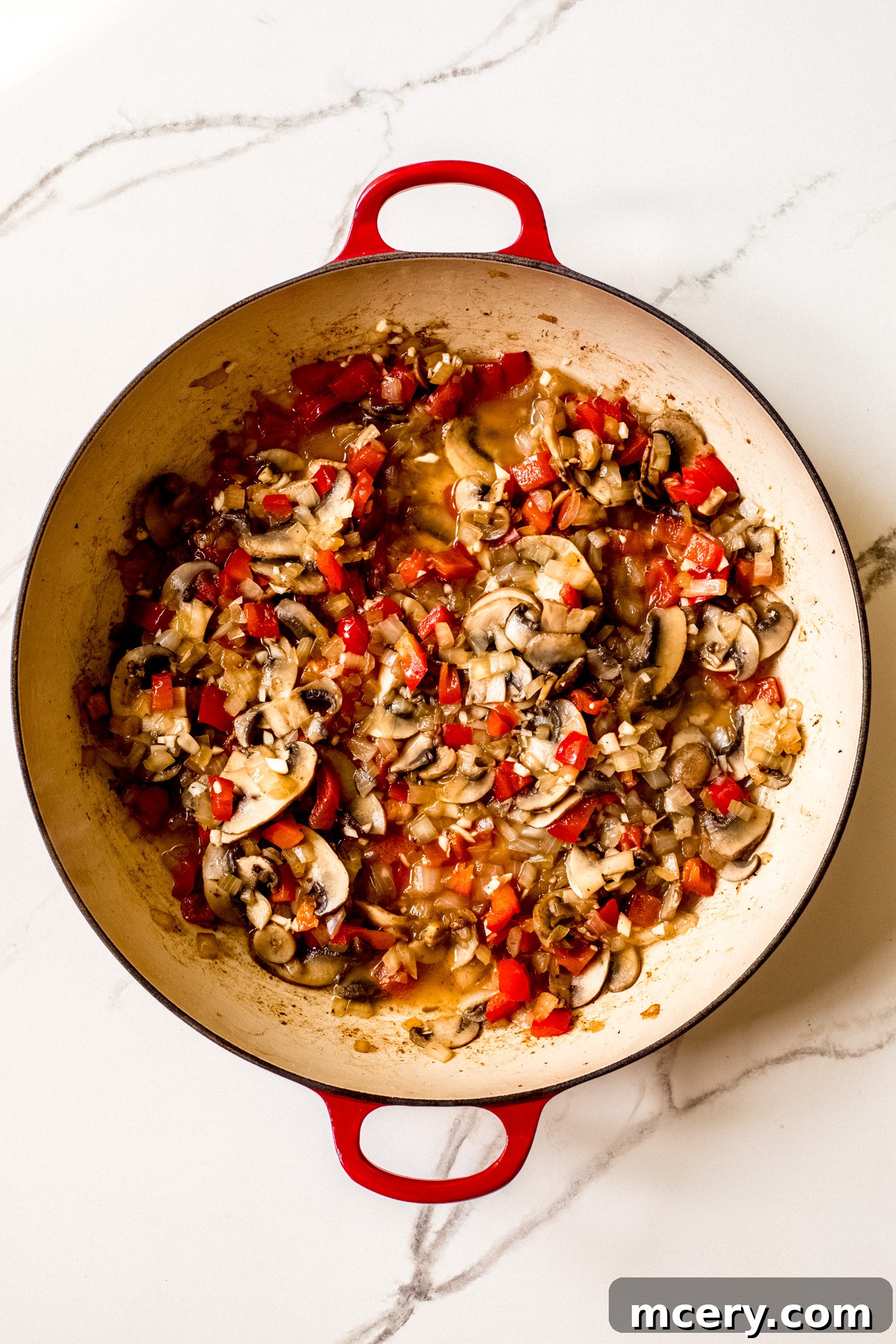
Step 4: Deglaze with Wine. Pour in the dry white wine. Use a wooden spoon to scrape up any browned bits from the bottom of the pan. Let the wine simmer and reduce by about half, which usually takes 2-3 minutes. This step is crucial for adding depth of flavor.
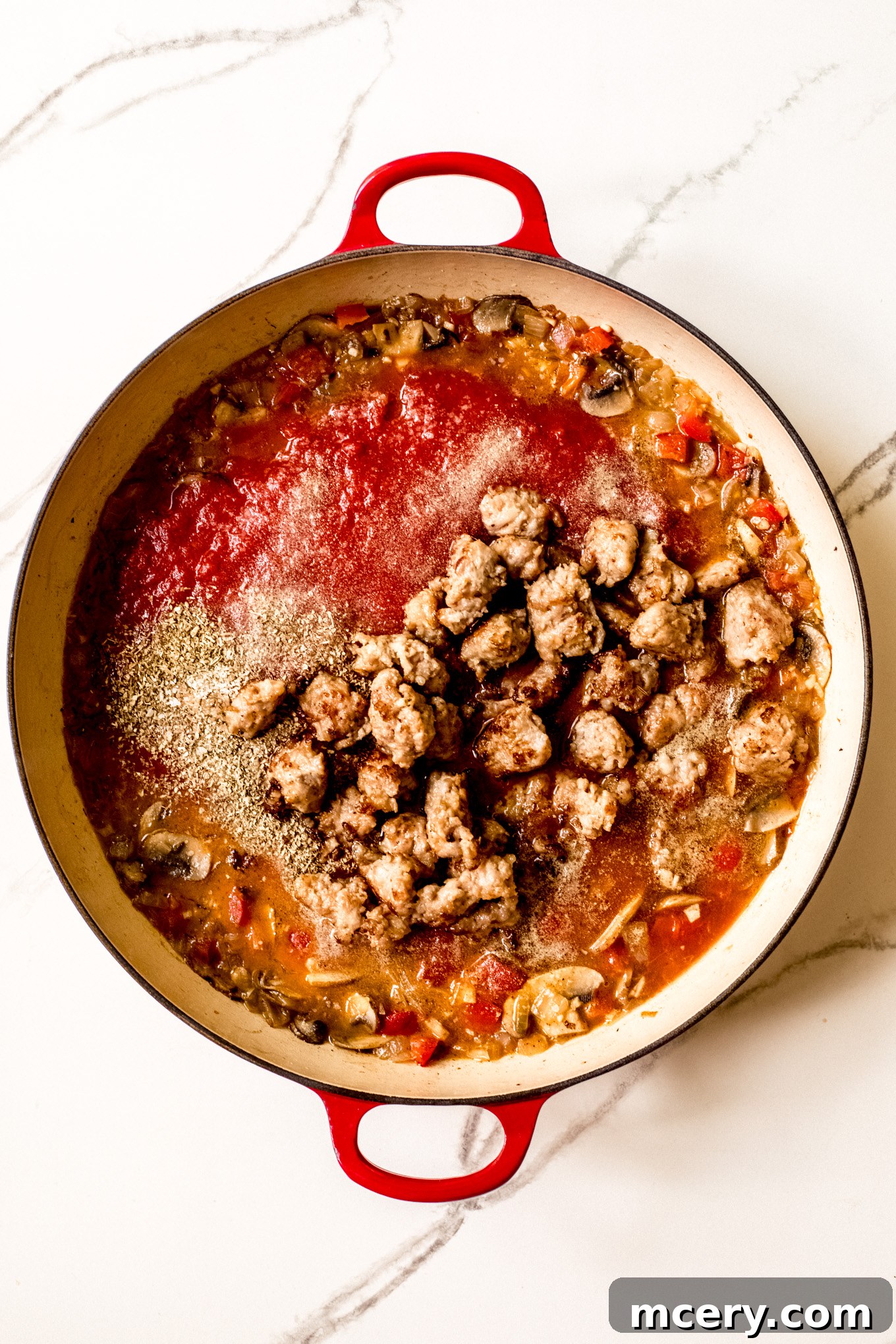
Step 5: Simmer the Sauce. Stir in the crushed tomatoes, dried oregano, sugar (to balance acidity), and water. Season with additional salt and pepper to taste. Bring the mixture to a gentle simmer. Return the cooked sausage to the pan, stirring to combine. Partially cover the pan and let it simmer on low heat for 15-20 minutes, or until the sauce has slightly thickened and the vegetables are fully tender. This allows all the flavors to meld beautifully.
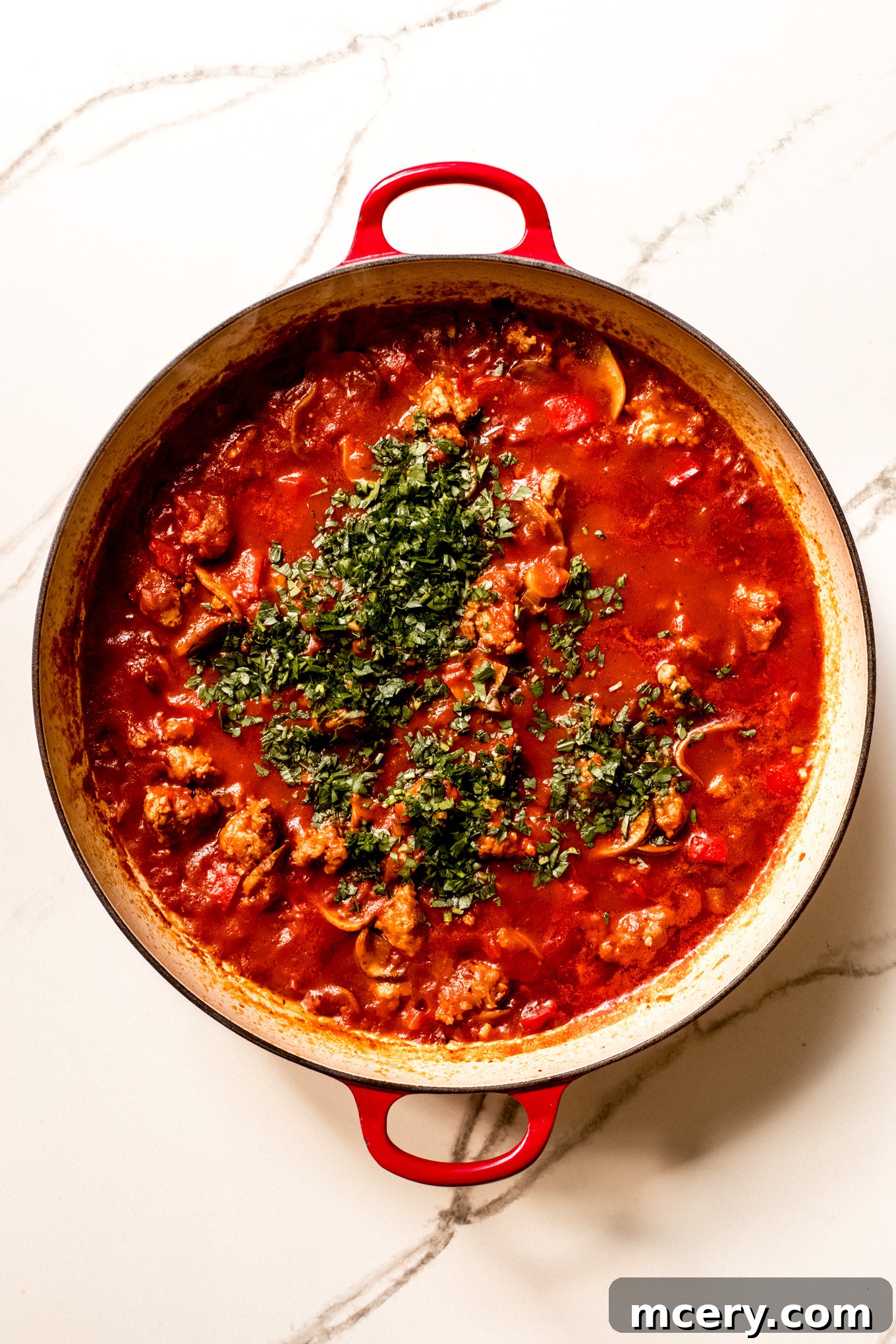
Step 6: Finish and Serve. Remove the pan from the heat. Stir in the fresh chopped parsley just before serving. Serve the sausage cacciatore hot over your favorite pasta, polenta, or with crusty bread.
Delicious Variations and Smart Substitutions
One of the beauties of sausage cacciatore is its inherent flexibility. Don’t hesitate to get creative with your ingredients to suit your taste or what you have on hand.
- Protein Power-Ups: While Italian sausage is classic, feel free to experiment! For a milder flavor, try chicken sausage. If you’re looking for a leaner option, ground chicken or turkey can be easily substituted. For a vegetarian take, consider adding robust chickpeas or cannellini beans after the vegetables have softened, simmering them in the sauce. You can also use chicken pieces to make a delightful easy chicken cacciatore.
- Vegetable Boost: Bell peppers and onions are traditional, but the possibilities are endless. Dice up some zucchini, eggplant, or carrots for added texture and nutrients. Sliced celery, green beans, or even a handful of fresh spinach wilted in at the end can also work wonderfully. Don’t shy away from using high-quality canned or frozen vegetables if fresh aren’t available—just adjust cooking times accordingly.
- Tomato Base Creativity: Crushed tomatoes provide a smooth, rich sauce, but you can alter the texture and flavor. Try canned diced tomatoes for a chunkier consistency, or use fresh cherry tomatoes halved for a sweeter, brighter sauce. A tablespoon or two of tomato paste can deepen the umami flavor and thicken the sauce, while pureed tomato sauce can create an even smoother finish.
- Herb and Spice Adjustments: Beyond oregano, consider adding a pinch of dried basil, a sprig of fresh rosemary, or a bay leaf to the simmering sauce for different aromatic notes. For those who love a little heat, a pinch of red pepper flakes can easily be stirred in with the garlic.
- Wine Alternatives: If you prefer not to cook with wine, or don’t have it on hand, a good quality chicken or vegetable broth can be used in its place to deglaze the pan and add liquid to the sauce.
Expert Tips for the Best Italian Sausage Cacciatore
To ensure your sausage cacciatore turns out perfectly every time, keep these expert tips in mind. These small details can make a significant difference in the final flavor and texture of your dish.
- Invest in High-Quality Tomatoes: The foundation of any great Italian sauce is the tomatoes. Opt for the best quality crushed tomatoes you can find, such as San Marzano tomatoes. These are renowned for their exceptional flavor, lower acidity, and natural sweetness, which will elevate your cacciatore sauce significantly.
- Embrace Fresh Herbs: While dried oregano is called for, incorporating fresh herbs like basil, oregano, and parsley at various stages (and especially at the end) can add an incredible burst of vibrant flavor. If using dried herbs, remember they are more potent, so use about one-third of the amount compared to fresh.
- Allow Ample Simmering Time: Once all the ingredients are in the pan, resist the urge to rush. Letting the sauce simmer gently for at least 15-20 minutes, or even longer if you have the time, allows the flavors to truly meld and deepen. This slow cooking process is key to developing a rich, complex taste.
- Slice Your Own Mushrooms: For the freshest taste and best texture, purchase whole white or cremini mushrooms and slice them yourself. This ensures they are firm and flavorful, and you have complete control over their thickness, allowing them to cook evenly and absorb the sauce perfectly.
- Don’t Skimp on Browning the Sausage: The initial browning of the sausage is crucial. The caramelized bits that form at the bottom of the pan (known as “fond”) are packed with flavor. When you deglaze with wine or broth, these bits release, enriching the entire sauce.
- Deglaze Properly: After browning the sausage and sautéing the vegetables, use the white wine (or broth) to thoroughly scrape up all those flavorful browned bits from the bottom of the pan. This step is a flavor powerhouse!
How to Store and Reheat Your Cacciatore Sausage
Sausage cacciatore is fantastic for leftovers, often tasting even better the next day. Here’s how to properly store and reheat it to maintain its deliciousness and ensure food safety.
Refrigerate: Once your cacciatore has cooled down to room temperature, transfer it to an airtight container. It can be safely stored in the refrigerator for up to five days. This makes it an excellent option for meal prepping throughout the week.
Freeze: For longer storage, allow the cacciatore to cool completely to room temperature. Then, transfer it to a freezer-safe container or a heavy-duty freezer bag. Be sure to label the container with the date. It can be frozen for up to three months, making it a convenient freezer-friendly meal for busy times.
Thaw: To thaw frozen cacciatore, the safest method is to transfer it from the freezer to the refrigerator and let it thaw overnight. If you’re in a hurry, you can thaw it using your microwave’s defrost setting, stirring occasionally to ensure even thawing.
Reheat: When reheating, always ensure the dish reaches an internal temperature of 165°F (74°C) to ensure it’s safe to eat. You have several options for reheating:
- Microwave: Place a portion in a microwave-safe dish, cover loosely, and heat in 1-minute intervals, stirring between each, until thoroughly heated.
- Stovetop: Transfer the cacciatore to a saucepan over medium-low heat. Add a splash of water or broth if it seems too thick, and stir occasionally until heated through.
- Oven: For larger batches, place the cacciatore in an oven-safe dish, cover with foil, and bake at 350°F (175°C) for 20-30 minutes, or until bubbling and hot.
Italian Sausage Cacciatore: Your FAQs Answered
What does cacciatore mean?
Cacciatore is an Italian word that translates to “hunter” in English. In culinary terms, it refers to a dish prepared “hunter-style,” which traditionally involves cooking meat (often chicken, rabbit, or, in this case, sausage) with onions, herbs, bell peppers, tomatoes, and sometimes wine. It’s a rustic, hearty stew-like preparation that evokes the simplicity and richness of a meal prepared by a hunter after a day in the field.
What’s the best way to serve sausage cacciatore?
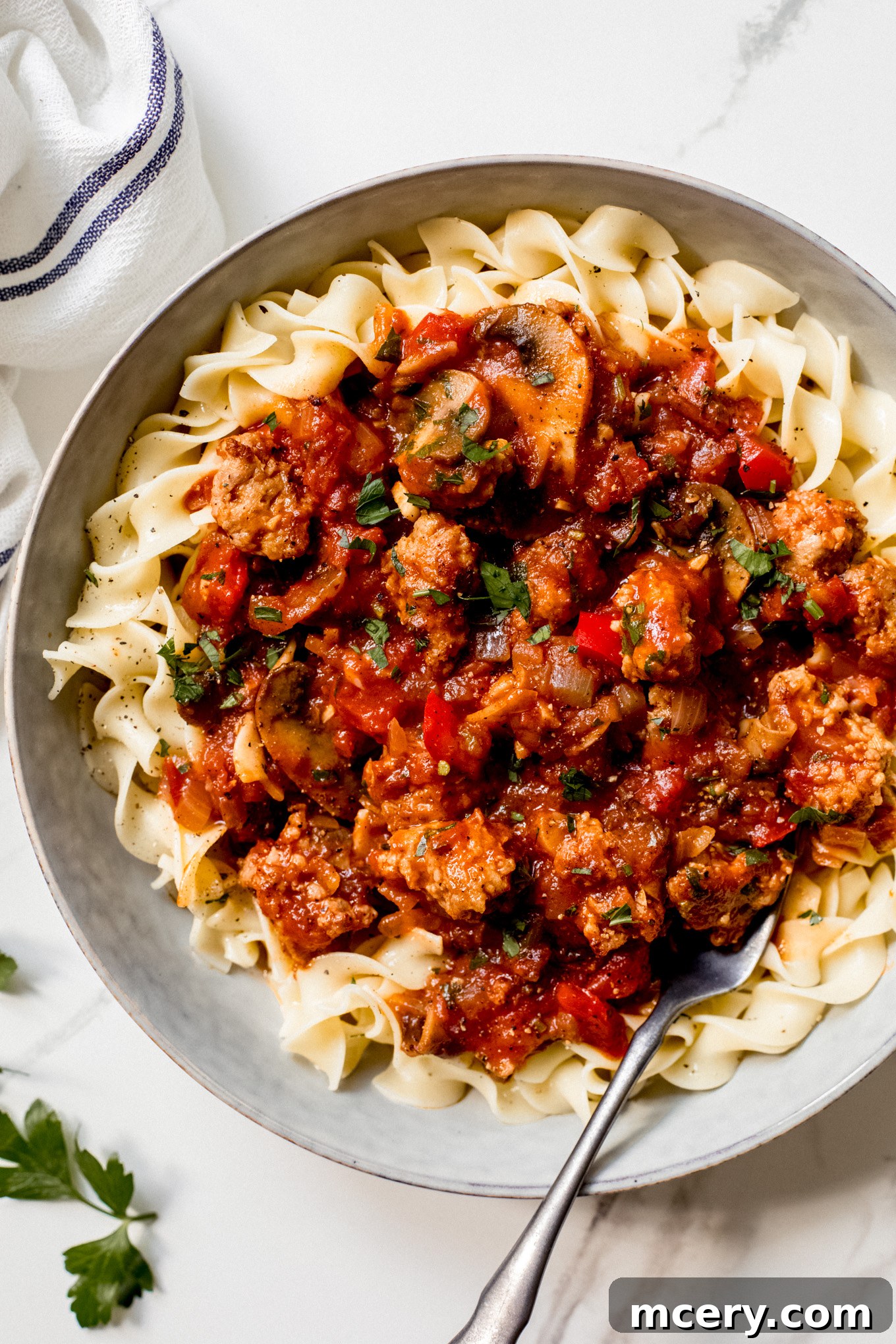
Sausage cacciatore is incredibly versatile and pairs well with many accompaniments. We particularly love serving it over a bed of tender egg noodles or creamy red skin mashed potatoes, allowing the rich sauce to coat every bite. Another excellent choice is pairing it with crusty sourdough garlic bread or a simple baguette, perfect for soaking up all the savory juices. For a complete meal, consider adding a fresh, crisp green salad or roasted vegetables on the side.
Should I remove the sausage casings before cooking cacciatore?
Yes, we highly recommend removing the casings from sausage links before cooking them for cacciatore. Sausage casings can often be tough, chewy, and unpleasant to eat once cooked in a sauce. To easily remove them, use a sharp knife to make a shallow slit lengthwise down each sausage link, then simply peel the casing away from the meat. This allows the sausage to crumble and blend seamlessly into the sauce, creating a much better texture.
Can I make a vegetarian cacciatore?
Absolutely! While this recipe features sausage, you can easily adapt it for a vegetarian diet. Replace the Italian sausage with plant-based sausage crumbles, hearty mushrooms like portobello, or even a mix of cannellini beans and lentils. Ensure your broth is vegetable-based, and you’ll have a wonderfully flavorful vegetarian cacciatore.
What kind of white wine should I use?
For cacciatore, a dry white wine is best. Good choices include Pinot Grigio, Sauvignon Blanc, or a dry (unoaked) Chardonnay. The key is to avoid sweet wines, as they will alter the intended flavor of the sauce. If you don’t have wine, chicken or vegetable broth makes a suitable non-alcoholic substitute.
More Delicious One-Pan Dinners You’ll Love
If you make this irresistible sausage cacciatore recipe, please leave a ⭐️ STAR rating and COMMENT below to let us know how much you enjoyed it. Your feedback helps us and other home cooks!
Print Recipe

Italian Sausage Cacciatore Recipe
5 Stars
5 from 1 review
- Author: Katya
- Prep Time: 15 min
- Cook Time: 45 min
- Total Time: 1 hour
- Yield: 6-8 servings
- Category: Main Course
- Method: Stovetop
- Cuisine: Italian
Description
Sausage cacciatore is a hearty Italian dish that combines savory Italian sausage with a flavorful tomato sauce and plenty of fresh herbs and vegetables. This one-pan wonder is perfect for a comforting weeknight dinner.
Ingredients
- 4 Tbsp. olive oil
- 1 lb. bulk mild Italian sausage
- 1 medium yellow onion, chopped
- 1 large red bell pepper, chopped
- 8 oz. white or cremini mushrooms, thinly sliced
- 3 garlic cloves, minced
- ¾ cup dry white wine, such as Pinot Grigio or Sauvignon Blanc
- 1 (28 oz) can good-quality crushed tomatoes, such as San Marzano
- 1 ½ tsp. dried oregano
- ½ tsp. sugar
- ½ cup water
- ¼ cup fresh chopped parsley or basil
- Kosher salt and fresh black pepper, to taste
Instructions
- Heat olive oil over medium-high heat in a large heavy-bottom sauté pan or skillet. Add sausage and cook until crumbled and browned, about 5 minutes. Remove to a bowl with a slotted spoon.
- To the same pan, add onions, bell peppers, and mushrooms. Season with salt and pepper, to taste. Cook until the vegetables begin to soften, while stirring occasionally, about 5-8 minutes. If veggies begin to stick to the pan, add 1-2 tablespoons of water to loosen up. Stir in garlic and cook just until fragrant, about 1 minute.
- Add wine and let reduce by half, about 2-3 minutes, scraping up any browned bits from the bottom of the pan.
- Add tomatoes, oregano, sugar, and water. Season with salt and pepper. Bring to a simmer. Stir in sausage. Simmer on low, partially covered, for 15-20 minutes or until the sauce is slightly thickened, and vegetables are fully tender. Stir in parsley and serve over cooked egg noodles, polenta, or with crusty bread.
Notes
- Sausage: If using sausage links, make sure to remove them from the casing first for a better texture in the sauce. Feel free to use spicy Italian sausage for an extra kick.
- Mushrooms: For the freshest taste and ideal texture, buy whole mushrooms and slice them yourself. This allows you to control the thickness of the slices.
- Wine: The dry white wine adds a subtle hint of sweetness and acidity that deepens the flavor of the dish. While an alternative like chicken broth can be used, wine is highly recommended for its unique contribution.
- Pan Size: For best results with this one-pan recipe, a large sauté pan or deep skillet is essential, ideally at least 13 inches in diameter or larger, to accommodate all the ingredients comfortably.
- Leftovers: Store any leftover cacciatore in an airtight container in the refrigerator for up to 5 days, or freeze for up to 3 months. Reheat thoroughly before serving.
Nutrition
- Serving Size: ½ cup sauce
- Calories: 265
- Sugar: 5.6 g
- Sodium: 86 mg
- Fat: 12.4 g
- Carbohydrates: 42.5 g
- Protein: 7.9 g
- Cholesterol: 0 mg
(Nutritional information is an estimate and may vary based on specific ingredients and preparation methods.)