
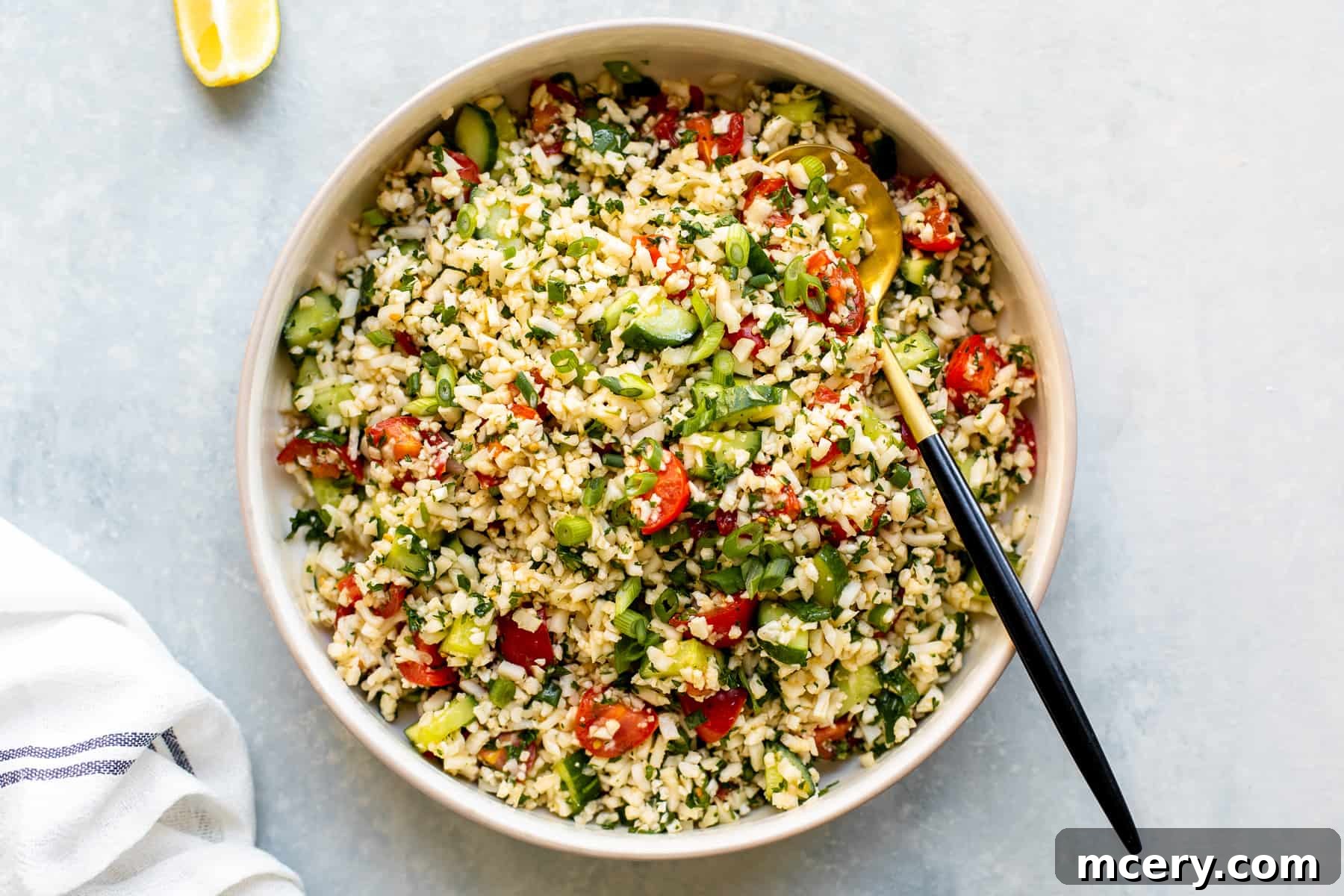
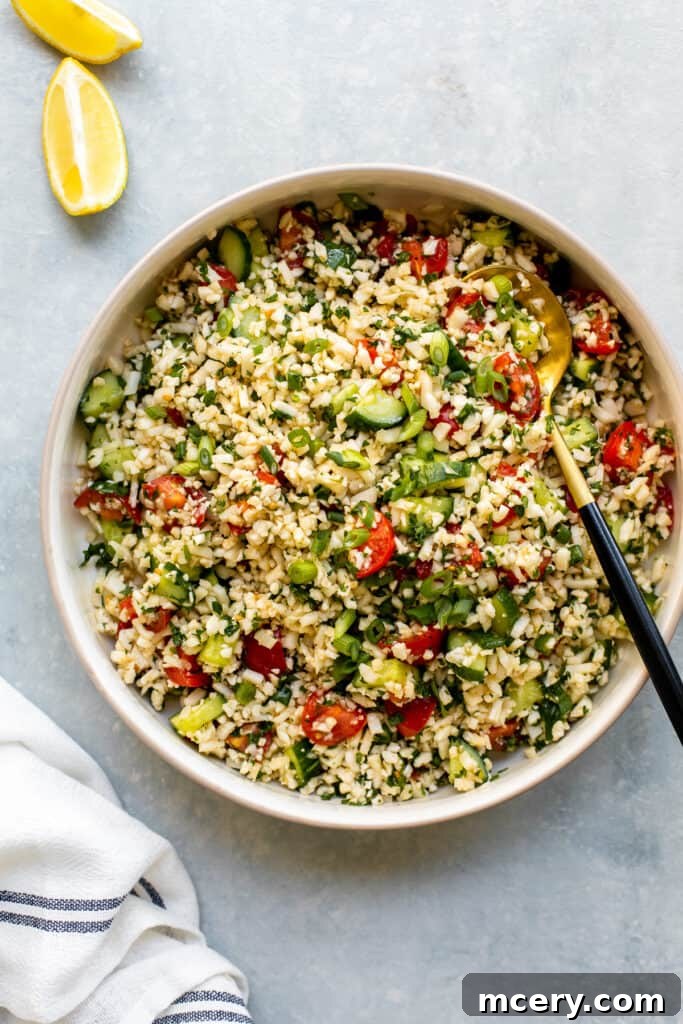
Welcome to the vibrant world of Cauliflower Tabbouleh, a delightful and refreshing twist on a beloved Middle Eastern classic. This salad masterfully combines the traditional zesty, herb-packed flavors of tabbouleh with the light, grain-free goodness of cauliflower rice. It’s an ingenious low-carb creation, perfect for anyone seeking a healthy, yet incredibly flavorful, summer dish. Imagine a vibrant medley of finely chopped parsley, crisp cucumbers, juicy tomatoes, and tender scallions, all brought together with a bright, lemony olive oil dressing, creating a symphony of textures and tastes with every bite.
Looking for more quick and easy summer salads? You’ll love our Summer Farro Salad – a hearty blend loaded with delicious seasonal vegetables and wholesome grains!
What is Cauliflower Tabbouleh?
Cauliflower Tabbouleh is a truly exceptional low-carb dish that captures the essence of Mediterranean cuisine in every mouthful. It reimagines the traditional tabbouleh by substituting bulgur wheat with finely riced cauliflower, offering a fantastic option for those following a low-carb, keto, or gluten-free diet without compromising on flavor or authenticity. This innovative salad is more than just a side dish; it’s a versatile culinary star.
Its crisp, fresh profile makes it an ideal accompaniment to a wide array of main courses. Picture it alongside succulent grilled chicken tenders, perfectly seasoned grilled garlic shrimp, or even hearty potato perogies. Beyond its role as a delicious side, cauliflower tabbouleh shines brightly as a standalone vegetarian or vegan meal, offering a complete and satisfying experience. Its vibrant colors and fresh ingredients make it a feast for the eyes as well as the palate.
One of the most appealing aspects of this low-carb tabbouleh is its sheer simplicity and speed of preparation. You can have this delightful salad prepped in less than 15 minutes, after which it simply needs a brief 30-minute chill in the refrigerator to allow the flavors to meld beautifully. This makes it a perfect dish to assemble before you begin preparing your main course, ensuring everything is ready to serve simultaneously. It’s the ultimate hassle-free, healthy option for busy weeknights or leisurely weekend gatherings.
Where Does the Word Tabbouleh Come From?
The name ‘tabbouleh,’ denoting the beloved national dish of Lebanon, is derived from the Arabic word ‘taabil,’ which translates to ‘seasoning’ or ‘spice.’ This linguistic root perfectly captures the essence of the salad, highlighting its rich and aromatic blend of herbs and spices that give it its distinctive flavor profile. Traditional tabbouleh, enjoyed and celebrated across the globe, typically features robust grains like bulgur wheat as its base. It’s a testament to the enduring appeal of this refreshing vegan dish that its core concept can be adapted while retaining its spirit.
Our featured recipe embraces this adaptability by thoughtfully exchanging the bulgur wheat for nutrient-dense cauliflower rice. This clever substitution transforms the classic into a modern, low-carb version, making it an excellent choice for a wider range of dietary preferences, including those on ketogenic, paleo, or gluten-free diets. Despite this innovative swap, the essence of tabbouleh – its vibrant freshness, lemony tang, and herbaceous punch – remains beautifully intact, ensuring it continues to be a fantastic option for vegetarians and vegans alike.
The history of tabbouleh is as rich as its flavors, with variations found across the Middle East. While typically a side dish, its nutritional value and refreshing qualities have made it a staple, particularly during warmer months. Its journey from a regional specialty to a globally recognized healthy salad is a testament to its universal appeal and delicious simplicity.
Tips for Making Perfect Cauliflower Tabbouleh
Crafting a consistently delicious cauliflower tabbouleh is simple with a few helpful tips and tricks. Follow these guidelines to ensure your salad is always bursting with flavor and boasts the perfect texture:
- **Allow Chilling Time:** This is a crucial step! Let the salad rest for at least 30 minutes in the refrigerator before serving. This isn’t just about temperature; it’s about allowing the zesty dressing to fully meld with and infuse the cauliflower rice and fresh vegetables, deepening the flavors and creating a more cohesive, harmonious dish. A longer chill time, even an hour, can further enhance this process.
- **Mastering Cauliflower Rice:** If you’re preparing your own riced cauliflower from a fresh head, utilize a food processor. Pulse the cauliflower florets in batches until they resemble small, rice-sized grains. The key is to avoid over-processing, as this can turn the cauliflower into a mushy paste and release too much liquid, leading to a soggy salad. Aim for a texture similar to couscous.
- **Preventing Soggy Salad:** To combat excess moisture, especially if using a food processor, consider placing the riced cauliflower in a clean kitchen towel or several layers of paper towels and gently squeezing out any residual liquid. This extra step ensures your tabbouleh remains crisp and vibrant.
- **Customize Your Veggies & Herbs:** This recipe is incredibly adaptable! Feel free to experiment with a variety of vegetables and herbs based on your preferences and what’s in season. Delicious additions include fresh mint, finely diced red onions or shallots for a sharper bite, crisp romaine lettuce for added crunch, or creamy avocado for richness. Bell peppers (red, yellow, or orange) can also add a delightful sweetness and color.
- **For a Traditional Touch:** If you prefer a more classic grain-based tabbouleh, you can easily substitute the cauliflower rice with cooked bulgur, farro, or even quinoa. These grains offer a different texture and nutritional profile while still pairing beautifully with the fresh herbs and lemony dressing.
- **Enhance with Toppings:** Elevate your cauliflower tabbouleh with additional textures and flavors right before serving. Crumbled feta cheese introduces a salty tang, while a sprinkle of sweet and tart pomegranate seeds adds a burst of color and juiciness. Toasted pine nuts or slivered almonds can also provide a pleasant crunch.
- **Seasoning is Key:** Always taste and adjust your seasoning before serving. The brightness of lemon and the punch of garlic can be balanced with just the right amount of salt and freshly ground black pepper. Don’t be shy to add a little more lemon juice if you desire extra zest!
Essential Ingredients for Cauliflower Tabbouleh
Creating this refreshing salad requires a handful of fresh, high-quality ingredients. The beauty of this recipe lies in its adaptability, allowing you to easily adjust quantities or swap components to suit your dietary needs or personal taste preferences. Here’s a detailed look at the key players:
- Cauliflower: The star of our low-carb show! For the best texture and flavor, it is highly recommended to use fresh riced cauliflower. You can either purchase a whole head of cauliflower and rice it yourself using a food processor (see tips above for best results), or opt for the convenience of pre-riced cauliflower available in the produce section of most grocery stores. It’s crucial to avoid frozen riced cauliflower for this recipe, as it tends to release too much water upon thawing, making the salad soggy.
- Parsley: Fresh parsley is absolutely essential for authentic tabbouleh flavor and its signature vibrant green color. It adds an incredible brightness and herbaceous depth. Make sure to use flat-leaf (Italian) parsley and chop it very finely to distribute its flavor evenly throughout the salad.
- Scallions (Green Onions): These provide a mild, delicate oniony flavor that complements the other ingredients without overpowering them. Their crisp texture and subtle bite are a welcome addition. Finely sliced scallions are ideal.
- Tomatoes: Juicy, ripe tomatoes contribute sweetness, a touch of acidity, and a beautiful pop of color. You can use large, ripe tomatoes diced into small pieces, or for even easier preparation and a burst of flavor, halved grape or cherry tomatoes work wonderfully.
- Cucumbers: Adding a delightful crunch and refreshing coolness, cucumbers are indispensable. Persian or English cucumbers are often preferred due to their thin skins and fewer seeds, eliminating the need for peeling or deseeding. Dice them into small, consistent pieces.
- Olive Oil, Lemon Juice, and Garlic: This powerful trio forms the simple yet incredibly flavorful dressing for your tabbouleh. Extra-virgin olive oil provides a smooth, rich base, while freshly squeezed lemon juice delivers that essential zesty brightness and tang. A single clove of fresh garlic, pressed or finely grated on a microplane, introduces a pungent, aromatic layer that perfectly balances and enhances all the other flavors.
- Salt and Pepper: These fundamental seasonings are vital for enhancing the natural flavors of all the ingredients. Kosher salt helps to draw out the best in the fresh produce, and freshly cracked black pepper adds a potent, aromatic kick that brings everything together harmoniously. Season to taste, adjusting as needed after mixing.
How to Effortlessly Make Cauliflower Tabbouleh
One of the most appealing aspects of this low-carb cauliflower tabbouleh is its remarkable ease of preparation, making it an ideal choice for both novice and experienced cooks. While these are the brief steps, a more detailed description can be found in the recipe card below, ensuring you have all the information you need for success.
The journey to a perfect cauliflower tabbouleh begins with the star ingredient: the cauliflower. Start by preparing your riced cauliflower. If you’re using a fresh head of cauliflower, pulse the florets in a food processor until they achieve a fine, rice-like consistency. Remember the tip about not over-processing to avoid excess moisture. Alternatively, for ultimate convenience, simply use a bag of pre-riced cauliflower from your grocery store’s produce section. Once your cauliflower rice is ready, turn your attention to the other vibrant vegetables. Finely dice your fresh parsley, slice the scallions, halve the grape or cherry tomatoes, and chop the crisp cucumbers. Once all your ingredients are prepared, combine them elegantly in a large mixing bowl, ensuring an even distribution of color and texture.
Next, it’s time to craft the simple yet impactful dressing that brings this salad to life. In a separate, smaller bowl, whisk together the high-quality extra-virgin olive oil, freshly squeezed lemon juice, and the pressed or grated garlic clove. Season this vibrant dressing generously with kosher salt and freshly cracked black pepper to taste. Once the dressing is perfectly emulsified and seasoned, gently pour it over the combined vegetables in the large bowl. Toss everything together thoroughly, ensuring every piece of cauliflower and every vegetable is coated in the fragrant, lemony dressing.
After mixing, cover the bowl and transfer it to the refrigerator. Allow the salad to chill for a minimum of 30 minutes. This crucial resting period permits the flavors to marry and deepen, transforming individual ingredients into a harmonious and incredibly refreshing whole. Once thoroughly chilled and the flavors have fully developed, your homemade cauliflower tabbouleh is ready to be served and enjoyed. Its crisp texture and bright, zesty taste are sure to impress!
Creative Additions to Your Cauliflower Tabbouleh
The beauty of this cauliflower tabbouleh recipe lies not only in its delicious simplicity but also in its incredible adaptability. It serves as a fantastic foundation, inviting you to customize and experiment with various ingredients to perfectly match your personal tastes and preferences. Don’t hesitate to remove any ingredients you’re not fond of and eagerly incorporate those you love!
Beyond the core components of this recipe, the possibilities for enhancing your tabbouleh are vast and exciting. Consider adding vibrant and crunchy bell peppers – red, yellow, or orange varieties would add both sweetness and a beautiful splash of color. For a different herb profile, fresh cilantro can introduce a bright, citrusy note, particularly appealing to those who enjoy its distinctive flavor. If you’re looking to boost the protein and fiber content, roasted chickpeas can provide a satisfying, nutty crunch. Sweet and tart pomegranate seeds offer a burst of juiciness and a dramatic visual appeal, while finely chopped red onion or a few fresh mint leaves can elevate the aromatic complexity. For a creamier texture and healthy fats, diced avocado is a wonderful addition. Additionally, for a touch of savory richness, a sprinkle of crumbled feta cheese or a handful of toasted pine nuts can transform the salad into an even more gourmet experience.
How to Prevent Your Cauliflower Tabbouleh from Getting Soggy
A common concern with vegetable-based salads, especially those with high water content, is the risk of them becoming soggy. Nobody wants a watery tabbouleh! Fortunately, there are several effective strategies you can employ to ensure your cauliflower tabbouleh remains delightfully crisp and fresh.
The primary culprit behind a soggy tabbouleh is often excess liquid. One of the most critical steps to avoid this is to strictly use fresh riced cauliflower, not frozen. Frozen cauliflower, when thawed, releases a significant amount of water, which will inevitably make your salad watery and diminish its desirable texture. Always opt for fresh cauliflower, whether you rice it yourself or purchase it pre-riced.
If you are ricing the cauliflower yourself using a food processor, pay close attention to the pulsing technique. Blitz the cauliflower florets into small, consistent pieces, similar to the size of bulgur wheat or couscous. Be careful not to over-process, as this can break down the cell walls of the cauliflower, causing it to release more moisture. After ricing, an invaluable trick is to transfer the cauliflower rice to a large paper towel or a clean, thin kitchen towel. Gently gather the edges and squeeze firmly to remove any remaining moisture. You’ll be surprised how much water comes out! This step is essential for achieving that perfect, non-soggy texture. By following these simple steps, you can ensure your cauliflower tabbouleh is always crisp, flavorful, and a pleasure to eat.
Serving Suggestions for Cauliflower Tabbouleh
The versatility of cauliflower tabbouleh allows it to be enjoyed in numerous ways. While it is absolutely delightful when eaten on its own as a light meal or refreshing snack, it truly shines when paired thoughtfully with other dishes. Its bright, zesty profile and crisp texture make it an excellent complement to a variety of Mediterranean-inspired or simple grilled entrees.
- With Grilled Meats: The refreshing nature of this salad cuts through the richness of grilled meats. Pair it with flavorful Lemon Pepper Chicken Tenders or tender Yogurt Marinated Chicken Kebabs for a complete and satisfying meal.
- Alongside Roasted Dishes: Its freshness provides a lovely contrast to heartier roasted options like a perfectly seasoned Herb Roasted Chicken.
- Seafood Pairings: Tabbouleh is a natural partner for seafood. Serve it alongside delicate Steamed Mussels with Garlic and Parsley or robust Grilled Salmon Burgers for a light and healthy seafood feast.
- Vegetarian Options: For a delightful vegetarian meal, enjoy it with Hummus Veggie Sandwiches, falafel, or wrapped in warm pita bread. It also makes a fantastic addition to a Mediterranean mezze platter.
- As a Light Lunch: Pack it in a container for a healthy and satisfying office lunch. You can add some grilled chicken or chickpeas for extra protein.
- Picnics and Potlucks: Its robust flavors and ability to hold up well make it an ideal choice for outdoor dining. It’s a crowd-pleaser that offers a refreshing alternative to heavier potato or pasta salads.
No matter how you choose to serve it, remember that cauliflower tabbouleh is best enjoyed chilled or at room temperature, allowing its vibrant flavors to truly shine.
How to Store Cauliflower Tabbouleh
Proper storage is key to maintaining the freshness and flavor of your cauliflower tabbouleh, ensuring you can enjoy its deliciousness for days after preparation. To keep any leftover tabbouleh at its best, transfer it to an airtight container immediately after your meal. Store it in the refrigerator, where it will remain fresh and flavorful for up to four days.
While the salad holds up well, you might notice that some of the flavors become more pronounced over time. Before serving it again, a quick stir will re-distribute the dressing and awaken the ingredients. For an extra touch of freshness and visual appeal, consider tossing it with a little freshly chopped parsley or a sprinkle of crumbled feta cheese just before enjoying it again. These additions can revitalize the salad and make it taste freshly made.
It is important to note that this salad is not suitable for freezing. The high water content in cauliflower and other fresh vegetables will change their texture significantly upon thawing, leading to a mushy and unappealing consistency. For the best experience, enjoy your cauliflower tabbouleh fresh and within the recommended refrigeration period.
Frequently Asked Questions
No, there’s no need to cook the cauliflower for this particular salad. Cauliflower tabbouleh tastes absolutely fantastic with raw, finely riced cauliflower, which contributes a wonderful crisp texture and fresh flavor that is essential to the dish. Cooking the cauliflower would change its texture and might make the salad less vibrant.
No, cauliflower tabbouleh, like its traditional counterpart, is fundamentally a refreshing, chilled salad. It is specifically designed to be served cold or at comfortable room temperature. Heating it would diminish its crispness, alter its delicate flavors, and create a less appealing texture.
While this recipe cleverly utilizes cauliflower rice, classic, authentic tabbouleh is primarily made with finely cracked bulgur wheat. Beyond the grain, it features a generous amount of fresh parsley, along with diced cucumbers, ripe tomatoes, and a punchy dressing of olive oil, lemon juice, and garlic. Fresh mint is also a common addition, adding another layer of herbaceous freshness.
Tabbouleh (often spelled tabouli) is typically served as part of a larger Mediterranean meal or as a refreshing side dish. It’s fantastic with warm pita bread for scooping, alongside creamy hummus, with crispy falafel, or simply enjoyed with pita chips. It also complements grilled meats and fish beautifully.
Adore tabbouleh salad? Explore another exciting variation with our Quinoa Tabbouleh Salad – a superfood version packed with nutrition!
Cauliflower Tabbouleh
5 from 2 reviews
- Author: Katya
- Prep Time: 20 mins
- Total Time: 20 mins
- Yield: 6-8 servings
- Category: Salad
- Method: Chopped
- Cuisine: Middle Eastern
Description
Cauliflower Tabbouleh salad is a delicious Middle Eastern dish that is light and lemony. It’s the perfect low-carb summer salad made with cauliflower rice instead of bulgar.
Ingredients
- 16 oz. riced cauliflower, about 5 cups
- 1 cup finely chopped parsley
- 4 green onions, sliced
- 2 cups halved grape or cherry tomatoes
- 1 cup chopped cucumber
- ⅓ cup extra-virgin olive oil
- 3 Tbsp. fresh lemon juice
- 1 garlic clove, pressed or grated on microplane
- Kosher salt and fresh black pepper
Instructions
- In a large bowl, combine the cauliflower, parsley, scallions, tomatoes, and cucumbers.
- Whisk together the olive oil, lemon juice, and garlic. Season with salt and pepper to taste. Pour the dressing over the vegetables and toss until combined.
- Cover and refrigerate at least 30 minutes before serving.
Notes
- Cauliflower: This recipe works best with fresh riced cauliflower. I do not recommend using frozen cauliflower as it will retain too much water.
- Leftovers: Store leftovers in an airtight container for up to 4 days in the refrigerator.
Nutrition
- Serving Size: 1 cup
- Calories: 111
- Sugar: 2.8 g
- Sodium: 27 mg
- Fat: 9.7 g
- Carbohydrates: 6.6 g
- Protein: 2 g
- Cholesterol: 0 mg
Recipe originally published June 2015.