
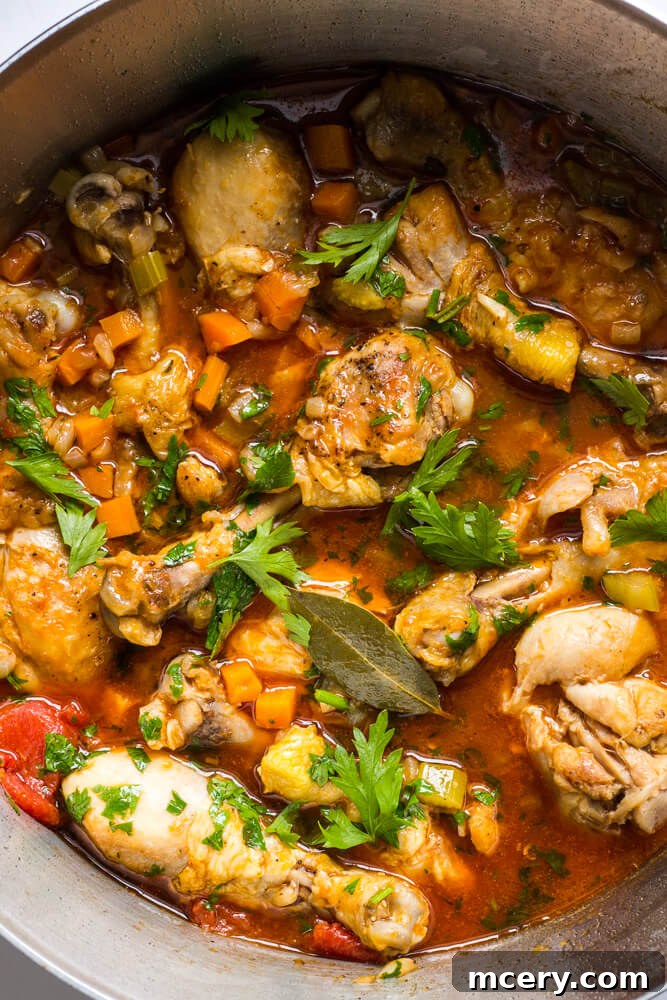
Welcome to the world of authentic Italian comfort food with this **Easy Chicken Cacciatore Recipe**! A true culinary gem, this classic dish brings together rustic chicken, slowly braised vegetables, and a deeply flavorful, rich tomato sauce in one magnificent pot. It’s a meal that whispers tradition, warmth, and the joy of shared dining, making it a beloved favorite for generations. Forget complicated culinary endeavors; this recipe proves that exceptional flavor can be achieved with simplicity and love.
If you cherish the convenience and hearty goodness of one-pot meals, you’ll also adore our Tomato Basil Chicken, the vibrant Chicken with Zucchini and Corn, or the elegantly simple Balsamic Chicken.
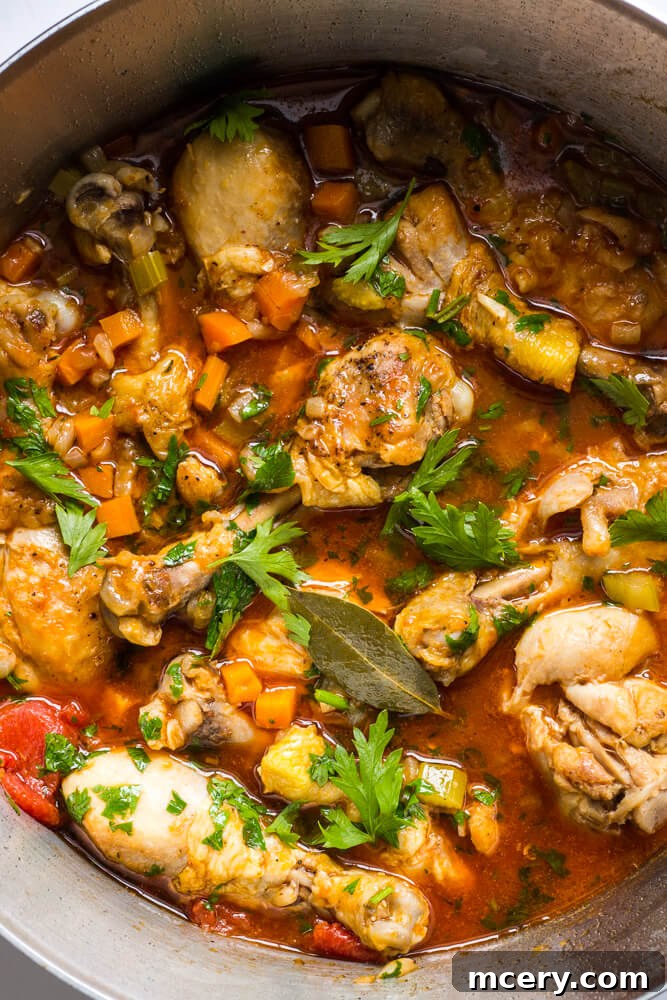
Experience Authentic Italian Comfort at Home
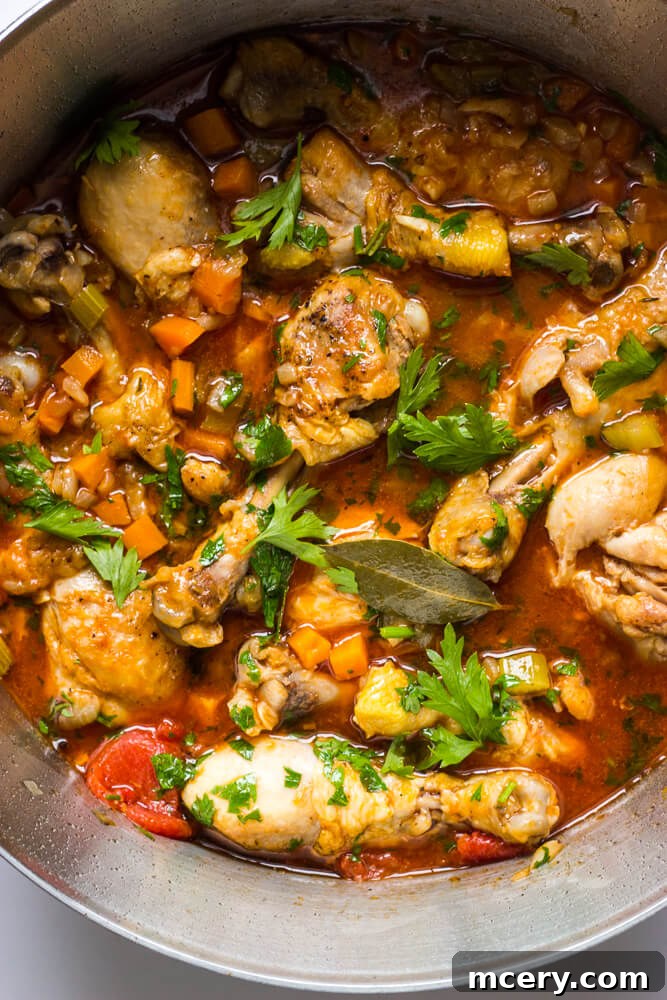
Imagine yourself seated in a charming trattoria in the heart of Italy, a plate of exquisitely prepared chicken cacciatore before you. With just one bite of this homemade version, you’ll be transported straight there. Our recipe delivers a depth of flavor and tender perfection that will make you rethink ever ordering it out again. Crafted with succulent bone-in chicken drumsticks and a medley of fresh, aromatic vegetables steeped in a savory, herb-infused broth, every mouthful is an explosion of authentic taste that will impress even the most discerning palates. It’s no wonder this recipe consistently earns a five-star review!
Designed for ease and maximum impact, this dish is straightforward enough for a casual weeknight dinner yet sophisticated and flavorful enough for special occasions and entertaining guests. A single batch generously serves up to six people, making it an ideal choice for family dinners and gatherings. It’s a complete meal in one pot, minimizing cleanup and maximizing enjoyment. Give it a try, and we guarantee it will quickly become a cherished favorite in your recipe collection, bringing genuine Italian warmth to your table.
Why You’ll Adore This Easy Chicken Cacciatore Recipe
There are countless reasons why this Chicken Cacciatore recipe stands out and continues to be a go-to for so many home cooks:
- Tender, Fall-Off-The-Bone Chicken: Through a process of slow braising, the chicken drumsticks become incredibly tender, practically melting in your mouth and effortlessly falling off the bone. This rustic, stew-like quality is what truly defines a superb cacciatore.
- Rich, Aromatic Tomato Sauce: Our distinctive version elevates the classic tomato sauce by incorporating a flavorful blend of celery and carrots, alongside traditional onions and garlic. This vegetable base deepens the umami and natural sweetness of the sauce, creating a complex and intensely satisfying profile, much like our popular Sausage Cacciatore.
- Heartwarming, Family-Friendly Comfort Food: This dish embodies the essence of comfort food. It’s a robust, soul-satisfying meal perfect for gathering the entire family, especially on those cherished Sunday evenings when you crave something truly special and nourishing. It pairs wonderfully with creamy sides like red skin mashed potatoes or the best garlic mashed potatoes.
- Surprisingly Simple to Make: Despite its gourmet taste and impressive appearance, this chicken cacciatore is remarkably easy to prepare. It involves straightforward steps and common ingredients, making it accessible for cooks of all skill levels, even on busy weeknights.
- Versatile and Customizable: The beauty of cacciatore lies in its adaptability. You can easily adjust the ingredients to suit your preferences, adding various vegetables, a splash of wine, or a hint of spice to make it uniquely yours.
What Exactly is Chicken Cacciatore? A Culinary Journey
Chicken Cacciatore is a beloved classic braised chicken recipe with deep roots in traditional Italian cuisine. The very term “cacciatore” holds significant meaning, translating directly to “hunter” in Italian. This name is not merely poetic; it reflects the dish’s historical origins as a practical, hearty, one-pot meal often prepared by hunters or their families using readily available ingredients found in the countryside. It was designed to be robust and satisfying, easily cooked outdoors over an open fire or in a simple kitchen, using whatever provisions were at hand after a day’s hunt.
Historically, cacciatore was incredibly versatile. While chicken is the most common protein today, the dish would traditionally be made with whatever game meat was available, frequently featuring rabbit or other poultry. The defining characteristics of its “hunter-style” preparation always involved a rustic and flavorful mix of foundational ingredients: typically onions, a generous blend of Italian herbs, and often, but not always, tomatoes, depending on the region and the season. Some regional variations might even incorporate bell peppers, mushrooms, or olives, further emphasizing the dish’s adaptability to local produce and preferences.
Every Italian household, much like any cherished family recipe, boasts its own unique rendition of the classic cacciatore. These variations often include subtle additions that impart extra depth and character to the rich tomato sauce, such as a splash of dry red or white wine. This addition not only tenderizes the meat but also introduces a layer of sophisticated flavor that enhances the overall complexity of the dish without making it overly sweet. The beauty of cacciatore lies in its hearty simplicity and the rich, comforting flavors it delivers, making it a timeless favorite across Italy and around the world.
Essential Ingredients for Your Classic Chicken Cacciatore
Creating an authentic and delicious Chicken Cacciatore starts with selecting high-quality, fresh ingredients. Each component plays a crucial role in building the layered flavors of this rustic Italian stew. Below is a comprehensive overview of what you’ll need. For precise measurements and quantities, please refer to the detailed recipe card provided at the bottom of this page.
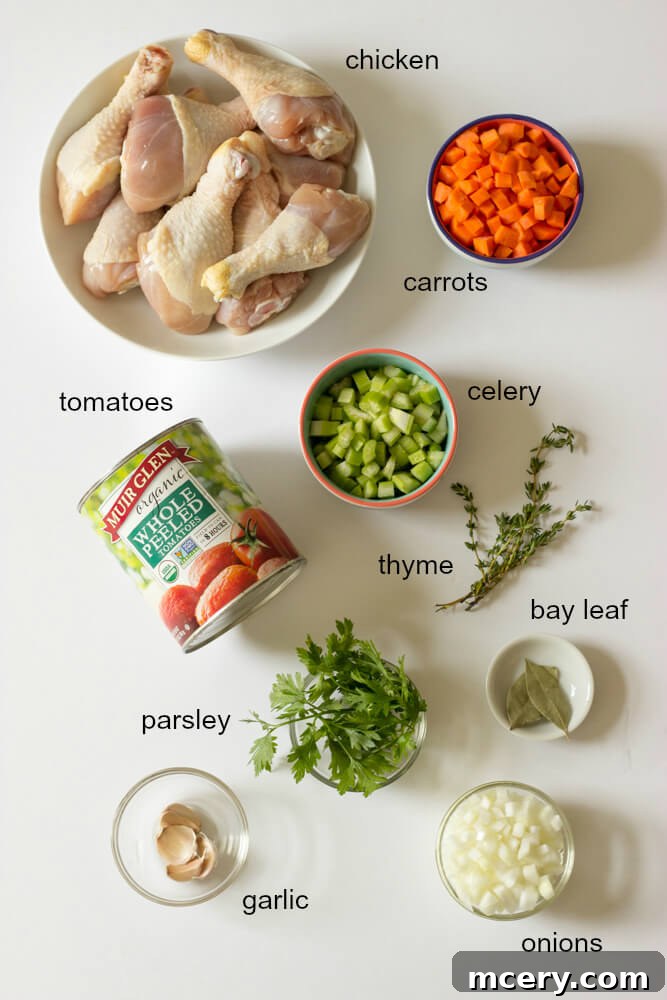
- Chicken: For the most tender and flavorful results, bone-in, skin-on chicken drumsticks are highly recommended. The bones contribute essential flavor to the sauce, and the skin helps keep the meat moist during the long braising process. Boneless chicken tends to dry out, diminishing the overall quality of the dish. Bone-in chicken thighs are also an excellent alternative.
- Tomatoes: The heart of the cacciatore sauce. High-quality canned whole peeled tomatoes (preferably San Marzano for authentic Italian flavor) are best. They break down beautifully during simmering, releasing a rich, sweet, and slightly acidic tomato flavor that forms the foundation of the stew. You can crush them by hand for a rustic texture or dice them finely.
- Onion: A fundamental aromatic that sets the savory foundation for the stew. When sautéed, onions release a gentle, sweet flavor that becomes deeply integrated into the sauce, providing a crucial base note.
- Carrots: Not just for color, carrots add a natural sweetness to the sauce. This sweetness is vital for balancing the acidity of the tomatoes, creating a harmonious and well-rounded flavor profile.
- Celery: Provides a refreshing, crisp texture and an earthy, slightly peppery flavor that contributes to the classic mirepoix (soffritto) base, adding depth and complexity to the vegetable medley.
- Garlic: An indispensable ingredient in Italian cooking, garlic infuses the dish with its characteristic savory, pungent warmth, adding layers of aromatic depth and a comforting kick.
- Herbs & Spices: Fresh herbs are key for vibrancy. Fresh thyme sprigs and bay leaves infuse the sauce with an earthy, herbaceous aroma during cooking. Fresh chopped Italian parsley is stirred in at the end for a burst of fresh flavor and a vibrant garnish. While fresh is ideal, dried Italian herbs or a pre-made Italian seasoning blend can be used in a pinch.
- Olive Oil: Essential for browning the chicken and sautéing the vegetables, providing a rich, fruity base fat for the dish. Use good quality extra virgin olive oil for the best flavor.
- Water or Chicken Stock: Used as the braising liquid, helping to tenderize the chicken and create the rich sauce. Chicken stock will add an extra layer of savory depth.
- Kosher Salt and Freshly Ground Black Pepper: Crucial for seasoning at every stage of cooking, enhancing all the flavors and ensuring the dish is perfectly balanced.
Step-by-Step Guide: Crafting Your Easy Chicken Cacciatore
Ready to create this Italian masterpiece? Follow these detailed steps to achieve a rich, flavorful chicken cacciatore that will be the star of your dinner table. The full recipe card with exact quantities is available further down the page.

Step 1: Prepare the Chicken. Begin by gently patting the chicken drumsticks thoroughly dry with several sheets of paper towels. Removing excess moisture is a critical step that ensures you achieve a beautifully crispy and golden-brown skin when searing. Once dry, generously season both sides of each chicken piece with kosher salt and freshly ground black pepper. Don’t be shy with the seasoning; this is your first opportunity to build a robust flavor profile.
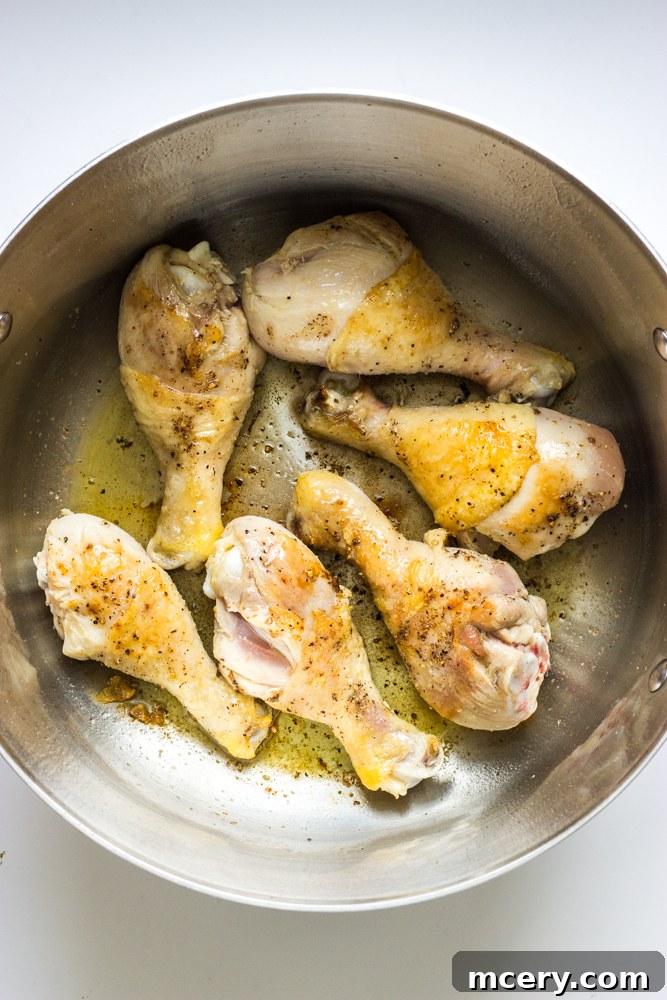
Step 2: Sear the Chicken to Golden Perfection. Heat 3 tablespoons of olive oil (or avocado oil) in a large Dutch oven or a heavy-bottomed sauté pan over medium-high heat. It’s important to wait until the oil is shimmering and hot before adding the chicken, which helps create that desirable golden crust. Carefully place the seasoned chicken drumsticks into the hot pan in batches, ensuring not to overcrowd the pan. Overcrowding can lower the pan’s temperature, leading to steaming instead of searing. Cook each batch for 4-5 minutes per side, or until they develop a beautiful golden-brown color. Once seared, remove the chicken pieces from the pan and set them aside on a clean plate.
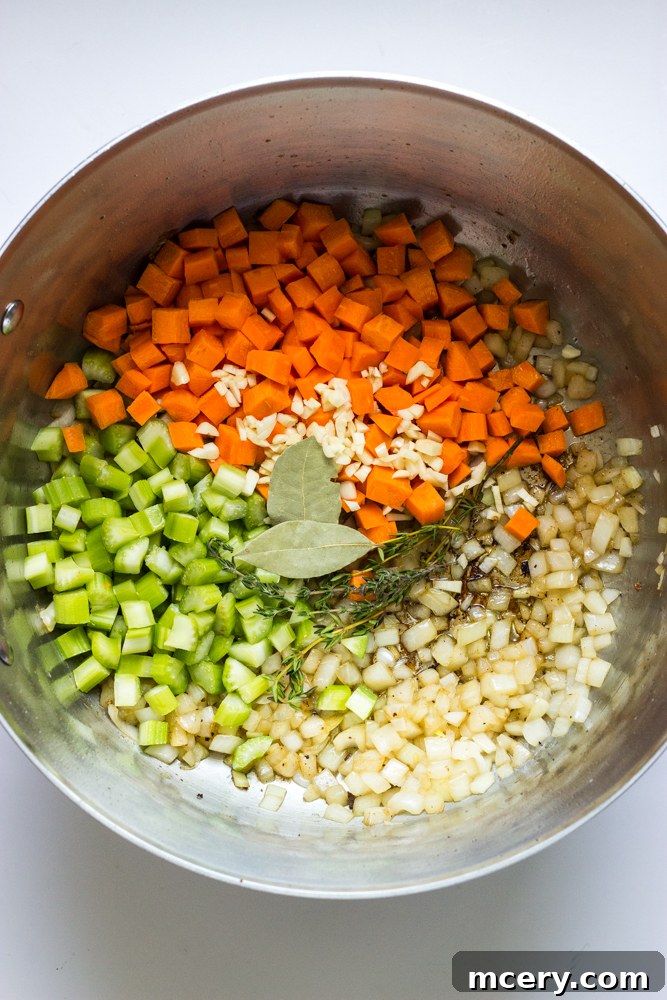
Step 3: Sauté the Aromatics. Reduce the heat to medium. Add the remaining 1 tablespoon of olive oil to the same pan, scraping up any browned bits from the chicken, which are packed with flavor. Add the chopped onions, diced carrots, and diced celery, along with a small pinch of salt. Sauté these vegetables, stirring frequently, for 10-13 minutes, or until they become beautifully softened and translucent. During the last minute of cooking, add the minced garlic and cook until fragrant, being careful not to burn it. This aromatic sofrito forms the flavorful base of your cacciatore sauce.
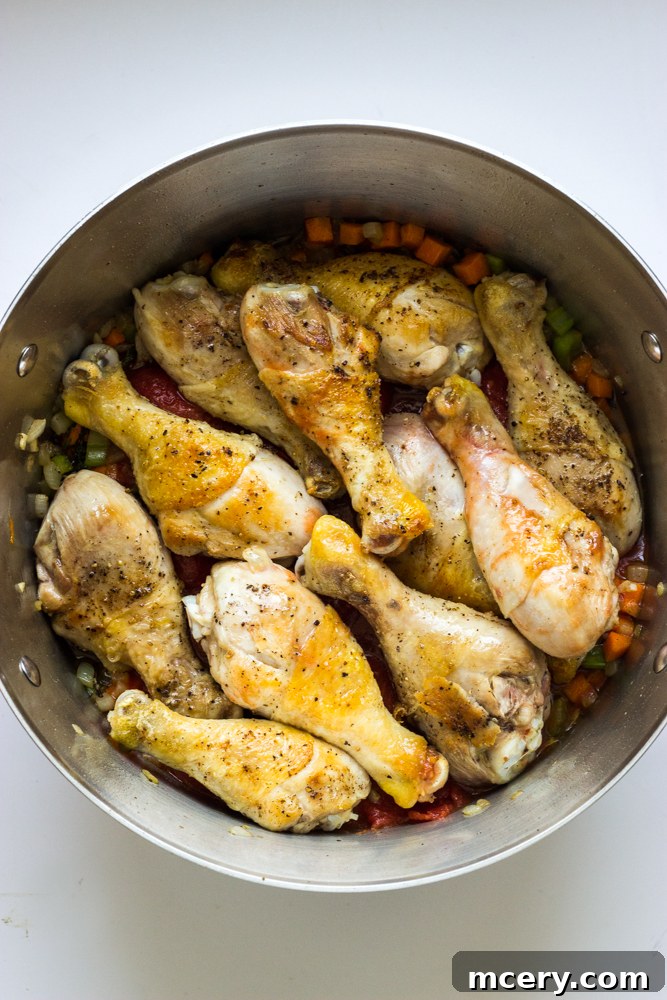
Step 4: Build the Sauce & Begin Simmering. Stir in the canned whole peeled tomatoes. For a truly rustic texture, crush them by hand directly into the pan as you add them. Incorporate the fresh thyme sprigs and bay leaves. Season the sauce generously with additional salt and freshly ground black pepper to taste. Gently layer the seared chicken drumsticks back into the pan, nestling them among the vegetables and sauce. Pour in ¼ cup of water or chicken stock. Bring the entire mixture to a gentle simmer, then cover the Dutch oven tightly, reduce the heat to low, and allow it to braise slowly for approximately 45 minutes.
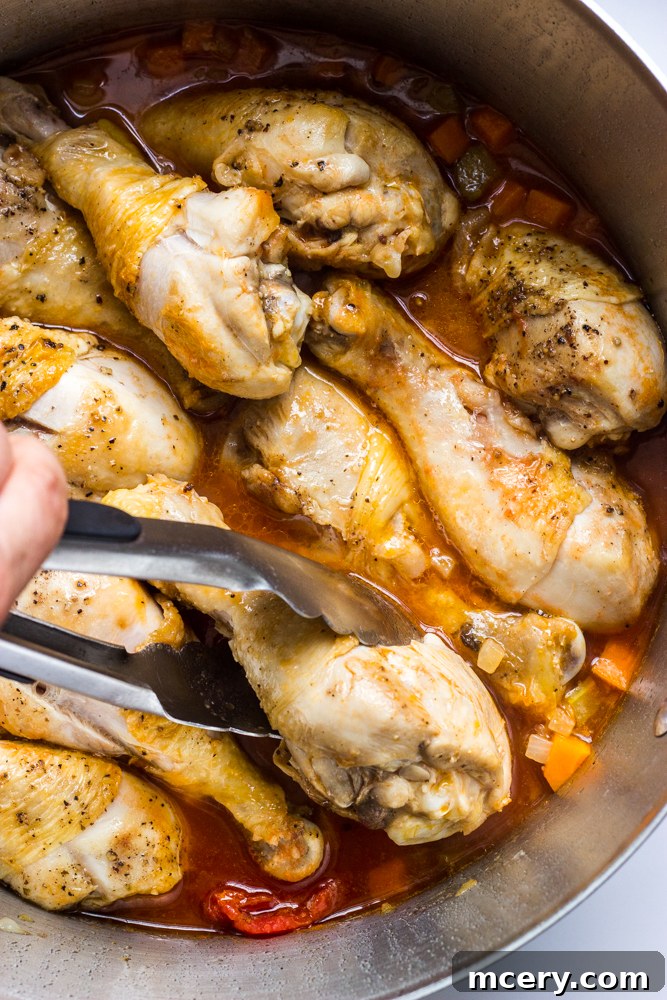
Step 5: Flip and Adjust Seasoning. Approximately halfway through the simmering process (around 20-25 minutes in), carefully uncover the pot and use tongs to flip the chicken drumsticks. This ensures both sides of the chicken are exposed to the rich sauce, allowing for even cooking and optimal flavor absorption. At this point, it’s also a good idea to taste the sauce and adjust the seasoning with more salt or pepper if necessary. Continue to simmer, covered, until the chicken is incredibly tender and easily pulls away from the bone, and the sauce has slightly thickened to your desired consistency.
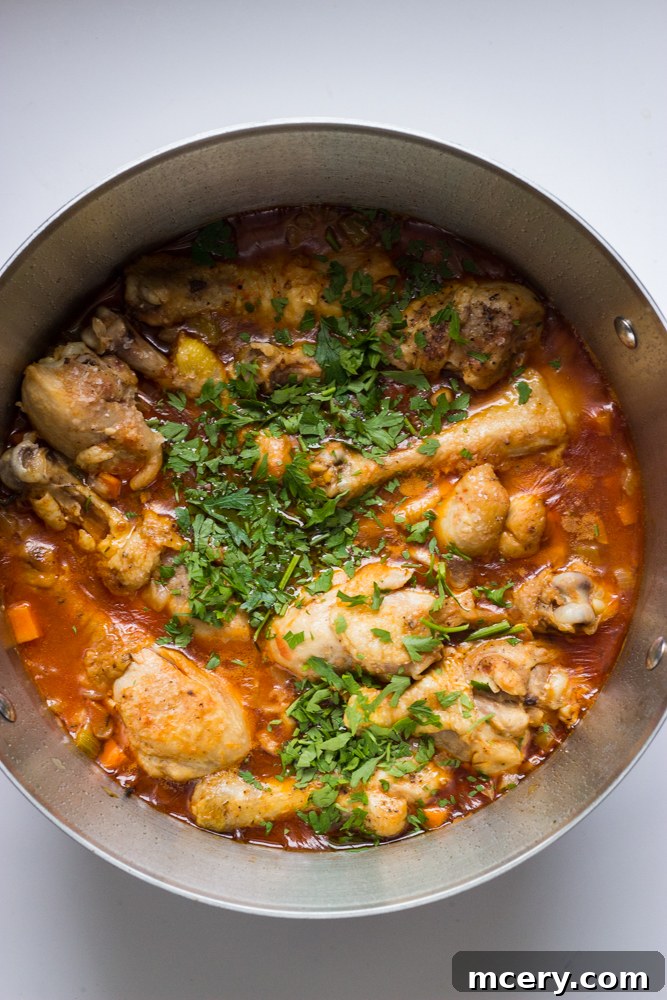
Step 6: Finish and Serve. Once the cooking time is complete, carefully remove and discard the bay leaves and any remaining thyme sprigs from the pot. Stir in the fresh chopped Italian parsley, which will add a vibrant burst of fresh flavor and color. Allow the chicken cacciatore to rest for 10 minutes before serving. This crucial resting period allows the flavors to meld together beautifully and ensures the chicken remains juicy and tender. Serve hot with your favorite side dishes.
Exciting Variations to Customize Your Chicken Cacciatore
One of the best aspects of Chicken Cacciatore is its inherent versatility. Don’t hesitate to experiment with these delicious variations to tailor the dish to your taste or what you have on hand:
- Sausage Cacciatore: For a robust alternative, substitute chicken with Italian sausage. Our dedicated Sausage Cacciatore recipe is a fantastic guide for this flavorful twist, offering a different, yet equally comforting, profile.
- Mediterranean Twist with Olives: Add a delightful briny depth and texture by stirring in ¼ cup of chopped green olives (such as Castelvetrano or Kalamata) during the last 15 minutes of simmering. Their salty tang beautifully complements the rich tomato sauce.
- Earthy Mushrooms: Introduce an additional layer of umami and earthiness by tossing in some sliced white button mushrooms or cremini mushrooms when you sauté the onions and carrots in Step 3. They will absorb the sauce’s flavors and add a wonderful textural element.
- A Dash of Acidity with Vinegar: A splash of good quality balsamic vinegar or red wine vinegar can work wonders, bringing out deeper flavors in the sauce and adding a bright, acidic counterpoint that lifts the entire dish. Add a tablespoon or two towards the end of simmering.
- Turn Up the Heat: If you prefer a dish with a bit of a kick, spice things up! Add ¼ to ½ teaspoon of red pepper flakes along with the tomatoes and herbs. Adjust the amount to your desired level of heat.
- Sophisticated Wine Infusion: Elevate your cacciatore by adding a touch of dry white wine (like Pinot Grigio or Sauvignon Blanc) or a light-bodied dry red wine (like Chianti) to the pan after sautéing the vegetables, allowing it to simmer and reduce slightly before adding the tomatoes. This will deglaze the pan, enhance the depth of flavor, and tenderize the meat without making the sauce overly sweet.
Slow Cooker Magic: Making Chicken Cacciatore in a Crock Pot
While the stovetop method for preparing chicken cacciatore is traditional and yields incredible results, utilizing a slow cooker or Crock Pot can make this classic dish incredibly convenient and just as delicious, perfect for busy days when you want dinner waiting for you. The low-and-slow cooking process ensures the chicken becomes exceptionally tender and infused with all the rich flavors of the sauce.
To truly unlock the deep flavors of the meat and vegetables, it is highly recommended that you still start by browning the chicken in a large skillet or your Dutch oven before transferring it to the slow cooker. This crucial step creates a flavorful crust on the chicken and seals in its juices. You can also quickly sauté the onions, carrots, and celery in the same pan for a few minutes to soften them and develop their sweetness, though this step is not strictly necessary for slow cooking, it greatly enhances the final taste.
Once your chicken is browned and any vegetables are lightly sautéed, simply transfer all the ingredients – the chicken, sautéed vegetables, crushed tomatoes, herbs, seasonings, and the braising liquid (water or chicken stock) – into your slow cooker. Ensure that the liquid adequately covers the chicken and vegetables; add more water or stock if needed to fully submerge the ingredients, ensuring everything braises evenly. Then, set your slow cooker to the LOW setting and let it work its magic for 6-8 hours, or choose the HIGH setting for a quicker 3-4 hour cook time. Your home will be filled with the most inviting aromas, and you’ll return to a perfectly cooked, tender, and flavorful chicken cacciatore.
Expert Tips for the Best Chicken Cacciatore Every Time
To master this simple yet profound chicken cacciatore recipe and achieve truly outstanding results, keep these expert tips in mind:
- Achieve the Perfect Sear: Always pat your chicken pieces thoroughly dry with paper towels before seasoning and searing. Excess moisture on the surface of the chicken will prevent it from browning effectively, leading to steaming instead of a desirable crispy, golden crust. A good sear adds a crucial layer of flavor to the entire dish.
- Give Your Chicken Space: When browning the chicken, avoid overcrowding the pan. Cook in batches if necessary. Overcrowding lowers the pan’s temperature, inhibiting proper browning and resulting in pale, less flavorful chicken. Each piece needs direct contact with the hot surface to develop a beautiful crust.
- Heat the Oil Properly: Ensure your olive oil is hot and shimmering before adding the chicken or vegetables. This ensures an immediate sizzle and prevents ingredients from sticking, guaranteeing an even golden-brown finish and maximizing flavor development through the Maillard reaction.
- The Importance of Resting: Once the cacciatore is cooked, let it rest, uncovered, for 10-15 minutes before serving. This resting period allows the juices in the chicken to redistribute, resulting in more tender and succulent meat. It also gives the rich flavors of the sauce time to meld and deepen further.
- Taste as You Go: Seasoning is key to a balanced dish. Always taste the sauce and adjust the seasonings (salt, pepper, herbs) throughout the cooking process. A small pinch of salt, a dash of freshly ground pepper, or even a tiny splash of lemon juice at the end can make all the difference in brightening and perfecting the flavors.
- Choose Quality Ingredients: Opt for high-quality ingredients, especially for your canned tomatoes (San Marzano are excellent) and fresh herbs. Better ingredients translate directly into better flavor in your finished dish.
Storage & Reheating: Enjoying Your Cacciatore Later
Chicken Cacciatore is one of those wonderful dishes that often tastes even better the next day as the flavors have more time to meld. Here’s how you can properly store and reheat any delicious leftovers:
- Refrigerator: Allow the cacciatore to cool completely before transferring it to an airtight container. It will keep beautifully in the refrigerator for up to 4 days. This makes it an excellent meal prep option for hearty lunches or quick dinners throughout the week.
- Freezer: For longer storage, transfer cooled chicken cacciatore to a freezer-safe storage container or heavy-duty freezer bags. It will maintain its quality in the freezer for up to 3 months. When ready to enjoy, thaw overnight in the refrigerator before reheating.
- Reheating: For the best results and to preserve the tender texture of the chicken, gently warm your cacciatore in a Dutch oven or a heavy-bottomed pot on the stovetop over medium-low heat. Add a splash of water or chicken stock to loosen the sauce and prevent it from drying out as it reheats. Stir occasionally until heated through. If you’re in a hurry, the microwave is a convenient option; simply heat in short intervals, stirring in between, until piping hot.
What to Serve with Chicken Cacciatore: Perfect Pairings
The beauty of this simple Italian comfort food is that it’s often a complete meal in itself. Sometimes, just a side of crusty bread to sop up that incredible sauce is all you need. However, if you’re looking to round out your meal, here are some fantastic and easy-side options that beautifully complement the rich flavors of chicken cacciatore:
- Creamy Mashed Potatoes: A classic pairing! The smooth, buttery texture of mashed potatoes provides a comforting contrast to the rustic chicken and sauce. Try our Yukon Gold Mashed Potatoes for their gorgeous creamy texture.
- Fluffy Rice: A light and fluffy bed of rice, such as White Mexican Rice (without the strong Mexican flavors, just plain white rice will also do wonders), is perfect for soaking up every drop of the savory tomato sauce.
- Cheesy Potato Dishes: For a more indulgent and decadent meal, consider serving cheesy sides like Cheesy Mashed Potatoes or rich Scalloped Potatoes with Cheese.
- Healthy Low-Carb Alternatives: If you’re looking for a lighter option, creamy Cauliflower Mash with Ricotta offers a delicious, low-carb alternative that’s equally satisfying.
- Fresh Green Vegetables: To add freshness and nutrition, a side of green vegetables is always a welcome addition. Simple Oven Roasted Broccoli or savory Garlic Green Beans provide a wonderful balance to the rich sauce.
- Crusty Italian Bread: Don’t forget a warm, crusty loaf of Italian bread or focaccia. It’s absolutely essential for scooping up every last bit of that delectable cacciatore sauce – a truly authentic Italian experience!
Frequently Asked Questions (FAQ) About Chicken Cacciatore
Here are answers to some common questions about making and enjoying Chicken Cacciatore:
Can I use boneless chicken for Chicken Cacciatore?
While possible, it’s generally not recommended for the best results. Boneless chicken breasts or thighs tend to dry out during the long simmering process that is essential for developing the rich flavors of cacciatore. Bone-in, skin-on chicken drumsticks or thighs are preferred as the bones add flavor to the sauce and the skin helps keep the meat moist and tender. If you must use boneless, consider reducing the simmering time to prevent dryness.
What kind of tomatoes are best for Cacciatore?
For an authentic Italian flavor, high-quality canned whole peeled tomatoes, especially San Marzano tomatoes, are highly recommended. They have a naturally sweet flavor and low acidity, breaking down beautifully into a rich sauce. Crushing them by hand adds a rustic texture. Diced canned tomatoes can also be used if you prefer a smoother sauce.
Can I add other vegetables to Chicken Cacciatore?
Absolutely! Cacciatore is a versatile dish. Bell peppers (red, yellow, or green), sliced mushrooms (cremini or white button), and zucchini are popular additions. You can add bell peppers and mushrooms alongside the onions, carrots, and celery to sauté. Zucchini can be added during the last 20-30 minutes of simmering to prevent it from becoming too soft.
What wine pairs well with Chicken Cacciatore?
Chicken Cacciatore, with its rich tomato base and savory chicken, pairs beautifully with a medium-bodied red wine. Italian reds like Chianti, Sangiovese, or Montepulciano d’Abruzzo are excellent choices. If you prefer white wine, a dry, crisp white such as Pinot Grigio or Sauvignon Blanc can also work, especially if the sauce is lighter.
Can I make Chicken Cacciatore ahead of time?
Yes, Chicken Cacciatore is an excellent make-ahead meal. In fact, many believe it tastes even better the next day as the flavors have more time to deepen and meld. Prepare the dish as instructed, then allow it to cool completely before storing it in an airtight container in the refrigerator for up to 4 days. Reheat gently on the stovetop with a splash of broth or water.
Explore More One-Pot Wonders & Chicken Recipes
If you try this **Easy Chicken Cacciatore Recipe**, please leave a star rating and let us know how you liked the recipe in the comments below. Your feedback is greatly appreciated!

Easy & Authentic Chicken Cacciatore Recipe
5 Stars 4 Stars 3 Stars 2 Stars 1 Star
5 from 2 reviews
Author: Katya
Prep Time: 15 mins
Cook Time: 1 hour 15 mins
Total Time: 1 hour 30 mins
Yield: 6 servings
Category: Main Course
Method: Stovetop, Braised
Cuisine: Italian
Description
Experience the rustic charm of Italy with this incredible one-pot Chicken Cacciatore. Featuring tender, slow-braised chicken drumsticks and a medley of fresh vegetables bathed in a rich, savory tomato sauce, this dish is the epitome of comfort food. It’s a surprisingly easy recipe that promises a hearty and impressive meal, perfect for any family dinner or special occasion.
Ingredients
- 2 ½ lbs. bone-in, skin-on chicken drumsticks (approx. 4-6 drumsticks)*
- 4 Tbsp. olive oil or avocado oil, divided
- 1 medium yellow onion, chopped
- 1 large carrot, diced (1 cup)
- 2 celery ribs, diced (1 cup)
- 4 cloves garlic, minced or chopped
- 3 sprigs fresh thyme (or 1 tsp dried)
- 2 bay leaves
- 1 (28 oz.) can high-quality whole peeled tomatoes, crushed by hand or diced
- ¼ cup water or low-sodium chicken stock
- ¼ cup fresh chopped Italian parsley, for garnish
- Kosher salt and freshly ground black pepper, to taste
Instructions
- Prepare the Chicken: Gently pat the chicken drumsticks dry with paper towels to ensure a crispy sear. Generously season both sides of the chicken with kosher salt and freshly ground black pepper. This initial seasoning is crucial for building flavor.
- Sear the Chicken: Heat 3 tablespoons of olive oil in a large Dutch oven or heavy-bottomed sauté pan over medium-high heat. Once the oil is shimmering and hot, carefully add the chicken drumsticks in batches, ensuring not to overcrowd the pan. Cook for 4-5 minutes per side until beautifully golden brown and crispy. Remove the seared chicken to a clean plate and set aside.
- Sauté the Aromatics: Reduce the heat to medium. Add the remaining 1 tablespoon of olive oil to the same pan. Add the chopped onions, diced carrots, and diced celery, along with a pinch of salt. Sauté, stirring frequently, for 10-13 minutes until the vegetables are softened and translucent, creating a fragrant base for your sauce. Add the minced garlic during the last minute of cooking to prevent burning.
- Build the Sauce & Simmer: Stir in the whole peeled tomatoes (crushing them by hand as you add them for a rustic texture), fresh thyme sprigs, and bay leaves. Season the sauce generously with salt and black pepper to taste. Gently place the seared chicken drumsticks back into the pan, nestled among the vegetables. Pour in ¼ cup of water or chicken stock. Bring the mixture to a gentle simmer, then cover the Dutch oven, reduce the heat to low, and let it braise for approximately 45 minutes.
- Flip and Adjust: About halfway through the simmering process (around 20-25 minutes in), carefully flip the chicken drumsticks to ensure even cooking and absorption of flavors. At this point, taste the sauce and adjust the seasoning with more salt or pepper if needed. Continue to simmer until the chicken is fork-tender and the sauce has thickened slightly.
- Finish and Serve: Once cooked, carefully remove and discard the bay leaves and thyme sprigs. Stir in the fresh chopped Italian parsley. Allow the chicken cacciatore to rest for 10 minutes before serving. This resting period allows the flavors to meld beautifully and the chicken to retain its juiciness. Serve hot with your favorite accompaniments.
Notes
- Chicken Alternatives: While bone-in, skin-on chicken drumsticks are highly recommended for their flavor and moisture retention, bone-in chicken thighs are an excellent alternative. Avoid using boneless chicken parts as they tend to dry out during the long simmering process.
- Add More Veggies: Feel free to customize your cacciatore with additional vegetables. Sliced bell peppers (red, yellow, or orange), zucchini, yellow squash, or mushrooms can be added alongside the onions, carrots, and celery in Step 3.
- Leftover Storage & Reheating: Store any leftover Chicken Cacciatore in an airtight container in the refrigerator for up to 4 days. For longer storage, freeze in a freezer-safe container for up to 3 months. To reheat, gently warm on the stovetop over medium-low heat, adding a splash of chicken stock or water to loosen the sauce. Microwaving is also an option for quick reheating.
Nutrition Information (Approximate Per Serving)
- Serving Size: 1 drumstick with sauce (approx. 1/6th of recipe)
- Calories: 381 kcal
- Sugar: 5.4 g
- Sodium: 466.4 mg
- Fat: 17.7 g
- Carbohydrates: 11.6 g
- Protein: 43.7 g
- Cholesterol: 192.8 mg
This recipe was originally published in August 2018 and has since been extensively updated with enhanced instructions, additional tips, and more comprehensive information to ensure the best possible cooking experience.