
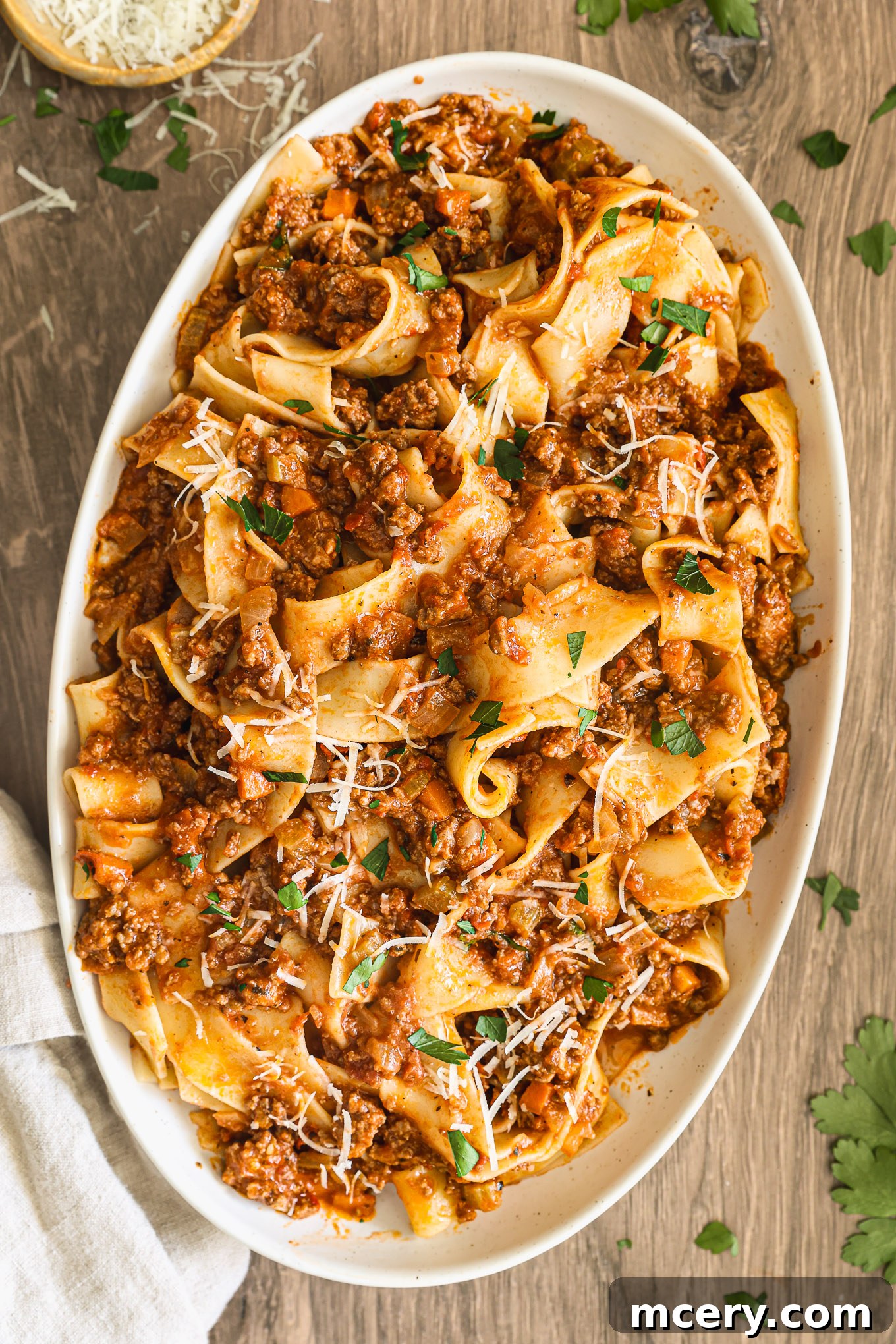
Experience the Ultimate Comfort: The Best Slow-Simmered Bolognese Sauce
There’s a reason Bolognese sauce holds such a special place in hearts and kitchens worldwide. It’s more than just a meat sauce; it’s a testament to the magic of slow cooking, transforming humble ingredients into a symphony of rich, comforting flavors. This isn’t just any Bolognese; it’s a meticulously crafted recipe designed to build layers of unparalleled depth, creating a sauce that feels like a warm, homemade hug with every single bite. From the initial caramelization of aromatic vegetables to the tender ground meats and the deep reduction of quality red wine, each step is crucial in developing a robust flavor profile that will transport you straight to an Italian nonna’s kitchen. It’s the perfect, hearty dish to bring your family together around the table, fostering connection and creating cherished memories over a truly unforgettable meal.
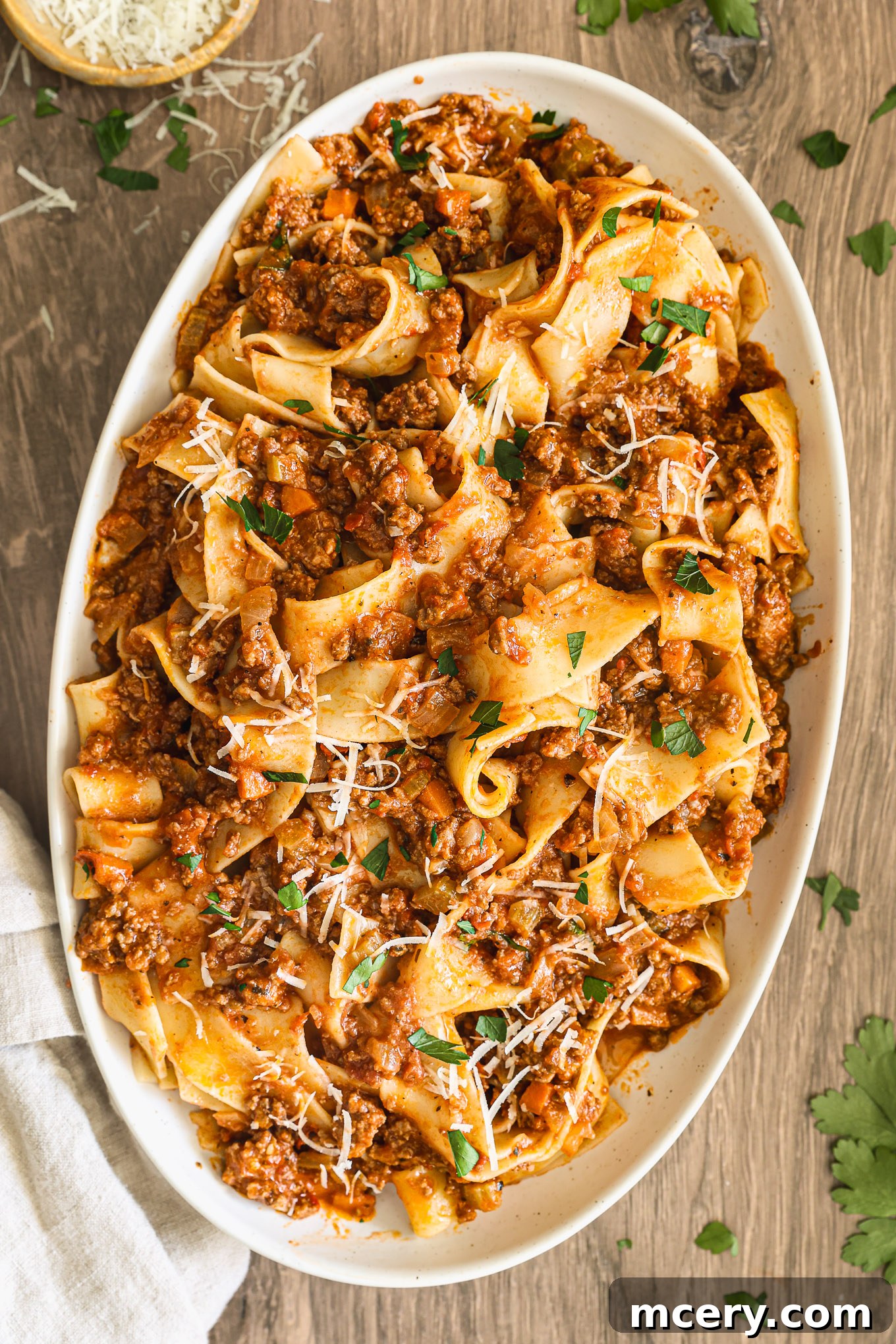
Looking for more delightful pasta sauce recipes to elevate your weeknight meals or special occasions? Explore our other fantastic creations like our rich alfredo sauce from scratch, a vibrant creamy spicy tomato sauce, or our incredibly versatile garlic cream sauce.
Why This Bolognese Recipe Will Become Your Family Favorite
Beyond its delicious taste, this Bolognese recipe offers several compelling reasons why it deserves a permanent spot in your culinary repertoire:
- Simple, Wholesome Ingredients: At its heart, this Bolognese relies on readily available, fresh ingredients that come together to create something truly extraordinary. It’s a celebration of how modest pantry staples, when treated with care and patience, can yield profoundly deep and savory flavors, with just a hint of natural sweetness as it slowly simmers to perfection. You don’t need exotic items to achieve gourmet results; just good quality basics.
- A Foolproof & Mastered Classic: Over many years and countless batches, I’ve meticulously fine-tuned this recipe, drawing inspiration from both traditional Italian methods and contemporary variations. The result is a truly foolproof and fail-safe Bolognese that’s incredibly easy for any home cook to master, yet tastes as if it’s been lovingly simmered in an authentic Italian kitchen for generations. It balances authenticity with accessibility, ensuring success every time.
- The Ultimate Family Go-To & Batch Cooking Dream: This Bolognese is our absolute go-to for spaghetti nights and a dish my family requests constantly. Its universal appeal makes it a perfect crowd-pleaser for gatherings or simply a comforting weeknight dinner. Knowing how much everyone loves it, I always make a large batch. A single pot provides at least 10 generous servings, meaning you’ll have plenty of delicious leftovers to enjoy throughout the week or conveniently freeze for future quick meals. It’s efficiency and flavor combined!
What Exactly is Bolognese Sauce? Understanding the Italian Classic
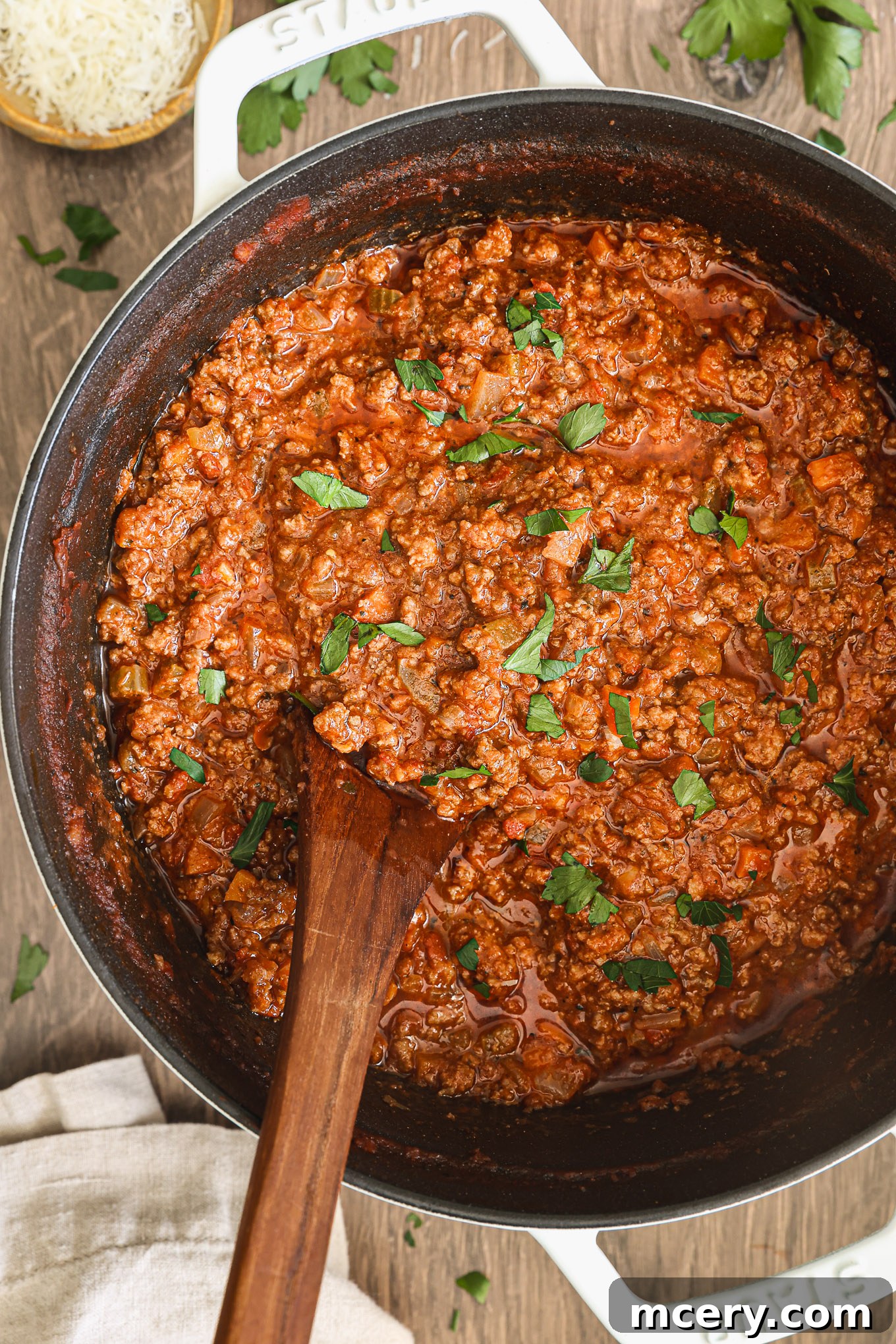
To truly appreciate Bolognese, it’s helpful to understand its roots. Bolognese is a type of ragù, an Italian term referring to a rich, slow-cooked meat sauce, typically served with pasta. Hailing from the culinary heartland of Bologna in the Emilia-Romagna region of Italy, authentic Bolognese ragù is renowned for its depth of flavor and luscious texture. Unlike many simpler tomato-based pasta sauces, a traditional Bolognese features a complex combination of ground meat (often a mix of beef and pork, sometimes veal), a sofrito base of finely chopped vegetables (onion, carrot, celery), tomatoes, wine, and critically, milk or cream. This medley of ingredients is cooked long and slow, allowing the flavors to meld and deepen into a truly rich, hearty, and intensely savory sauce.
While the core components remain consistent, there are numerous regional and family variations of Bolognese, and pinpointing a single “original” recipe can be elusive. Some versions emphasize a bolder red wine presence, while others incorporate milk for a creamier, more tenderizing effect on the meat. However, the unifying thread through all these delicious interpretations is the foundation of quality meat, aromatic vegetables, and ripe tomatoes, all patiently simmered to create a sauce that is both robust and incredibly satisfying. This recipe seeks to honor that tradition while making it approachable and utterly delicious for the home cook.
Essential Ingredients for a Perfect Bolognese
Crafting an exceptional Bolognese begins with selecting the right ingredients. Each component plays a vital role in building the complex flavor profile that defines this classic sauce. Here’s a breakdown of what you’ll need to create this culinary masterpiece:
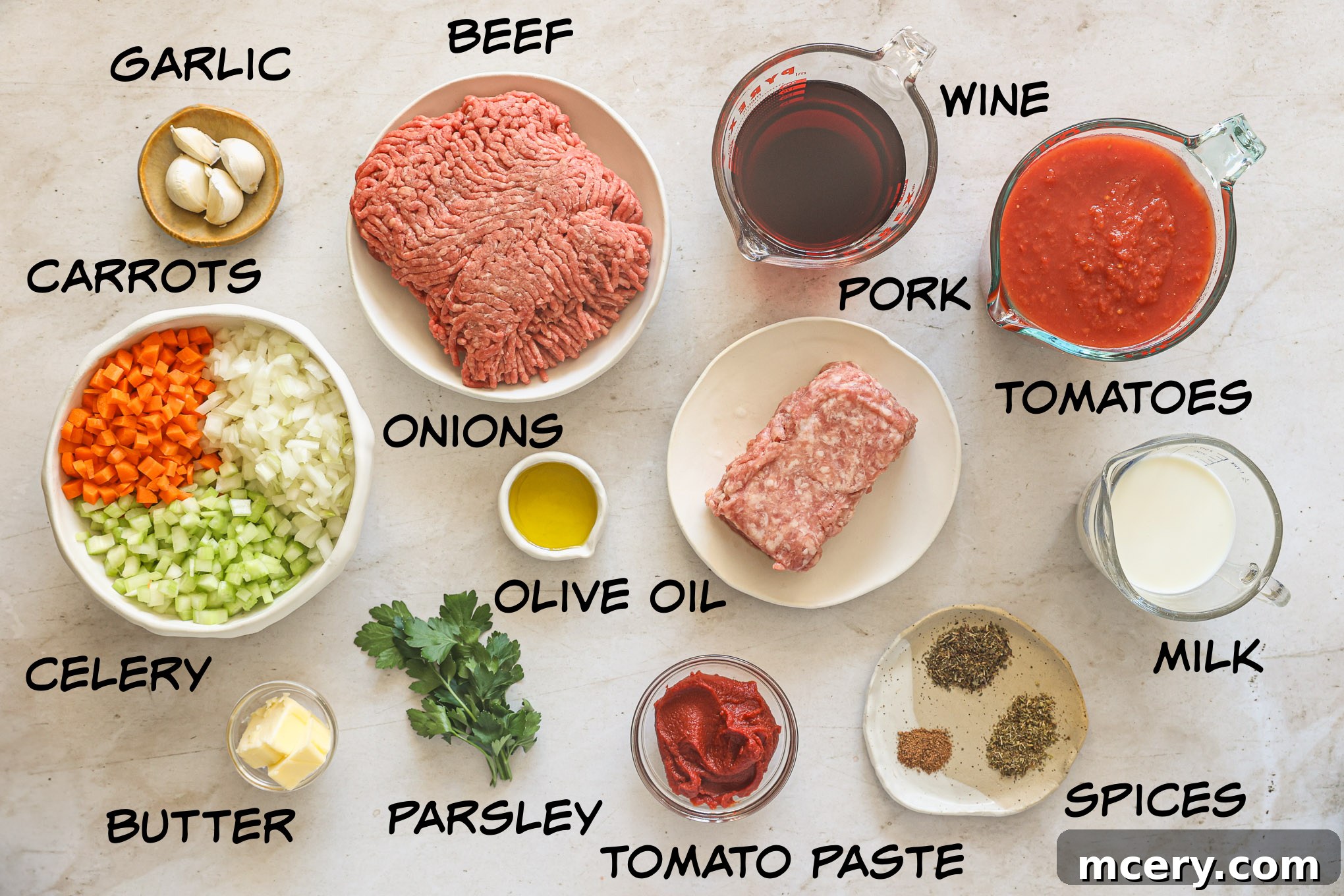
- Olive Oil and Unsalted Butter: The dynamic duo for starting our sauce. Olive oil provides a fruity undertone and a high smoke point, while butter adds a luxurious richness and helps achieve beautiful caramelization on our vegetables and meat.
- Classic Soffritto Vegetables:
- Onion, Carrots, and Celery: These three vegetables, finely chopped, form the aromatic foundation known as “soffritto” in Italian cuisine. They release their natural sugars and savory notes as they slowly cook, building the first layer of profound flavor in the sauce.
- Garlic: Minced garlic adds a pungent, warm aroma and quintessential Italian flavor. Be careful not to burn it; a minute or so is usually all it needs.
- Meat: A blend of ground meats provides a superior flavor and texture compared to using just one type.
- Ground Beef: I highly recommend using 80/20 ground beef (80% lean, 20% fat). The fat content is essential for flavor and moisture, preventing the sauce from becoming dry.
- Ground Pork: Pork adds a lovely sweetness and richness that complements the beef perfectly, contributing to a more complex meat flavor.
- Dry Red Wine: A crucial ingredient for deglazing and adding depth. A dry red wine like Pinot Noir, Merlot, or even a Chianti works wonderfully. Its acidity cuts through the richness of the meat and enhances the overall savory notes.
- Whole Milk: This might seem unusual for a meat sauce, but whole milk is a traditional Bolognese ingredient. It helps to tenderize the meat, enriches the sauce, and contributes to its silky, creamy consistency without making it overtly “milky.”
- Crushed Tomatoes: The heart of any tomato-based sauce. For the best flavor, I highly recommend using high-quality San Marzano tomatoes. Their naturally sweet, balanced acidity provides a superior base. If not available, use the best quality crushed tomatoes you can find.
- Tomato Paste: A concentrated burst of tomato flavor that adds depth, richness, and helps to thicken the sauce beautifully. It also contributes a bolder, slightly more acidic note that balances the sweetness of the other ingredients.
- Fresh Italian Parsley: Stirred in at the end, fresh parsley brightens the sauce with its slightly peppery, herbaceous notes, adding a touch of freshness and vibrant color.
- Essential Seasonings:
- Dried Oregano and Dried Basil: Classic Italian herbs that provide warmth and aromatic complexity.
- Ground Nutmeg: A pinch of nutmeg might surprise you, but it’s a traditional secret ingredient in Bolognese. It subtly enhances the meat’s flavor and adds a warm, almost sweet spice note that ties everything together.
- Kosher Salt and Freshly Ground Black Pepper: Essential for seasoning generously throughout the cooking process, adjusting to taste to ensure perfect balance.
(See the recipe card at the bottom of the page for full information on specific ingredient quantities.)
Mastering the Art of Bolognese: A Step-by-Step Guide
Creating this deeply flavorful Bolognese requires patience and a large, heavy-bottomed pot, ideally a Dutch oven, which provides even heat distribution crucial for slow simmering. Follow these steps to build layers of rich flavor:
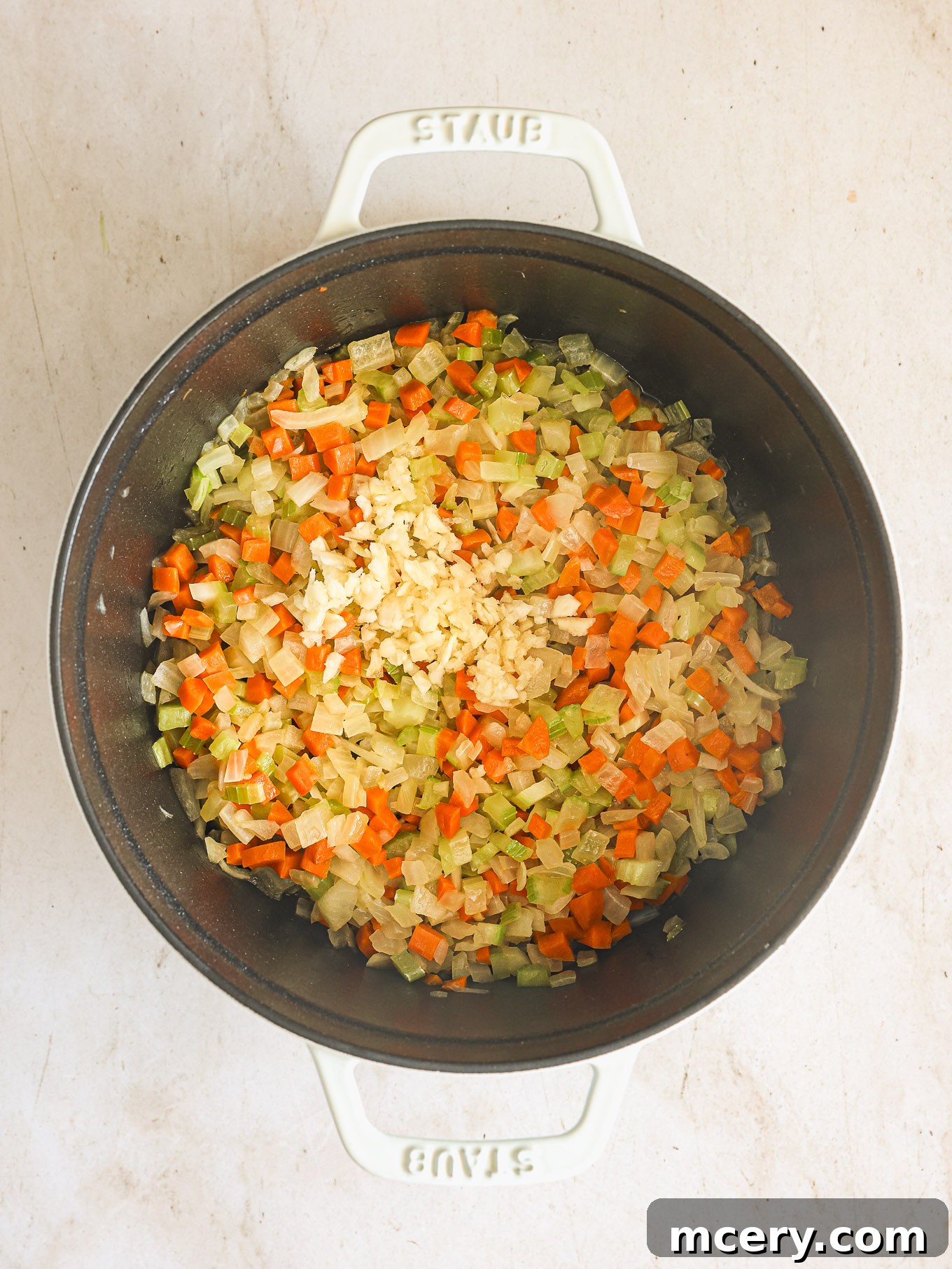
Step 1: Build the Soffritto Foundation. Begin by heating the olive oil and butter in your Dutch oven over medium-high heat. Add the finely chopped onion, carrots, and celery. Sauté these aromatic vegetables, stirring occasionally, for about 7-10 minutes until they are beautifully softened and translucent, indicating their natural sugars are beginning to caramelize and their sweet flavors are developing. This step is crucial for the overall depth of the sauce. Next, add the minced garlic and cook for just one more minute until it becomes wonderfully fragrant, being careful not to let it burn.
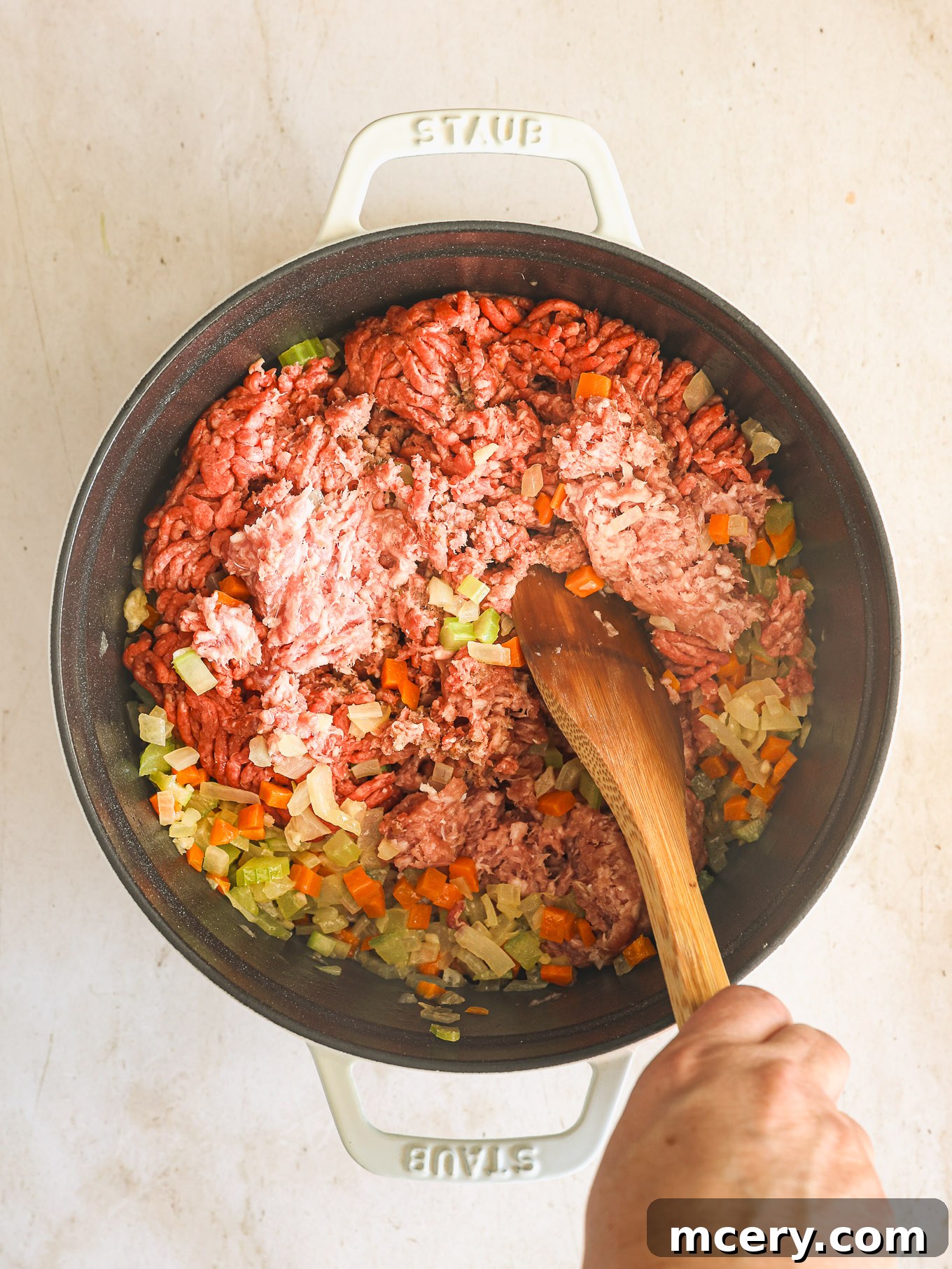
Step 2: Brown the Meat for Maximum Flavor. Introduce the ground beef and ground pork into the pot with the softened vegetables. Use a spoon or potato masher to break the meat into small, even pieces. Cook the meat, stirring intermittently, until it is thoroughly browned and no longer shows any pink. This typically takes 8-10 minutes. The key here is not just to cook the meat, but to allow it to develop a deep, rich color and caramelization at the bottom of the pot. These browned bits, known as “fond,” are packed with umami and are essential for a truly robust Bolognese.
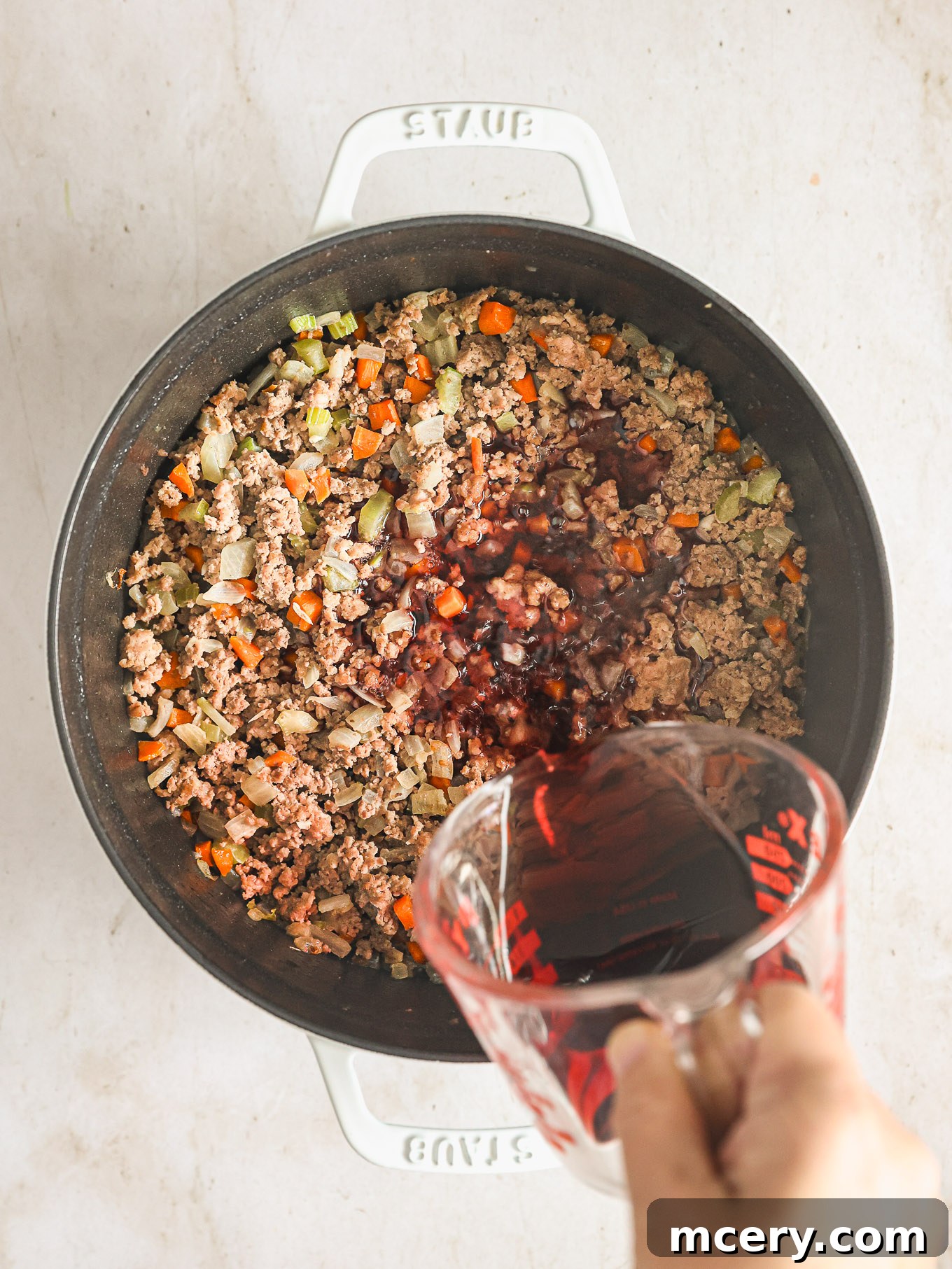
Step 3: Deglaze with Red Wine. Pour the dry red wine into the pot. Immediately scrape the bottom of the pot with your spoon, dissolving all those caramelized, flavor-packed brown bits (the fond) that developed during meat browning. This process, called deglazing, adds incredible depth and complexity to your sauce. Allow the wine to cook off and reduce by about half, which should take approximately 3-5 minutes. You want the alcohol to evaporate, leaving behind the concentrated, rich wine flavor.
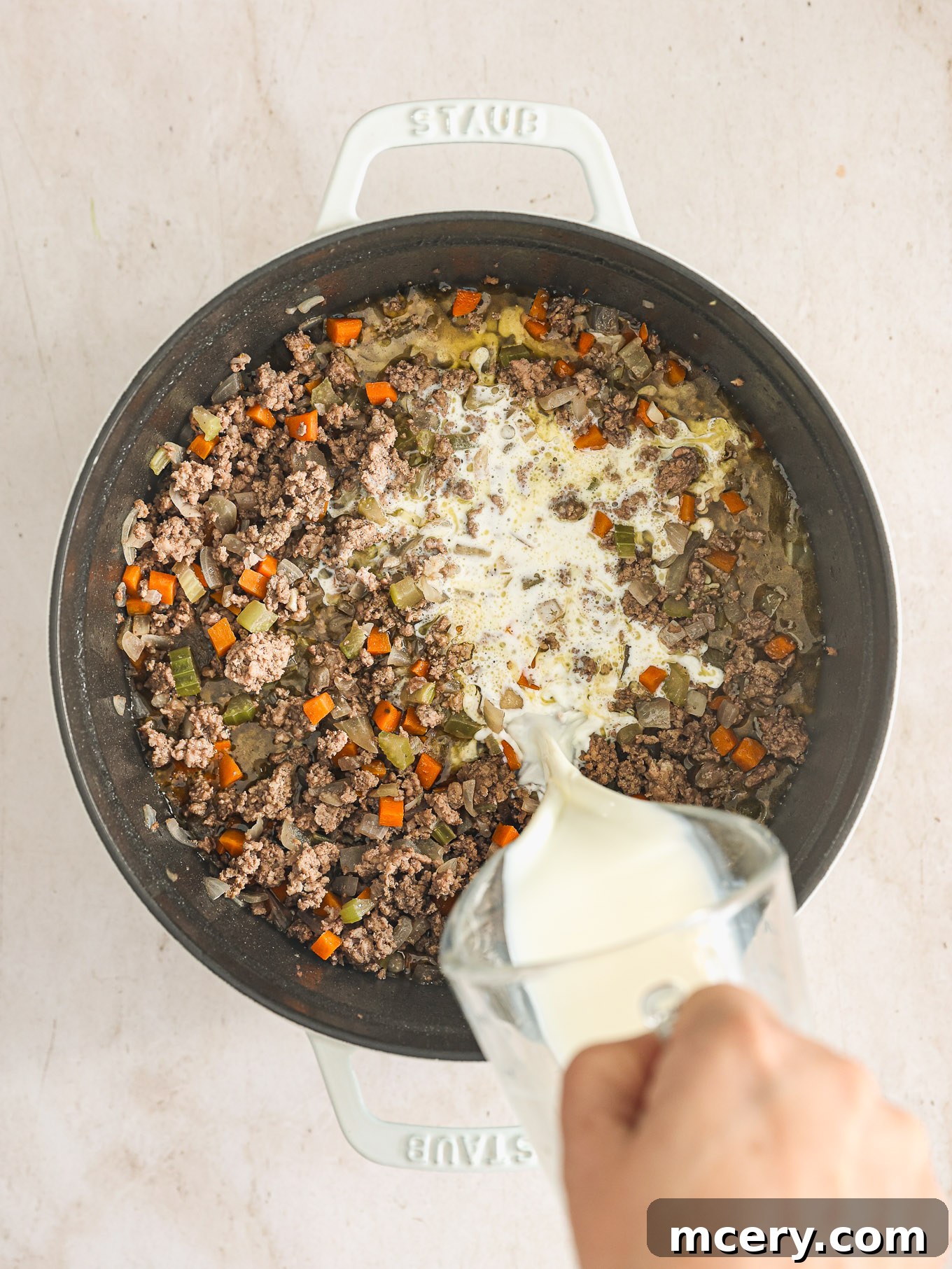
Step 4: Introduce the Milk. Next, pour in the whole milk, stirring it thoroughly to combine with the meat and vegetable mixture. Bring the mixture to a gentle simmer and let it cook for a few minutes until the liquid reduces slightly and is almost fully absorbed by the meat. The milk plays a crucial role in tenderizing the meat and adding a subtle, creamy richness that is characteristic of authentic Bolognese, balancing out the acidity of the tomatoes.
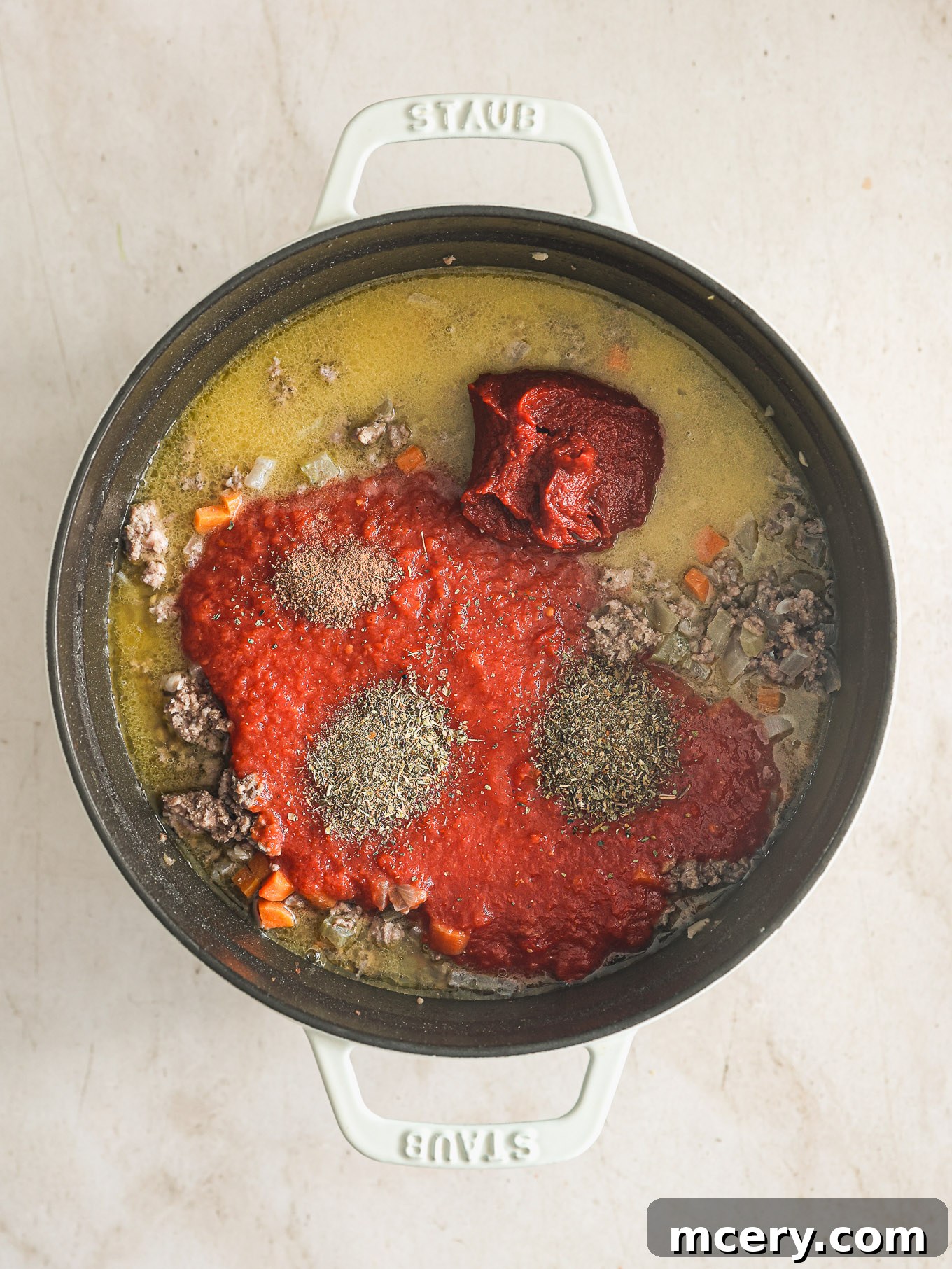
Step 5: Add Tomatoes and Seasonings. Now, stir in the crushed San Marzano tomatoes, tomato paste, dried oregano, dried basil, and the secret ingredient, ground nutmeg. The tomato paste provides a concentrated boost of umami, while the nutmeg enhances the meat’s flavor in a subtle, aromatic way. Season the mixture generously with kosher salt and freshly ground black pepper. Bring the sauce to a gentle simmer, ensuring all ingredients are well combined and the flavors can begin to meld.
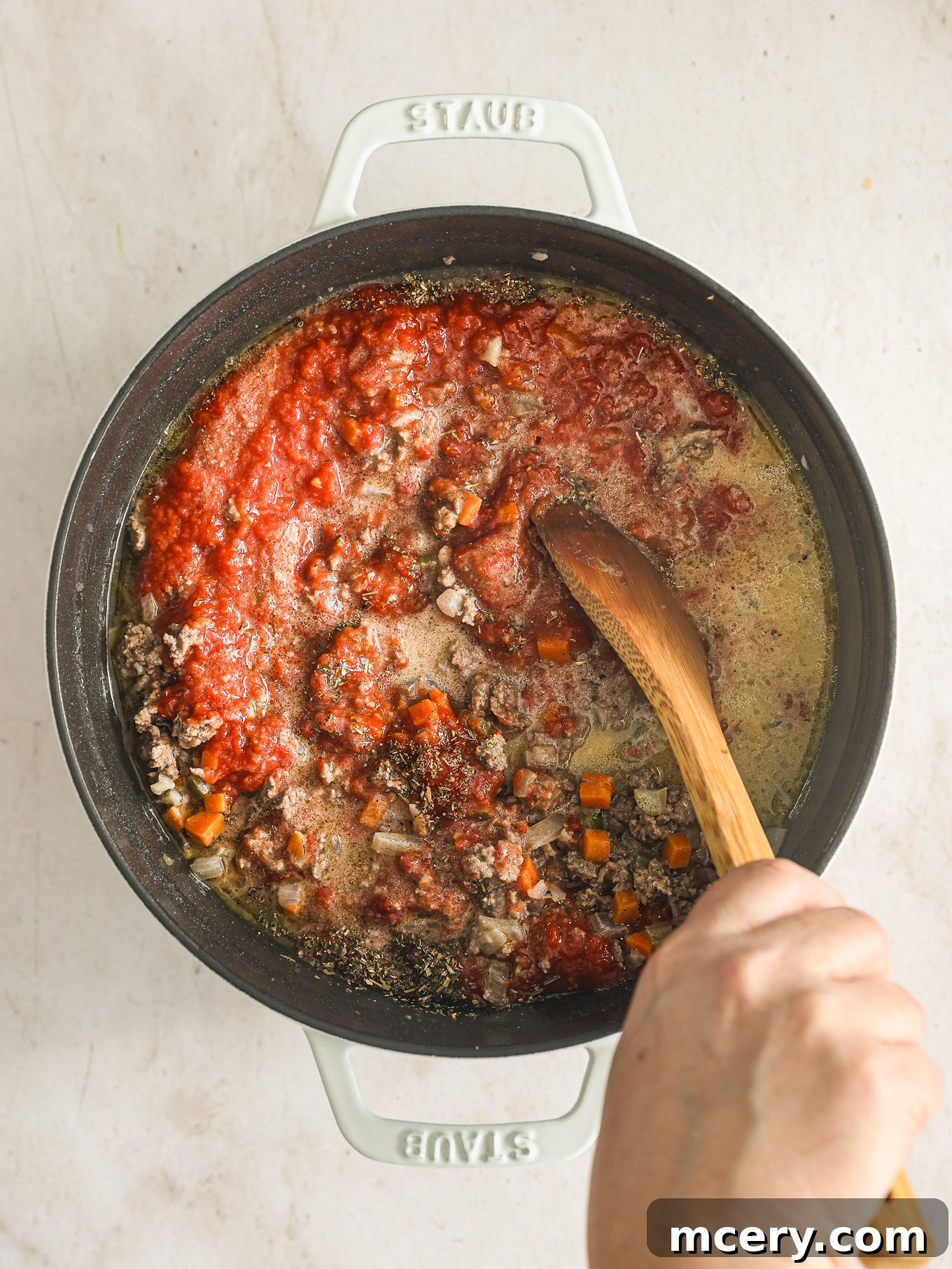
Step 6: The Essential Slow Simmer. Reduce the heat to very low, cover the pot, and let the sauce gently simmer for at least 1½ to 2 hours, stirring occasionally to prevent sticking and ensure even cooking. This long, slow simmer is the undisputed secret to a truly outstanding Bolognese. It allows the flavors to fully develop, deepen, and meld into a rich, complex, and harmonious sauce. If you have the luxury of time, extending the simmer to 3 hours will yield an even more profoundly developed and delicious taste. Just before serving, stir in the fresh Italian parsley. Taste and adjust seasonings one last time with salt and pepper as needed.
Creative Bolognese Sauce Recipe Variations and Customizations
While this recipe provides a perfectly balanced and delicious classic Bolognese, don’t hesitate to experiment and make it your own. Here are some ideas for delicious variations:
- Exploring Meat Combinations: Many traditional Bolognese recipes feature a mix of beef, pork, and even veal for ultimate richness. You can easily swap out some or all of the ground pork for finely diced pancetta or bacon to introduce a smoky, savory depth. For a leaner option, ground turkey can be used, though it will alter the traditional flavor profile slightly.
- Tomato Preference & Sweetness: While San Marzano tomatoes are highly recommended for their inherent sweetness and balanced acidity, feel free to adapt. If you prefer a tangier sauce, regular crushed tomatoes will work beautifully. For an even sweeter note, a pinch of sugar can be added during the simmering process to balance acidity, though quality San Marzanos often negate this need.
- Creamier Consistency with Milk Alternatives: Whole milk is essential for tenderizing the meat and adding richness. If you’re looking for an even more luxurious and creamier consistency, you can easily substitute whole milk with half-and-half or even heavy cream. Start with the same quantity and adjust to your desired richness.
- Herb & Spice Boosts: Beyond the standard oregano and basil, consider adding a bay leaf during the simmer for an earthy note, or a pinch of red pepper flakes for a subtle kick. Fresh rosemary or thyme can also add an aromatic complexity.
- Hidden Veggies: Boost the nutritional value and add more flavor by incorporating finely grated zucchini, mushrooms, or bell peppers into the soffritto. They’ll melt into the sauce, adding richness without being overtly noticeable.
Perfect Pairings: What to Serve with Your Authentic Bolognese
A truly superb Bolognese sauce deserves the perfect accompaniment. Traditionally, Bolognese is served with wide, flat pasta shapes that can truly hold onto the rich, hearty sauce. Think fresh tagliatelle, pappardelle, or substantial tubes like rigatoni. These pasta varieties are ideal for capturing every savory morsel. However, don’t let tradition limit you; we often enjoy this sauce over classic spaghetti for a comforting, universally loved meal! No matter your pasta choice, always finish your serving with a generous sprinkle of freshly grated Parmesan cheese and a garnish of fresh Italian parsley for a pop of color and freshness.
To transform your Bolognese into a cozy, family-style feast, complement it with some vibrant and refreshing side dishes. A crisp, zesty salad like a chopped wedge salad with buttermilk dressing or a bright avocado Caesar salad with crisp cucumbers will provide a lovely contrast to the richness of the sauce. For a simple vegetable accompaniment, our roasted asparagus with lemon offers a light, elegant touch. And, of course, no pasta meal is complete without something to soak up every last drop of that incredible sauce! Our homemade sourdough garlic bread is the absolute perfect choice, offering a crunchy, savory companion to your comforting Bolognese.
Smart Storage & Reheating Tips for Your Bolognese
One of the many joys of making a large batch of Bolognese is having delicious leftovers. This sauce not only stores beautifully but often tastes even better the next day as the flavors continue to meld and deepen. Here’s how to best store and reheat your culinary creation:
- Refrigeration: For optimal freshness and to prevent the pasta from getting soggy, I highly recommend storing any leftover Bolognese sauce separately from cooked pasta. Allow the sauce to cool completely to room temperature before transferring it to an airtight container or a glass jar. Stored properly, the sauce will remain fresh and delicious in the refrigerator for up to 4 days.
- Freezing for Long-Term Enjoyment: This Bolognese sauce freezes exceptionally well, making it a perfect candidate for meal prepping. You can easily make a large batch and store individual or family-sized portions in freezer-safe containers or heavy-duty freezer bags for up to 3 months. To thaw, simply transfer the frozen sauce to the refrigerator overnight.
- Reheating Instructions: When you’re ready to enjoy your stored Bolognese, simply prepare a fresh batch of your favorite pasta. Reheat the sauce gently in a microwave-safe dish or in a pot over medium heat on the stove, stirring occasionally. If the sauce appears too thick or needs a little rejuvenation, add a splash of broth (chicken, beef, or vegetable) or a bit of water to loosen it back up to your desired consistency. Serve immediately over hot pasta with your favorite garnishes.
Frequently Asked Questions About Bolognese Sauce
While both are popular pasta toppers, Bolognese and standard spaghetti sauce have distinct characteristics. Bolognese is a type of ragù, specifically a slow-cooked meat sauce, always featuring ground meat and a base of aromatic vegetables (soffritto), along with tomatoes, wine, and often milk. Its texture is rich and hearty. In contrast, traditional spaghetti sauce is typically a simpler, plain tomato-based sauce, often flavored primarily with herbs and sometimes containing small pieces of vegetables, but not always centered around meat as the primary ingredient. Bolognese is much more robust and complex due to its extended cooking time and meat-centric profile.
The primary distinction lies in their approach to richness, seasoning, and traditional serving. American-style Bolognese often tends to be heavier on the meat, sometimes incorporating a wider array of spices, herbs, and additional flavor enhancers like Worcestershire sauce, aiming for a bolder, more intensely savory taste. It can also be thicker and more tomato-forward. Traditionally, Italian Bolognese (Ragù alla Bolognese) from its region of origin is characterized by a more balanced flavor, with milk or cream often used to tenderize the meat and create a smoother, less acidic sauce. Furthermore, authentic Italian Bolognese is almost exclusively served with wide, flat egg pastas like tagliatelle or pappardelle, while American variations are frequently paired with spaghetti or other dry pasta shapes.
Absolutely! Bolognese is one of those magical sauces that actually improves with time. Making it a day or two in advance allows the flavors to deepen and meld even further, resulting in an even more delicious and cohesive sauce. Simply prepare the sauce as directed, let it cool completely, and then store it in an airtight container in the refrigerator. Reheat gently when ready to serve.
For the best results, a heavy-bottomed pot, such as a Dutch oven or a substantial stockpot, is highly recommended. These types of pots distribute heat evenly, which is crucial for the long, slow simmering process that defines Bolognese. Even heat prevents scorching and allows the flavors to develop beautifully without sticking to the bottom.
You May Also Love These Pasta Sauce Recipes…
If you enjoyed crafting and savoring this rich Bolognese, you’ll be delighted by these other fantastic pasta sauce recipes from our collection:
If you’ve had the pleasure of trying our Bolognese Pasta recipe, we would absolutely love to hear from you! Please consider leaving a star rating and a comment below, letting us know how much you enjoyed this comforting and flavorful dish.
Print Recipe
Best Bolognese Recipe
★
★
★
★
★
5 from 1 review
- Author: Katya
- Prep Time: 30 min
- Cook Time: 2 hr 30 min
- Total Time: 3 hours
- Yield: 8–10 servings
- Category: Main Course
- Method: Stovetop
- Cuisine: Italian
Description
Rich, hearty, and slow-simmered to perfection—this Bolognese sauce is pure comfort in a bowl. Made with layers of flavor from tender ground meat, aromatic veggies, and a luscious tomato base, it’s the kind of sauce that tastes like it’s been passed down for generations. Serve it over pasta, and get ready for a meal that feels like a warm hug!
Ingredients
- 2 tablespoons olive oil
- 2 tablespoons unsalted butter
- 1 medium onion, finely chopped
- 2 medium carrots, finely diced
- 2 celery stalks, finely diced
- 4 garlic cloves, minced
- 1 pound ground beef, preferably 80/20
- ½ pound ground pork
- 1 cup dry red wine, such as Pinot Noir
- ½ cup whole milk
- 28 oz. can crushed San Marzano tomatoes
- ¼ cup tomato paste
- 1 teaspoon dried oregano
- 1 teaspoon dried basil
- ½ teaspoon ground nutmeg
- Kosher salt and freshly ground black pepper, to taste
- ¼ cup chopped fresh Italian parsley, plus extra for garnish
- Freshly grated Parmesan cheese, for serving
Instructions
- Heat the olive oil and butter in a large heavy-bottomed pot, such as a Dutch oven over medium-high heat.
- Add the onions, carrots, and celery and sauté, stirring occasionally, for about 7-10 minutes, until the vegetables are softened and the onions are translucent. Add the garlic and cook for another minute until fragrant.
- Add the ground beef and pork to the pot. Break the meat up with a spoon and cook, stirring occasionally, until the meat is browned and no longer pink. This should take about 8-10 minutes. Allow the meat to develop deep color and caramelization.
- Add the wine to the pot, stirring to deglaze any bits stuck to the bottom. Allow the wine to cook off and reduce by about half, about 3-5 minutes. Pour in the milk, stirring to combine. Let it simmer for a few minutes until the liquid reduces slightly.
- Stir in the crushed tomatoes, tomato paste, oregano, basil, and nutmeg. Season generously with salt and freshly ground black pepper. Let the mixture come to a gentle simmer.
- Lower the heat to very low and let the sauce simmer, covered for at least 1.5 to 2 hours. Stir occasionally. The longer it simmers, the richer the flavor will be. If you have time, you can let it cook for up to 3 hours for an even more developed taste.
- Near the end of the cooking time, stir in parsley and taste the sauce and adjust the seasoning with more salt and pepper. Serve Bolognese sauce over your favorite pasta, traditionally tagliatelle, pappardelle, or rigatoni. We also like to use spaghetti. Finish with freshly grated Parmesan and garnish with fresh parsley if desired.
Notes
- Meat Variety: Some traditional Bolognese recipes use a combination of beef, pork, veal, and even pancetta. You can swap out the pork for pancetta or bacon for a smoky flavor.
- Milk: Milk helps tenderize the meat and adds a smooth richness to the sauce. Feel free to use half-and-half or heavy cream for a richer texture.
- Tomato Preference: For a sweeter, less acidic sauce, use San Marzano tomatoes. If you prefer a tangier flavor, you can use regular crushed tomatoes.
- Low & Slow Cooking: The key to a great Bolognese is the long, slow simmer. The more time it has to develop flavors, the better it will taste. Patience is key!
- Leftovers: I recommend storing leftover Bolognese sauce separately from pasta. On its own, the sauce will stay fresh in an airtight container in the refrigerator for up to 4 days! This sauce also freezes incredibly well. You can make a large batch and store leftovers for up to 3 months in the freezer.
- Suggested Portion: This recipe should yield about 8-10 servings, depending on the portion size and the type of pasta used. For pasta: about ¾ to 1 cup of cooked pasta per person (roughly 2 oz of dry pasta per person, adjustable based on preference). For sauce: approximately ½ to ¾ cup of sauce per serving.
Nutrition
- Serving Size: ¾ cup
- Calories: 260
- Sugar: 3.8 g
- Sodium: 101.7 mg
- Fat: 14.5 g
- Carbohydrates: 8 g
- Protein: 19.1 g
- Cholesterol: 62.7 mg