
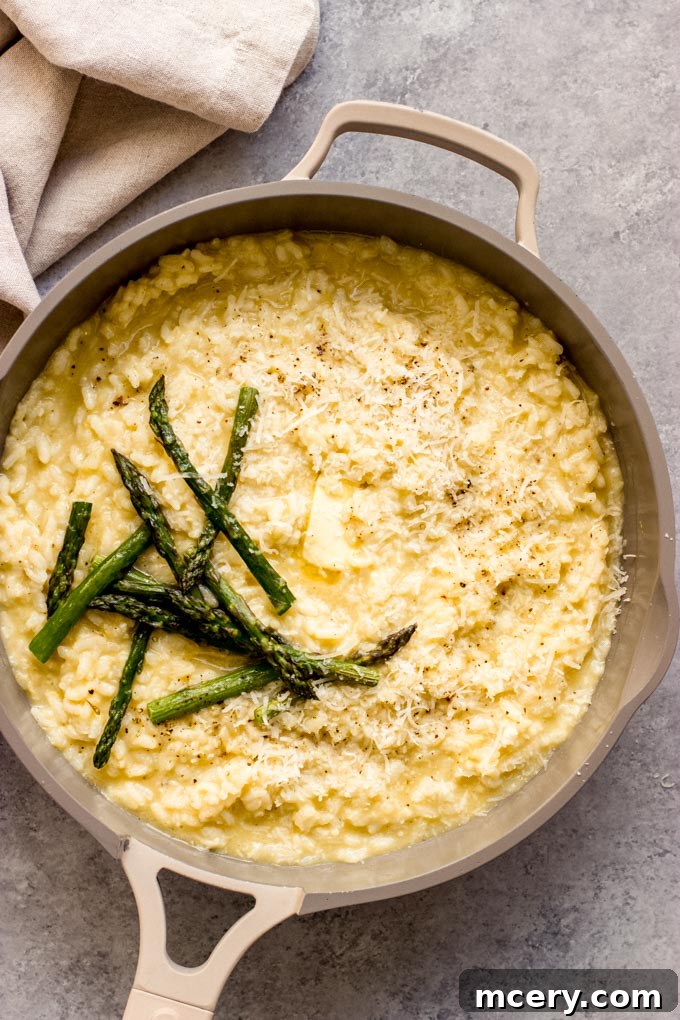
Indulge in the ultimate Italian comfort food with this exquisite Lemon Asparagus Risotto. This dish masterfully combines creamy, silky Arborio rice with the vibrant freshness of asparagus, the zesty brightness of lemon, and the savory depth of Parmesan cheese. It’s a truly satisfying and elegant culinary experience, perfect as a stand-alone meatless main course, or as a luxurious side dish.
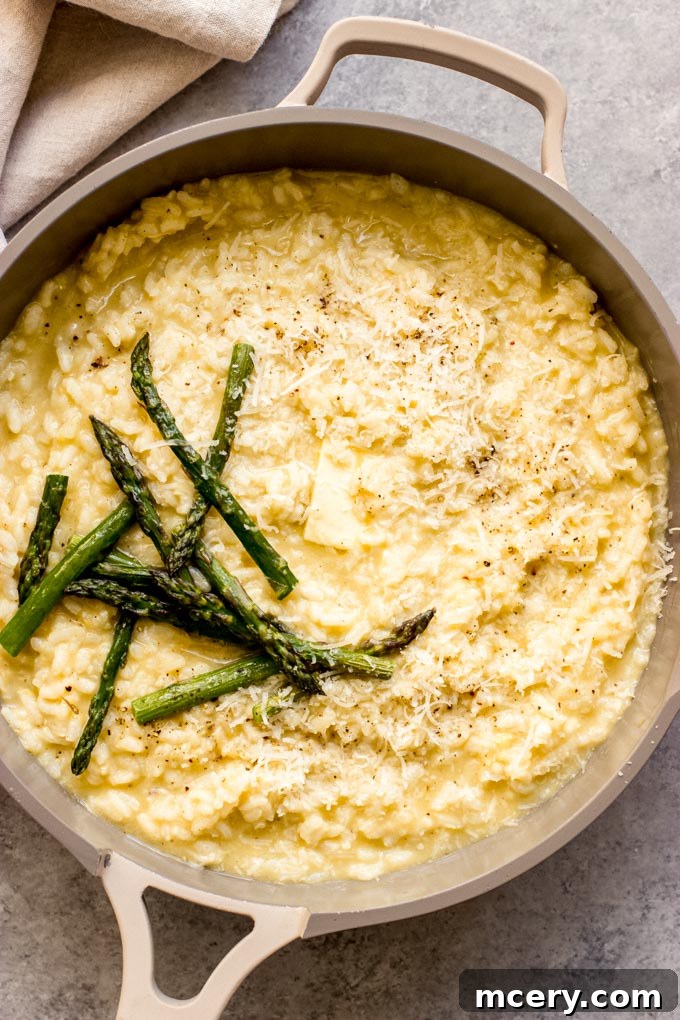
Mastering Asparagus Risotto: A Culinary Journey
Risotto is more than just a dish; it’s an age-old Italian culinary technique involving rice cooked gradually in a flavorful stock until it reaches a rich, creamy consistency. While many associate risotto with complex preparations, the truth is that with a few key principles, anyone can master this beloved staple.
Our Lemon Asparagus Risotto recipe highlights the versatility of this classic technique. Infused with fresh lemon juice and generously laced with grated Parmesan, it offers a bright, tangy counterpoint to the earthy sweetness of perfectly roasted asparagus. The result is a bowl of pure comfort – intensely creamy, incredibly satisfying, and bursting with fresh, vibrant flavors.
This delightful risotto serves beautifully as a meatless main dish, offering a wholesome and fulfilling meal on its own. However, its rich flavor profile also makes it an ideal canvas for various delicious toppings. Consider pairing it with succulent grilled garlic shrimp, pan-seared scallops, tender roasted half chicken, or an assortment of other roasted seasonal vegetables for a truly elevated dining experience.
The texture of this risotto is what truly sets it apart: incredibly creamy, remarkably silky, and wonderfully satisfying. Each spoonful delivers a harmonious blend of tender rice, bright lemon, savory Parmesan, and crisp-tender asparagus, making it a perfect example of sophisticated comfort food.
Unlocking the Secrets to Perfect Risotto: Essential Tips & Techniques
Achieving a truly remarkable risotto hinges on understanding a few fundamental principles. Far from being intimidating, these techniques are straightforward and, once mastered, will allow you to create consistently delicious, restaurant-quality risotto at home. Let’s delve into the core elements that define a good risotto.
- The Right Rice Matters: The choice of rice is paramount for authentic risotto. Arborio rice is the most widely recognized and preferred variety due to its short-grain structure and high amylopectin starch content. This specific starch is what gives risotto its characteristic creamy texture as it’s released during cooking. Unlike other rice dishes, there’s absolutely no need to rinse Arborio rice. You want to preserve every bit of that precious surface starch, which is crucial for creating the luscious, velvety sauce. While Arborio is excellent, other Italian varieties like Carnaroli (often considered the “king of rice” for risotto, producing an even creamier result) or Vialone Nano can also be used.
- Choosing the Correct Pan: The vessel you cook in plays a significant role in starch development. A pan that is too wide will cause the rice to cook in a very thin layer, preventing the grains from rubbing against each other sufficiently to release their starch. For optimal results, a deep sauté pan with high sides or a Dutch oven is ideal. This allows the rice to pile up, ensuring consistent contact and continuous starch release as you stir, leading to that coveted creamy consistency.
- Mastering Mise en Place (Preparation is Key): Risotto demands your undivided attention once cooking begins. Therefore, thorough preparation beforehand, known as “mise en place,” is non-negotiable. This means having all your ingredients prepped and ready: finely chop the shallots and garlic, bring your stock to a warm simmer, grate your Parmesan cheese, and zest and juice your lemon. This organized approach not only makes the cooking process smoother and less stressful but is critical because risotto achieves its peak perfection the very second it’s done; it doesn’t wait for you to scramble for ingredients.
- The Warmth of the Stock: Adding cold stock to hot rice will instantly drop the temperature of your pan, halting the cooking process and potentially leading to unevenly cooked rice and less starch release. To maintain a consistent cooking temperature and encourage continuous starch liberation, always warm your stock in a separate saucepan and keep it at a low, barely steaming heat throughout the cooking process. Add the warm stock gradually, just enough to barely cover the rice, and stir patiently until it is almost completely absorbed before adding the next ladleful. This allows the rice grains to gently “bump and grind” against each other, continuously releasing starch and building creaminess.
- The Art of Stirring: The signature creaminess of risotto doesn’t come from cream (though butter and cheese are added at the end for richness), but from the starch released when the rice grains gently rub together. Consistent, frequent stirring is essential for this process. Stirring too little allows air to cool the risotto, making it gluey, and risks the rice sticking and burning to the bottom of the pan. Stirring frequently ensures even cooking, maximizes starch release, and prevents sticking, resulting in a smooth, velvety texture.
- Controlling the Heat: Maintaining the correct heat level is crucial. The rice should be at a medium simmer throughout the entire cooking process. When you add each ladle of warm stock, it should immediately begin to steam gently and maintain a soft, steady simmer. Avoid a vigorous boil, which can cook the rice too quickly on the outside while leaving it raw in the center, and also evaporate the liquid too rapidly.
- The Perfect End Result: A perfectly cooked risotto should have a beautifully saucy texture, often described as a “flowing wave” or like “lava” if you tilt the plate. The rice grains should be “al dente” – tender with a slight, pleasant resistance or chewiness in the center, never mushy. The liquid component should be a creamy, almost soupy sauce, not thick or gummy. This ideal consistency is achieved by adding the last bit of stock and stirring vigorously (the “mantecatura” process) along with butter and cheese off the heat.
Essential Ingredients for Lemon Asparagus Risotto
Crafting this vibrant Lemon Asparagus Risotto requires a simple yet carefully selected list of ingredients. Each component plays a vital role in building the dish’s distinct flavor and luxurious texture.
- Butter: Essential for sautéing and finishing the risotto, providing richness and a luscious mouthfeel.
- Shallots: Offer a milder, sweeter onion flavor that forms a delicate aromatic base.
- Garlic: Provides a fragrant, savory depth that is characteristic of Italian cuisine.
- Chicken Broth: The foundational liquid for cooking the rice, imparting savory flavor and contributing to the creamy texture. Vegetable broth can be substituted for a vegetarian version.
- Arborio Rice: The star of the show, its high starch content is key to risotto’s signature creaminess.
- Parmesan Cheese: Adds a salty, umami-rich, and nutty flavor, crucial for the final creamy consistency and savory notes.
- Fresh Lemon Zest and Juice: The bright, zesty essence of lemon cuts through the richness, adding a refreshing and aromatic finish.
- Asparagus: Provides a tender-crisp texture and a delicate, slightly earthy flavor that complements the lemon and Parmesan beautifully.
Step-by-Step Guide: Crafting the Perfect Lemon Asparagus Risotto
Follow these detailed steps to create a truly spectacular Lemon Asparagus Risotto in your own kitchen. Remember, patience and constant attention are your best friends when making risotto.
- 1. Warm Your Broth to Perfection: Begin by pouring your chicken (or vegetable) broth into a medium saucepan. Place it over medium heat and bring it to a gentle simmer. Once warm, reduce the heat to low, ensuring the broth stays consistently hot but not boiling. It should be barely steaming. This crucial step prevents the cold broth from shocking the rice and disrupting the cooking process later.
- 2. Build the Aromatic Base: In a deep sauté pan or Dutch oven, melt 2 tablespoons of butter over medium heat. Add the finely chopped shallots and cook them gently until they become soft and translucent, typically taking about 2-4 minutes. Stir frequently to ensure they soften without browning. Next, stir in the minced garlic and cook for another 30 seconds, or until it becomes wonderfully fragrant. Be careful not to let the garlic burn, as this can impart a bitter flavor.
- 3. Toast the Arborio Rice: Add the Arborio rice to the pan with the shallots and garlic. Stir continuously for 3-5 minutes, ensuring every single grain is thoroughly coated in the melted butter and aromatics. This toasting process, called “tostatura,” helps to strengthen the rice grains, preventing them from becoming mushy and giving them a slightly nutty flavor. You might hear a faint crackling sound as the rice toasts.
- 4. Gradually Add the Broth: Begin by adding ½ cup of the warm chicken broth to the rice. Stir consistently, making sure the rice fully absorbs all the liquid. Once the broth is almost completely absorbed, add another ½ cup. Continue this process, adding broth in ½ cup increments and stirring after each addition. The continuous stirring helps to release the starches from the rice, creating that characteristic creamy texture. The risotto is ready when the rice grains are “al dente” – tender to the bite but still offering a slight, pleasant firmness in the center. The overall consistency should resemble a thick, flowing porridge, not a solid mass. This gradual addition and constant stirring process usually takes about 20-25 minutes.
- 5. Roast the Asparagus: While the risotto is about halfway through its cooking process (around the 10-12 minute mark), preheat your oven to 425°F (220°C). Arrange the trimmed asparagus spears in a single layer on a parchment-lined baking sheet. Drizzle them lightly with olive oil and season generously with salt and freshly cracked black pepper. Roast in the preheated oven for 8-10 minutes, or until the asparagus is tender-crisp and slightly caramelized. This ensures your asparagus is perfectly cooked and ready to be added to the finished risotto.
- 6. Finish with Flavor: Once the risotto has reached its ideal al dente consistency, remove the pan from the heat. Add the remaining butter and stir until it completely melts into the rice, enriching its texture. Next, vigorously stir in the freshly grated Parmesan cheese, lemon zest, and fresh lemon juice. Continue stirring until the cheese is fully melted and incorporated, and the liquid surrounding the risotto is creamy yet still very fluid. This final stirring, known as “mantecatura,” is vital for achieving ultimate creaminess and incorporating the finishing flavors.
- 7. Adjust and Serve: If the risotto appears too thick, stir in a little more warm broth, a tablespoon at a time, until you achieve the desired luscious, flowing consistency. Taste the risotto and season with additional salt as needed, as the flavor truly blossoms with proper seasoning. Serve immediately, generously topped with the roasted asparagus, an extra sprinkle of Parmesan cheese if desired, and a final flourish of fresh cracked black pepper. Risotto is best enjoyed fresh from the pan.
Risotto Troubleshooting: Common Issues and Quick Fixes
Even with the best intentions, culinary challenges can arise. Don’t worry, many common risotto issues have simple solutions. Here’s how to troubleshoot your way to a perfect dish:
Why does my risotto taste bland? This is a very common issue, and the solution is almost always simple: add more salt! Even after incorporating flavorful ingredients like butter, Parmesan, lemon juice, and zest, risotto often requires additional seasoning to bring all its flavors to life. Taste frequently throughout the cooking process and especially at the very end. Start with a pinch, stir, taste again, and continue until the flavors truly pop. Don’t underestimate the power of proper seasoning.
Why is my risotto rice still hard? If your rice remains stubbornly firm, it’s likely a matter of heat and hydration. First, check your heat level – it might be too low. Risotto should maintain a consistent, medium simmer. When you add broth, it should immediately begin to steam gently and barely simmer. If the heat is too low, the rice won’t cook efficiently. Second, ensure you are adding enough broth and allowing the rice ample time to absorb it. Continue adding warm broth, ½ cup at a time, and stir until the rice reaches the desired al dente tenderness – soft on the outside with a slight chew in the center, never crunchy.
Why is my risotto not creamy? The creamy texture of risotto comes primarily from the starch released by the rice, not from added cream. The main culprits for a non-creamy risotto are usually rinsing the rice and insufficient stirring. Never rinse Arborio rice, as this washes away the essential starches. Secondly, risotto requires frequent, consistent stirring. This constant agitation causes the rice grains to rub against each other, releasing their starch into the cooking liquid. Without enough stirring, the starch won’t release adequately, resulting in a less creamy, often more soupy or watery consistency. Keep stirring, especially in the final stages!
How do you fix sticky risotto? If your risotto turns out too thick or sticky, it simply means it needs a little more liquid to achieve that perfect flowing consistency. The fix is easy: simply stir in an additional splash of hot broth, a tablespoon at a time, off the heat. Stir gently but thoroughly until the risotto loosens up and reaches your desired texture. Remember, risotto should resemble a thick porridge or lava-like consistency, flowing slowly when tilted, rather than being a stiff mound.
Perfect Pairings: What to Serve with Lemon Asparagus Risotto
Lemon Asparagus Risotto is a rich, creamy, and satisfying dish that holds its own beautifully as a main course. However, its vibrant flavors also make it an excellent base or accompaniment to a variety of other dishes. When considering what to serve alongside, think about contrasts in texture and flavor to create a balanced and memorable meal.
For a lighter meal, pair it with simple, fresh vegetable-focused sides. To elevate it further, consider topping your risotto with exquisite seafood or complementing it with heartier protein options. Here are some delightful pairings to consider:
- Fresh Salads: A crisp salad provides a wonderful textural contrast and a refreshing element. Consider a light and tangy Tomato Mozzarella Salad with Balsamic Reduction or a peppery Parmesan Arugula Kale Salad with Pine Nuts. The acidity and freshness of the greens will beautifully cut through the richness of the risotto.
- Simple Roasted Vegetables: While the risotto already includes asparagus, other roasted vegetables can add more depth and nutritional value. Easy Oven Roasted Broccoli or Brussels sprouts are fantastic choices, offering a slight bitterness and tender-crisp texture.
- Seafood: Risotto and seafood are a classic Italian pairing. The delicate flavors of the lemon asparagus risotto complement various types of fish and shellfish. Try topping it with perfectly seared scallops, grilled shrimp, or a light and flaky baked fish in foil. The lemon notes in the risotto will harmonize beautifully with most seafood.
- Baked Fish: For a heartier main, consider serving a protein alongside. Maple Mustard Salmon offers a delightful sweet and savory contrast, while Bruschetta Baked Cod provides a light, flavorful option that won’t overpower the risotto.
Don’t forget dessert! After a rich and satisfying main course like risotto, a light and refreshing dessert is the perfect palate cleanser. Our adorable Mini Lemon Cheesecakes would be an elegant and harmonious choice, echoing the lemon notes of the risotto while offering a sweet, creamy finish.

Lemon Asparagus Risotto
5 Stars 4 Stars 3 Stars 2 Stars 1 Star
5 from 1 review
Author: Katya
Prep Time: 10 min
Cook Time: 35 mins
Total Time: 45 min
Yield: 4-6 1x
Category: Main
Method: Simmer
Cuisine: Italian
Description
Indulge in this creamy, silky Italian comfort food, generously loaded with fresh asparagus, bright lemon, and savory Parmesan cheese. This Lemon Asparagus Risotto makes a truly delicious and satisfying meatless main dish that’s perfect for any occasion.
Ingredients
Units
Scale
- 4 Tbsp. butter, divided
- 2 Tbsp. finely chopped shallots
- 2 garlic cloves, minced
- 6 cups chicken broth (or vegetable broth for a vegetarian option)
- 1 ½ cups Arborio rice (do not rinse)
- ½ cup freshly grated Parmesan cheese, plus more for serving
- 1 Tbsp. lemon zest, from about 2 medium lemons
- 1 Tbsp. fresh lemon juice
- 8 oz. asparagus, about ½ bunch, tough ends trimmed, cut into 3-inch pieces
- Olive oil, for roasting asparagus
- Kosher salt and fresh black pepper, to taste
Instructions
- In a small saucepan, gently heat the chicken broth over medium heat until it is warm and just barely steaming. Reduce the heat to low and keep the broth warm on the stovetop. It is crucial to prevent the broth from simmering or boiling vigorously at any point; it simply needs to be hot enough to maintain the cooking temperature of the rice.
- Meanwhile, melt 2 tablespoons of butter in a 4-quart deep sauté pan or a Dutch oven over medium heat. Add the finely chopped shallots and cook, stirring frequently, until they become soft and translucent, which should take approximately 2-4 minutes. Ensure they do not brown; you only want them to soften. Stir in the minced garlic and cook for an additional 30 seconds, stirring constantly, until it becomes fragrant. Be careful not to burn the garlic.
- Add the Arborio rice to the pan and stir vigorously, ensuring that every single grain is thoroughly coated with the melted butter and infused with the aromatics. Toast the rice for 3-5 minutes, stirring frequently. You will notice the edges of the grains becoming translucent, and you might hear a subtle crackling sound, indicating the rice is properly toasting.
- Pour in ½ cup of the warm chicken broth into the rice. Stir continuously until all the broth is almost completely absorbed by the rice. Once absorbed, continue by adding another ½ cup of warm broth. Repeat this process, adding broth ½ cup at a time and stirring patiently after each addition. Allow the rice to absorb most of the liquid before adding the next ladleful. This gradual method is key to developing the risotto’s creamy texture.
- Continue adding broth and stirring after each addition until the rice has reached an al dente consistency. The grains should be tender but still have a slight, pleasant bite in the center – not mushy. It’s important to taste the rice periodically to gauge its doneness. You may not need all of the broth, so stop once the rice is perfectly cooked.
- When the risotto is roughly halfway through its cooking time (approximately 10-15 minutes into the broth addition), prepare your asparagus. Preheat your oven to 425 degrees F (220°C). Arrange the trimmed asparagus spears in a single layer on a parchment-lined baking sheet. Drizzle them lightly with olive oil and season generously with kosher salt and fresh black pepper. Bake for 8-10 minutes, or until the asparagus is tender-crisp and slightly charred at the edges. This timing ensures the asparagus will be ready just as the risotto finishes cooking.
- Confirm your risotto’s readiness: The rice should be al dente, and the overall consistency should be that of a thick, flowing porridge. It should appear more liquid than solid. If you drag your spoon through the risotto in the pan, the space should slowly fill back in, indicating the perfect creamy “wave” consistency.
- Once the risotto is ready, remove the pan from the heat. Add the remaining butter and stir until it completely melts and is thoroughly incorporated, adding an extra layer of richness. Stir in the freshly grated Parmesan cheese, lemon zest, and lemon juice. Continue stirring vigorously until the cheese has melted, and the liquid surrounding the risotto is beautifully creamy and fluid. If the consistency is too thick, stir in a little more warm broth, a tablespoon at a time, until it reaches your desired fluidity. Finally, taste and season with additional salt as needed, and add fresh black pepper to taste.
- Serve your Lemon Asparagus Risotto immediately. Garnish each serving generously with the roasted asparagus, an extra sprinkle of Parmesan cheese if desired, and a final grind of fresh cracked black pepper for added aroma and flavor. Enjoy this exquisite dish while it’s warm and at its peak creamy perfection.
Notes
- Leftovers: Risotto is truly at its best when enjoyed immediately after preparation, as its creamy consistency is most vibrant. However, if you happen to have any leftover Lemon Asparagus Risotto, it can be stored in an airtight container in the refrigerator for up to 3 days. When reheating, you may need to add a splash of warm broth or water to restore some of its creamy texture.
Nutrition
- Serving Size:
- Calories: 307
- Sugar: 3.3 g
- Sodium: 1559.1 mg
- Fat: 18.8 g
- Carbohydrates: 26.3 g
- Protein: 9.5 g
- Cholesterol: 45.2 mg