
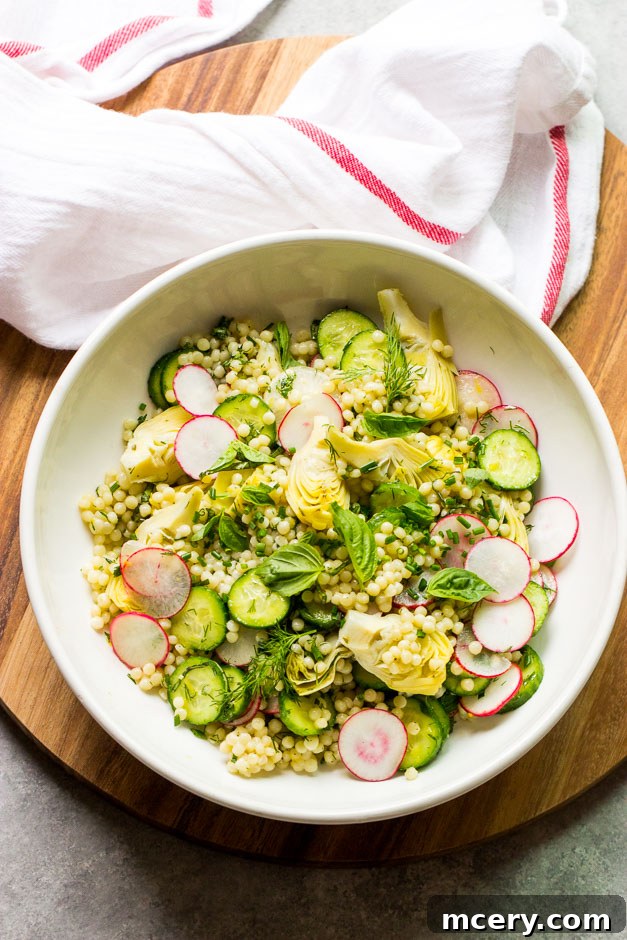
Incredibly fresh, vibrant, and loaded with the best spring vegetables, this Israeli couscous salad with marinated artichokes is truly the perfect dish to welcome the season! Its delightful blend of textures and bright flavors makes it an instant favorite for light lunches, festive gatherings, or a healthy weeknight side.
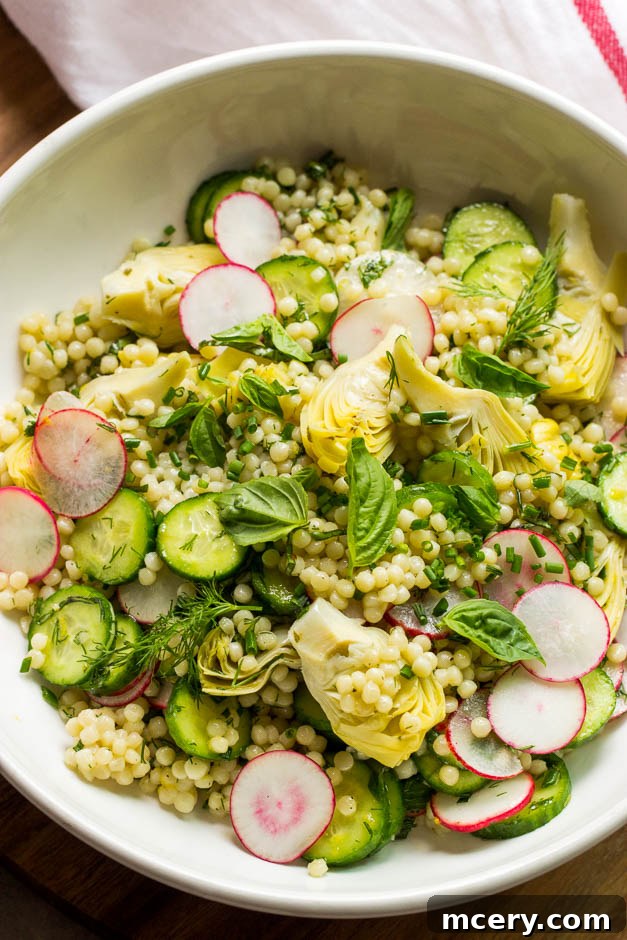
This refreshing Israeli couscous salad makes an outstanding companion to a flavorful main course. Consider pairing it with Roasted Lemon Rosemary Chicken for a complete and utterly beautiful spring meal that’s sure to impress!
Embrace the season with an Israeli couscous salad that promises freshness and light, invigorating flavors. This simple yet sophisticated pearl couscous salad is a celebration of spring, showcasing a gorgeous array of crisp, seasonal vegetables, tender semolina pearls, and savory marinated artichokes. Each spoonful delivers a vibrant, delicate combination of textures from the chewy couscous, crunchy cucumbers and radishes, tangy artichokes, and fragrant fresh herbs, all unified by a zesty lemon-garlic dressing.
Whether you’re hosting a spring brunch, preparing a holiday side, or simply looking for a healthy and satisfying meal, this recipe offers a delightful culinary experience. Its ease of preparation and stunning presentation make it a go-to dish for any occasion. Let’s dive into what makes this pearl couscous salad a must-try for your table.
What Exactly Is Israeli Couscous?
Often referred to as pearl couscous or Jerusalem couscous, Israeli couscous stands apart from its smaller, more common North African counterpart. Unlike traditional couscous, which is typically steamed, Israeli couscous is a type of pasta, not a grain, made from toasted semolina flour. These small, spherical pearls are roughly the size of peppercorns, giving them a unique texture. When cooked, they become delightfully chewy and tender, offering a satisfying bite that’s perfect for absorbing dressings and flavors.
Its versatility makes it an excellent alternative to rice, quinoa, or other grains in various dishes. From hearty main courses to light and refreshing salads, Israeli couscous brings a wonderful texture and mild flavor that complements a wide range of ingredients. It’s particularly well-suited for cold salads like this one, as its pearls remain distinct and don’t clump together, allowing the fresh vegetables to shine.
Irresistible Reasons to Love This Israeli Couscous Salad
This Israeli couscous salad isn’t just a recipe; it’s an experience. Here’s why it’s destined to become a staple in your spring and summer repertoire:
- A Symphony of Flavors and Textures: This isn’t just another salad; it’s a carefully crafted blend where every ingredient plays a crucial role. The tender, slightly chewy couscous pearls provide a comforting base, beautifully contrasted by the crisp freshness of seasonal vegetables like cucumbers and radishes. But it’s the marinated artichokes that truly elevate this dish, infusing it with a tangy, herbaceous depth that sets it apart. All these elements are brought together by a bright, zesty lemon-garlic dressing, creating a harmonious and utterly delicious combination of sweet, savory, and tart notes.
- Effortless Preparation in Minutes: Life is busy, and your meals shouldn’t add to the stress. This pearl couscous salad is incredibly straightforward to make. Once your couscous pearls are perfectly cooked to a light and fluffy consistency, the rest is a simple assembly job. Just toss the warm couscous with the vibrant herbs, crisp vegetables, and the irresistible dressing. Minimal cooking, maximum flavor – it’s the ideal recipe for a quick lunch or a hassle-free side dish.
- The Epitome of Spring Salads: There’s something truly magical about a dish that perfectly captures the essence of a season. The aromatic blend of fresh garlic, bright lemon, and a medley of garden herbs in this salad instantly awakens your palate, inviting the joyful spirit of spring with every bite. It’s a refreshing, light, and invigorating dish that perfectly aligns with what you crave as the weather warms. Think of it as a delightful, lighter spin on our beloved orzo pasta salad recipe, offering a different texture profile while retaining that fresh, herbaceous appeal.
- Healthy and Nutritious: Packed with fresh vegetables and a wholesome couscous base, this salad is a powerhouse of nutrients. It’s a light option that doesn’t compromise on satisfaction, making it a great choice for those looking for nutritious meal solutions.
- Perfect for Meal Prep and Potlucks: This salad tastes even better after the flavors have had time to meld, making it an excellent candidate for make-ahead meals. It also travels well, making it a fantastic addition to picnics, potlucks, and outdoor gatherings.
Is Israeli Couscous Gluten-Free? It’s important to note that Israeli couscous is traditionally made from toasted semolina flour, which is derived from wheat. Therefore, it is *not* gluten-free. However, for those with gluten sensitivities or celiac disease, there are excellent gluten-free couscous or pasta alternatives available on the market. While I haven’t personally tested this specific recipe with them, a quinoa base would be a fantastic gluten-free substitute, offering a similar chewy texture and nutritional benefits.
Essential Ingredients and Savvy Substitutions for Your Pearl Couscous Salad
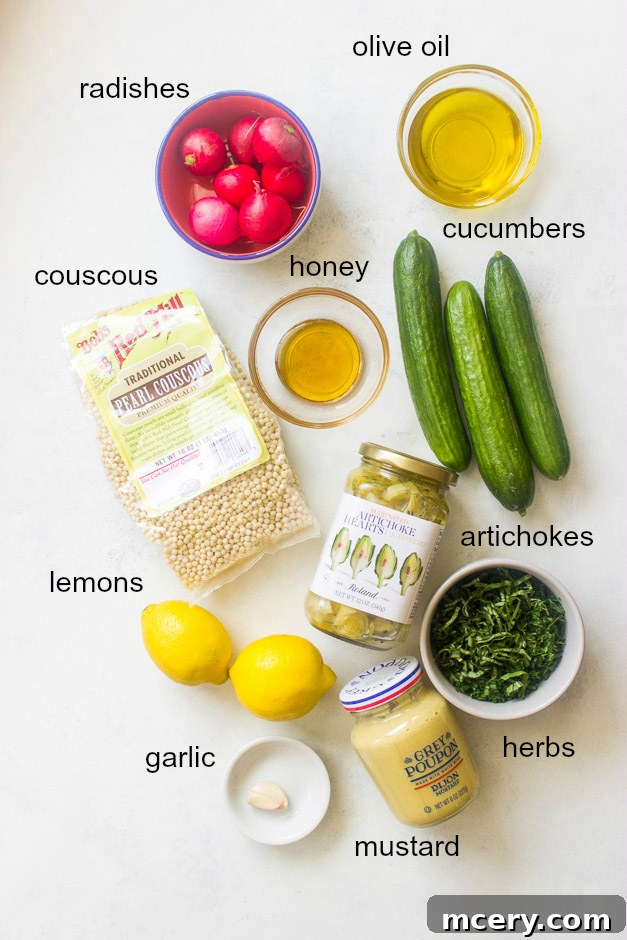
Crafting this delightful Israeli couscous salad relies on a few key ingredients, each chosen for its flavor and texture contribution. Here’s a detailed look at what you’ll need and how you can adapt the recipe to your preferences or what you have on hand:
- Israeli Couscous: These tiny, chewy, and tender semolina pearls are the heart of our salad. You can typically find them in the pasta or grains aisle of most major supermarkets, sometimes labeled as “pearl couscous” or “Jerusalem couscous.” If you’re unable to find it or are looking for a gluten-free option, cooked quinoa makes an excellent substitute, providing a similar texture and a nutritional boost. Orzo pasta is another good alternative if you prefer a different pasta shape.
- Cucumbers: We recommend using either three small pickling cucumbers or half of an English (seedless) cucumber. English cucumbers are known for their thinner skin and fewer seeds, making them ideal for salads as they don’t require peeling and have a milder flavor. Slice them thinly to ensure a delicate crunch that complements the other ingredients without overpowering them.
- Radishes: These beautiful, peppery root vegetables add a wonderful crisp texture and a subtle spicy kick to the salad. Slicing the radishes very thin is key; it mellows their intensity and allows them to blend seamlessly with the other ingredients, providing just enough bite without being too sharp.
- Marinated Artichoke Hearts: This ingredient is a true game-changer! Marinated artichokes, usually found in jars, bring an incredible tangy, savory, and slightly briny flavor that adds a complex layer to the salad. While you *can* use plain artichoke hearts (canned or frozen and thawed), the infused flavors from the marinade truly go a long way in enhancing the overall profile of this pearl couscous salad. Make sure to drain them well before adding.
- Fresh Herbs: A vibrant medley of fresh dill, basil, and chives provides essential aromatic notes and a burst of green freshness. These herbs are carefully chosen to complement the other ingredients. Feel free to adjust the quantities based on your preference, or experiment with other fresh herbs like parsley or mint for a different twist.
For the Zesty Lemon Garlic Dressing:
The dressing is the binding agent that brings all these fresh flavors together. It’s simple, bright, and perfectly balanced:
- Oil: A light, high-quality extra virgin olive oil or avocado oil is recommended. These oils offer a smooth base without overpowering the delicate and refreshing flavors of the salad. Avoid strong, heavy oils that might compete with the lemon and herbs.
- Honey: Just a touch of honey adds a subtle sweetness that balances the acidity of the lemon and the tang of the artichokes. Maple syrup is a fantastic vegan-friendly alternative if you prefer.
- Lemon: You’ll use both fresh lemon juice for its vibrant acidity and lemon zest for its intense, aromatic essential oils. Don’t skip the zest – it provides a depth of citrus flavor that juice alone cannot achieve.
- Dijon Mustard: This creamy, tangy mustard acts as an emulsifier, helping the dressing come together smoothly, and adds a sophisticated depth of flavor. Yellow mustard can be used in a pinch, but be aware it is generally tangier and less complex in flavor.
- Garlic: Fresh garlic, minced or pressed, is always best for its pungent, aromatic qualities. If fresh isn’t available, jarred minced garlic can be used, but fresh will always provide superior flavor.
- Salt and Pepper: Essential for seasoning! Always taste and adjust to your preference, as the exact amount can vary based on the saltiness of your artichokes and personal taste.
Crafting Your Israeli Couscous Salad: A Step-by-Step Guide
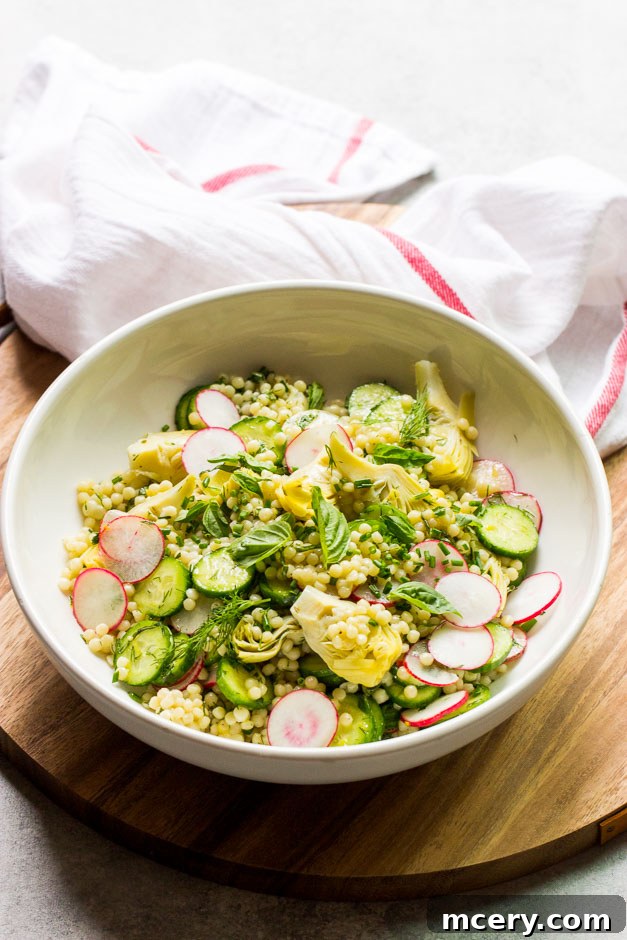
Preparing this flavorful Israeli couscous salad is incredibly simple and comes together with just a few steps. While it’s delightful fresh, allowing it a little chill time significantly enhances the flavors. Follow these easy instructions for a perfect spring salad:
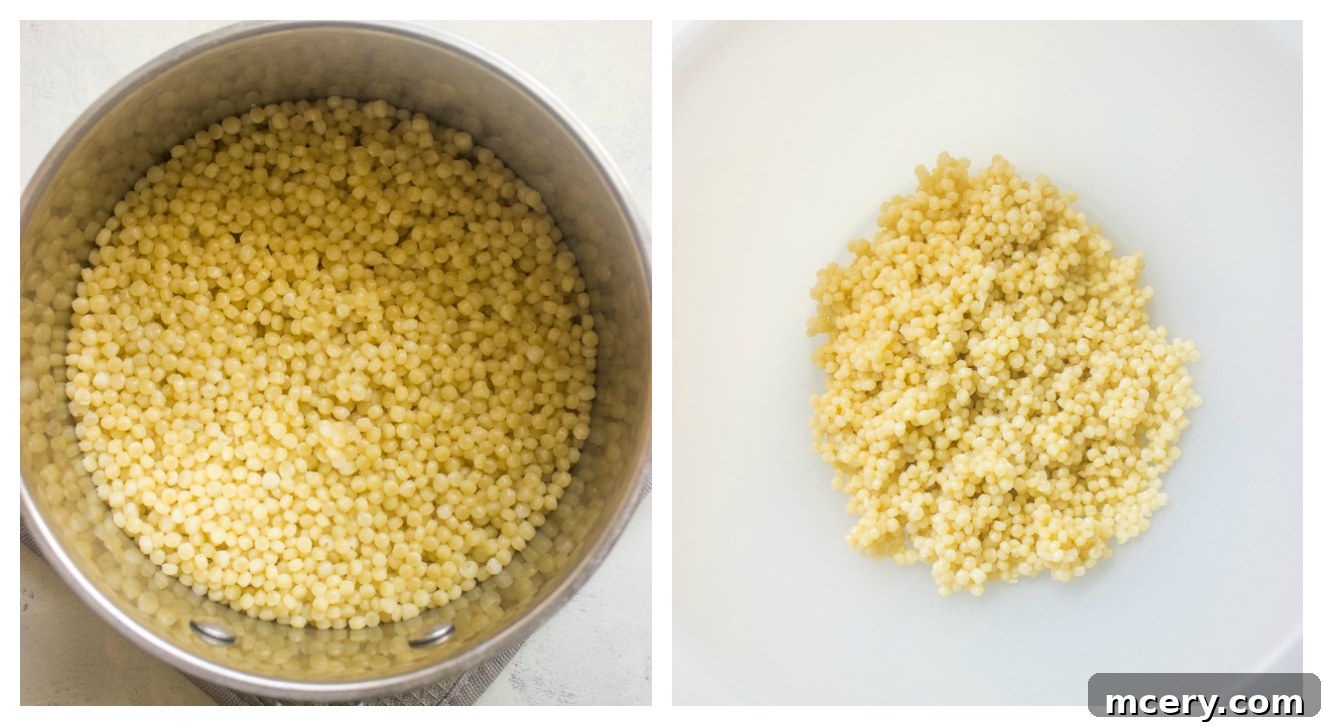
- Cook the Couscous to Perfection: Begin by cooking your Israeli couscous according to the package directions. Just like pasta, the key is to cook it al dente – tender but still with a slight bite. Once cooked, drain any excess water thoroughly. Fluff the warm couscous gently with a fork to prevent sticking and transfer it immediately to a large salad bowl. Working with warm couscous allows it to better absorb the dressing, infusing every pearl with flavor.
- Prepare Your Fresh Ingredients: While the couscous is cooking or cooling slightly, take this time to prepare your vegetables and herbs. Thinly slice the mini cucumbers or English cucumber, ensuring uniform pieces for an even texture throughout the salad. Do the same for the radishes, aiming for very thin slices to distribute their subtle peppery crunch. Drain your marinated artichoke hearts well and chop them if they are not already quartered. Finally, finely chop your fresh dill, basil, and chives, releasing their vibrant aromas. Add all these prepared vegetables and herbs to the bowl with the warm couscous.
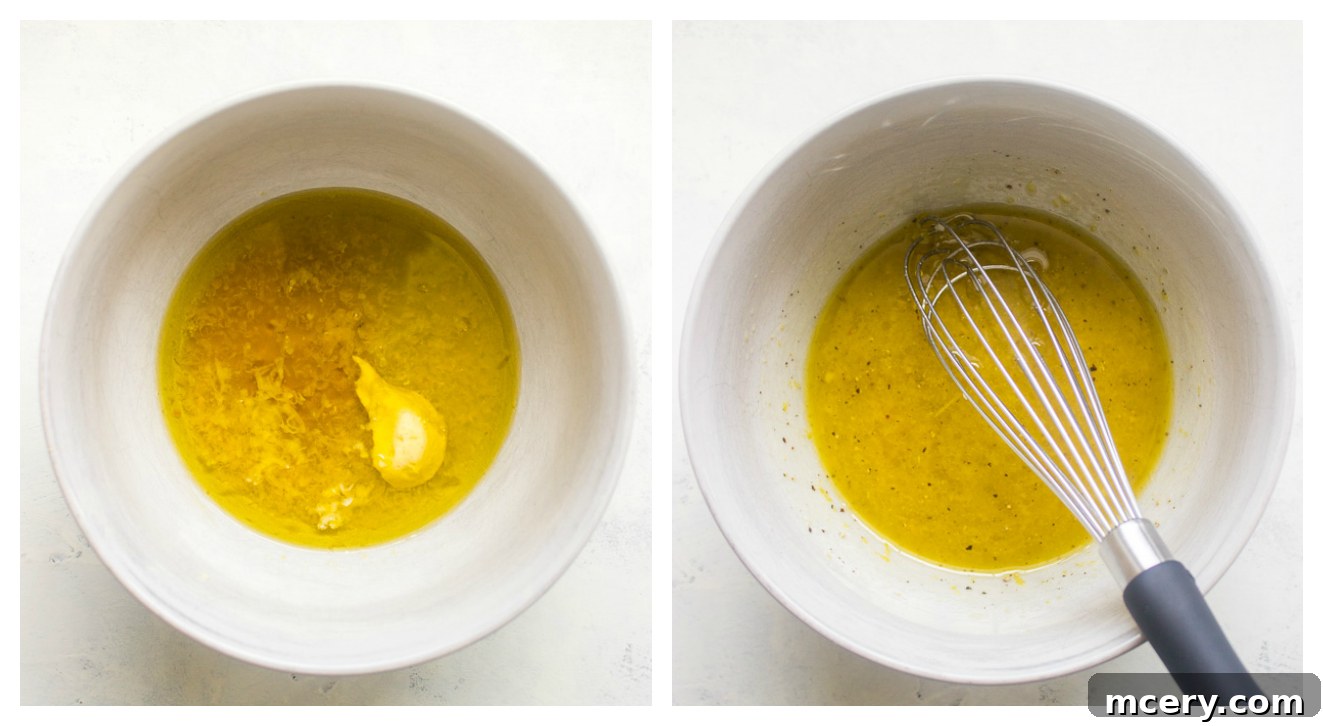
- Whisk Together the Zesty Dressing: In a separate small bowl or a jar with a tight-fitting lid, combine all the dressing ingredients: extra virgin olive oil, honey (or maple syrup), fresh lemon zest, fresh lemon juice, Dijon mustard, and minced garlic. Whisk vigorously until all ingredients are well combined and emulsified. Taste the dressing and season it generously with kosher salt and fresh black pepper to your liking. The dressing should be bright, tangy, and slightly sweet.
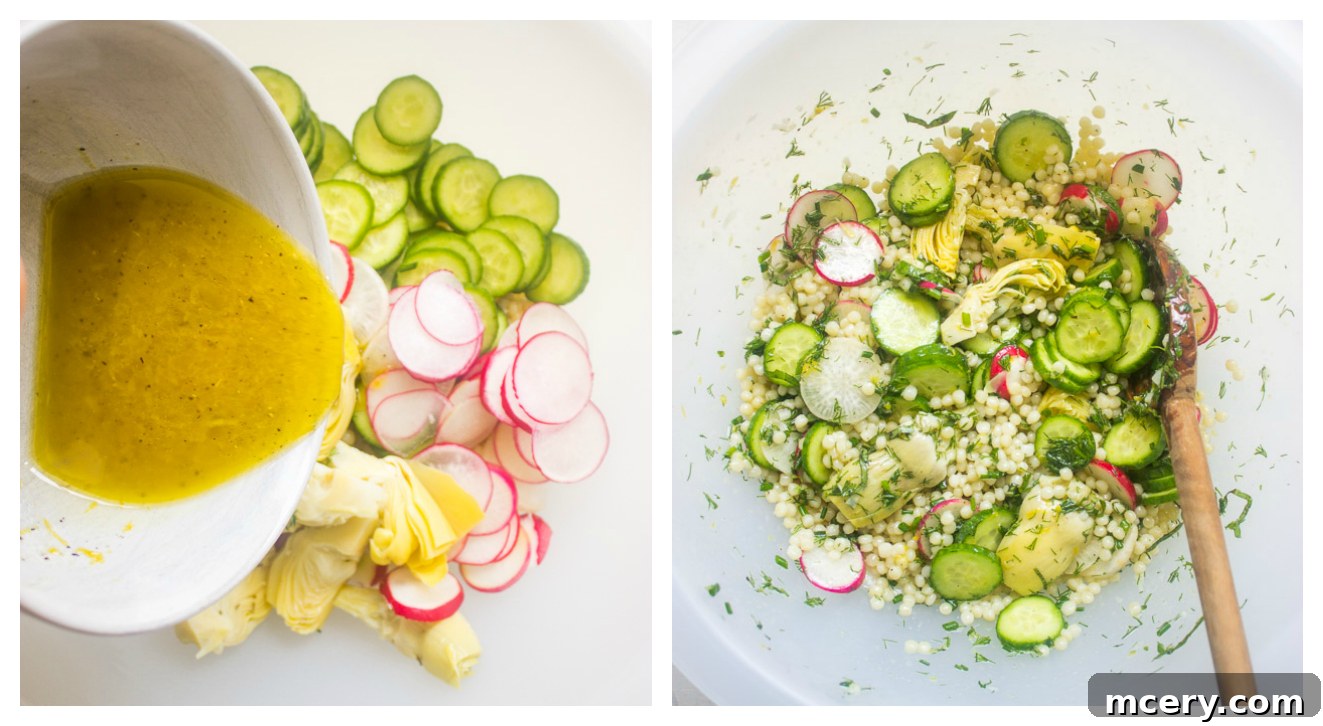
- Combine and Chill: Pour the freshly made dressing generously over the warm couscous and vegetable mixture in the large salad bowl. Toss everything gently but thoroughly, ensuring that every pearl of couscous and every piece of vegetable is coated in the delicious dressing. This step is crucial for allowing the couscous to soak up all the fantastic flavors. Once mixed, taste the salad again and adjust the seasoning if needed. For the best flavor development, cover the salad and refrigerate it for at least 30 minutes before serving. Chilling allows the flavors to meld beautifully and the salad to reach a refreshing temperature.
Expert Recipe Tips for the Best Israeli Couscous Salad
Achieving the perfect Israeli couscous salad is easy with these simple tips:
- Crucial Resting Time for Flavor Development: Once you’ve combined all the ingredients and tossed the salad with the dressing, resist the urge to serve it immediately. Pop the salad in the fridge, covered, for at least 30 minutes, or even longer. This resting period is transformative; it allows the couscous pearls and vegetables to fully absorb the bright, zesty flavors of the lemon-garlic dressing, resulting in a much more cohesive and delicious salad. Chilled is always best for salads!
- Precision Slicing for Balanced Texture: The texture is just as important as the flavor in this salad. Ensure your cucumbers and radishes are sliced very thinly. This careful preparation creates a delicate crunch that provides a beautiful contrast to the soft, chewy pearl couscous. Thickly cut vegetables can overpower the dish and disrupt the harmonious texture. A mandoline slicer can be a great tool here for consistent, thin slices.
- Enhance with Crumbled Feta Cheese: For an extra layer of salty, tangy creaminess, consider adding about 1 cup of crumbled feta cheese just before serving. Feta pairs exceptionally well with the Mediterranean flavors of this salad, adding depth and richness. If you’re preparing the salad ahead of time, it’s best to add the feta right before serving to keep it fresh and prevent it from becoming too soggy.
- The Power of Make-Ahead: This Israeli couscous salad is a fantastic make-ahead option. As mentioned, the flavors deepen and improve with time, making it an ideal choice for meal prepping lunches for the week or preparing a side dish for a gathering a day or two in advance. Store it in an airtight container in the refrigerator. However, if you plan to make it more than a few hours ahead, it’s wise to hold off on adding the fresh herbs until just before serving. This ensures the herbs retain their vibrant color and fresh aroma, preventing them from wilting or losing their potency.
- Prevent Mushy Couscous: The key to perfectly cooked Israeli couscous is to follow package instructions closely, using the correct water-to-couscous ratio. Overcooking or using too much liquid can lead to mushy pearls. You want them tender but still firm.
Creative Variations to Customize Your Couscous Salad
While this Israeli couscous salad is perfect as is, it’s also wonderfully adaptable! Feel free to get creative and tailor it to your tastes or what you have on hand:
- Hearty Chicken Israeli Couscous Salad: Transform this vibrant side dish into a complete and satisfying main course by adding your favorite protein. It pairs exquisitely with chicken! Try topping the salad with slices of our grilled chicken tenders, shredded rotisserie chicken, or even pan-seared chicken breast for a boost of lean protein.
- Flavorful Chickpea Israeli Couscous Salad (Vegetarian-Friendly): For a delicious vegetarian and vegan-friendly option, chickpeas are an excellent addition. You can simply toss them in as is for a soft texture and protein boost. For an added layer of flavor and crunch, try roasting the chickpeas in the oven or air fryer until crispy before adding them to the salad. This creates a delightful contrast against the tender couscous and fresh vegetables.
- Spicy Pearl Couscous Salad: If you enjoy a little heat, it’s easy to infuse this recipe with a spicy kick. Finely chop some fresh jalapeños (deseeded for less heat) and toss them into the salad. Alternatively, sprinkle in some cayenne pepper or red pepper flakes with the dressing ingredients to distribute the warmth evenly. Start with a small amount and add more to taste.
- Roasted Vegetable Medley: Enhance the depth of flavor by adding roasted vegetables like bell peppers, zucchini, or cherry tomatoes. Roasting brings out their natural sweetness and adds a tender-crisp texture.
- Nutty Crunch: For an extra layer of texture and healthy fats, sprinkle in some toasted pine nuts, chopped almonds, or sunflower seeds just before serving.
- Different Cheeses: Beyond feta, consider crumbled goat cheese for a creamier, tangier profile, or shaved Parmesan for a salty, umami kick.
- Olives for Brininess: A handful of pitted Kalamata or Castelvetrano olives would add a delightful brininess and Mediterranean flair.
Elegant Serving Suggestions for Your Israeli Couscous Salad
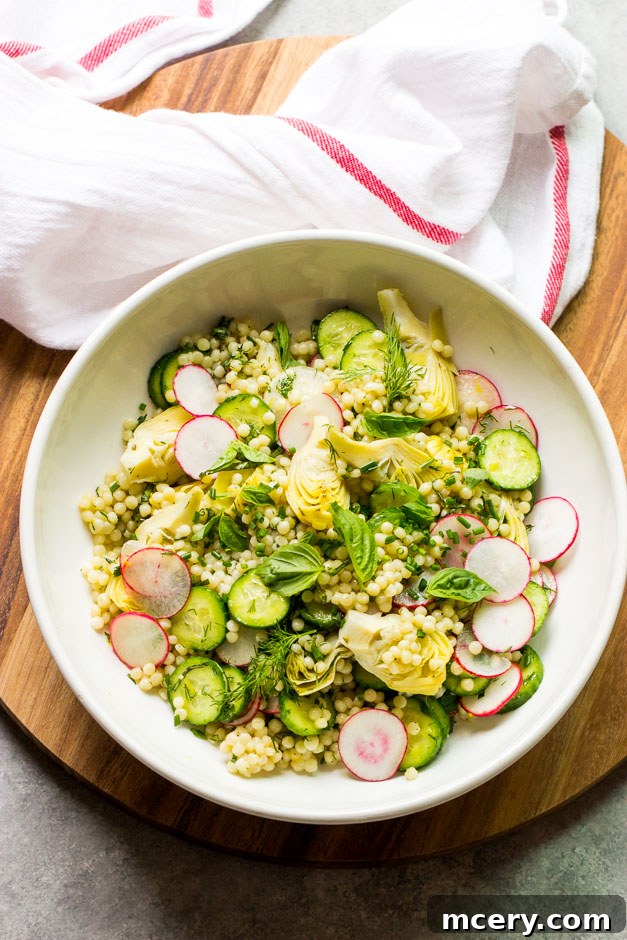
This Israeli couscous salad is a testament to simple, nutritious, and incredibly flavorful eating. Its versatility means it can shine as a refreshing light meal all on its own, or as a vibrant and satisfying side dish for almost any occasion. Here are some ideas for how to serve it:
- As a Light Lunch: Enjoy a generous bowl of this salad as a refreshing and fulfilling lunch. The combination of pearl couscous, fresh vegetables, and protein from the optional additions (like chickpeas or feta) makes it a perfectly balanced midday meal.
- The Perfect Spring Side Dish: It’s an ideal accompaniment to a wide range of main courses. Its bright flavors and light profile beautifully cut through richer dishes, providing a wonderful contrast. Try pairing it with:
- Artichoke and Spinach Roasted Salmon: The delicate flavors of the salmon and spinach will complement the salad’s zestiness.
- Lemon Roasted Chicken and Potatoes: A classic pairing, where the lemon notes in both dishes will harmonize beautifully.
- Easy Broccoli Potato Soup: For a comforting yet balanced meal, the fresh salad offers a lovely counterpoint to a creamy soup.
- Chicken Sausage and Broccolini Pasta: The salad provides a light, fresh element to balance the heartiness of pasta and sausage.
- For Gatherings and Potlucks: This salad is a crowd-pleaser! It holds up well at room temperature for a short period, making it excellent for picnics, BBQs, holiday buffets (especially Easter or Mother’s Day), or family gatherings. Its colorful presentation is always a hit!
- Garnish for Impact: Before serving, consider a final flourish. A sprinkle of extra fresh herbs (dill, basil, or mint), a grating of lemon zest, or a drizzle of your best extra virgin olive oil can enhance both its visual appeal and flavor.
Storing Leftovers: This Israeli couscous salad with marinated artichoke hearts maintains its deliciousness when properly stored. Transfer any leftovers to an airtight container and keep it in the refrigerator. It will last beautifully for 4-5 days, making it an excellent option for meal prep throughout the week. While the vegetables might soften slightly over time, the flavors will continue to meld and deepen.
Frequently Asked Questions About Israeli Couscous Salad
Here are some common questions to help you master this delicious Israeli couscous salad:
No, they are distinct! Regular couscous (often called Moroccan couscous) is much smaller, resembling tiny grains, and is traditionally steamed. Israeli couscous, on the other hand, is a type of pasta. It’s made from semolina flour, toasted, and formed into small, spherical pearls that are larger than regular couscous. This gives it a soft, chewy texture that’s closer to orzo or other small pasta shapes. They offer different culinary experiences.
Nope, it’s generally not necessary to rinse pearl couscous before cooking. Since it’s a form of pasta rather than a grain like rice or quinoa, it doesn’t typically have the same starchy residue that benefits from rinsing. You can treat it much like you would any other small pasta when preparing it for cooking.
Israeli couscous cooks relatively quickly! Similar to most small pastas, it typically only takes about 10-12 minutes to cook on the stovetop until it’s tender with a pleasant chew. Always follow the specific cooking instructions on your package, as cooking times can vary slightly by brand. Once cooked, give it a light fluff with a fork, much like you would with rice, to keep the pearls separate.
Mushy Israeli couscous is a common issue and usually occurs when too much liquid is added during cooking, or if it’s overcooked. To avoid this, it’s crucial to strictly follow the water-to-couscous ratio and cooking time directions provided on the pearl couscous packaging. Just like with pasta, you want it to be al dente – tender but still firm. Once cooked, drain any excess liquid immediately and fluff it to stop the cooking process.
Absolutely! This Israeli couscous salad is very versatile. Feel free to incorporate other spring or summer vegetables you enjoy. Great additions include chopped bell peppers (any color), cherry tomatoes, blanched asparagus, or even finely diced zucchini. Just ensure they are cut into small, bite-sized pieces.
Yes, with one small modification! To make this Israeli couscous salad fully vegan, simply substitute the honey in the dressing with an equal amount of maple syrup or agave nectar. All other ingredients are naturally plant-based.
Discover More Delightful Grain Salad Recipes
If you’re a fan of the wholesome and satisfying nature of grain-based salads, you’re in luck! Here are some other fantastic recipes that offer a similar blend of fresh ingredients, invigorating flavors, and nourishing goodness:
- Lemon Chicken Quinoa Salad: A protein-packed and zesty salad perfect for a healthy lunch or light dinner.
- Chopped Farmers Market Farro Salad: A hearty and rustic salad showcasing seasonal produce with chewy farro.
- Quinoa Salad with Spinach and Feta: A simple yet elegant salad, combining the earthiness of spinach with tangy feta.
- Butternut Squash and Cranberry Quinoa Salad: A warm and inviting salad, perfect for cooler months, boasting sweet and savory notes.
Print
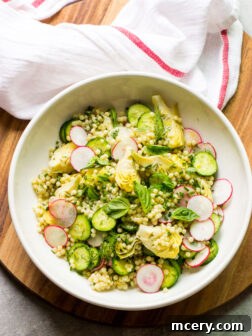
Israeli Couscous Salad with Marinated Artichokes
5 Stars 4 Stars 3 Stars 2 Stars 1 Star
5 from 3 reviews
Author: Katya
Prep Time: 10 min
Cook Time: 15 min
Total Time: 25 minutes
Yield: 6 1x
Category: Salad
Method: Chopped
Cuisine: Mediterranean
Description
Experience the ultimate spring delight with this incredibly fresh Israeli couscous salad. Bursting with seasonal vegetables and elevated by savory marinated artichokes, it’s the perfect light, vibrant, and satisfying dish for any occasion. This pearl couscous salad is easy to make and guaranteed to be a hit!
Ingredients
Units
Scale
- 1 cup dry Israeli couscous
- 3 mini cucumbers or ½ English cucumber, thinly sliced
- 6–8 radishes, thinly sliced
- 1 (10 – 12 oz.) jar quartered marinated artichokes, drained
- ¼ cup fresh dill, finely chopped
- ¼ cup fresh basil, finely chopped
- ¼ cup chives, finely chopped
For the Zesty Lemon Garlic Dressing
- ¼ cup extra-virgin olive oil
- 1 Tbsp. honey (or maple syrup for vegan)
- 2 tsp. lemon zest
- 2 Tbsp. fresh lemon juice
- 1 tsp. Dijon mustard
- 1 small garlic clove, minced or pressed
- Kosher salt and fresh black pepper, to taste
Instructions
- Cook the Israeli couscous according to package directions. Once cooked, drain thoroughly, fluff lightly with a fork, and transfer to a large salad bowl.
- Add the thinly sliced cucumbers, radishes, drained marinated artichokes, and finely chopped fresh herbs (dill, basil, and chives) to the bowl with the warm couscous.
- Prepare the Dressing: In a small bowl, whisk together all the dressing ingredients: extra-virgin olive oil, honey (or maple syrup), lemon zest, fresh lemon juice, Dijon mustard, and minced garlic. Season with salt and fresh black pepper, to taste, until the flavors are bright and balanced.
- Pour the prepared dressing over the couscous and vegetable mixture. Toss the salad gently but thoroughly to combine, ensuring all ingredients are well coated. Tossing while the couscous is still warm allows it to absorb the flavors much more effectively. Taste and adjust for salt and pepper as needed.
- Cover the salad bowl and refrigerate for at least 30 minutes before serving. This chilling time is essential for the flavors to meld and develop, resulting in a more delicious and refreshing salad.
Notes
- Couscous Terminology: Israeli couscous is also commonly known as pearl couscous or Jerusalem couscous. All refer to the same small, round pasta pearls.
- Leftovers & Make-Ahead: This salad is wonderful when served on the same day, especially after allowing it to chill for at least 30 minutes. It also makes an excellent make-ahead dish, as the flavors deepen overnight. Leftovers refrigerate well for 4-5 days in an airtight container. Keep in mind that while delicious, the vegetables (especially cucumbers and radishes) may soften slightly the longer the salad sits. For optimal freshness when making ahead for more than a day, consider adding the fresh herbs just before serving.
Nutrition
- Serving Size:
- Calories: 279
- Sugar: 4.8 g
- Sodium: 72.6 mg
- Fat: 10 g
- Carbohydrates: 42.8 g
- Protein: 8.1 g
- Cholesterol: 0 mg