
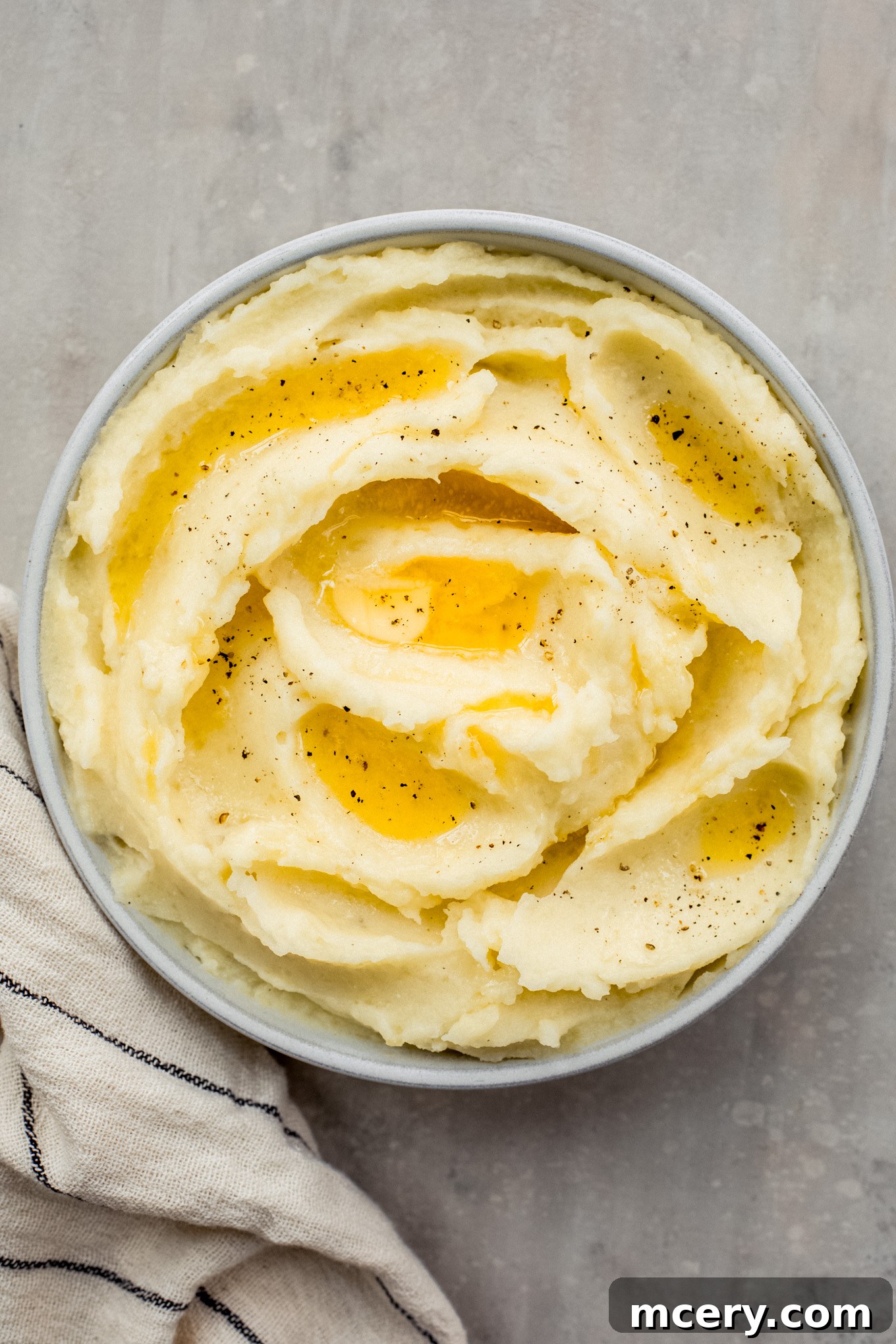
Welcome to the ultimate guide for creating the most irresistibly creamy, dreamy Yukon Gold mashed potatoes! A truly classic side dish, mashed potatoes are a culinary staple that graces tables from simple weeknight dinners to elaborate holiday feasts. While seemingly straightforward, mastering the art of perfect mashed potatoes elevates any meal. This recipe, focusing on the naturally buttery and velvety texture of Yukon Gold potatoes, promises a dish that is not only easy to prepare but also a guaranteed crowd-pleaser every single time. Get ready to transform humble potatoes into a dish of pure comfort and sophistication.
Whether you’re planning a grand holiday spread or just looking for a comforting side, these mashed potatoes are incredibly versatile. They pair beautifully with a variety of main courses and other side dishes. Imagine serving them alongside a succulent Bone-In Turkey Breast, vibrant Garlic Green Beans, and a refreshing Harvest Salad for an unforgettable meal. This guide will walk you through every step, ensuring your mashed potatoes are always a resounding success.
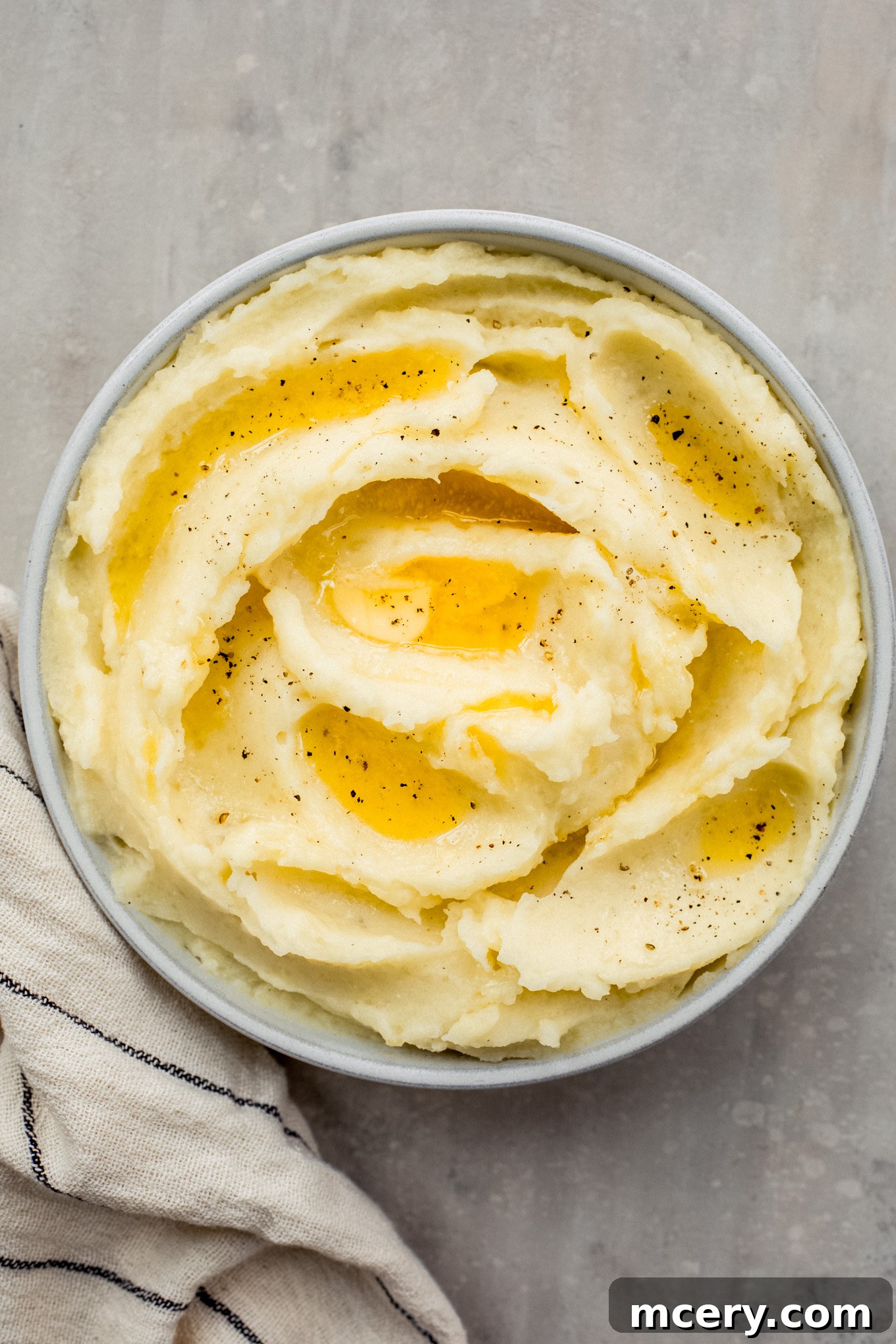
Table of Contents
- Why Yukon Golds are the Best for Mashing
- Key Ingredients for Irresistible Mashed Potatoes
- Creative Variations and Substitutions
- Step-by-Step: How to Make Creamy Mashed Potatoes
- Expert Tips for Perfecting Your Mash
- Perfect Pairings: What to Serve With
- Holiday Meal Enhancements
- Frequently Asked Questions (Mashed Potatoes FAQs)
- More Delicious Potato Sides
Why Yukon Golds are the Best for Mashing
There’s a reason why Yukon Gold mashed potatoes stand out from the crowd. Their unique characteristics make them the ideal choice for achieving that coveted buttery, creamy consistency.
- Unmatched Buttery and Creamy Texture: Yukon Gold potatoes possess a naturally rich, buttery flavor and a dense, moist flesh. When cooked and mashed, they break down beautifully, yielding a silky-smooth texture without becoming watery or gluey. This inherent creaminess means you don’t have to work as hard to achieve a luxurious feel, and they absorb butter and milk gorgeously, enhancing their already delightful profile. Unlike drier, starchier russet potatoes, Yukon Golds offer a more forgiving and satisfying mash.
- Beautiful Golden Color: Beyond their fantastic texture, Yukon Gold potatoes lend a stunning golden hue to your mashed potatoes. This vibrant color adds an extra touch of visual appeal and elegance to any plate, making them particularly attractive for special occasions and holiday gatherings. It’s a subtle visual cue that hints at the rich flavor within.
- A True Classic Side Dish: This recipe isn’t just about delicious potatoes; it’s about perfecting a foundational side dish. Whether you need a simple yet elegant accompaniment for a hearty Sausage Cacciatore on a chilly evening, or a robust partner for a grand Whole Roasted Chicken during the holidays, this Yukon Gold mashed potato recipe is a timeless staple that complements virtually any main course. Its consistent excellence makes it a reliable favorite for all types of meals.
Key Ingredients for Irresistible Mashed Potatoes
Creating truly delicious creamy mashed potatoes requires just a few high-quality, simple ingredients. Each component plays a vital role in achieving that perfect taste and texture. For precise measurements and detailed instructions, always refer to the full recipe card below.
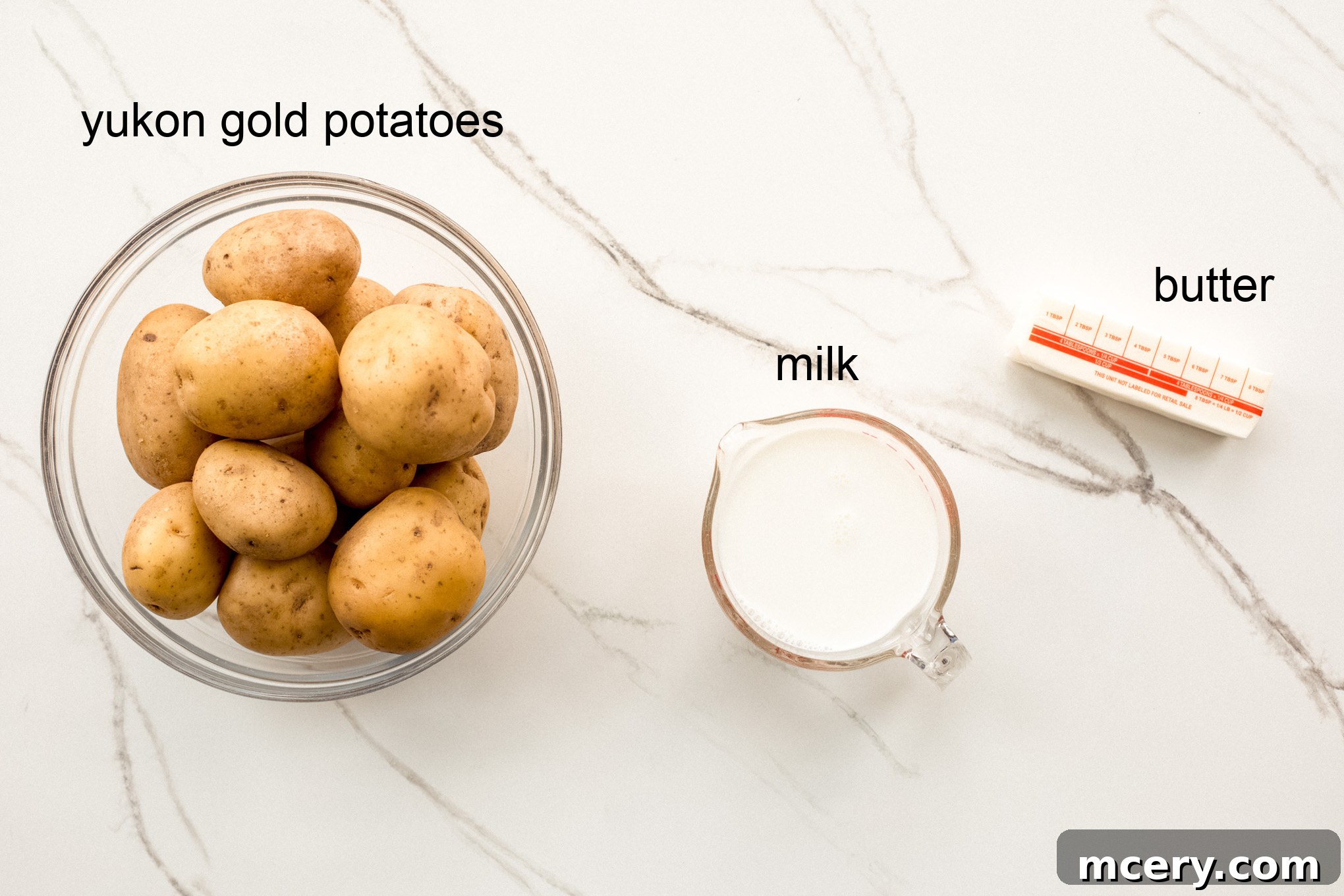
- Yukon Gold Potatoes: The star of our show! When selecting Yukon Golds, choose firm, unblemished potatoes free from sprouts or green spots. Their naturally creamy texture and buttery flavor are unparalleled for mashing. Their thin, delicate skin means you can even leave them unpeeled for a more rustic texture, if desired, adding a touch of visual interest and fiber. For the smoothest mash, peeling is recommended.
- Butter: Butter is essential for that rich, decadent flavor and luxurious mouthfeel. You can opt for either unsalted or salted butter. If using salted butter, be sure to taste your potatoes before adding extra salt, as you may need to adjust the amount accordingly. Good quality butter makes a significant difference in the final taste, so don’t skimp here. European-style butter with a higher fat content can make your mashed potatoes even richer.
- Milk: Whole milk or heavy cream is highly recommended for achieving the richest, creamiest mashed potatoes. The fat content in whole milk contributes to a velvety smooth texture and a fuller flavor that cannot be achieved with lower-fat alternatives. Warm milk is crucial as it incorporates more smoothly into the potatoes without cooling them down, preventing a lumpy or gluey texture. You can even use a combination of milk and cream for an extra indulgent experience.
- Salt: Often overlooked but arguably the most important flavor enhancer. Salt not only seasons the potatoes but also draws out their natural sweetness, making every bite more satisfying. Using kosher salt is ideal as its larger flakes are easier to control for seasoning. Remember to salt the water when boiling the potatoes, and then taste and adjust the seasoning after adding the milk and butter mixture. Freshly cracked black pepper can also be added for a subtle kick.
Helpful tools for the smoothest mash! For an exceptionally smooth, lump-free consistency, consider using a potato ricer or a high-quality smooth potato masher. These tools ensure even mashing and prevent overworking the potatoes, which can lead to a gummy texture.
Creative Variations and Substitutions
While this recipe provides the perfect foundation, there are countless ways to customize your homemade mashed potatoes to suit your personal preferences and dietary needs. Don’t be afraid to experiment with these variations and substitutions to create a unique twist on this beloved classic:
- Flavorful Add-ins: Elevate your mashed potatoes with exciting additions.
- Garlic: Roast whole garlic cloves until tender, then mash them directly into the potatoes for a sweet, mellow garlic flavor. Alternatively, sauté minced garlic in the butter before adding it to the milk.
- Herbs: Fresh chives, finely chopped rosemary, thyme, or parsley can add a burst of freshness and aromatic depth. Stir them in just before serving.
- Bacon & Cheese: Crispy crumbled bacon and shredded cheddar, Gruyère, or Parmesan cheese are classic additions that add a savory, indulgent element.
- Roasted Vegetables: For a unique twist, fold in other roasted vegetables like carrots, parsnips, or even sweet potatoes for added color, sweetness, and nutrition.
- Spices: A pinch of paprika, a dash of nutmeg, or even a hint of cayenne pepper can introduce subtle warmth or a mild kick.
- Butter Alternatives for Healthier Options: If you’re looking to reduce dairy or saturated fat, consider these alternatives:
- Olive Oil: A high-quality extra virgin olive oil can impart a fruity, slightly peppery note, offering a Mediterranean twist.
- Coconut Oil: For a subtle tropical flavor, refined coconut oil can work well, especially if paired with other complementary spices.
- Avocado Oil: A neutral-tasting oil that provides healthy fats without altering the potato flavor significantly.
- Non-Dairy Milk Substitutions: For those with lactose intolerance or following a vegan diet, several plant-based milks can provide creaminess:
- Almond Milk: Opt for unsweetened plain almond milk for a neutral flavor.
- Soy Milk: Provides a richer texture than almond milk, similar to dairy milk.
- Oat Milk: Known for its natural creaminess, oat milk is an excellent choice for a smooth, dairy-free mash.
- Vegetable Broth: While not as creamy, vegetable or chicken broth can add savory depth and moisture, making the potatoes flavorful without added fat.
- Exploring Different Potato Varieties: While Yukon Golds are superior for this recipe, other potato types can be used if unavailable:
- Russet Potatoes: Known for their fluffiness, russets are starchy and absorb liquids well, making them great for a light, airy mash. Be careful not to overwork them, as they can become gluey.
- Red Potatoes: With their thin skin and waxy texture, red potatoes yield a slightly denser, chunkier mash. Many prefer to leave the skins on for added texture and color.
- Fingerling Potatoes: These small, tender potatoes can also be mashed, offering a unique flavor profile and a slightly less uniform texture.
- Seasonings Beyond Salt and Pepper: Don’t limit yourself to just salt and pepper.
- Fresh Herbs: Rosemary, thyme, sage, or oregano can be chopped and mixed in.
- Spice Blends: A touch of onion powder, garlic powder, or even a specialized potato seasoning blend can add layers of flavor.
- Umami Boost: A dash of white truffle oil or nutritional yeast can add a gourmet, savory depth.
- Heat: For those who enjoy a little spice, a tiny amount of hot sauce or red pepper flakes can provide an exciting kick.
- Adjusting Texture: The beauty of homemade mashed potatoes is controlling the texture.
- Chunkier Mash: If you prefer a more rustic, textured mash, simply use a hand masher and leave some small potato pieces intact. This adds a delightful chewiness.
- Silky Smooth: For the ultimate smooth experience, a potato ricer or food mill is your best friend, followed by vigorous whisking (but not over-whisking!).
Recipe Yield Information: This simple mashed potato recipe is designed to serve approximately 10 people generously. A good rule of thumb is to plan on about ½ pound of potatoes per person, which translates to a satisfying 1-cup serving per individual.
Step-by-Step: How To Make This Recipe
Achieving perfectly creamy mashed potatoes is simpler than you might think. Follow these detailed steps to create a show-stopping side dish. For complete ingredient quantities and precise timings, please consult the recipe card provided at the end of this post.
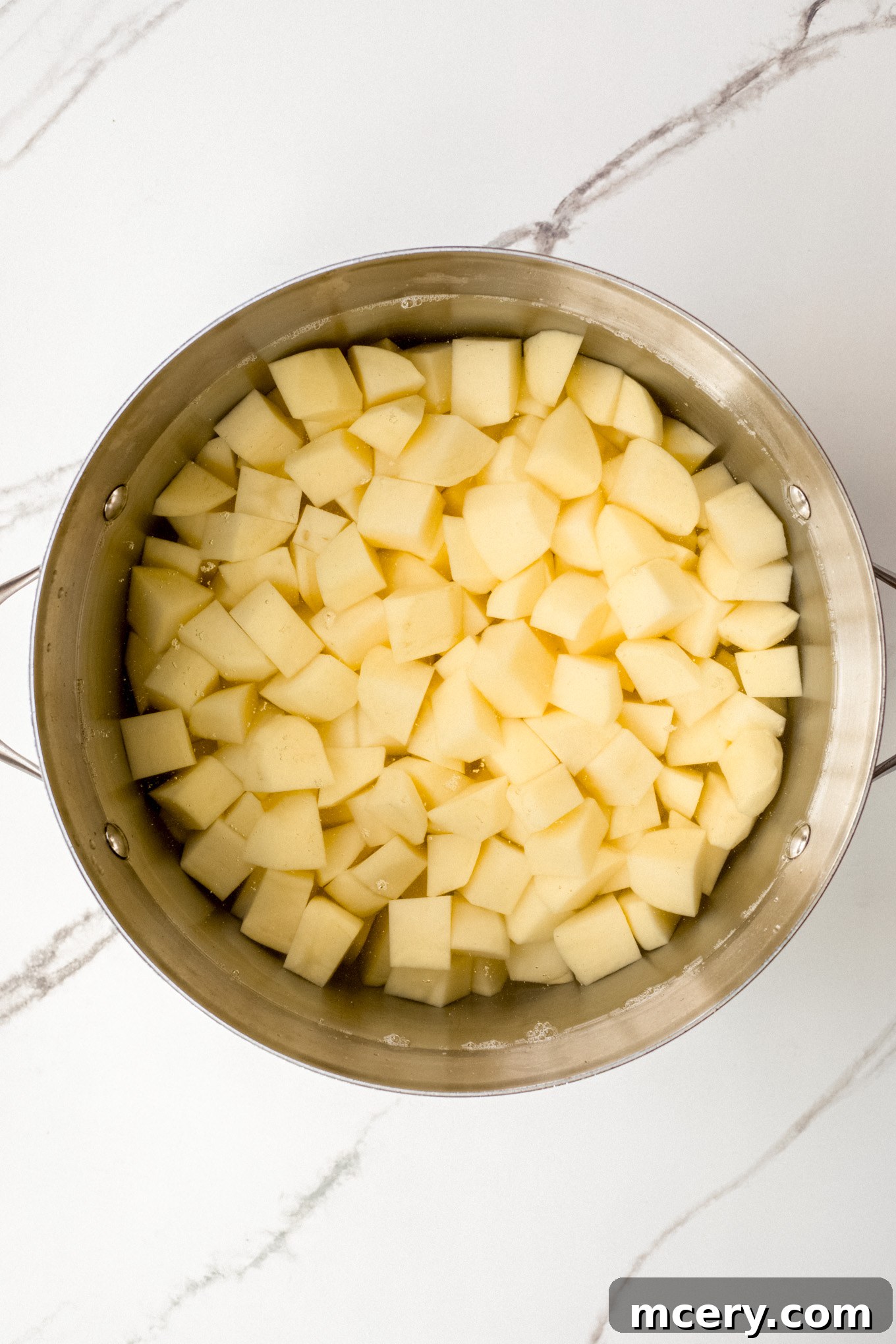
Step 1: Prepare and Boil the Potatoes. Begin by thoroughly washing your Yukon Gold potatoes. While Yukon Golds have thin skins that can be left on for a rustic texture, for the ultimate creamy mash, we recommend peeling them. Cut the peeled potatoes into evenly-sized 1-inch chunks. This crucial step ensures that all potato pieces cook uniformly, preventing some from being undercooked while others turn mushy. Place the cubed potatoes in a large stockpot and cover them with cold water by at least one inch. Add a generous amount of salt (approximately 1 tablespoon per 5 pounds of potatoes) to the water. Bring the water to a rolling boil over high heat, then reduce the heat to a simmer and cook until the potatoes are “knife tender” – meaning a fork or knife can easily pierce a potato chunk with minimal resistance. This usually takes about 10-14 minutes, depending on the size of your potato chunks. Avoid overcooking, as this can lead to waterlogged or gummy potatoes.
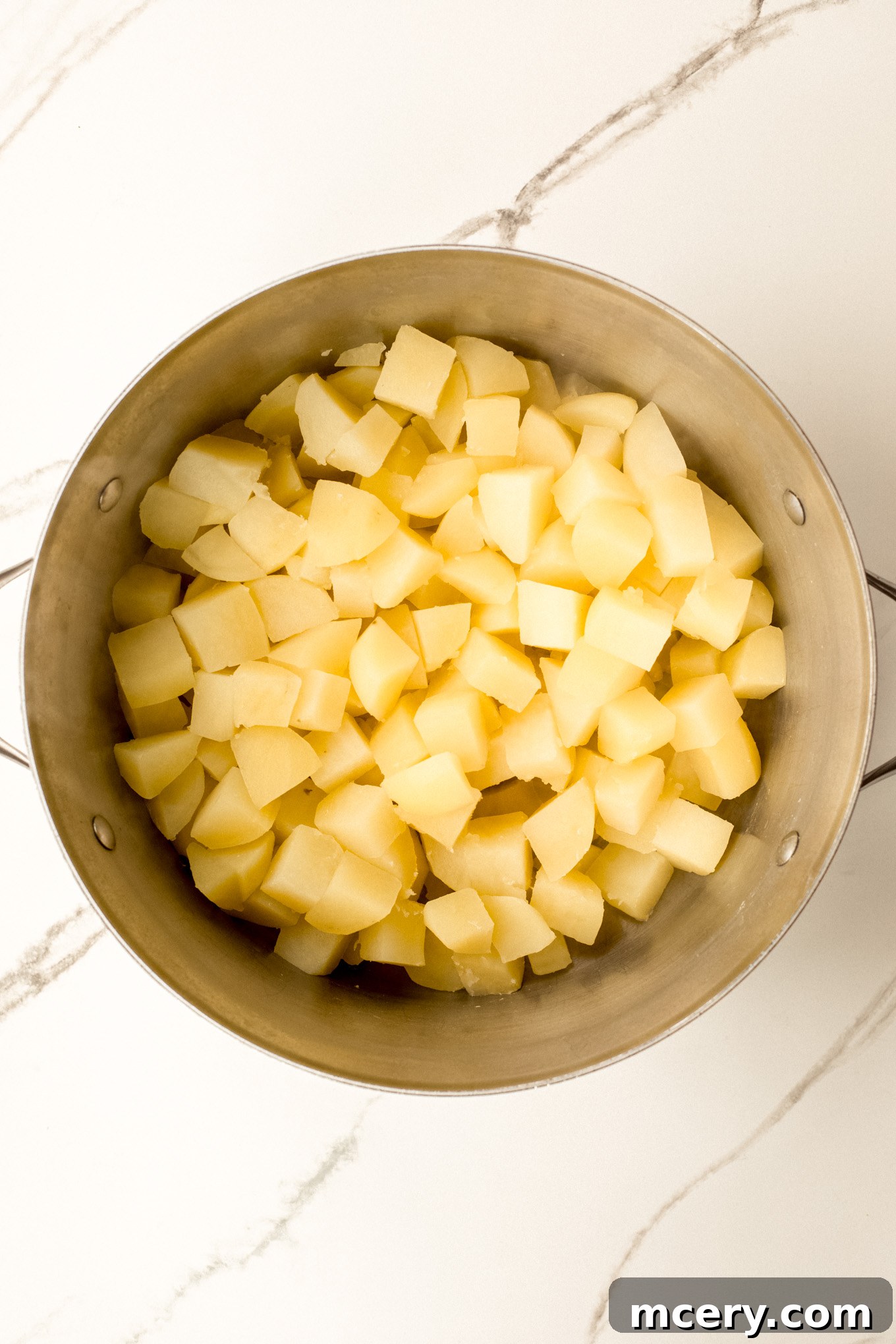
Step 2: Drain Thoroughly. Once the potatoes are knife-tender, immediately drain them very well in a colander. This step is critical to prevent waterlogged mashed potatoes. For extra dryness, you can even return the drained potatoes to the empty hot pot over very low heat for 1-2 minutes, shaking the pot gently. This allows any residual moisture to evaporate, concentrating the potato flavor and ensuring a drier base for maximum creaminess.
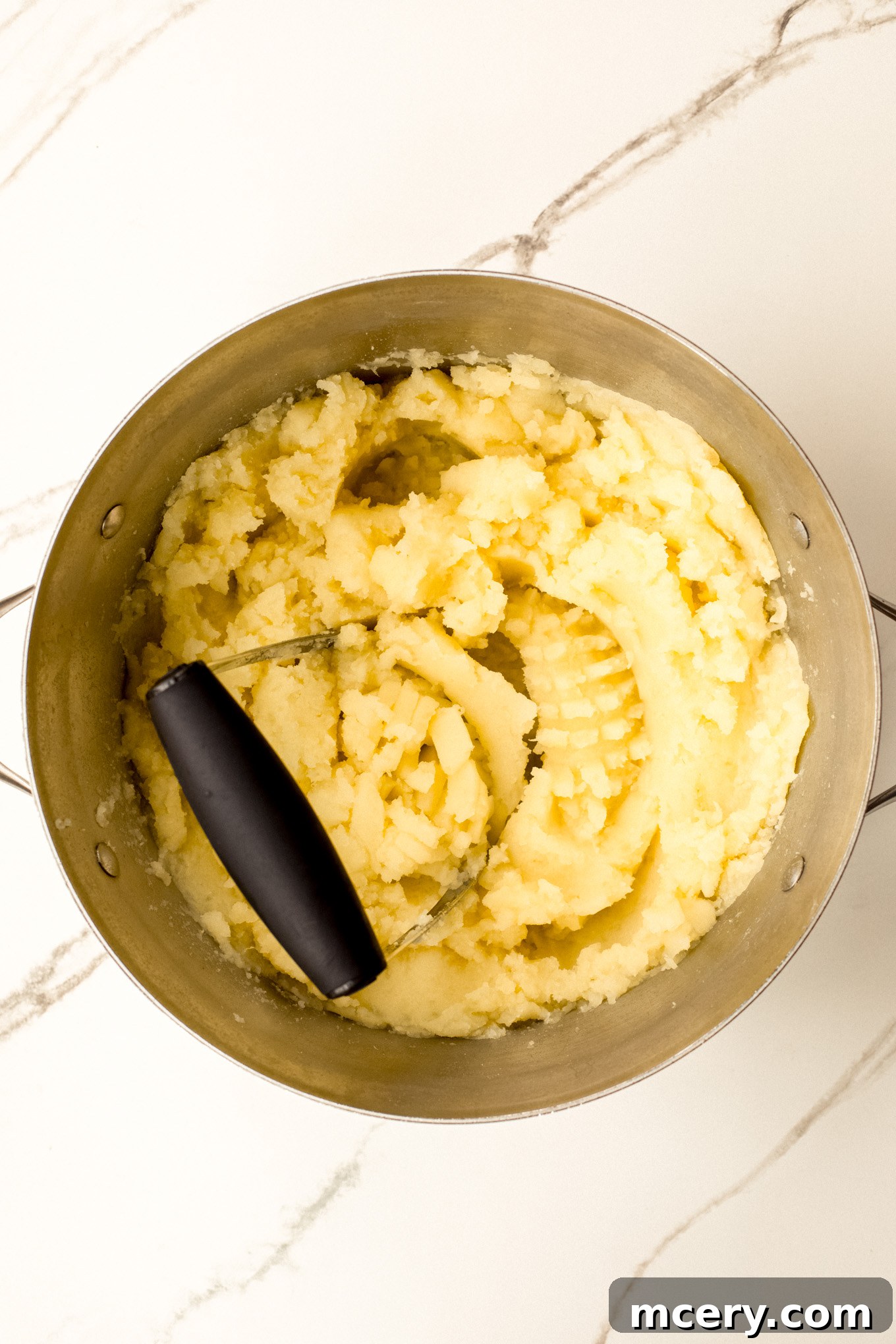
Step 3: Mash the Potatoes. Now for the mashing! For the silkiest texture, immediately pass the hot, drained potatoes through a potato ricer or use a sturdy potato masher directly in the pot. Work quickly while the potatoes are still hot. Mashing them while hot helps them absorb the dairy mixture more effectively. Aim for a smooth consistency, ensuring no large lumps remain. Avoid using a food processor or blender, as the high-speed blades can overwork the starch in the potatoes, leading to a gluey, unpleasant texture.
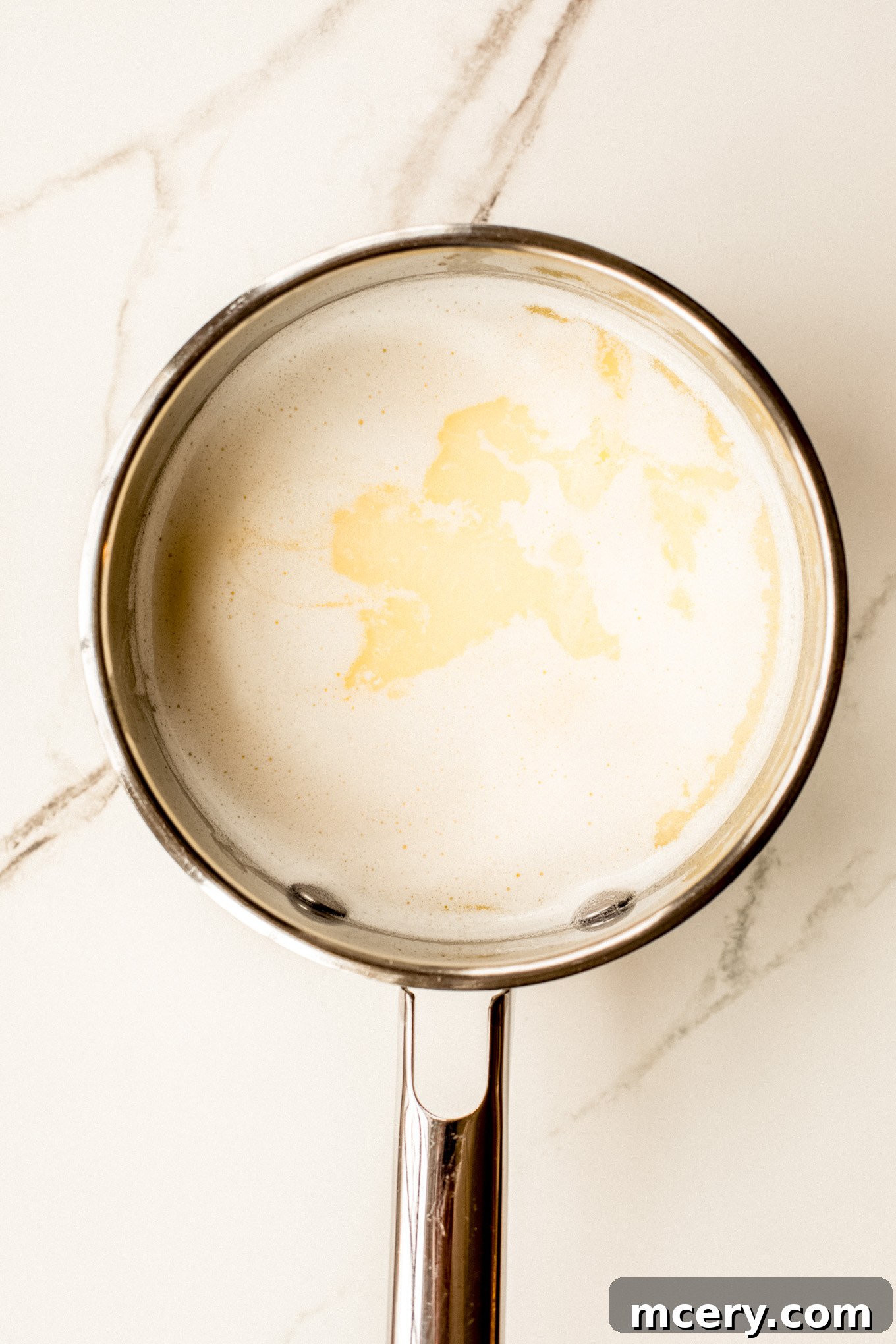
Step 4: Prepare the Warm Dairy Mixture. In a separate small saucepan, combine your butter, whole milk (or cream), and an initial amount of salt. Heat this mixture gently over low to medium heat, stirring occasionally, until the butter is completely melted and the milk is steaming, but not boiling. Boiling the milk can alter its flavor and texture. This warming step is crucial because cold milk and butter will chill the potatoes and make them lumpy. Once warmed, remove the saucepan from the heat and set it aside, ready to be incorporated.
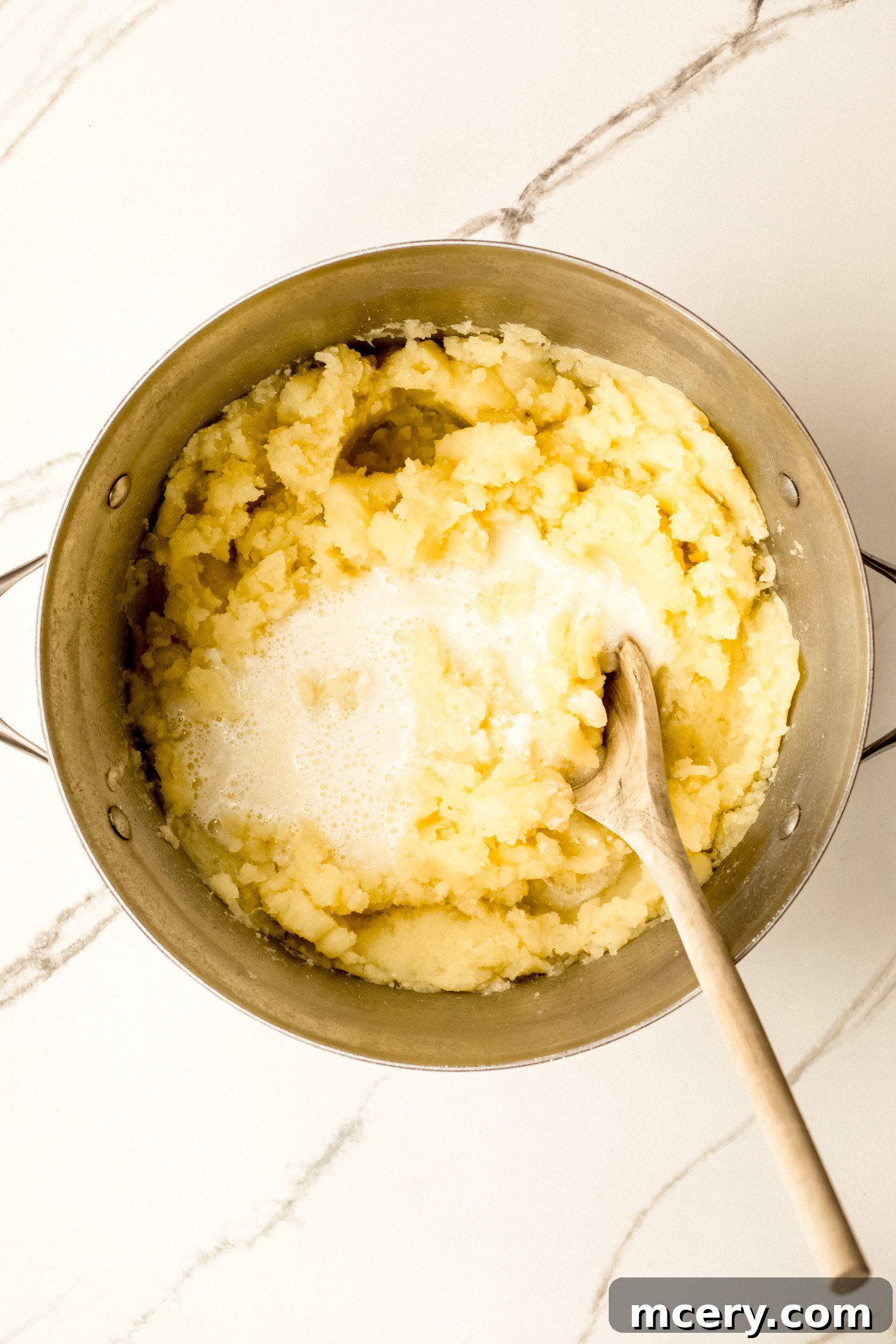
Step 5: Incorporate the Dairy (First Half). Return to your mashed potatoes. Pour about half of the warm butter and milk mixture over the potatoes. Using a sturdy wooden spoon or a spatula, gently fold the liquid into the potatoes. The goal here is to allow the potatoes to gradually absorb the rich liquid without over-mixing. Folding rather than stirring vigorously helps maintain the light, fluffy texture. As the potatoes soak up the liquid, you’ll notice them becoming noticeably creamier and more luscious.
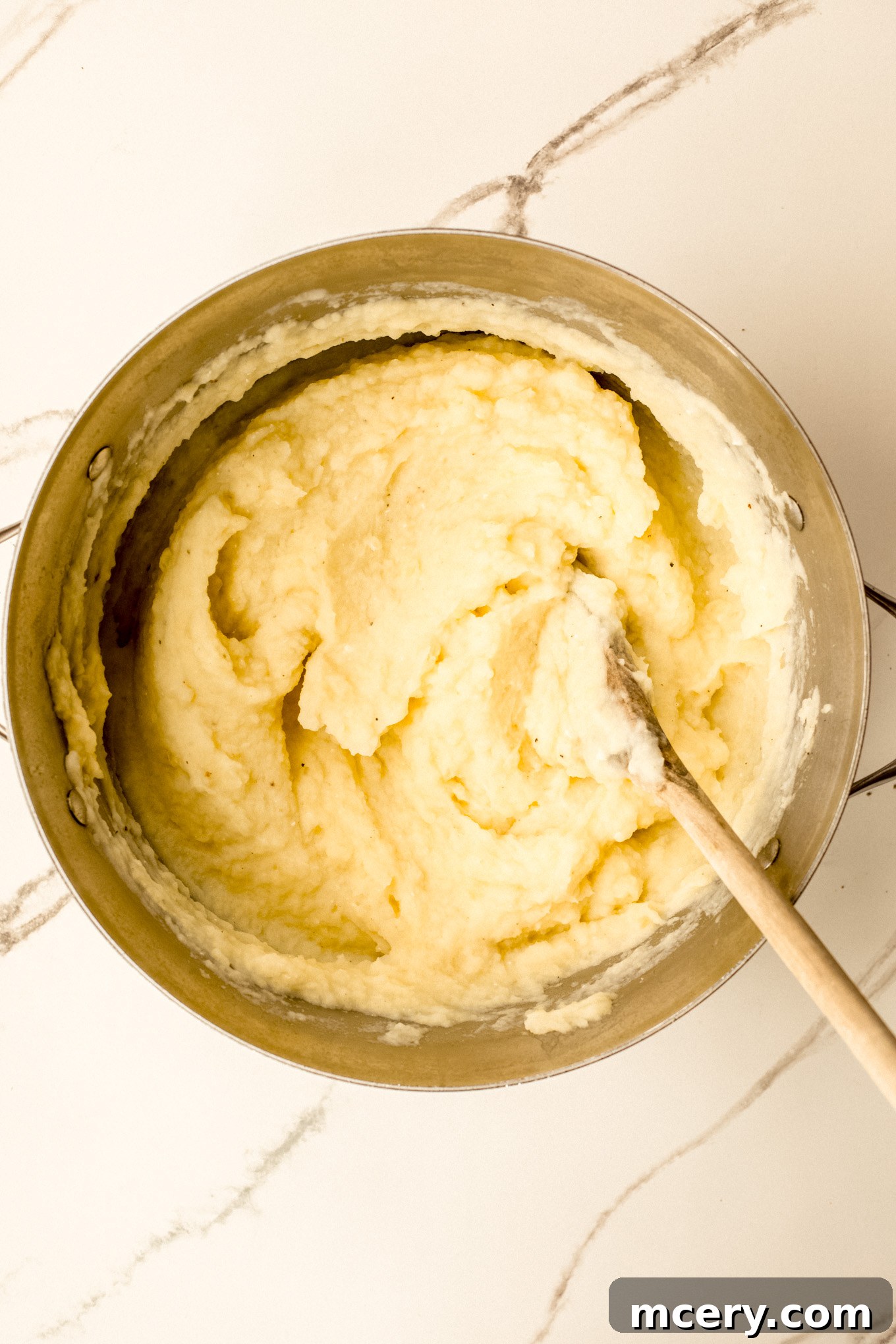
Step 6: Finish Mixing and Season. Add the remaining warm milk and butter mixture to the potatoes. Continue to gently fold until the liquid is just combined and the potatoes are uniformly creamy. Over-mixing at this stage can activate too much starch, leading to a gummy texture, so stop as soon as everything is incorporated. Now, it’s time to taste! Adjust the seasoning with more salt and freshly cracked black pepper to your liking. Remember, perfectly seasoned mashed potatoes are essential for their ultimate deliciousness. Serve immediately, or keep warm until ready to enjoy.
Expert Tips for Perfecting Your Mash
Achieving consistently perfect easy mashed potatoes is all about understanding a few key principles. Follow these expert tips to ensure your Yukon Gold mashed potatoes are always a triumph:
- Choose the Right Potato Variety: As discussed, Yukon Gold potatoes are truly superior for mashing due to their ideal starch-to-moisture ratio, resulting in a naturally buttery and creamy texture. While other potatoes can be mashed, save Russet potatoes for scalloped cheesy potatoes where their fluffiness shines, and Red potatoes for red skin mashed potatoes where their waxier texture and thin skin are appreciated. Sticking with Yukon Golds guarantees the best results for this particular recipe.
- Cut Potatoes Evenly: Consistency in potato size is paramount. Cutting your potatoes into uniform 1-inch pieces ensures they cook at the same rate. This prevents a mixture of overcooked, mushy pieces and undercooked, hard chunks, leading to an even, smooth mash. Unevenly cooked potatoes can also lead to a lumpy final product.
- Start in Cold Water: Always begin cooking your cubed potatoes in cold, salted water. This allows the potatoes to heat up gradually with the water, ensuring they cook evenly from the outside to the center. If you start in hot or boiling water, the exterior of the potatoes will cook much faster, becoming mushy before the inside is fully tender, resulting in a less desirable texture.
- Don’t Overcook Them: Watch your potatoes carefully. Overcooked potatoes absorb too much water, leading to a bland, watery, and often gummy texture. Cook them only until they are “knife-tender”—easily pierced with a fork or knife, but not falling apart. Drain them immediately once they reach this stage to stop the cooking process.
- Use the Right Tools for Mashing: For a consistently smooth and creamy texture, a potato ricer or a sturdy masher is your best friend. Ricers produce exceptionally fine strands of potato, resulting in an incredibly airy and smooth mash. Mash quickly while the potatoes are hot. Avoid using a food processor or blender at all costs; their blades activate too much starch, turning your beautiful potatoes into a sticky, gluey mess.
- Warm Your Dairy and Butter: This is a simple but impactful tip. Always warm your milk and melt your butter together before adding them to the mashed potatoes. Introducing cold dairy to hot potatoes will cool them down rapidly, preventing proper absorption and often leading to lumpy or less creamy results. Warm liquids integrate seamlessly, maintaining the potato’s temperature and promoting a velvety texture.
- Season Generously and Taste: Don’t underestimate the power of salt! Season the boiling water, and then taste and adjust the seasoning after adding the butter and milk. Potatoes require a good amount of salt to truly shine. A pinch of freshly ground black pepper is also highly recommended. Taste frequently as you season to achieve the perfect balance.
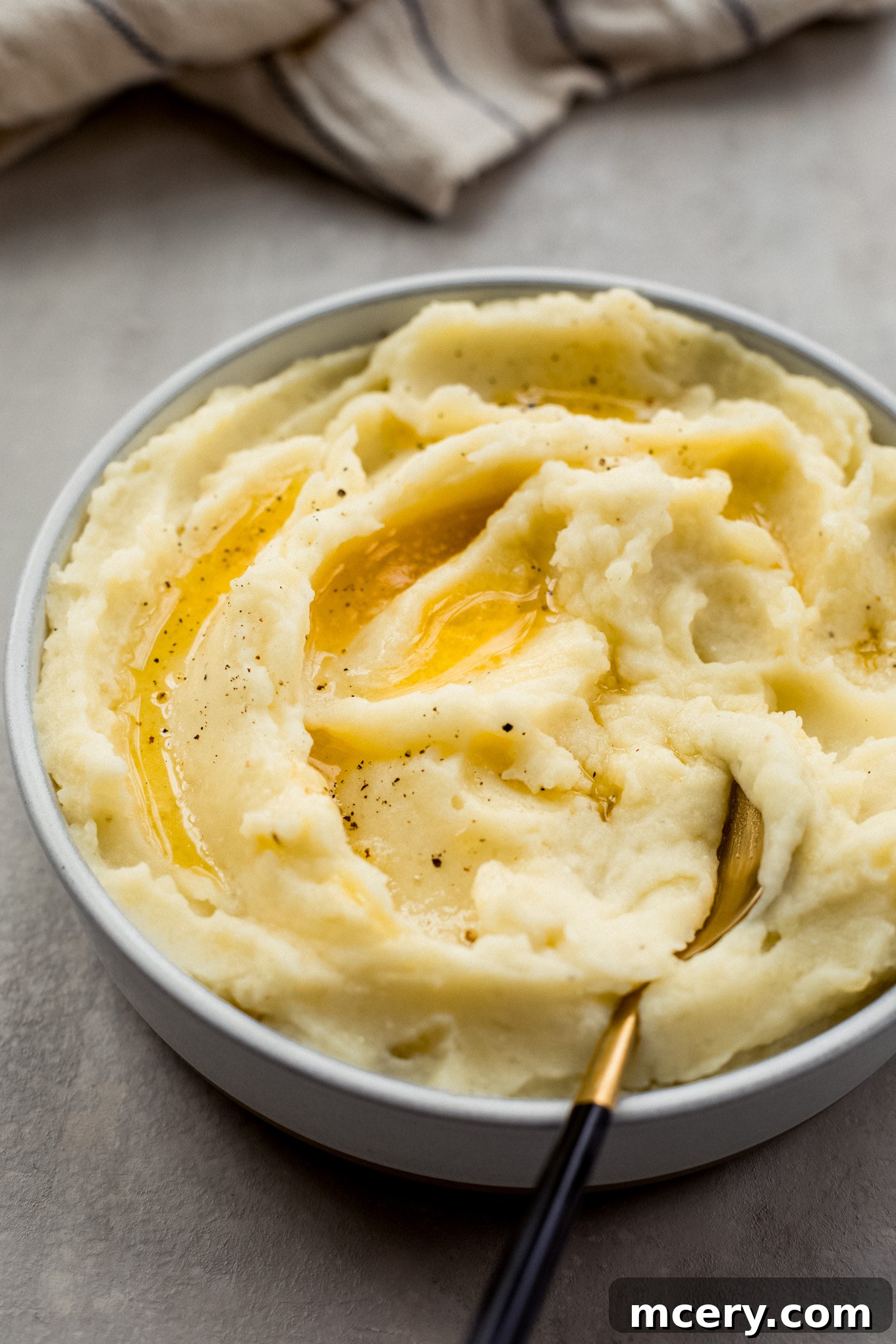
Perfect Pairings: What to Serve With
The best mashed potatoes are incredibly versatile, making them a fantastic side for almost any meal. Here are some of our favorite main dishes that beautifully complement the rich creaminess of Yukon Gold mashed potatoes:
- Chicken Chesapeake: The savory chicken and seafood flavors are perfectly balanced by the smooth potatoes.
- Lemon Pepper Chicken Tenders: The bright, zesty notes of the chicken are wonderfully grounded by the comforting mash.
- Chicken Stroganoff: The rich, creamy sauce of stroganoff finds its ideal companion in a bed of fluffy mashed potatoes.
- Herb Baked Chicken: A classic pairing, the aromatic herbs on the chicken and the simplicity of the potatoes create a harmonious meal.
- Asian Chicken Meatballs: The savory, slightly sweet meatballs are excellent with the neutral, creamy base of mashed potatoes.
- Easy Chicken Marsala Recipe: The earthy mushroom and Marsala wine sauce are a match made in heaven with smooth mashed potatoes.
- Creamy Honey Mustard Chicken: The tangy-sweet sauce of the chicken is delightfully mellowed by the richness of the potatoes.
Holiday Meal Enhancements
No holiday spread is complete without a generous serving of perfect mashed potatoes. These pairings will elevate your festive table:
- Roasted Half Chicken: A succulent alternative to a full turkey, perfect with mashed potatoes.
- Apple Walnut Salad: A crisp and refreshing contrast to the rich mashed potatoes.
- Maple Roasted Brussels Sprouts: The sweet and savory notes of these sprouts are a delicious complement.
- White Cheddar and Cranberry Dip: A festive appetizer to start the meal before the main course with mashed potatoes.
- Pumpkin Sheet Cake: End your holiday meal on a sweet note with this delightful dessert.
Making Ahead and Storing Leftovers
Mashed potatoes are a fantastic make-ahead option, especially for busy holidays. You can prepare them up to 2 days in advance. Simply follow the recipe steps through mashing and adding the dairy. Let them cool completely, then transfer to an airtight container and refrigerate. To reheat, gently warm them on the stovetop over low heat, stirring frequently and adding a splash more warm milk or cream to restore their creamy consistency. You can also reheat them slowly in a slow cooker on the “warm” setting, or in the oven covered with foil.
Leftover mashed potatoes can be stored in an airtight container in the refrigerator for up to 3-4 days. They can also be frozen for up to 1-2 months. To freeze, transfer cooled mashed potatoes to freezer-safe bags or containers, pressing out as much air as possible. Thaw in the refrigerator overnight before reheating gently, adding more liquid as needed.
Troubleshooting Common Mashed Potato Problems
Even with the best intentions, mashed potatoes can sometimes go awry. Here’s how to fix some common issues:
- Gummy Potatoes: This usually happens from overworking the potatoes, especially with a food processor. There’s no perfect fix, but you can try to salvage them by incorporating a bit more warm milk or cream, or folding in some mashed cream cheese to change the texture. Next time, use a ricer or masher and mix gently.
- Lumpy Potatoes: If you find lumps, it often means the potatoes weren’t cooked long enough or weren’t mashed thoroughly. You can try to pass them through a ricer one more time, or just embrace the rustic texture!
- Watery Potatoes: This is a sign of overcooking (absorbing too much water) or not draining properly. To fix, return the potatoes to the stove over low heat and stir constantly to evaporate some of the excess moisture. Avoid adding more liquid.
- Bland Potatoes: Easily remedied! Taste and adjust the seasoning. Often, they just need more salt. A dash of garlic powder, onion powder, or a sprinkle of fresh herbs can also bring them back to life.
- Cold Potatoes: If your potatoes have cooled down, gently reheat them on the stovetop over low heat, adding a splash of warm milk or butter as you stir to restore their creaminess.
Frequently Asked Questions (Mashed Potatoes FAQs)
Here are answers to some common questions about making the best homemade mashed potatoes:
What are some alternatives to milk in Yukon Gold mashed potatoes?
If you’re looking for dairy-free alternatives to traditional milk in your Yukon Gold mashed potatoes, you have several excellent options. Unsweetened coconut milk or almond milk can provide a creamy texture with a subtle nutty flavor. For a savory, non-creamy alternative, vegetable or chicken broth works well, adding depth of flavor without the richness of dairy. Vegan butter substitutes can also be used in conjunction with these milks for a fully plant-based dish.
What makes Yukon Gold mashed potatoes the best?
Yukon Gold potatoes are widely considered the best choice for mashed potatoes due to their unique qualities. Their naturally buttery flavor and exceptionally creamy texture create a luxurious mash. They have a lower starch content compared to russet potatoes, which significantly reduces the risk of them becoming gummy or gluey when mashed. Additionally, their thin, delicate skin means you don’t necessarily have to peel them if you prefer a more rustic finish, saving you prep time.
Do I need to peel potatoes for mashed potatoes?
While it is a common practice to peel potatoes for mashed potatoes, it is not always necessary, especially when using Yukon Gold potatoes. The thin skin of Yukon Golds is perfectly edible and can add a lovely subtle texture and extra nutrients to your mashed potatoes. Many home cooks prefer to leave the skins on for a rustic look and feel. However, if you desire an ultra-smooth, perfectly consistent mashed potato dish, peeling the potatoes before boiling them is recommended.
Can I make mashed potatoes ahead of time?
Absolutely! Mashed potatoes are an excellent make-ahead side dish, making them perfect for busy holidays or meal prepping. You can prepare them up to two days in advance. Simply cool them completely after mashing, then store them in an airtight container in the refrigerator. When ready to serve, gently reheat on the stovetop or in a slow cooker, stirring in extra warm milk or cream to restore their creamy consistency.
Can I freeze mashed potatoes?
Yes, mashed potatoes freeze well! Allow them to cool completely before transferring them to freezer-safe containers or heavy-duty freezer bags. They can be stored in the freezer for up to 1-2 months. Thaw them overnight in the refrigerator before reheating gently on the stovetop over low heat, adding a splash of milk or cream to bring them back to life.
More Delicious Potato Sides
If you love potatoes, expand your culinary repertoire with these other fantastic potato-based side dishes:
We hope this comprehensive guide inspires you to create the most incredible Yukon Gold Mashed Potatoes. If you try this recipe, please consider leaving a star rating and share your thoughts in the comments section below. Your feedback helps us and other home cooks!
Print Recipe
Yukon Gold Mashed Potatoes
5 from 1 review
- Author: Katya
- Prep Time: 15 min
- Cook Time: 25 min
- Total Time: 40 minutes
- Yield: 10 servings
- Category: Side Dish
- Method: Stovetop
- Cuisine: American
Description
These Yukon Gold Mashed Potatoes are a timeless classic, perfect for any meal or celebration. They’re effortlessly delicious, remarkably easy to prepare, and guaranteed to delight everyone at your table.
Ingredients
- 5 lbs. Yukon Gold potatoes, peeled and cut into evenly-sized 1-inch chunks
- 1 ¼ cup whole milk
- 8 Tbsp. unsalted butter
- Kosher salt and fresh black pepper, to taste
Instructions
- Add the evenly cubed Yukon Gold potatoes to a large stockpot and cover them with cold water by 1 inch. Stir in 1 tablespoon of kosher salt. Bring the water to a boil over high heat, then reduce the heat to a simmer and cook until the potatoes are tender when pierced with a knife, which typically takes about 10-14 minutes. Drain the potatoes thoroughly in a colander.
- While the potatoes cook, prepare the dairy mixture. In a small saucepan, combine the unsalted butter, whole milk, and 2 teaspoons of salt. Heat gently over low to medium heat, stirring until the butter completely melts and the milk is steaming hot. Be careful not to let the milk boil. Remove from heat and set aside.
- Immediately transfer the hot, drained potatoes to the empty stockpot. Using a potato masher or a ricer, mash the potatoes until they are smooth and free of lumps, about 2 minutes.
- Pour approximately half of the warm milk mixture over the mashed potatoes. Gently fold it in with a wooden spoon or spatula until the liquid is fully absorbed by the potatoes. Season with fresh cracked black pepper. Add the remaining milk mixture, folding it in just until combined. Avoid over-mixing to prevent a gummy texture. Taste and adjust the salt as needed to your preference.
- To keep your delicious mashed potatoes warm until serving time, transfer them to a serving bowl, cover it tightly, and place it in a warm spot, such as the back of the stove (turned off) or in a preheated, low-temperature oven. The potatoes will remain hot and creamy for at least 30 minutes.
Notes
- Substitutions: For optimal flavor and texture, we strongly recommend following the recipe as written. This recipe is designed to be simple, easy, and exceptionally delicious. However, if you have specific dietary restrictions, a list of potential substitutions can be found in the “Variations and Substitutions” section within the body of the article.
- Serving Amount: This recipe yields a generous portion of mashed potatoes, sufficient to feed approximately 10 people. We suggest planning for about ½ pound of raw potatoes per person, which translates to a satisfying 1-cup serving per individual.
Nutrition
- Serving Size: about 1 cup
- Calories: 267
- Sugar: 3.4 g
- Sodium: 27.8 mg
- Fat: 9.5 g
- Carbohydrates: 41.3 g
- Protein: 5.8 g
- Cholesterol: 25 mg