
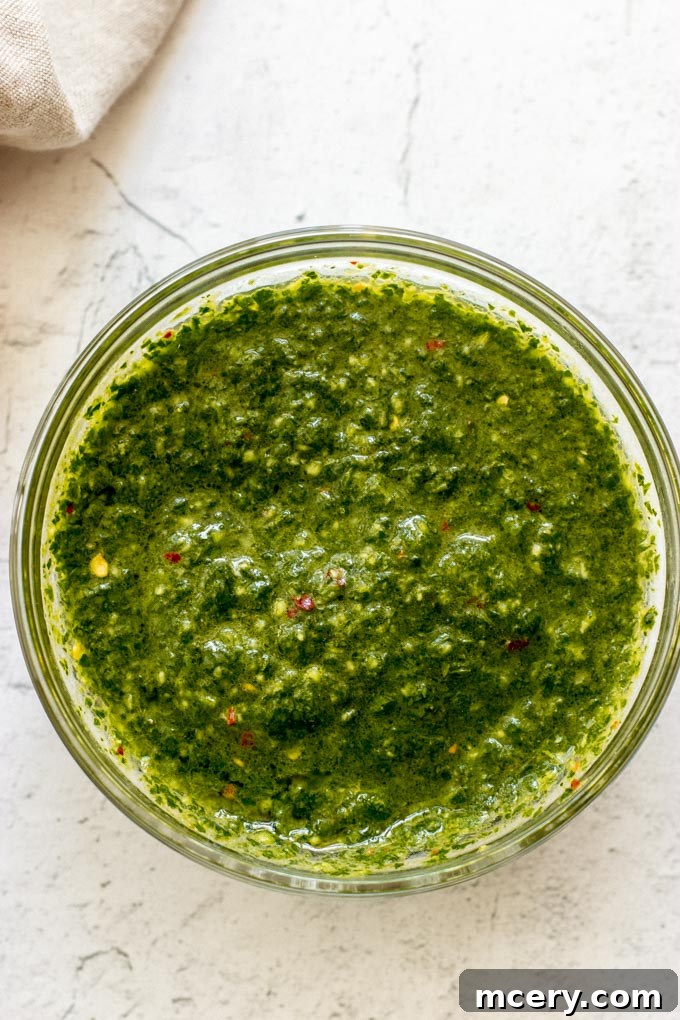
Unleash a burst of fresh flavors with this incredible chimichurri sauce recipe! Crafted from vibrant fresh herbs, aromatic garlic, quality oil, and tangy vinegar, this versatile condiment is designed to elevate everything from succulent grilled meats and roasted vegetables to your everyday meals. Prepare to transform your cooking with this simple yet sensational green sauce!
Authentic & Easy Chimichurri Sauce Recipe: Your Ultimate Guide
There’s something truly special about a homemade sauce that can instantly elevate any dish from ordinary to extraordinary. And when it comes to fresh, vibrant, and incredibly versatile condiments, chimichurri sauce stands in a league of its own. Originating from the heart of Argentina, this herbaceous green sauce has captivated palates worldwide, becoming a staple for grilling enthusiasts and a secret weapon for home cooks.
Forget store-bought alternatives; crafting your own chimichurri is not only surprisingly easy but also guarantees a depth of flavor that simply cannot be replicated. Our recipe focuses on simplicity and speed, allowing you to whip up a batch of this zesty condiment in mere minutes, ensuring you always have a fresh, flavorful addition to your meals. Get ready to discover the magic of homemade chimichurri and transform your culinary creations!
What is Chimichurri Sauce?
At its core, chimichurri sauce is a vibrant, uncooked condiment, often likened to a robust, garlicky herb vinaigrette. Hailing from Argentina and Uruguay, it’s a fundamental component of their famous “asado” (barbecue) culture, traditionally served with grilled beef. Unlike many sauces that rely on cooking or complex techniques, chimichurri celebrates the raw, unadulterated freshness of its ingredients.
The essence of chimichurri lies in its finely chopped fresh herbs, typically parsley and often cilantro, blended with pungent garlic, a touch of spicy chili, tangy vinegar, and rich olive oil. While it shares some superficial similarities with Italian pesto due to its green color and herb base, chimichurri is distinctly different. Pesto often incorporates nuts, cheese, and a thicker, more paste-like consistency, whereas chimichurri is thinner, brighter, and vinegar-based, offering a refreshing counterpoint to rich meats without the dairy or nuts.
This traditional Argentinian green sauce is incredibly adaptable, a testament to its simple yet powerful flavor profile. While its most famous pairing is with grilled steak, its bright, acidic, and herbaceous notes make it a fantastic companion for a wide array of dishes, from seafood to vegetables. Our particular adaptation of this classic recipe makes it even more accessible by utilizing a food processor, allowing you to create this sensational sauce in approximately 5 minutes – making it perfect for busy weeknights or impromptu gatherings.
The Distinctive Taste of Chimichurri Sauce
The flavor profile of chimichurri sauce is a delightful symphony of fresh, pungent, and tangy notes that awaken the taste buds. Each spoonful offers a refreshing, herbaceous essence, predominantly from the fresh parsley and cilantro, which provides a clean, almost grassy undertone. This freshness is beautifully contrasted by the sharp, aromatic punch of raw garlic, adding a delightful zest and depth.
Adding to its complex character is a subtle warmth from red chili flakes, providing just enough kick to intrigue the palate without overpowering the delicate herbs. The tanginess from the white wine vinegar cuts through the richness of any dish it accompanies, providing a crucial acidic balance that brightens and invigorates the overall flavor. Finally, the olive oil binds all these elements together, contributing a smooth texture and a hint of fruity richness that rounds out the sauce.
This interplay of flavors — herbaceous, garlicky, slightly spicy, and wonderfully tangy — makes chimichurri much more than just a condiment. It’s a flavor enhancer, a palate cleanser, and a culinary unifier that ties diverse ingredients together with its distinctive South American charm. Whether drizzled generously or used as a marinade, its unique taste promises to leave a lasting impression.
Essential Chimichurri Sauce Ingredients
The beauty of chimichurri lies in its simple yet powerful list of ingredients. While there are countless variations across different regions and households, the core components remain consistent, ensuring that unmistakable vibrant flavor. Our recipe focuses on readily available pantry staples combined with fresh herbs, making it accessible for any home cook:
- Fresh Cilantro: While traditional Argentinian chimichurri often relies solely on parsley, the addition of fresh cilantro brings a bright, citrusy, and slightly peppery note that many find irresistible. Ensure your cilantro is vibrant green and freshly picked for the best flavor.
- Fresh Parsley: The cornerstone of any authentic chimichurri, fresh flat-leaf (Italian) parsley provides a robust, clean, and slightly bitter herbaceous base. It’s essential for that classic green color and earthy freshness.
- White Wine Vinegar: This provides the crucial tangy and acidic element that balances the richness of the oil and the pungency of the garlic. While white wine vinegar is preferred for its crispness, red wine vinegar or even apple cider vinegar can be used as alternatives, each offering a slightly different nuance.
- Garlic: No chimichurri is complete without a generous amount of fresh garlic. It contributes a pungent, aromatic kick that is central to the sauce’s character. Use fresh cloves and adjust the amount to your preference for a milder or more intense garlic flavor.
- Salt: Essential for enhancing all the other flavors, kosher salt is recommended for its pure taste. Seasoning to taste is key to perfecting your chimichurri.
- Cumin: A touch of ground cumin introduces a warm, earthy, and slightly smoky complexity that adds depth to the sauce, distinguishing it from a simple vinaigrette.
- Red Chili Flakes: For that characteristic subtle heat, red chili flakes are indispensable. They provide a gentle warmth that stimulates the palate without overwhelming the fresh herb flavors. You can adjust the quantity based on your desired level of spice.
- Olive Oil: A good quality extra virgin olive oil is vital for emulsifying the sauce, carrying the flavors, and contributing to its smooth body. It adds a fruity, slightly peppery richness that ties all the ingredients together.
- Black Pepper: Freshly ground black pepper adds a final layer of subtle spice and aromatic complexity.
Choosing fresh, high-quality ingredients is paramount for a truly exceptional chimichurri. Opt for herbs that are bright green and firm, and garlic that is plump and free of sprouts. These simple choices will make all the difference in the final taste of your homemade sauce.
How to Make Chimichurri Sauce: A Step-by-Step Guide
Crafting homemade chimichurri is surprisingly straightforward, especially with the aid of a food processor. This recipe prioritizes efficiency without compromising on flavor, ensuring you can enjoy this delicious sauce with minimal effort. Here’s how to make it:
Using a Food Processor (Recommended for Speed and Consistency)
- Combine Dry Ingredients: Begin by adding your fresh cilantro (leaves and tender stems, packed), fresh parsley (leaves and tender stems, packed), white wine vinegar, peeled garlic cloves, kosher salt, ground cumin, red chili flakes, and freshly ground black pepper to the bowl of your food processor.
- Pulse to Mince: Secure the lid and pulse the ingredients several times until they are finely minced. You want a coarse, rustic texture, not a smooth paste. Be careful not to over-process, as this can make the herbs watery and potentially release bitterness from the garlic and herbs. Stop periodically to scrape down the sides of the bowl with a spoon or small rubber spatula to ensure everything is evenly chopped.
- Slowly Add Olive Oil: With the food processor running on a low setting, slowly stream in the olive oil through the feed tube in a steady, thin stream. This allows the oil to emulsify properly with the other ingredients, creating a smooth yet textured sauce. Continue to process until the sauce comes together and has a good body.
- Taste and Adjust: Stop the food processor, taste the chimichurri, and adjust the seasoning as needed. You might want to add more salt, pepper, or even a splash more vinegar or olive oil to achieve your desired balance and consistency. The sauce should have a vibrant, almost chunky texture, not be overly liquid.
Making Chimichurri Sauce Without a Food Processor (Manual Method)
If you don’t have a food processor, don’t worry! You can still achieve a fantastic chimichurri with a little patience and a good sharp knife:
- Finely Chop Herbs: Start by very finely chopping the fresh cilantro and parsley. The finer you chop, the more the flavors will meld together and the better the texture of your sauce will be. Aim for a consistently fine mince.
- Mince Garlic and Chili: Mince the garlic cloves very finely, or even mash them into a paste. Crush the red pepper flakes even further if desired.
- Combine All Ingredients: Transfer the finely chopped herbs, minced garlic, salt, cumin, red chili flakes, and black pepper to a medium mixing bowl.
- Add Liquids and Stir: Pour in the white wine vinegar and then slowly drizzle in the olive oil while stirring continuously with a spoon or whisk. Stir well to ensure all ingredients are thoroughly blended and the oil and vinegar are emulsified.
- Taste and Adjust: Taste and adjust seasonings as desired. The manual method often yields a chunkier sauce, which some prefer for its rustic charm.
Regardless of the method, the key is to achieve a balance of flavors and a beautiful, vibrant green hue. Avoid over-processing or over-mixing, particularly with the olive oil, as this can sometimes lead to a slightly bitter taste. A quick pulse or careful stirring is all it takes to create this fresh and flavorful condiment.
Creative Ways to Use Chimichurri Sauce
This chimichurri recipe is incredibly versatile, far beyond its traditional pairing with steak. Its bright, zesty, and herbaceous profile makes it a fantastic addition to almost any savory dish that could benefit from a burst of fresh flavor. Here are numerous ways to incorporate this vibrant green sauce into your culinary repertoire:
- Grilled Meats and Seafood: This is the classic pairing! Spoon it generously over freshly grilled steak, chicken, pork, lamb, or seafood like shrimp, salmon, or cod. It adds an unbeatable freshness and cuts through the richness.
- Roasted Vegetables: Toss roasted broccoli, asparagus, potatoes, bell peppers, or carrots with chimichurri for an instant flavor upgrade. It brightens up the earthy notes of the vegetables.
- Grilled Vegetables: Marinate or drizzle chimichurri over grilled zucchini, eggplant, corn on the cob, or portobello mushrooms for a smoky, herbaceous treat.
- Poultry Enhancer: Beyond grilling, use it as a finishing sauce for roasted chicken, pan-seared duck breast, or even a simple baked turkey.
- Grain Bowls & Salads: Drizzle it over your favorite grain bowls (quinoa, farro, rice) for a refreshing dressing, or mix it into green salads for a vibrant and flavorful vinaigrette.
- Pasta Sauce: Toss it with warm pasta for a quick, fresh, and light pasta dish. Add some cherry tomatoes or grilled chicken for a complete meal.
- Marinade: Its acidic components make chimichurri an excellent marinade for chicken, shrimp, or firm vegetables. Marinate for at least 30 minutes, or up to a few hours for deeper flavor.
- Salad Boost: Stir it into potato salad, egg salad, or even tuna salad for a fresh, unexpected twist on classic comfort foods.
- Sandwiches & Wraps: Spread a layer of chimichurri on sandwiches, wraps, or burgers instead of mayonnaise or mustard for a unique and flavorful condiment.
- Eggs: A dollop of chimichurri can completely transform scrambled eggs, omelets, or fried eggs, adding a gourmet touch to your breakfast or brunch.
- Dipping Sauce: Serve it as a dip for crusty bread, pita chips, or even as a flavorful accompaniment to a cheese board.
- Soups & Stews: Swirl a spoonful into hot vegetable or bean soups just before serving for an extra layer of freshness and complexity.
- Pizza Topping: Drizzle a little chimichurri over a freshly baked pizza for a vibrant, herbaceous finish.
- Tacos & Burritos: Use it as a fresh salsa alternative or a flavor-packed topping for your favorite tacos, burritos, or fajitas.
Don’t be afraid to experiment! The beauty of homemade chimichurri is its adaptability. Its bold flavors are designed to complement and enhance, making it a truly indispensable sauce in any kitchen.
Storing and Maximizing Your Chimichurri Sauce
Proper storage is key to maintaining the vibrant flavor and freshness of your homemade chimichurri sauce. Because it’s an uncooked sauce packed with fresh herbs, it has a relatively short shelf life, but with a few tips, you can enjoy it at its best.
Refrigeration
Chimichurri sauce is best made fresh and enjoyed within 1-2 days for optimal flavor and vibrancy. You can prepare it up to a day in advance and store it in an airtight container in the refrigerator overnight. While it will still be good for up to 3-4 days, the herbs may start to lose some of their bright green color and intense freshness over time. Always bring the sauce to room temperature for about 15-30 minutes before serving, as the olive oil can solidify and the flavors will be more pronounced when not chilled.
Freezing for Longer Storage
For longer-term storage, chimichurri can be frozen! This is a fantastic way to preserve its fresh flavors for weeks or even months:
- Ice Cube Trays: Pour the chimichurri into ice cube trays. Once frozen solid, pop out the cubes and transfer them to a freezer-safe bag or airtight container. This allows you to thaw small, convenient portions as needed.
- Small Containers: Alternatively, freeze larger portions in small, freezer-safe containers. Leave a little headspace for expansion.
Frozen chimichurri can last for up to 3-4 months. When ready to use, simply thaw the desired amount in the refrigerator overnight or at room temperature for a few hours. Stir well before serving, and add a fresh drizzle of olive oil if needed to revive its texture.
Tips for Longevity and Best Flavor
- Airtight Container: Always store your chimichurri in an airtight container to prevent oxidation and keep it from absorbing other odors in the refrigerator.
- Oil Layer: For refrigerated chimichurri, some people like to pour a thin layer of olive oil over the top of the sauce in the container before sealing. This creates a barrier against air, which can help preserve the color and freshness of the herbs for a slightly longer period.
- Fresh Ingredients: Starting with the freshest herbs and garlic will naturally lead to a sauce that tastes better and lasts longer.
Experiment with storing and using your chimichurri to find what works best for your cooking style. Knowing you can quickly whip up a batch or grab a frozen portion makes this fantastic sauce an even more invaluable tool in your kitchen.
Love exploring new flavors and homemade condiments? Don’t miss out on our refreshing Tzatziki Yogurt Sauce, perfect for Mediterranean dishes, or our vibrant Easy Homemade Basil Pesto, a classic Italian staple.
Chimichurri Sauce Recipe
★★★★★
5 from 1 review
- Author: Katya
- Prep Time: 5 min
- Total Time: 5 minutes
- Yield: ½ cup
- Category: Condiment
- Method: Chopped
- Cuisine: Argentinian
Description
Refreshing chimichurri sauce recipe made with fresh herbs, garlic, oil, and vinegar to serve over grilled meats, veggies, and more!
Ingredients
- 1 cup fresh cilantro leaves and tender stems, packed
- 1 cup fresh parsley leaves and tender stems, packed
- ¼ cup white wine vinegar
- 3 cloves garlic
- ½ tsp. kosher salt
- ½ tsp. ground cumin
- ½ tsp. crushed red pepper flakes
- ¼ cup olive oil, plus more to taste
- Fresh ground black pepper
Instructions
- To a bowl of a food-processor, add cilantro, parsley, vinegar, garlic, salt, cumin, red pepper flakes, and black pepper. Pulse until minced. Scrape down the sides with a spoon or small rubber spatula.
- While the food processor is running, slowly add the olive oil in a steady small stream. Taste the sauce and add more olive oil and/or salt as needed. The sauce should have body and some texture.
- The sauce is best served within 1-2 days. Keep refrigerated until ready to serve. Bring to room temperature before serving.
Notes
- Olive oil: Use regular olive oil or extra-virgin olive oil, or a combination of both. Just make sure not to over-mix the olive oil in the food-processor as it can cause a bitter taste.
- Vinegar: Red wine vinegar and apple cider vinegar also work in this recipe.
- No food-processor? Finely chop cilantro and parsley. Add to a mixing bowl along with the remaining ingredients. Stir well to blend.
Nutrition
- Serving Size: 2 tablespoons
- Calories: 136
- Sugar: 0.2 g
- Sodium: 167.4 mg
- Fat: 14.3 g
- Carbohydrates: 2.5 g
- Protein: 0.8 g
- Cholesterol: 0 mg