
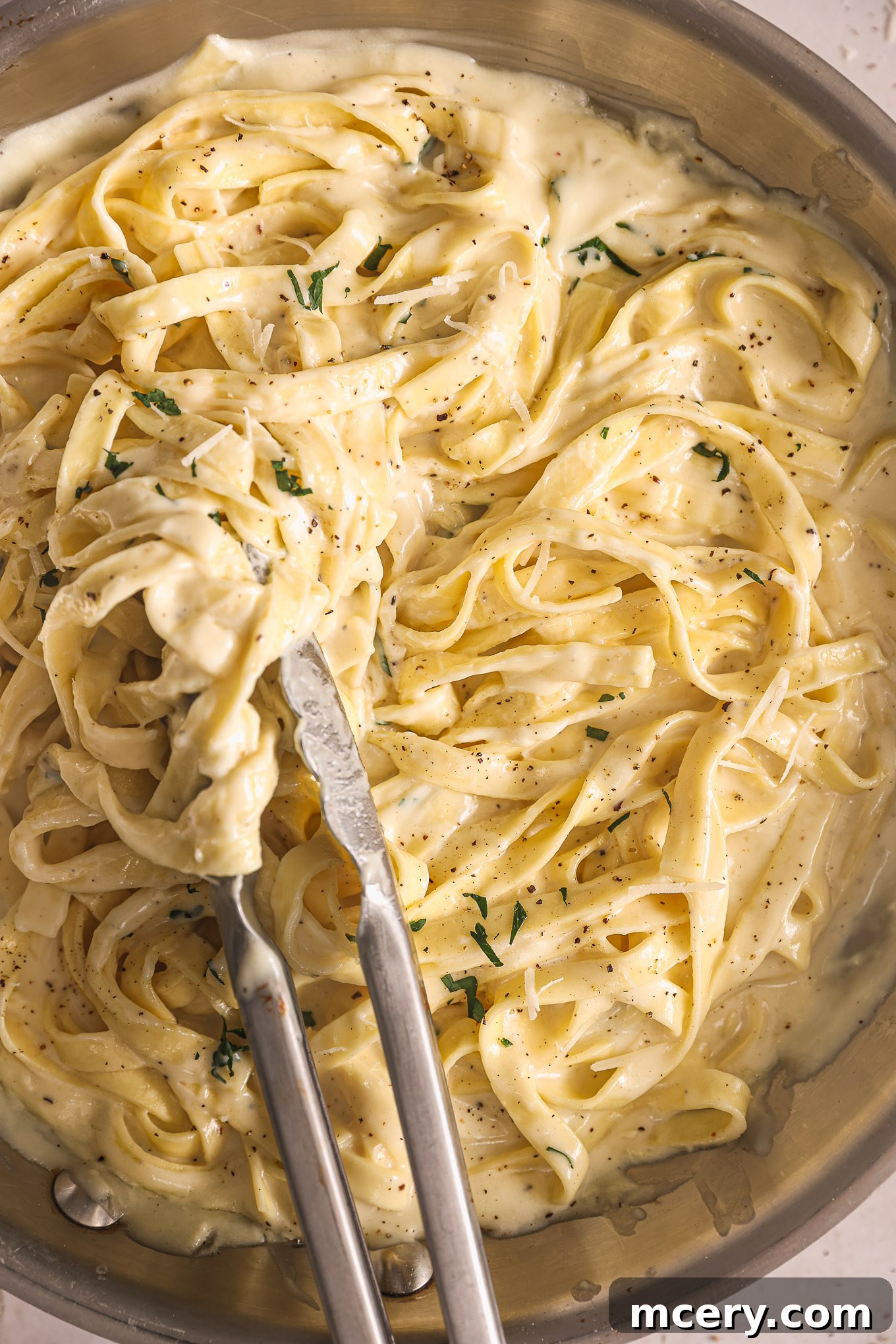
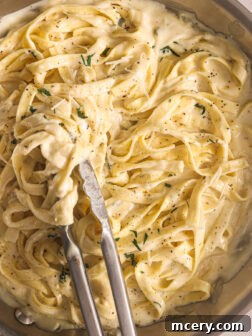
One bite of this homemade alfredo sauce recipe, and you’ll forever question why you ever settled for store-bought varieties. Its rich, creamy texture and profound flavor consistently impress, leading everyone who tries it to eagerly ask for the recipe.
If you’re a connoisseur of luxurious creamy sauces, you’ll also adore our irresistible cream cheese pasta sauce and our vibrant lemon garlic cream sauce. Both offer unique culinary experiences, but nothing quite compares to the timeless appeal of a truly spectacular Alfredo.
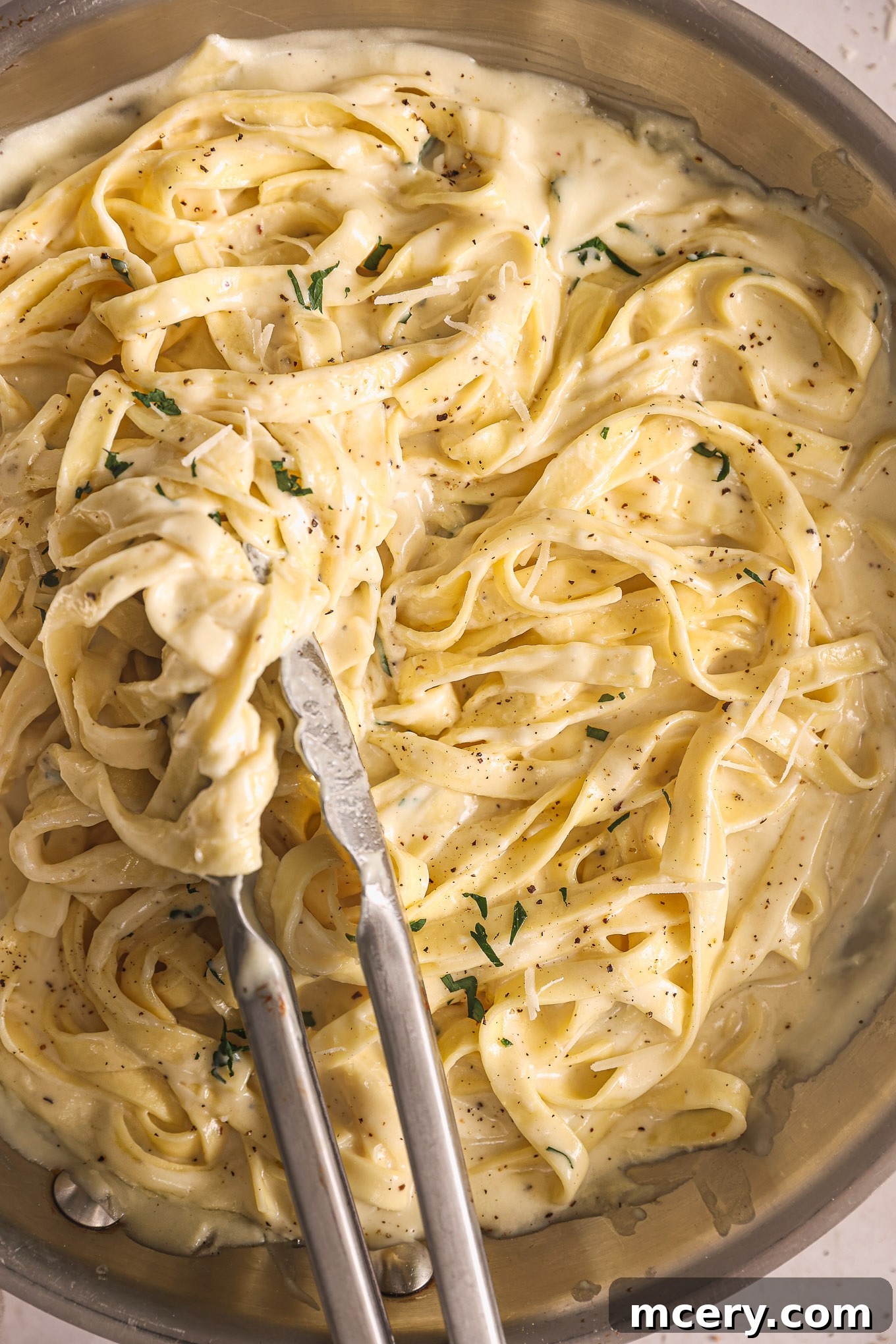
The Ultimate Homemade Alfredo Sauce Recipe
Discover the secret to making the absolute best alfredo sauce right in your own kitchen. This recipe stands out not by taking shortcuts, but by embracing the power of fresh, high-quality, real ingredients. We focus on essentials like rich Parmesan cheese, luscious heavy cream, and decadent butter, ensuring an authentic flavor profile that truly sings. The result is a sauce that’s far superior to anything you’ll find pre-made on a grocery store shelf.
This particular homemade alfredo sauce recipe has been a staple in my kitchen for years. It was one of the very first dishes I mastered as a newlywed, and its simplicity combined with its incredible depth of flavor never ceases to amaze me. I vividly remember being captivated by how a handful of basic ingredients could transform into something so profoundly rich and utterly satisfying.
Having prepared this recipe countless times, I can confidently say it’s virtually failproof. You don’t need extensive culinary experience or specialized equipment. With just a few staple ingredients, everything comes together effortlessly in mere minutes, right in a single large saucepan on your stove. The end result is a velvety, luxurious sauce so decadent you’ll want to pair it with everything from classic pasta dishes to roasted vegetables, and beyond. It’s perfect for elevating any weeknight meal into a gourmet experience, making it a favorite for family dinners and special occasions alike.
Understanding Alfredo Sauce: A Culinary Classic
At its heart, traditional Alfredo sauce is a masterpiece of Italian simplicity, born from a humble yet brilliant blend of fresh ingredients: butter, Parmesan cheese, a touch of salt, and pepper. Originating in Rome in the early 20th century, the original “Fettuccine Alfredo” created by Alfredo di Lelio was remarkably minimalist, relying solely on fresh pasta, butter, and Parmigiano-Reggiano cheese, with the rich starch from the pasta water creating the emulsified sauce.
Over time, particularly as it traveled to America, the recipe evolved. Many modern interpretations, including this one, incorporate heavy cream and often garlic and nutmeg to create a richer, thicker, and more robust sauce profile that perfectly coats pasta and other dishes. While you can find countless varieties, from super simple recipes like our 3-ingredient alfredo sauce (closer to the Roman original) to more flavorful options like this homemade alfredo sauce with garlic and nutmeg, the essence remains the same: a celebration of dairy and cheese.
Alfredo sauce is most famously served with fettuccine pasta, creating the iconic Fettuccine Alfredo. However, its creamy versatility knows no bounds. It can be deliciously paired with many different pasta shapes – think penne, rotini, spaghetti, or even ravioli – or used as a luxurious base in unique, creative dishes, from casseroles to pizza toppings.
Essential Ingredients for the Best Homemade Alfredo Sauce
The magic of this Alfredo sauce lies in the quality and freshness of its components. Using real, simple ingredients ensures a flavor and texture that truly stands out. For precise measurements and detailed instructions, please refer to the comprehensive recipe card below.
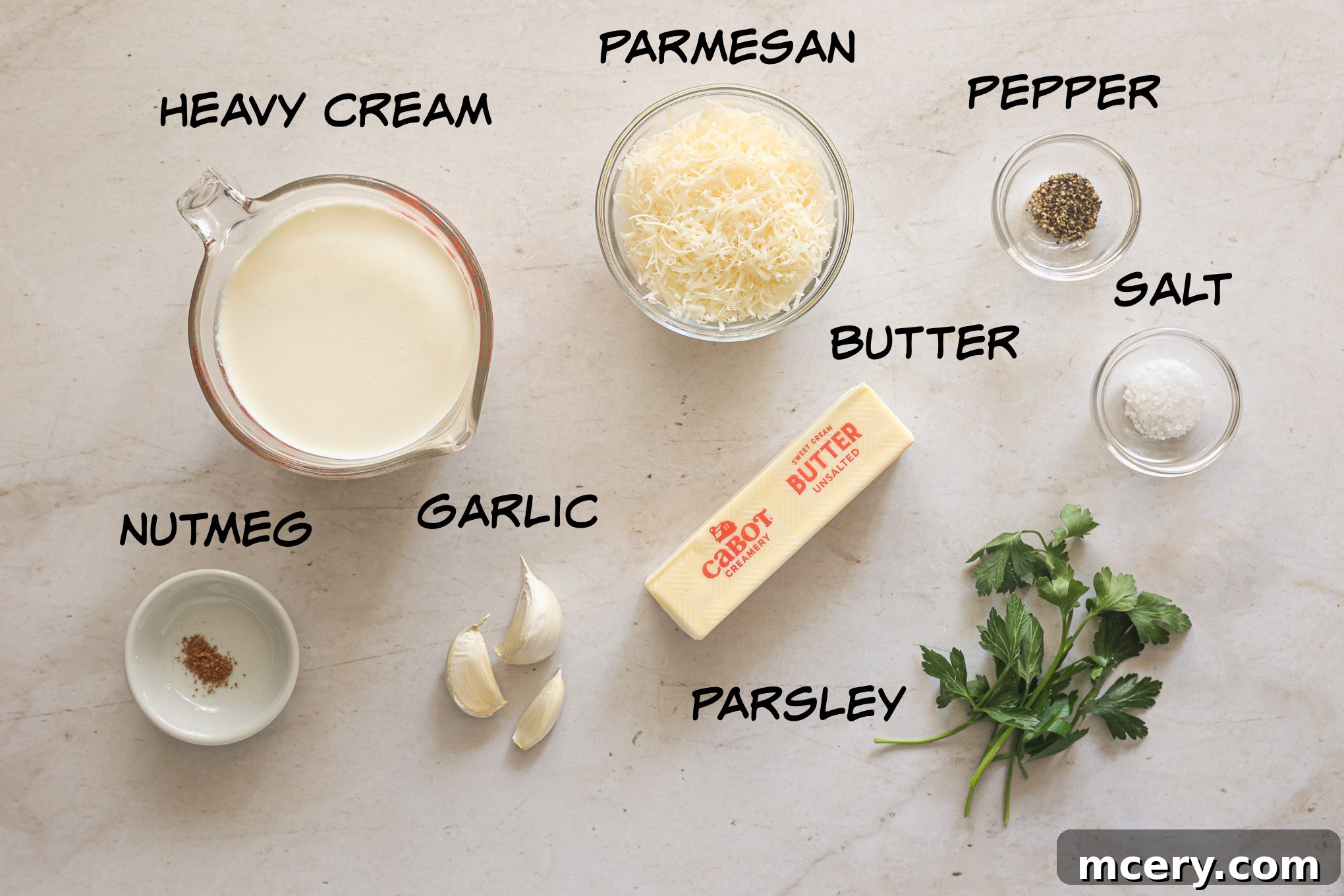
- Unsalted Butter: The foundation of any great Alfredo sauce begins with high-quality, real unsalted butter. It provides a rich, smooth base and allows you to control the overall sodium content of your sauce. Using unsalted butter prevents the sauce from becoming overly salty, letting the natural flavors shine through.
- Fresh Garlic: For an unparalleled aroma and depth of flavor, opt for whole, fresh garlic cloves. Grate them finely using a microplane. This method extracts maximum flavor and ensures the garlic blends seamlessly into the sauce without any chunky bits. Steer clear of pre-minced garlic, which often lacks the vibrant punch of fresh cloves and can contain preservatives.
- Heavy Cream: This is a non-negotiable ingredient for achieving the signature luscious, thick, and rich texture of Alfredo sauce. Full-fat heavy cream is essential. Its high-fat content is crucial for creating a stable emulsion and a velvety mouthfeel. Do not substitute with half-and-half, milk, or any lower-fat dairy alternatives; they will result in a thinner, less flavorful, and potentially unstable sauce.
- Spices:
- Kosher Salt: Essential for enhancing all the other flavors.
- Black Pepper: Adds a subtle warmth and gentle kick.
- Nutmeg: A small pinch of ground nutmeg is a classic addition to Alfredo sauce. It might seem unexpected, but it beautifully enhances the dairy flavors, adding a subtle warmth and complexity that rounds out the sauce without being overpowering.
- Parmesan Cheese: The quality of your cheese is paramount. Freshly grated Parmesan cheese is absolutely essential for a smooth, melt-in-your-mouth sauce. Avoid pre-grated cheeses at all costs; they often contain anti-caking agents (like cellulose) that prevent them from melting properly, leading to a grainy or clumpy sauce. Invest in a block of high-quality Parmigiano-Reggiano, grate it yourself just before cooking, and taste the incredible difference. Parmigiano-Reggiano offers the most authentic and robust flavor profile.
Choosing the Best Cheese for Alfredo Sauce
While freshly grated Parmigiano-Reggiano is the gold standard for traditional Alfredo sauce, other hard, salty cheeses can be used if Parmesan isn’t available. Grated Pecorino Romano, with its sharper, saltier profile, or Asiago, which offers a slightly milder, nutty flavor, can both serve as excellent substitutes. Both are hard cheeses that will melt down beautifully to create a creamy sauce, imparting their own unique character.
Crafting Your Homemade Alfredo Sauce: A Step-by-Step Guide
Making this exquisite Alfredo sauce is remarkably simple, requiring just one large saucepan and a bit of patience to ensure smooth, creamy perfection. Follow these straightforward steps, and you’ll have a restaurant-quality sauce in minutes. The complete recipe card with exact measurements and cooking times is available further down.
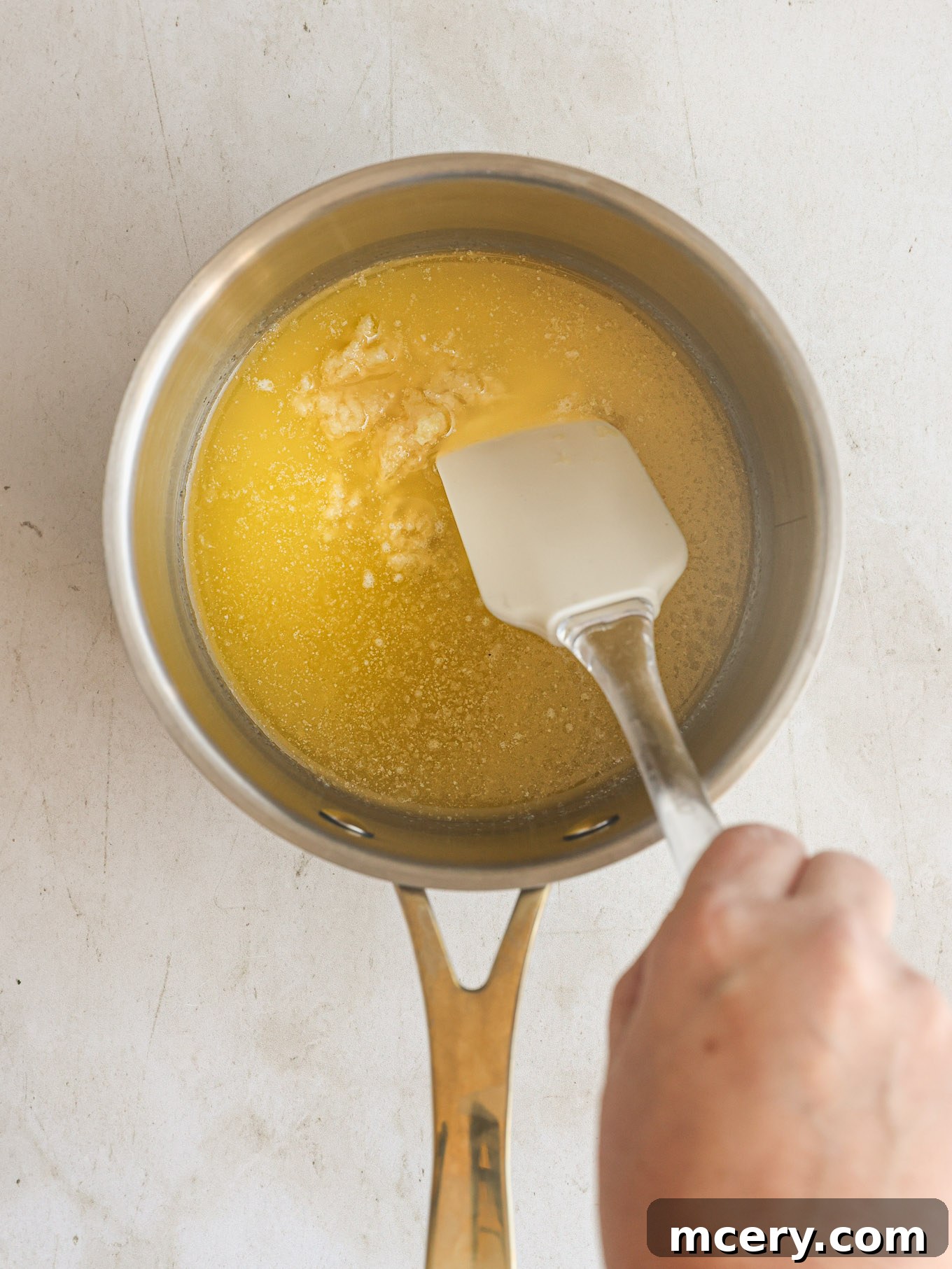
Step 1: Infuse with Garlic. Begin by melting the unsalted butter in a large saucepan over medium-low heat. Once melted, add the finely grated fresh garlic. Sauté the garlic for about 1 minute, stirring constantly, just until it becomes fragrant. Be careful not to let the garlic brown, as this can impart a bitter flavor to your delicate sauce. The goal is to gently warm and release its aromatic oils.
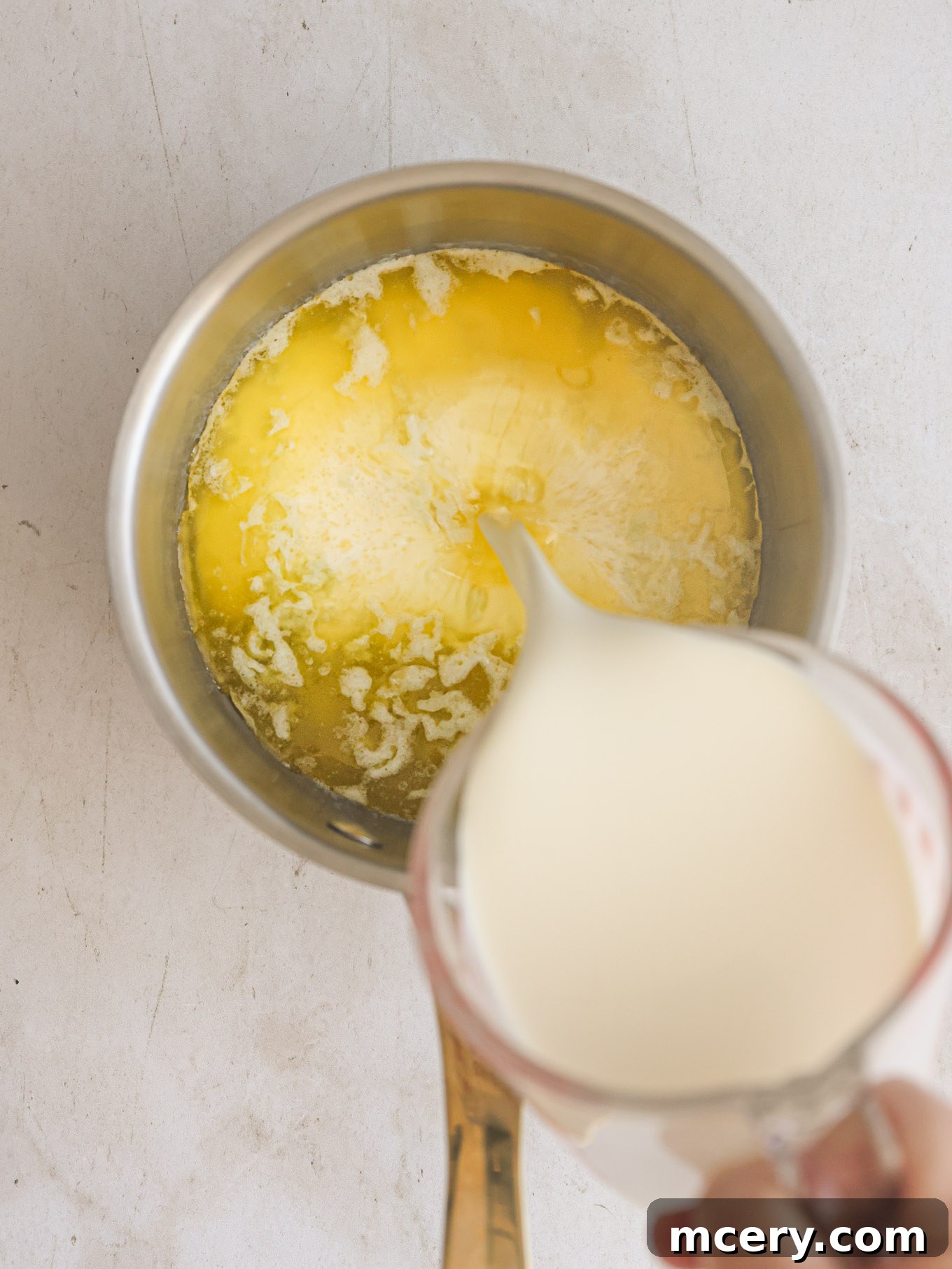
Step 2: Create the Cream Base. Slowly pour the heavy cream into the saucepan, whisking gently to combine it with the butter and garlic. Add your chosen spices: kosher salt, black pepper, and a pinch of nutmeg. Bring this mixture to a very gentle simmer, ensuring it never comes to a rolling boil. Continue to cook, stirring occasionally, for about 5-7 minutes, until the cream base begins to thicken slightly and reduces a bit. This step is crucial for developing a rich and stable sauce.
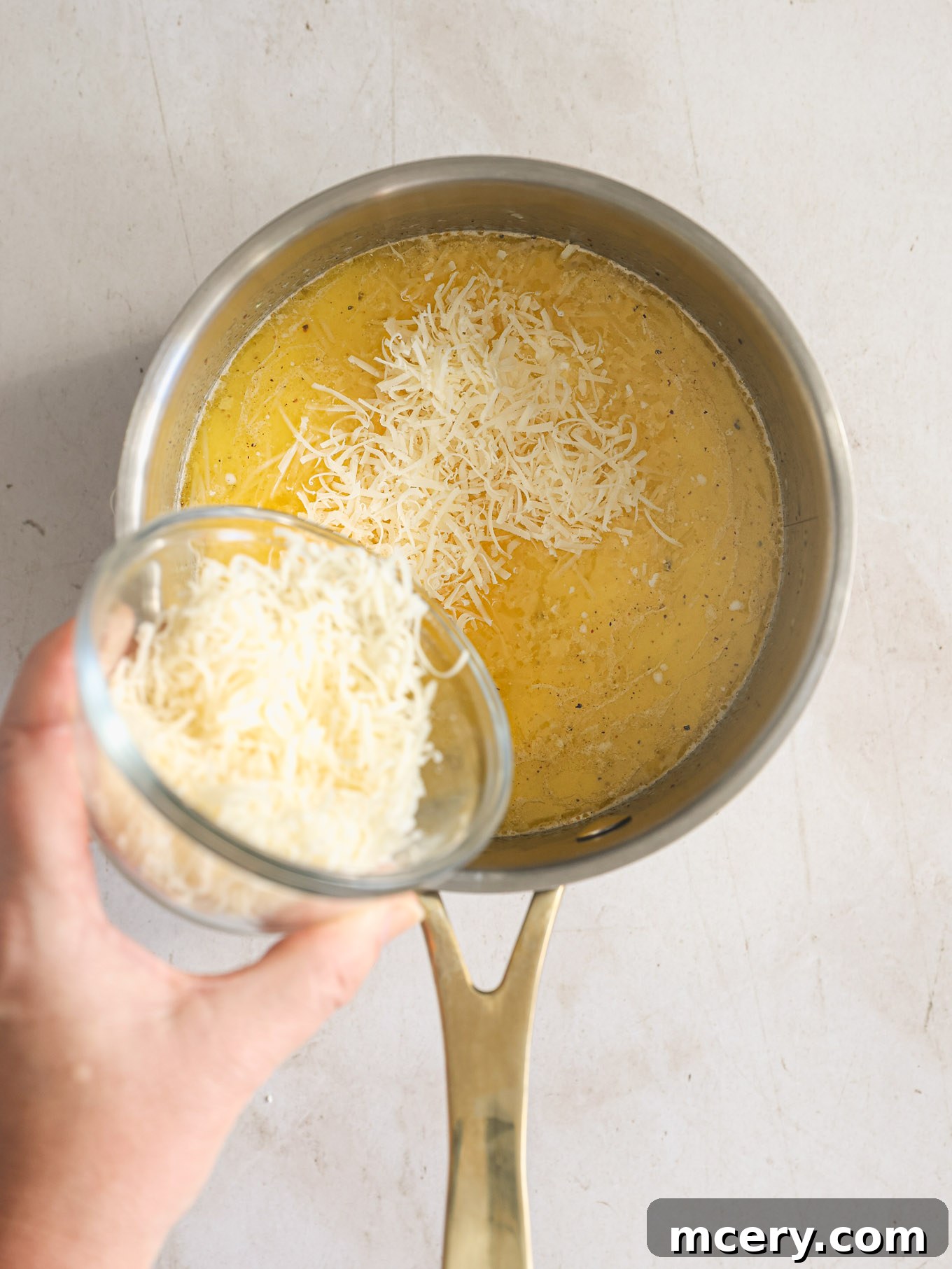
Step 3: Incorporate the Cheese. Reduce the heat to low. Gradually whisk in the freshly grated Parmesan cheese, a handful at a time, stirring constantly. This gradual addition and continuous whisking are key to ensuring the cheese melts evenly and smoothly, preventing any clumping. Continue until all the Parmesan is incorporated and the sauce is beautifully smooth and creamy. Do not rush this step, as gentle heat and steady whisking are vital for perfect emulsification.
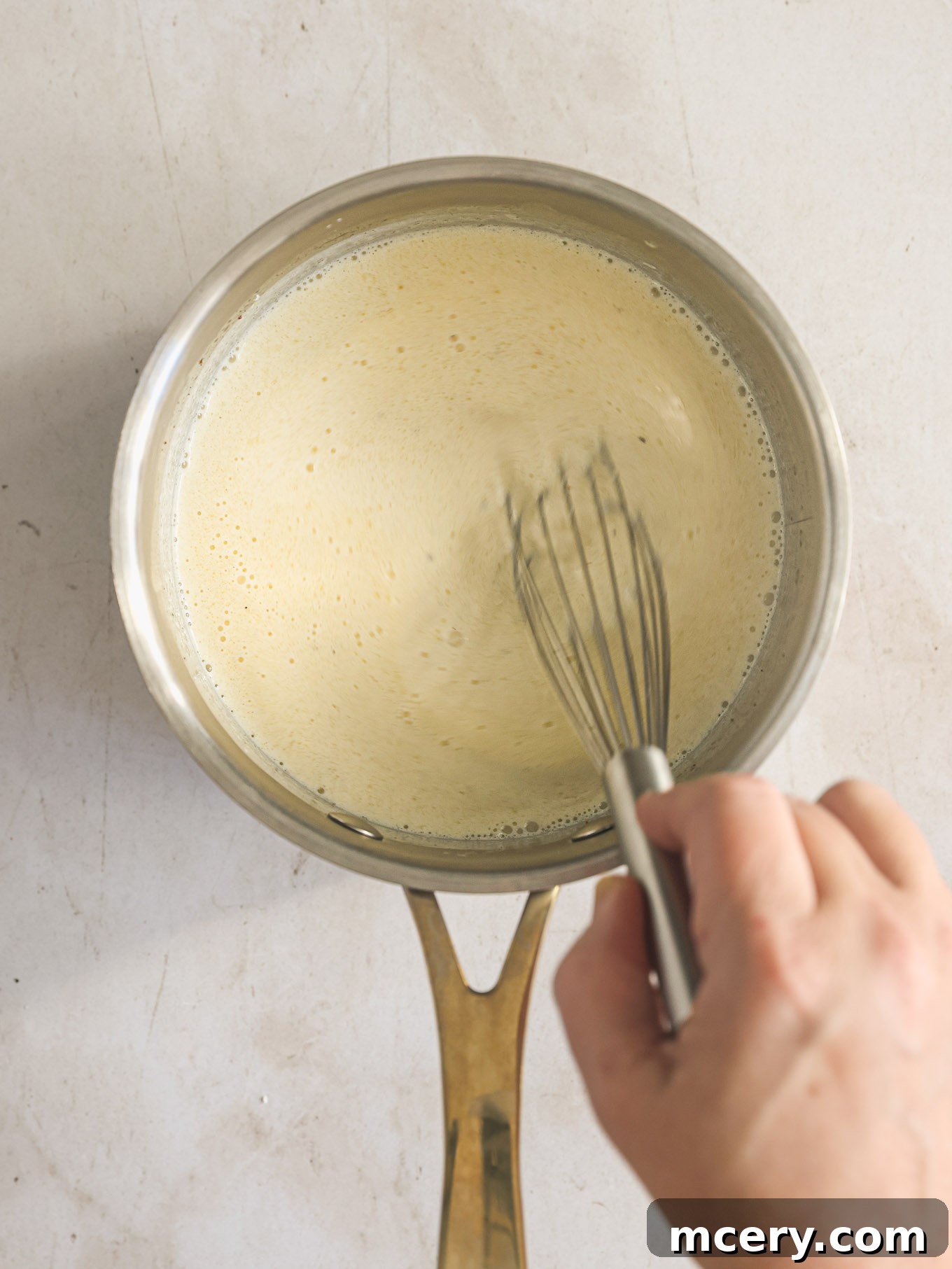
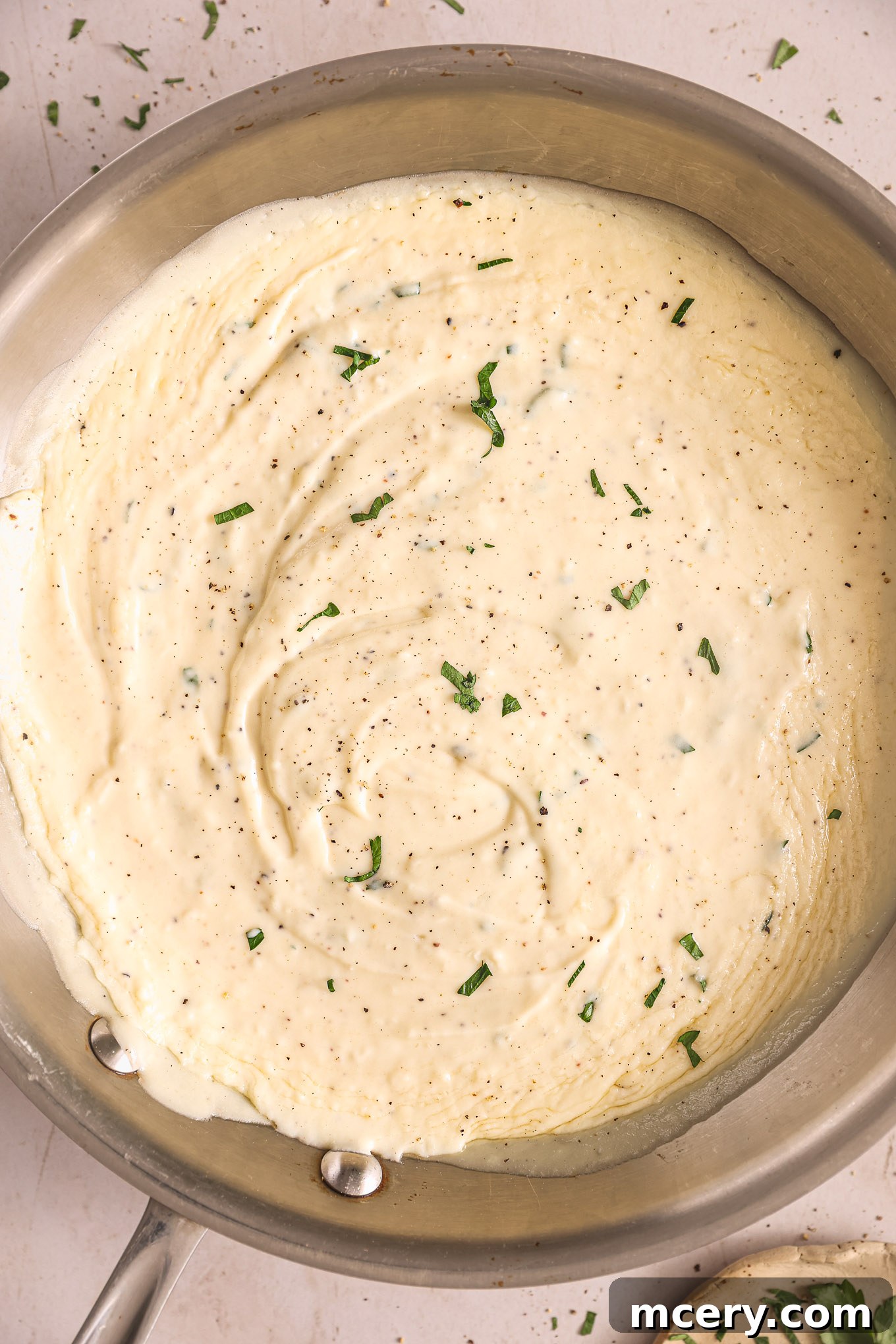
Step 4: Season and Serve. Once the sauce has reached your desired consistency and creaminess, taste it and adjust the seasoning as needed. You might want to add a touch more salt or pepper. Remove the sauce from the heat immediately. It’s now ready to be used as desired! Toss it with freshly cooked pasta, spoon it over vegetables, or incorporate it into other dishes. Garnish with fresh parsley and extra Parmesan cheese for a delightful finish.
Expert Tips for a Flawless Alfredo Sauce
Achieving the perfect, velvety Alfredo sauce is simple with these expert tips:
- Always Grate Your Own Cheese: This cannot be emphasized enough. For the smoothest, most luxurious sauce, use a box grater with small holes to finely grate fresh Parmesan cheese. Pre-shredded or pre-grated cheeses contain anti-caking agents (like cellulose) that prevent them from melting properly, leading to a grainy or clumpy sauce that lacks the desired silky texture. Invest in a block of Parmigiano-Reggiano for the best results.
- Master Heat Control: Alfredo sauce is delicate and prone to breaking or separating if exposed to excessive heat. Crucially, avoid letting the cream mixture come to a rolling boil at any stage. Instead, maintain a low to medium heat, ensuring a gentle simmer. Cook it slowly and deliberately, stirring frequently to prevent scorching on the bottom and to encourage even thickening.
- Whisk Consistently for Smoothness: When it’s time to add the Parmesan, do so slowly and gradually. Whisk the sauce constantly as you sprinkle in the cheese. This continuous motion ensures the cheese melts evenly into the warm cream, creating a perfectly emulsified sauce without any clumps. This is particularly important when using fresh cheese, which requires a bit more encouragement to fully incorporate.
- Use a Microplane for Garlic: For an incredibly smooth sauce where garlic flavor is perfectly infused without any discernible pieces, use a microplane to grate your garlic cloves. This breaks the garlic down into a fine paste that melts seamlessly into the butter and cream.
- Reserve Pasta Water: If you’re serving your Alfredo sauce with pasta, always remember to reserve about a cup of the starchy pasta cooking water before draining. This cloudy, flavorful water is a chef’s secret weapon. A splash or two whisked into your finished sauce can help thin it slightly, adjust its consistency, and most importantly, the starch helps the sauce cling beautifully to the pasta, creating a more cohesive and delicious dish.
How to Achieve Your Desired Alfredo Sauce Consistency
Homemade Alfredo sauce naturally thickens as it simmers on the stove and continues to thicken as it cools. If your sauce isn’t reaching your desired consistency, try cooking it for a few extra minutes over low heat, stirring continuously, allowing more of the liquid to evaporate and the sauce to reduce. This gentle reduction will naturally concentrate its flavors and thicken it.
If it’s still too runny after simmering, you have a couple of options. The simplest is to stir in an extra tablespoon or two of freshly grated Parmesan cheese. The cheese will melt and add body to the sauce. Alternatively, if your sauce is already cheesy enough for your taste, you can incorporate a cornstarch slurry. To do this, whisk together equal parts cornstarch and cold water (about one tablespoon of each) in a small bowl until smooth. Then, gradually mix a teaspoon or two of this slurry into your simmering sauce. Let it cook for another minute or so, stirring constantly, until it reaches your preferred thickness. This method provides a quick and effective way to adjust the consistency.
How to Thin Alfredo Sauce
Sometimes, Alfredo sauce can become too thick, especially after cooling or if it’s been simmering for a while. To loosen it back to a perfect consistency, simply whisk in an extra splash of heavy cream, a bit of that reserved starchy pasta water, or even some homemade chicken broth. Gently reheat the sauce on the stove over low heat, stirring consistently, until it warms through and achieves your desired, pourable consistency. Remember, start with small additions and adjust gradually to avoid making it too thin.
Versatile Ways to Enjoy Your Homemade Alfredo Sauce
While fettuccine alfredo remains the most iconic and beloved dish for this creamy sauce, its versatility extends far beyond. Once you’ve mastered this homemade Alfredo, a world of culinary possibilities opens up! Feel free to toss the sauce with any pasta shape you prefer – penne, rotini, spaghetti, or even delicate tortellini all pair beautifully.
For a more substantial and filling meal, easily add your favorite protein. Transform it into a classic chicken alfredo, or whip up a delicious shrimp alfredo bake. You can also explore other proteins like thinly sliced steak, pan-seared scallops, or even crispy bacon bits for added flavor and texture.
If you’re feeling particularly creative, use this rich sauce to elevate your vegetable dishes. Drizzle it over tender oven-roasted broccoli, create a luxurious topping for artichoke and spinach roasted salmon, or mix it into creamy vegetable orzo. It also makes an incredible dipping sauce for crusty bread, breadsticks, or even freshly baked pizza crusts.
Beyond main dishes, Alfredo sauce can be a fantastic substitute or base in many recipes. Swap it for other sauces in dishes like a comforting chicken and broccoli pasta bake, or use it as the foundational layer to create a rich chicken mushroom and spinach lasagna. It’s also fantastic as a white pizza sauce, a creamy addition to mashed potatoes, or even mixed into scrambled eggs for a decadent breakfast. The options are truly endless, so don’t hesitate to experiment and let your culinary imagination soar!
Storing and Reheating Your Alfredo Sauce
Proper storage is key to enjoying your homemade Alfredo sauce for days to come. Once the sauce has fully cooled to room temperature, transfer it to an airtight container or a clean jar. Store it promptly in the refrigerator, where it will maintain its quality for up to 3-4 days. Don’t be alarmed if the sauce hardens and a thin “skin” forms on the surface – this is entirely normal due to the high fat content and will smooth out beautifully as the sauce is reheated.
When you’re ready to indulge again, gently warm your Alfredo sauce in a non-stick saucepan over low heat. Stir consistently and patiently until it becomes smooth, creamy, and heated through. Add a splash of heavy cream or reserved pasta water if needed to restore its perfect consistency. Whatever you do, resist the temptation to use the microwave for reheating! Microwaves tend to heat unevenly and too quickly, which can cause the delicate dairy in the sauce to break, split, and separate, resulting in an oily, unappealing texture.
Can You Freeze Alfredo Sauce?
Unfortunately, I generally do not recommend freezing homemade Alfredo sauce. The high concentration of dairy products, particularly heavy cream and cheese, means that the sauce does not fare well during the freezing and thawing process. When frozen and then reheated, dairy-based sauces tend to separate, becoming thick, mushy, and grainy. While it might technically be safe to eat, the texture and luxurious quality that makes Alfredo so special will be significantly compromised. It’s best enjoyed fresh or within a few days from the refrigerator.
You May Also Like…
If you’ve had the pleasure of trying our homemade alfredo sauce recipe, we’d love to hear from you! Please consider leaving a star rating and a comment below to share your experience with the recipe.
Print
Best Alfredo Sauce Recipe
5 Stars
4 Stars
3 Stars
2 Stars
1 Star
No reviews
- Author: Katya
Prep Time: 10 min
Cook Time: 15 min
Total Time: 25 minutes
Yield: 6 1x
Category: Sauce
Method: Stovetop
Cuisine: Italian
Description
Homemade Alfredo sauce holds a special place in my kitchen—it’s one of the first recipes I learned to make as a newlywed, almost 20 years ago! It’s my go-to recipe for pasta, casseroles, pizza, lasagna, and more. This failproof recipe delivers a rich, creamy, and authentic flavor that elevates any meal.
Ingredients
Scale
-
½ cup real unsalted butter, 1 stick (8 Tbsp.) -
2–3 fresh garlic cloves, grated on a microplane for a smooth sauce -
1 ½ cups heavy cream, do not use half and half, milk, or anything lower in fat -
½ tsp. kosher salt -
¼ tsp. black pepper -
Pinch of nutmeg -
¾ cup freshly grated Parmesan cheese -
Fresh parsley, finely chopped, for garnish
Instructions
- In a large saucepan over medium-low heat, melt the unsalted butter completely. Add the finely grated fresh garlic and sauté for approximately one minute, stirring constantly, until the garlic is wonderfully fragrant but has not browned. This gentle cooking extracts maximum flavor without bitterness.
- Slowly and steadily pour in the heavy cream, followed by the kosher salt, black pepper, and a subtle pinch of nutmeg. Whisk the mixture gently to combine all ingredients. Bring the sauce to a very gentle simmer, ensuring it never comes to a rolling boil. Continue to cook, stirring occasionally, for about 5-7 minutes, or until the cream begins to thicken slightly and coats the back of a spoon.
- Reduce the heat to its lowest setting. Gradually add the freshly grated Parmesan cheese into the simmering cream, a small handful at a time. Whisk continuously and vigorously as you add the cheese until it completely melts and is fully incorporated, resulting in a perfectly smooth, velvety, and creamy sauce. Maintain low heat throughout this process to prevent the cheese from clumping or burning.
- Once the sauce is smooth and reaches your desired consistency, taste it and adjust the seasoning as needed with additional salt or pepper. If the sauce becomes too thick for your preference, whisk in a small splash of extra heavy cream or reserved pasta water to loosen it to your desired consistency.
- Remove the luxurious Alfredo sauce from the heat immediately. It’s now ready to be tossed with freshly cooked pasta, used as a rich sauce for your favorite proteins, or incorporated into other dishes. For an elegant finish, garnish with freshly chopped parsley and a sprinkle of extra Parmesan cheese. Enjoy this decadent homemade delight!
- This recipe yields approximately 2 cups of rich and creamy Alfredo sauce, which is typically enough to generously coat about 12-16 ounces of cooked pasta. This amount is ideal for serving 4-6 people, depending on how much sauce each person prefers with their dish.
Notes
- Parmesan Cheese is Key: For the absolute best results and a perfectly smooth sauce, the importance of using freshly grated Parmesan cannot be overstated. Avoid pre-grated varieties, which often contain anti-caking agents that hinder proper melting and can lead to a grainy texture. Purchase a block of high-quality Parmigiano-Reggiano and grate it yourself just before use for superior flavor and melt.
- Storing Leftovers: After the sauce has cooled completely to room temperature, transfer any leftovers into an airtight container or a glass jar. Store it securely in the refrigerator for up to 3-4 days. It is entirely normal for the sauce to harden and for a thin “skin” to form on the surface; this is due to its rich dairy content. Rest assured, this will dissipate and the sauce will return to its smooth, creamy consistency once gently reheated.
Nutrition
- Serving Size: ⅙
- Calories: 283
- Sugar: 1 g
- Sodium: 283.4 mg
- Fat: 29 g
- Carbohydrates: 1.7 g
- Protein: 4.9 g
- Cholesterol: 81.8 mg