
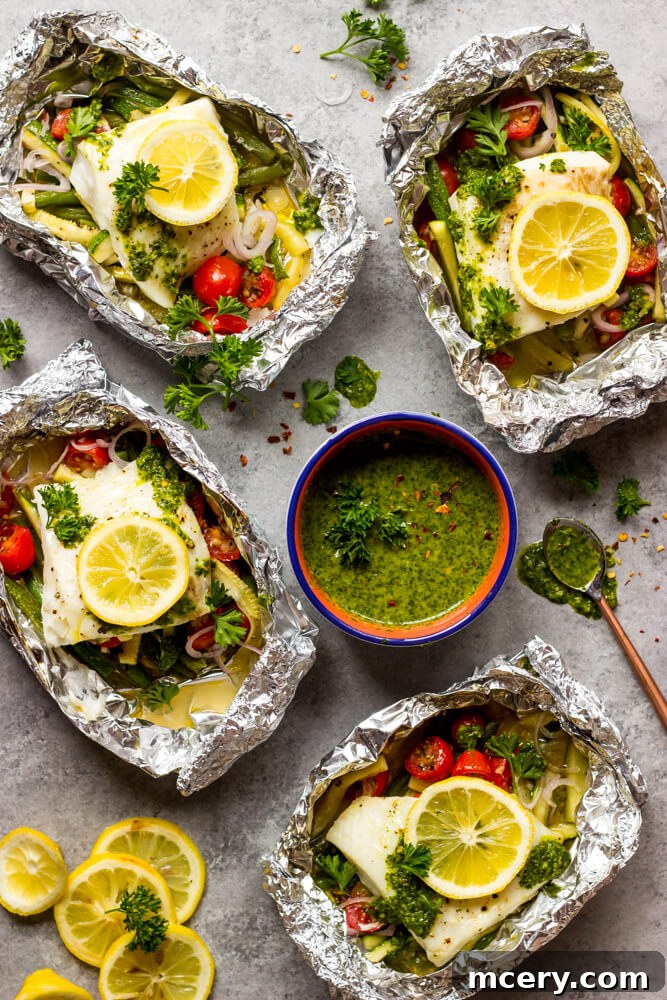
Delight in a truly unforgettable culinary experience with this incredibly easy and healthy Baked Fish in Foil with Vegetables, generously topped with an vibrant homemade Chimichurri Sauce. This simple yet sophisticated recipe defines the perfect weeknight dinner, offering immense flavor, minimal cleanup, and a wholesome meal that caters to busy schedules without compromising on taste or nutrition.
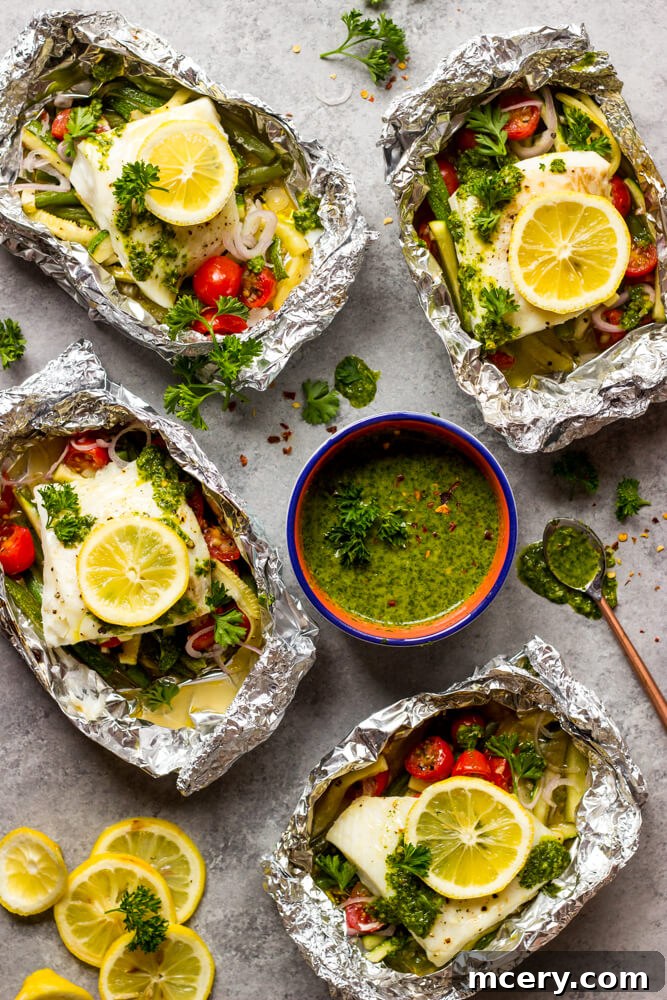
Embrace the freshness of the season with this light and simple meal. This baked fish in foil with an assortment of garden-fresh vegetables is more than just a recipe; it’s a celebration of vibrant flavors and healthy eating. Imagine tender, flaky white fish cooked to perfection alongside crisp green beans, tender zucchini, and juicy grape tomatoes, all infused with a delicate hint of butter and lemon. The magic truly happens when this wholesome package is unveiled and drizzled with an intensely flavorful chimichurri sauce, transforming a simple dinner into an extraordinary one.
Our recipe highlights the bounty of the farmer’s market, utilizing seasonal ingredients that shine with minimal effort. The star of the show, a mild white fish, is gently baked atop the carefully chosen vegetables within its foil packet, locking in moisture and flavor. But what truly elevates this dish from delicious to divine is the addition of a homemade chimichurri sauce. This bright green condiment, bursting with fresh herbs, aromatic spices, and rich olive oil, introduces a delightful tang and a subtle hint of spice that complements the mildness of the fish and fresh crispness of the vegetables beautifully. It’s a harmonious blend that will leave your taste buds craving more.
Key Ingredients for Your Foil-Baked Fish
Crafting this perfect baked fish and vegetable dish requires a selection of fresh, high-quality ingredients. Here’s a detailed look at what you’ll need to create this simple yet impressive meal:
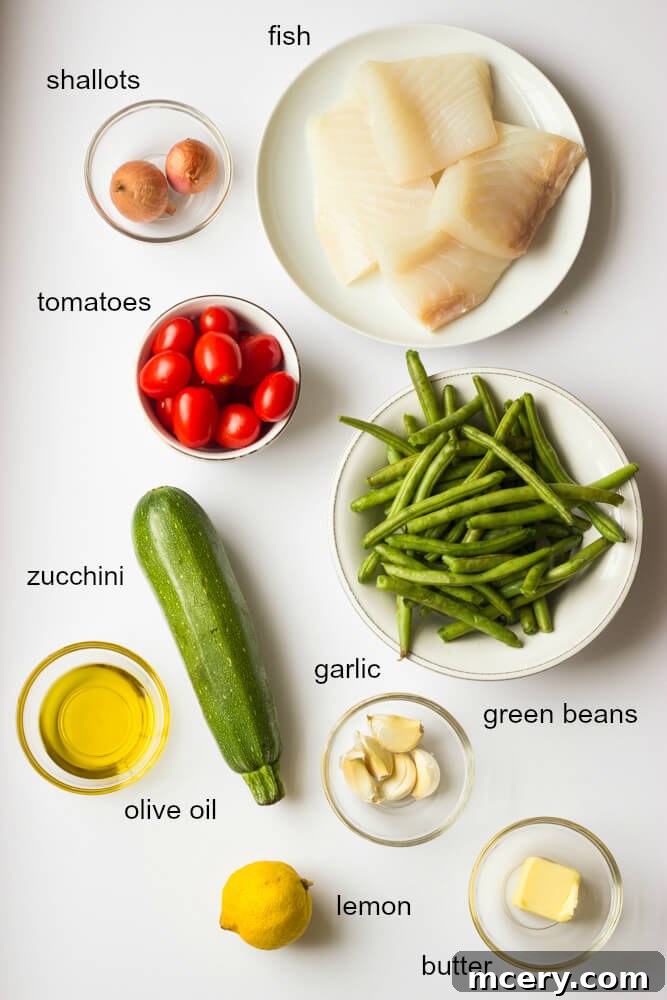
- Seasonal Vegetables – We recommend a colorful and nutritious mix of fresh green beans, firm zucchini, and sweet grape tomatoes. These vegetables not only provide a delightful texture contrast but also pack a punch of essential vitamins and minerals. Feel free to explore other quick-cooking seasonal vegetables based on availability and preference.
- Shallots – Often mistaken for small onions, shallots offer a more delicate, sweeter, and less pungent flavor profile, adding an exquisite depth to the vegetable medley without overpowering the fish.
- Fresh Garlic – For an incomparable aroma and robust flavor, always opt for fresh garlic, finely minced. It’s a foundational ingredient that brings a savory warmth to the entire dish.
- Premium Olive Oil – A good quality extra-virgin olive oil is crucial for coating the vegetables, allowing them to roast beautifully while adding a rich, fruity note. Avocado oil can be an excellent alternative, offering a neutral flavor and high smoke point.
- Flaky White Fish Fillets – The choice of fish is key to this recipe’s success. Varieties such as cod, halibut, and tilapia are ideal due to their mild flavor and ability to cook quickly and evenly, becoming wonderfully flaky when baked in foil. Other great options include bass, grouper, haddock, or snapper.
- Unsalted Butter – A touch of butter placed directly on top of the fish fillets melts down, infusing the fish with richness and moisture, enhancing its natural flavor.
- Fresh Lemon – Thin slices of lemon placed with the fish and vegetables add a bright, zesty acidity that cuts through the richness and truly enlivens the entire dish.
Selecting the Best Fish for Baking in Foil
When preparing fish in foil, the goal is a tender, moist, and flaky result. The best types of fish for this method are those with a mild flavor and a texture that holds up well during baking, yet cooks relatively quickly. We specifically recommend flaky white fish varieties, as they readily absorb the flavors of the surrounding ingredients while remaining succulent. For this particular recipe, cod was used due to its consistent texture and mild taste, making it a versatile choice. However, you have many excellent alternatives:
- Tilapia: A very mild, lean, and affordable option that cooks quickly.
- Halibut: Known for its firm, meaty texture and delicate flavor, halibut is a premium choice that bakes beautifully.
- Bass: Offers a slightly richer flavor than cod, with firm, white flesh.
- Grouper: Another firm, mild-flavored fish that is excellent for baking.
- Haddock: Similar to cod but often a bit sweeter, it flakes wonderfully.
- Snapper: Has a distinct sweet and nutty flavor with a firm, moist texture.
- Flounder or Sole: These thinner fillets cook even faster and are very delicate.
No matter your choice, ensure the fillets are of similar thickness to promote even cooking. Freshness is paramount, so look for fish with clear eyes (if whole), bright gills, and a firm, resilient flesh. Your local fishmonger can provide guidance on the freshest catch available.
The Brilliance of Baking Fish in Foil
Baking fish in foil is a culinary technique revered for its simplicity, effectiveness, and the outstanding results it delivers. It’s not just a convenient method; it’s a smart way to prepare seafood. Here’s why wrapping fish in foil is an absolute game-changer for healthy weeknight dinners:
- Optimal Moisture Retention: The foil acts as a sealed pouch, trapping steam and moisture around the fish and vegetables. This creates a miniature oven effect, ensuring the fish remains incredibly moist and tender, preventing it from drying out, which is a common pitfall when baking fish directly on a sheet pan.
- Intensified Flavor Infusion: As the ingredients cook together within the confined space of the foil packet, their flavors meld and deepen. The aromas and juices from the vegetables, herbs, butter, and lemon are circulated, infusing the fish with every delicious note, resulting in a more cohesive and richly flavored dish.
- Effortless Cleanup: One of the most beloved benefits of foil packet cooking is the minimal cleanup. Once dinner is served, simply discard the foil. No sticky pans, no baked-on residue – just pure culinary enjoyment without the chore.
- Nutrient Preservation: By trapping the steam and juices, foil baking helps to preserve the delicate nutrients and natural goodness of both the fish and the vegetables, making it a truly healthy cooking method.
- Perfectly Even Cooking: The consistent heat distribution within the foil packet ensures that both the fish and the accompanying vegetables cook evenly and thoroughly, reaching optimal doneness at the same time.
Seeking an alternative to aluminum foil? If you prefer to avoid foil, or simply wish to try a different method, reusable parchment cooking bags are an excellent eco-friendly option. They offer similar benefits in terms of moisture retention and flavor infusion, making them a fantastic substitute.
Step-by-Step Guide: How to Make Baked Fish in Foil
Creating this delicious and healthy meal is wonderfully straightforward. Follow these simple steps to achieve perfectly baked fish and tender vegetables every time:
- Preheat Your Oven: Start by preheating your oven to a steady 400°F (200°C). This ensures the oven is at the correct temperature when you place your foil packets inside, leading to even cooking.
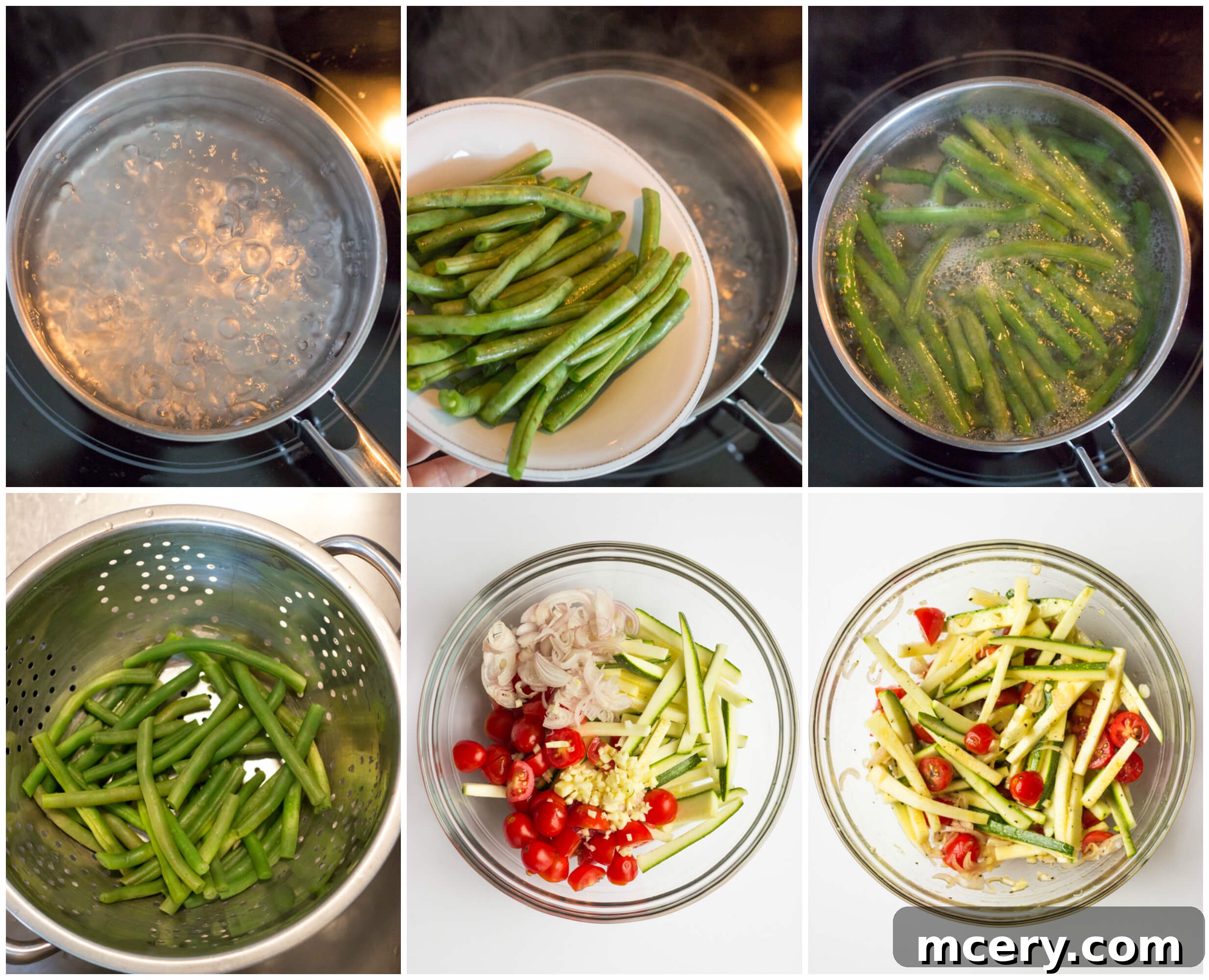
- Prepare the Green Beans: Bring a small saucepan of water to a rolling boil over high heat. Add the trimmed green beans and blanch them for exactly 3 minutes. This quick blanching step helps them retain their vibrant color and a pleasant crisp-tender texture, ensuring they aren’t undercooked in the foil packet. Immediately drain the blanched green beans in a colander and set them aside.
- Toss the Remaining Veggies: In a medium-sized mixing bowl, combine the matchstick-cut zucchini, halved grape tomatoes, thinly sliced shallots, minced fresh garlic, and extra-virgin olive oil. Gently toss until all the vegetables are lightly coated with the oil and aromatics. Season generously with kosher salt and freshly ground black pepper to taste.
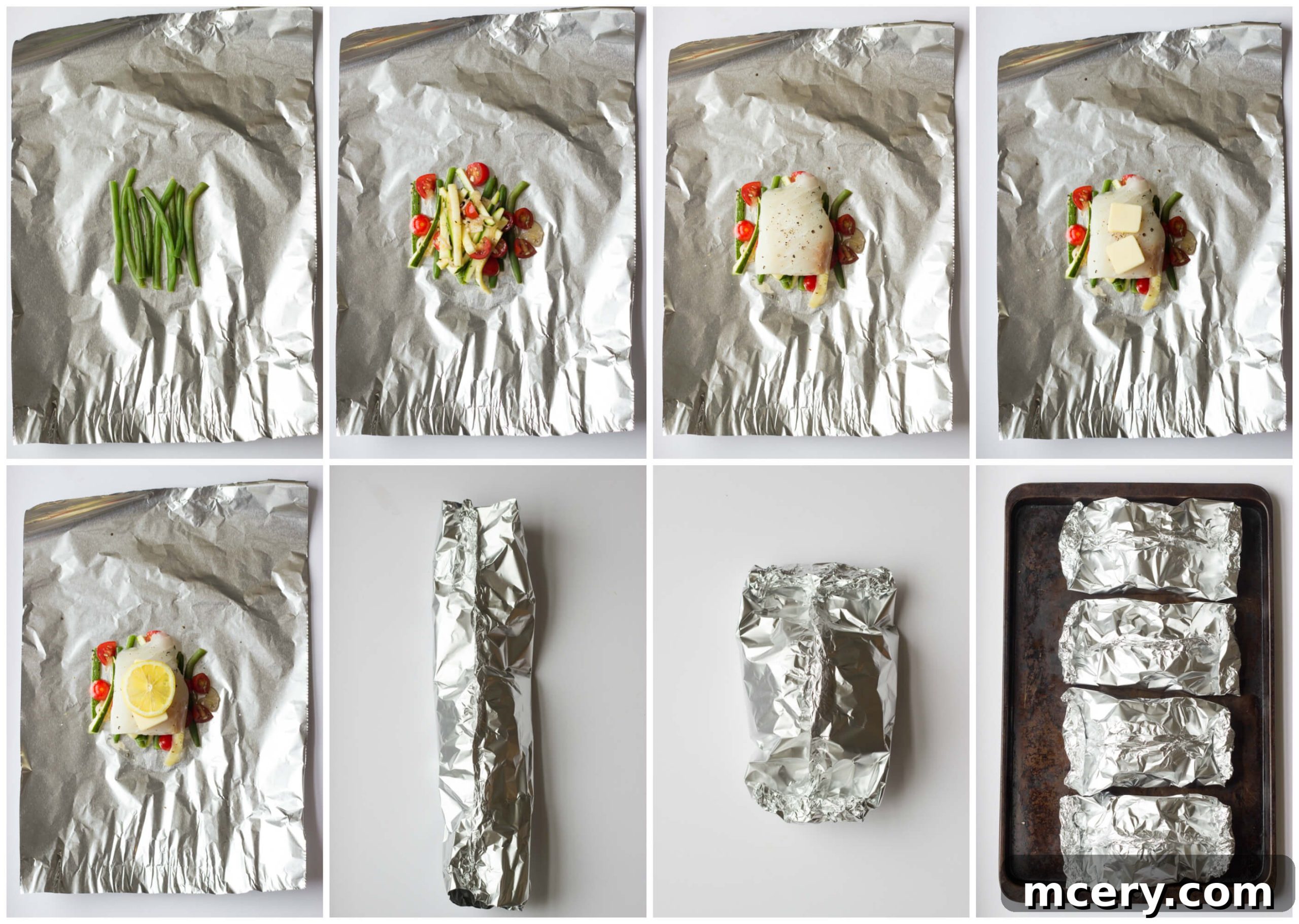
- Assemble the Foil Packets: Lay out four pieces of heavy-duty aluminum foil (approximately 12×17 inches each) on a clean work surface. For each packet, start by evenly distributing the blanched green beans in the center of the foil. Next, spoon an equal portion of the tossed zucchini and tomato mixture over the green beans. Place one white fish fillet directly on top of the vegetables in the center of each packet. Season the fish fillets lightly with salt and pepper. Finally, top each fish fillet with two thin slices of butter and 1-2 thin slices of fresh lemon.
- Seal and Bake: Carefully seal each foil packet. Begin by bringing the two long ends of the foil together and folding them over several times to create a tight seam. Then, crimp the shorter ends inwards to ensure the packet is completely sealed, preventing any steam from escaping. This “tenting” method allows steam to build up inside, cooking the contents perfectly. Place the sealed foil packets onto a large baking sheet. Bake in the preheated oven for approximately 18-21 minutes. The fish is done when it easily flakes with a fork.
- Serve with Chimichurri: Once cooked, carefully remove the baking sheet from the oven. Be extremely cautious when opening the foil packets, as the escaping steam will be very hot. Transfer the fish and vegetables from the foil to individual plates. Serve immediately, drizzling generously with the homemade chimichurri sauce for an explosion of fresh flavor.
Recipe Tips & Expert Notes for Perfect Baked Fish in Foil
To ensure your baked fish in foil is nothing short of spectacular, consider these helpful tips and insights:
- Proper Foil Tenting is Key: When sealing your foil packets, don’t wrap them too tightly around the contents. Instead, create a slight dome or “tent” above the fish and vegetables. This allows space for steam to build up, which is essential for cooking the ingredients evenly and keeping the fish exceptionally moist. A tight wrap can sometimes lead to uneven cooking or less steam retention.
- Experiment with Diverse Seafood: While mild white fish is excellent, this recipe is incredibly versatile. Feel free to swap out the cod for other types of fish like succulent salmon, delicate trout, or firm sea bass. For those looking beyond fish, shrimp, crab, or scallops also bake wonderfully in foil packets, often requiring less cooking time due to their smaller size. Adjust cooking times accordingly based on the thickness and type of seafood.
- Elevate with a Flavorful Sauce: The homemade chimichurri sauce is a vibrant, herbaceous masterpiece that perfectly complements the mildness of the fish and fresh vegetables. It’s surprisingly easy to whip up in minutes and adds a gourmet touch. If you’re short on time, a quick alternative can be made by whisking together quality olive oil, fresh lemon juice, minced garlic, and a splash of balsamic vinegar. Drizzle your chosen sauce generously over the fish and vegetables immediately after opening the packets for an added burst of flavor.
- Exercise Caution When Opening: The steam trapped inside the foil packets will be incredibly hot. When opening, carefully tear or cut along the top seam, allowing the steam to escape away from your face and hands to prevent burns. A pair of tongs can be useful for initial handling.
- Don’t Overcrowd the Packet: Ensure each foil packet has enough space for the ingredients to cook evenly. Overcrowding can lead to steaming instead of a gentle bake, and your vegetables might not reach the desired tenderness. If serving a larger crowd, prepare more packets.
Expanding Your Palate: Other Vegetables to Add to Foil Packets
The beauty of foil packet cooking lies in its adaptability. While green beans, zucchini, and tomatoes create a classic and delicious combination, you can easily customize your parcels with a variety of other vegetables. The key is to select vegetables that are either thinly sliced or cook relatively quickly, ensuring everything reaches optimal tenderness at the same time as the fish.
Consider these fantastic additions to elevate your foil-baked fish:
- Asparagus: Trimmed spears add a delicate, earthy flavor and a lovely bright green color.
- Peas: Fresh or frozen (thawed) peas bring a touch of sweetness and pop of color.
- Corn: Fresh corn kernels (cut from the cob) or small cobs provide a sweet and crunchy element, especially delightful in summer.
- Mushrooms: Sliced cremini or button mushrooms add an umami depth and a savory, meaty texture.
- Red Peppers: Thinly sliced red bell peppers introduce a sweet, smoky flavor and a beautiful vibrant hue.
- Eggplant: Cubed or thinly sliced eggplant absorbs flavors wonderfully, adding a rich and tender component.
- Spinach or Kale: A handful of fresh spinach or thinly sliced kale can be added to the packet, wilting down beautifully as it cooks.
- Cherry Tomatoes: In addition to grape tomatoes, cherry tomatoes offer another burst of juicy sweetness.
Experiment with your favorites! Just remember to cut harder vegetables into smaller pieces or blanch them briefly, like the green beans, to ensure they cook through within the fish’s baking time.
Versatile Cooking Methods for Fish in Foil
While this fresh fish in foil recipe is perfectly suited for oven baking, its adaptability extends to other popular cooking methods, making it ideal for various occasions, from a backyard BBQ to a rustic camping trip. The principle remains the same: a tightly sealed foil packet locks in moisture and flavor, regardless of the heat source.
- Oven Baking (Recommended): As detailed in the main recipe, the oven provides consistent, even heat, making it the most foolproof method for perfectly cooked fish and tender vegetables. It’s convenient for weeknight meals and requires minimal supervision.
- Grilling: For those who love the smoky char of a grill, foil packets are a fantastic option. Prepare the fish and vegetables as instructed, sealing the foil securely. Preheat your grill to a medium-low heat. It’s best to cook them over indirect heat to prevent burning and ensure even cooking. Place the packets on the side of the grill opposite the direct flame. Grill for approximately 15-25 minutes, depending on the thickness of the fish and heat of your grill, carefully flipping once halfway through. The internal temperature of the fish should reach 145°F (63°C), and the vegetables should be tender.
- Campfire Cooking: Embrace the outdoors with a quintessential campfire meal! Foil-wrapped fish is one of the best dinners to enjoy while camping, especially if you’ve just returned from a day of fishing. Prepare your packets as usual. Once your campfire has burned down to a good bed of glowing embers (not direct flames), carefully place the foil packets directly on the embers or on a grill grate placed over them. Cook for 15-25 minutes, turning occasionally with tongs. Be mindful of hot spots and ensure the packets don’t sit in direct flame, which can burn the foil and contents. The residual heat of the embers will cook the fish and vegetables to tender perfection, infusing them with a subtle smoky flavor.
Regardless of the method, always ensure the packets are sealed tightly to retain all the wonderful juices and steam. Exercise caution when opening, as the steam will be incredibly hot.
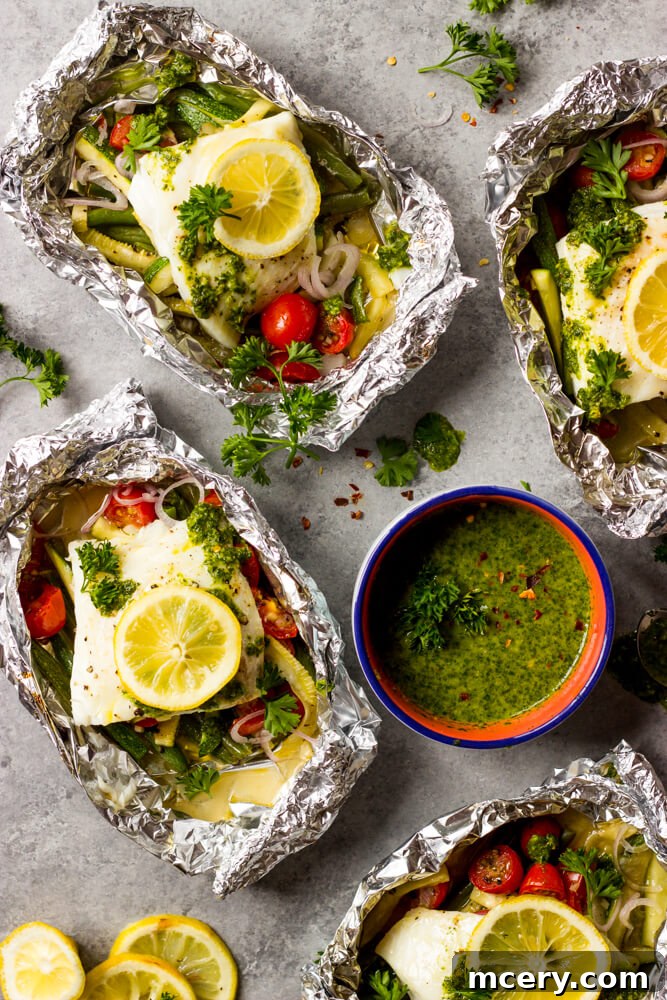
Serving Suggestions for Your Baked Fish Packets
These baked fish packets are a complete meal in themselves, offering protein, healthy fats, and a generous portion of vegetables. However, if you’re looking to round out your meal or serve a more elaborate dinner, they pair beautifully with a variety of light and complementary side dishes:
- Grain Bowls: Serve the fish and vegetables over a bed of fluffy quinoa, brown rice, or couscous for a heartier, more satisfying meal.
- Fresh Salads: A crisp green salad with a light vinaigrette provides a refreshing contrast. Options like a corn salad with lime dressing would add an extra burst of flavor.
- Starchy Sides: For a more comforting meal, consider serving with roasted new potatoes, a creamy polenta, or even some crusty bread to soak up the delicious juices.
- Unique Additions: Don’t shy away from creative pairings like zucchini and corn fritters or aromatic coconut lime rice to enhance the meal’s profile.
- Fruit Platter: For a light and refreshing finish or alongside the main course, a vibrant fruit platter offers natural sweetness and cleanses the palate.
The versatility of this dish means you can tailor your serving style to any occasion, from a casual family dinner to a more formal gathering.
Storage and Reheating Tips
Leftovers of this delicious baked fish and vegetables are a rare occurrence, but if you do find yourself with some, here’s how to store and reheat them to maintain their quality:
- Refrigeration: Allow any leftover fish and vegetables to cool completely before transferring them to an airtight container. Store in the refrigerator for up to three days. Beyond this, the quality and texture of the fish may diminish.
- Reheating: For the best results, gently reheat the fish in a microwave on a low to medium setting to prevent it from becoming rubbery or dry. Alternatively, you can reheat it carefully in a pan on the stovetop over low heat, adding a splash of water or broth to create a little steam. If reheating the vegetables with the fish, these methods work well. Leftover vegetables are also excellent cold, perhaps tossed into a fresh salad or used as a topping for a grain bowl. Avoid excessive reheating, as it can compromise the delicate texture of the fish.
Frequently Asked Questions About Baked Fish in Foil
Here are some common questions regarding baked fish in foil, offering further clarity and confidence in your cooking:
For most fish fillets, the optimal internal temperature for doneness is 145 degrees Fahrenheit (63 degrees Celsius). At this temperature, the fish will be opaque throughout and flake easily with a fork. It’s important to note that thinner fillets may not require cooking all the way through if they are very delicate, but for food safety, 145°F is generally recommended.
Yes, absolutely! Parchment paper is an excellent alternative to foil, especially when baking in the oven. It offers similar benefits by trapping steam and flavors, resulting in moist, perfectly cooked fish and vegetables. However, parchment paper is not recommended for cooking over high direct heat, such as on a grill or over a campfire, as it can scorch or catch fire.
When cooking fish in foil, you want to create a sealed packet, but not one that is overly tight. The best technique is to “tent” the foil, leaving a little air space above the fish and vegetables. This air space is crucial because it allows steam to build up inside the packet, which is the primary mechanism for cooking the fish and keeping it moist. Too tight a wrap might hinder proper steam circulation and result in uneven cooking.
The most reliable indicator of doneness is when the fish flakes easily with a fork. Gently insert a fork into the thickest part of the fillet; if it separates into layers without resistance, it’s ready. The flesh should also be opaque throughout. Avoid overcooking, as this can lead to dry, rubbery fish.
Yes, you can assemble the foil packets up to 1-2 hours in advance and keep them refrigerated. This can be a great time-saver for busy evenings. Just be sure to bring them to room temperature for about 15-20 minutes before baking to ensure even cooking.
More Delicious Fish Recipes to Explore
If you loved this easy and healthy baked fish in foil, you’re sure to enjoy these other fantastic fish and seafood recipes:
- Baked Cod with Panko: A crispy, flavorful twist on classic baked cod.
- Artichoke and Spinach Roasted Salmon: A rich and creamy salmon dish perfect for a special occasion.
- Cod in Creamy Pepper Sauce: Tender cod fillets enveloped in a luscious roasted red pepper sauce.
- Blackened Salmon Lettuce Wraps: A light, spicy, and refreshing meal with vibrant orange salsa.
Print Recipe
Baked Fish in Foil
- Author: Katya
- Prep Time: 15 mins
- Cook Time: 25 mins
- Total Time: 40 mins
- Yield: 4 1x
- Category: Main
- Method: Baked
- Cuisine: American
Description
Baked white fish atop of green beans, zucchini, and tomatoes served with the most delicious chimichurri sauce. This weeknight dinner is simple, healthy, and insanely delicious!
Ingredients
Units
Scale
- 8 oz. fresh green beans, ends trimmed
- 1 medium zucchini, cut into matchsticks, about 8 ounces
- 6 oz. grape tomatoes, halved
- 2 small shallots, thinly sliced
- 2 cloves garlic, minced
- 2 Tbsp. extra-virgin olive oil
- 4 (4 – 6 oz. each) white fish fillets, such as halibut, cod, tilapia
- 4 Tbsp. butter, cut into 8 slices
- 1 lemon, thinly sliced
- Kosher salt and fresh black pepper
To Serve
- Chimichurri Sauce
Instructions
- Preheat the oven to 400 degrees F.
- Bring a small saucepan of water to a boil over high heat. When water comes to a rolling boil, add greens beans and boil for 3 minutes. Immediately drain over a colander and set aside.
- In a medium bowl, toss together the zucchini, tomatoes, shallots, garlic, and olive oil. Season with salt and pepper, to taste.
- Arrange four 12X17-inch pieces of heavy-duty foil on work surface. Divide the green beans evenly in the center of each foil, followed by the zucchini mixture. Place one fish fillet in center of each. Sprinkle fish with salt and pepper. Top with two slices of butter and 1-2 slices lemon.
- Seal the foil packets, starting with long ends and then crimping the short ends so no steam escapes. Place on a large baking sheet and bake for 18-21 minutes. Around 20 minutes you want to check the fish for doneness. It should flake easily. Be careful opening the packets as the escaping steam is HOT!
- Serve immediately with chimichurri sauce.
Nutrition
- Serving Size: 1 fillet with vegetables
- Calories: 359
- Sugar: 3.7 g
- Sodium: 771.2 mg
- Fat: 27.6 g
- Carbohydrates: 9.9 g
- Protein: 20.4 g
- Cholesterol: 54.5 mg